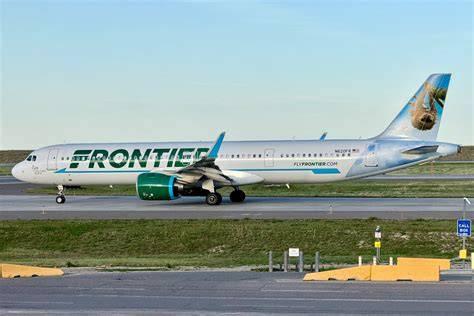
Frontier Airlines is scaling back its presence at Chicago O’Hare International Airport (ORD) this September, removing eight routes from its scheduled network compared with the same month last year. The changes affect a mix of major business markets, leisure destinations, and international services, highlighting how the ultra-low-cost carrier continues to adjust capacity around demand and competitive conditions.
O’Hare remains one of the most strategically important airports in the United States. United Airlines and American Airlines maintain powerful hubs there, while Frontier competes by offering lower fares across a broad selection of domestic and leisure markets. However, scheduled data from aviation analytics provider Cirium indicates that Frontier’s September 2026 departures from O’Hare are down by approximately 9% year over year.
The eight routes removed from the September schedule are Nashville, Charlotte, Raleigh-Durham, San Diego, Austin, Tampa, Cancún, and Phoenix. The changes do not necessarily mean every route has been permanently abandoned. Several services have already disappeared from the schedule for the remainder of the year, while Cancún and Phoenix are scheduled to return in October.
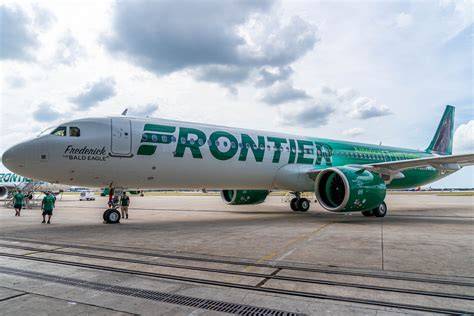
Frontier Airlines Routes Cut From Chicago O’Hare
The domestic reductions cover several markets where Frontier faces substantial competition. Nashville International Airport (BNA) recorded the weakest load factor among the discontinued routes, at roughly 70%, according to the supplied route-performance data. Charlotte Douglas International Airport (CLT) recorded a 73.5% load factor, while Raleigh-Durham International Airport (RDU) reached 77.3%.
The Austin-Bergstrom International Airport (AUS) route performed more strongly, posting an 83.7% load factor, while Tampa International Airport (TPA) recorded 81.5%. San Diego International Airport (SAN), meanwhile, achieved a 79.4% load factor. That service was particularly notable because Frontier launched it in June 2025 and entered a market already dominated by major carriers, including United and American.
Most of these routes last operated in May 2026 and are not currently scheduled to return during the rest of the year. Nashville is an exception in the supplied schedule data, with its last operation listed as December 2025. Regardless of the individual timing, the broader pattern points toward a more selective Frontier network at O’Hare rather than an across-the-board retreat from Chicago.
Cancún and Phoenix Are Temporary Suspensions
Not every missing route represents a permanent network cut. Cancún International Airport (CUN) is scheduled to return on October 8 after Frontier’s last operation on August 17. The Mexico service has historically been a relatively consistent part of Frontier’s O’Hare network, although the airline has adjusted frequencies during late summer in previous years.
Phoenix Sky Harbor International Airport (PHX) is also scheduled to return on October 8. When service resumes, Frontier plans to operate four weekly flights. This makes Phoenix and Cancún different from the domestic routes that currently have no scheduled return for the remainder of 2026.
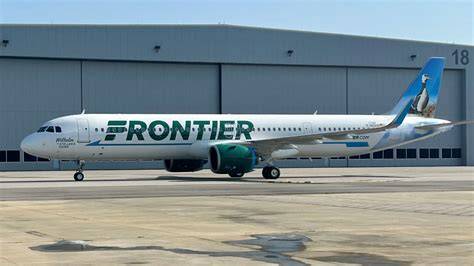
Frontier Adds Fort Lauderdale and San Juan
While eight routes disappear from September’s schedule, Frontier is also operating two O’Hare routes that were not present during the same period last year. These are Fort Lauderdale-Hollywood International Airport (FLL) and Luis Muñoz Marín International Airport (SJU) in San Juan.
Fort Lauderdale represents one of Frontier’s newer Chicago opportunities. The airline launched the service in November 2025 with three weekly flights and has since increased it to daily operation. The route is operated with Frontier’s 240-seat Airbus A321neo, and U.S. Department of Transportation data shows an 85.94% load factor for the 12 months through May 2026.
San Juan is different because Frontier previously served the market before discontinuing it in 2022. The airline reinstated the O’Hare–San Juan route in March 2026, providing another leisure-oriented option for Chicago travelers. The schedule is complicated by seasonal suspensions, with service ending September 8 before returning November 20 and then resuming December 17 for daily operation through the end of the month.
O’Hare Falls in Frontier’s Airport Rankings
Chicago remains strategically important to Frontier despite the reduction. In May 2024, the airline reopened its Chicago crew and pilot base, which had been closed in 2022. The base supports operations at both O’Hare and Chicago Midway, giving Frontier a broader footprint across the Chicago market.
For September 2026, Frontier has 324 scheduled departures from O’Hare, representing approximately 74,506 seats. Yet the airport has slipped from 11th to 19th among Frontier’s busiest airports by scheduled departures.
That ranking puts O’Hare well behind Frontier’s largest bases and focus cities. Denver International Airport (DEN) leads with 1,834 scheduled departures, followed by Orlando International Airport (MCO) with 1,758 and Hartsfield-Jackson Atlanta International Airport (ATL) with 1,748. Las Vegas and Dallas/Fort Worth also rank ahead of Chicago.
What the O’Hare Cuts Mean for Frontier
The September schedule illustrates Frontier’s evolving strategy at one of the world’s most competitive airports. Removing eight routes while adding or restoring selected services suggests the carrier is concentrating its aircraft where it sees stronger demand, better utilization, or strategic opportunities created by changes among competing airlines.
The result is a smaller but more targeted Frontier network at Chicago O’Hare. Fort Lauderdale’s strong load factor demonstrates the potential of leisure-heavy routes, while the planned return of Cancún and Phoenix shows that some reductions are seasonal rather than permanent.
For Chicago passengers, the changes mean fewer Frontier options to several important U.S. cities in September, but the airline is not abandoning O’Hare. Instead, its schedule shows a continuing effort to balance low-cost fares, aircraft utilization, seasonal demand, and intense competition at one of the world’s most important aviation hubs.