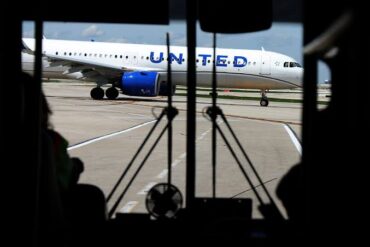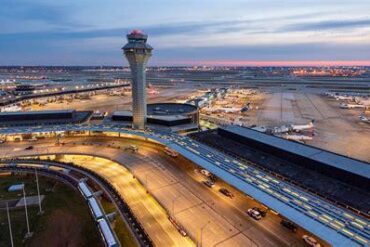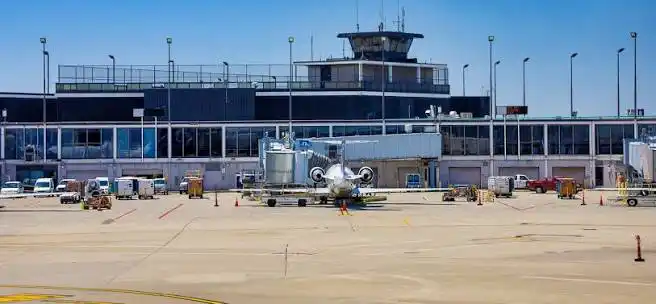
Chicago O’Hare International Airport remains one of the most important airports in the United States and the world’s busiest airport by aircraft movements. For United Airlines, its importance is even greater: O’Hare is one of the carrier’s largest hubs, accounting for roughly 45% to 50% of its passenger and flight operations at the airport. United serves more than 200 destinations from Chicago, giving it an unusually broad network across the United States and beyond.
That network has nevertheless faced a significant adjustment in 2026. United has removed 10 planned routes from its Chicago O’Hare schedule, with the affected services concentrated largely across smaller regional markets in the Midwest and nearby states. The changes do not necessarily represent permanent cancellations. Instead, they reflect the growing impact of the Federal Aviation Administration’s (FAA) flight cap at O’Hare, which has forced airlines to reconsider previously planned growth.
The affected routes include communities in Illinois, Michigan, Wisconsin, Minnesota, Pennsylvania, and Tennessee. Several had been served by United in the past, sometimes many years ago, while others represented proposed restorations of service. The unusual nature of the cuts highlights how airport capacity constraints can reshape airline schedules even when carriers remain committed to expanding their networks.
United Airlines Drops 10 O’Hare Routes From 2026 Schedule
The 10 services removed from United’s 2026 schedule cover a wide range of regional destinations. Central Wisconsin Airport (CWA) was scheduled to regain Chicago service despite having last been served by United in January 2022. Rochester International Airport (RST) had also been absent since September 2021, while Erie International Airport (ERI) last saw United service in May 2023.
Michigan is particularly represented among the affected markets. United had planned service to Marquette Sawyer Regional Airport (MQT), a market it last served from Chicago in February 1999. The airline also removed planned flights to Capital Region International Airport (LAN) and Kalamazoo/Battle Creek International Airport (AZO), both of which last received United service in January 2022.
Illinois and Wisconsin are affected as well. Champaign–Urbana Airport (CMI) last had United service in September 2018, while Central Illinois Regional Airport (BMI) was last served in October 2008. La Crosse Regional Airport (LSE) has an even longer gap, with United’s previous Chicago service ending in December 1991.
The only destination among the 10 that was not a restoration of previously operated service is Tri-Cities Airport (TRI) in Tennessee. United had originally planned to launch nonstop Chicago service on June 8, 2026. The start date was subsequently moved to October 25 before being pushed back again. The route is now expected to launch in fall 2027.
FAA O’Hare Flight Cap Changes United’s Expansion Plans
The central factor behind the schedule changes is the FAA restriction on flights at Chicago O’Hare. The regulator introduced a cap intended to reduce congestion and improve operational reliability as construction and airfield infrastructure projects continue.
The restriction limited O’Hare to roughly 2,708 arrivals and departures per day, approximately 10% below the number of flights airlines had originally scheduled for the summer period. The order took effect on June 2 and was initially expected to remain in place only until October 24.
United had originally responded by moving several planned summer launches into October. That strategy became much more difficult when the FAA extended the flight cap through October 30, 2027. The extension means that routes originally expected to begin during 2026 can no longer simply be accommodated once the summer restrictions end.
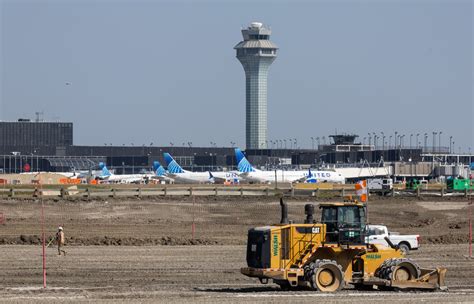
United subsequently removed the 10 routes from its published schedule. A United spokesperson indicated that the airline was delaying the services because of the FAA extension and was working with affected passengers to provide alternative travel options or refunds. The carrier also reiterated its intention to improve connectivity to the affected communities when conditions at O’Hare allow.
United Still Operates More Flights From Chicago O’Hare
Despite the cancellations, it would be misleading to view the changes as a broad retreat by United from Chicago. United continues to operate substantially more flights from O’Hare than it did a year earlier, demonstrating that the airline is still pursuing growth even under the capacity restrictions.
According to schedule data cited in the reference analysis, United removed more than 9,000 departures from previously filed schedules between June and August. That represented a reduction of roughly 7.6%. Even after those adjustments, however, United’s O’Hare departure schedule remained approximately 17% higher year over year.
Current scheduling data also shows the scale of United’s Chicago operation. The airline is operating more than 19,200 flights from O’Hare during the month, offering approximately 2.4 million seats. That represents about 10% more capacity than during the same period a year earlier.
The busiest United routes from O’Hare remain heavily concentrated on major business and connecting markets. New York LaGuardia (LGA) leads by frequency, with as many as 15 daily departures. Denver (DEN) follows with up to 14, while Houston Intercontinental (IAH) reaches up to 12 daily flights. South Bend (SBN) also receives as many as eight departures per day.
What the O’Hare Route Cuts Mean for 2027
The removal of these 10 routes illustrates the difficult balance United must maintain at its largest Chicago hub. Smaller regional destinations can provide valuable connectivity, but every additional departure must compete for limited airport capacity with high-frequency routes serving major business centers and connecting hubs.
For passengers in the affected communities, the immediate consequence is a loss of planned nonstop connectivity to Chicago. However, the longer-term picture remains more optimistic because United has described the changes as delays rather than abandoning its commitment to the markets.
With the FAA O’Hare flight cap now extending into October 2027, the airline’s regional expansion plans will remain constrained for the foreseeable future. If capacity becomes available after the restrictions expire, several of these routes could return to United’s network. Until then, Chicago’s busiest hub will have to operate within tighter limits, forcing the airline to prioritize its most valuable flights while postponing some of its smaller-market ambitions.