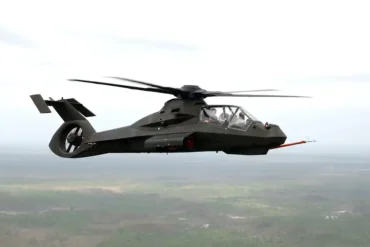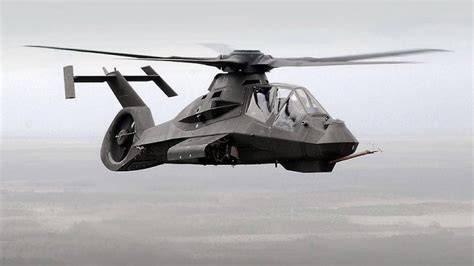
The RAH-66 Comanche was conceived in the late 1980s as a stealth-capable reconnaissance and attack helicopter for the U.S. Army, a joint venture between Boeing and Sikorsky that promised to redefine low-observable rotary-wing flight. Its angular, faceted airframe echoed the geometry of early stealth aircraft like the F-117 Nighthawk, while its mission profile demanded speed, agility, and survivability in equal measure. The program ultimately collapsed in 2004 without delivering a production helicopter, but the prototypes flown during testing revealed an aircraft of remarkable performance — and its top speed remains one of the most compelling figures in modern military aviation history.
The original program requirement called for a maximum speed of more than 170 knots, roughly 195 miles per hour. That threshold alone would have placed the Comanche among the faster scout helicopters ever fielded. Yet during flight testing, the aircraft exceeded expectations, reaching speeds of 200 knots — over 230 miles per hour. For a machine with a maximum weight of just 12,813 pounds, that figure was extraordinary, made possible by two Rolls-Royce/Honeywell turboshaft engines producing approximately 2,800 horsepower.
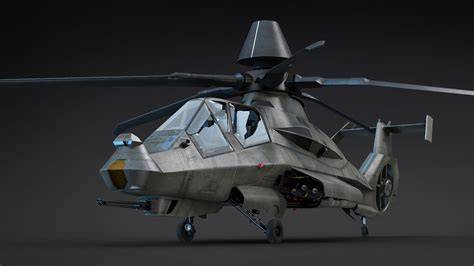
That power-to-weight ratio explains much of the Comanche’s celebrated handling. The aircraft carried state-of-the-art fly-by-wire controls, a rarity for helicopters of its era, giving pilots unprecedented precision and responsiveness. Lt. Gen. Richard Cody, the Army’s deputy Chief of Staff, described it as “the most flexible, most agile aircraft that we have produced in this country.” The Sikorsky Archive, an organization devoted to documenting the legacy of founder Igor Sikorsky, likewise records the Comanche as a genuine joy to fly — a testament to how far its design had advanced beyond contemporary rotorcraft.
Why the Comanche Was So Fast for Its Size
Context matters when assessing the 200-knot figure. The Bell/Textron AH-1Z attack helicopter, functionally similar but far heavier at a maximum 18,500 pounds, draws a combined 3,600 horsepower from two General Electric engines. The Comanche achieved comparable or superior speed with substantially less thrust, a direct consequence of its lightweight composite structure and aerodynamic refinement. Every element of the airframe — from the shrouded tail rotor to the retractable landing gear and internal weapons bays — was engineered to reduce drag and radar signature simultaneously.
The two Rolls-Royce/Honeywell turbines proved so capable that evolved versions eventually powered the United Kingdom’s Royal Navy Wildcat helicopter. The Wildcat, a larger multi-purpose platform, cruises to a top speed of 160 knots, about 194 miles per hour — respectable, but measurably slower than the Comanche’s demonstrated 200 knots. That lineage underscores the sophistication of the powerplant the Army abandoned.
An Exceptional Aircraft Undone by Cost, Not Capability
Speed, agility, and pilot approval could not rescue the program. The United States Government Accountability Office issued repeated findings on the Comanche’s delayed schedule and significant cost overruns, and the effort stretched from the late 1980s to 2004 without producing an operational helicopter. The aircraft was simply too expensive across too many years, and the Army redirected its funding toward sustainment and modernization of existing fleets.
The RAH-66 Comanche therefore stands as a paradox: a helicopter fast enough to outrun its contemporaries, nimble enough to earn the admiration of generals, and advanced enough to seed technology that still flies today — canceled not because it failed, but because it cost too much for too long. Its 200-knot top speed remains the definitive answer to what America’s stealth scout could do, and a reminder of what might have been.