The dream of a supersonic propeller-driven aircraft is one of aviation’s enduring paradoxes. In theory, it seems achievable: build a powerful engine, attach high-performance blades, and push the limits. But in practice, blade tip speed becomes a relentless obstacle — not due to lack of ambition or innovation, but because of the immutable laws of physics. As a propeller nears transonic or supersonic speeds, the efficiency, stability, and practicality of the design begin to collapse. This article dives deep into the core reasons why blade tip speed hinders the top speed of propeller planes, revealing how engineering, aerodynamics, and raw physical forces converge to draw a hard line in the sky.
The Aerodynamic Challenge of Blade Tip Speed
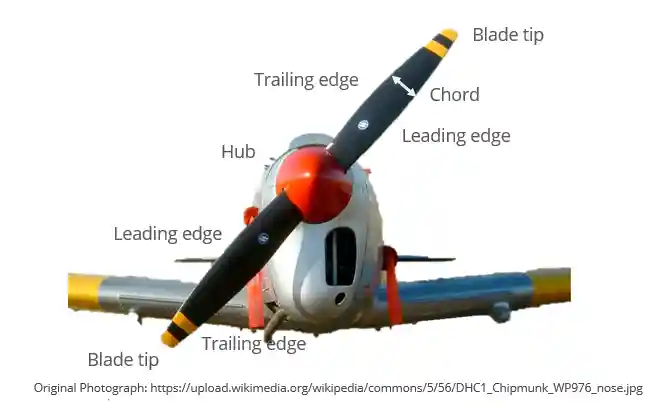
At the heart of every propeller-driven aircraft is a rotating wing — a blade engineered to generate thrust by slicing through air in a helical pattern. These blades operate much like wings on a conventional aircraft, relying on pressure differentials above and below their surfaces to generate lift — or in this case, forward thrust. But unlike a fixed wing, the tip of the propeller blade moves far faster than its root, due to its greater distance from the rotational center.
As the rotational speed increases, so does the linear velocity at the tip of the blade. Once the blade tips approach Mach 0.8 and beyond, they enter the transonic regime, where the air behaves in dramatically different ways. Air becomes compressible, shockwaves begin to form, and the airflow over the blade surface destabilizes. Efficiency plummets as drag skyrockets.
This is not a hypothetical scenario. It’s a hard limit defined by the relationship:
Tip Speed = Rotational Speed (RPM) × Radius of Blade × 2π / 60
Any increase in RPM or blade length brings the tip closer to Mach 1 — the speed of sound. And once that barrier is crossed, shockwave formation and airflow separation create losses in lift and increases in drag that conventional blade shapes cannot overcome.
The Mechanical Limits: Structural Stress and Momentum
The first and most straightforward reason why blade tip speed is limited is the enormous stress exerted by momentum. As the blade spins, centrifugal forces attempt to tear it apart. The stress is proportional to the square of the angular velocity, and even modern composite materials struggle under the strain beyond a certain point.
With increasing tip speeds, the centrifugal forces become so severe that blades risk deformation or catastrophic failure. Engineers have pushed these limits in experimental programs, but the trade-offs in durability and safety make such designs unfeasible for operational aircraft.
Even small increases in RPM create exponential increases in stress, leading to a practical ceiling that propeller designers cannot breach without sacrificing reliability or structural integrity.
Transonic Instability and Blade Geometry Breakdown
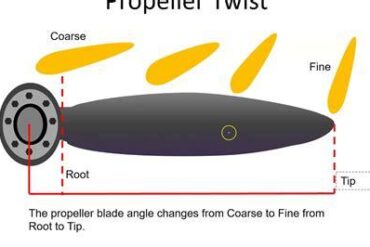
Once we move past basic stress limits, the aerodynamic effects become even more problematic. A propeller blade is not a simple flat surface; it is a carefully engineered airfoil that varies in pitch and thickness from root to tip. This design assumes a relatively linear flow of air around each section of the blade. But when parts of the blade — particularly the tip — enter transonic speeds, this assumption collapses.
Air begins to compress unevenly, creating shockwaves and turbulent eddies that disturb the smooth airflow. The pressure distribution across the blade surface becomes unstable, leading to reduced thrust and a higher likelihood of stall. Variable-pitch propellers attempt to compensate for changing airflow conditions, but even these have limits.
The result is a situation where the very geometry that makes a propeller efficient at low or moderate speeds becomes inefficient or unstable at high speeds. Instead of cutting through the air cleanly, the blade begins to push compressible air pockets that fight back — robbing the aircraft of the very thrust it seeks.
The Case of the Tupolev Tu-95: A Propeller Speed Record
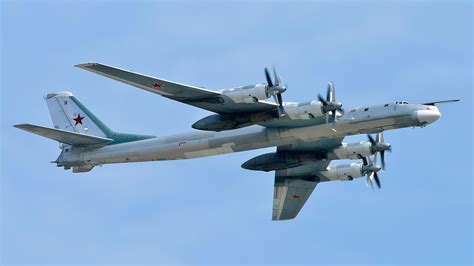
One of the only successful examples of a propeller aircraft that regularly operates with transonic blade tips is the Tupolev Tu-95 “Bear”, a Cold War-era Soviet strategic bomber. Its massive contra-rotating propellers — eight in total — spin at a relatively slow 750 RPM, but the blade diameter is so large that the tips still break the sound barrier at Mach 1.08.
The key to the Tu-95’s success lies in the use of contra-rotating propellers, where two propellers on the same axis spin in opposite directions. This configuration reduces the rotational energy loss (known as swirl) and increases thrust efficiency by roughly 15% over traditional single-rotation setups.
But this solution comes at a cost. The Tu-95 is notorious for its deafening noise, both inside and outside the aircraft. Pilots and ground crews alike require hearing protection, and its distinctive acoustic signature can be detected from great distances — a major drawback in modern stealth-conscious warfare.
The Thunderscreech: When Small and Fast Goes Wrong
If large, slow-turning propellers suffer from efficiency loss due to tip speed, what about small, ultra-fast ones? This approach was explored in the form of the Republic XF-84H “Thunderscreech,” a postwar experimental aircraft designed by the United States.
The XF-84H used a turbo-propeller engine capable of rotating its short, stiff blades at extremely high speeds. But this created a situation where a significant portion of the blade — not just the tip — went supersonic. The result was an acoustic and aerodynamic disaster.
The plane emitted a continuous barrage of sonic booms, upwards of 900 per second, which made it the loudest aircraft ever built. Ground crews experienced physical illness, seizures, and temporary incapacitation from the overwhelming noise. In addition, the aircraft’s torque was so severe that it became nearly uncontrollable during flight tests.
Despite the advanced materials and engineering effort, the XF-84H demonstrated that supersonic propellers generate unacceptable side effects: extreme torque, intolerable noise, and overall mechanical instability. The aircraft never saw production and remains a stark warning about the limits of propeller technology.
The Physical Wall: Propeller Efficiency vs. Speed
At the core of the propeller’s performance envelope is the efficiency curve — a measurement of how well it converts engine power into useful thrust. This curve peaks at moderate speeds and falls sharply as tip velocity increases.
This decline is due to a combination of factors:
- Drag increase due to compressibility effects
- Shockwave formation at blade tips
- Unstable pressure contours and flow separation
- Structural limits of materials at high RPMs
In short, as speed increases, propellers become less able to “bite” into the air. Their advantage — excellent low-speed efficiency and short takeoff capabilities — becomes a liability at high velocity.
It’s no surprise, then, that jet engines replaced propellers for high-speed flight. Jets compress air internally, bypassing the issues of blade tip speed entirely. Propellers still dominate in turboprops, STOL (short takeoff and landing) aircraft, and in missions where fuel efficiency and runway flexibility matter more than raw speed.
Conclusion: Physics Over Ambition
The limitations of blade tip speed are not artifacts of outdated design — they are fundamental truths of aerodynamics and materials science. From shockwaves and airflow disruption to catastrophic mechanical stress and unbearable noise, propellers are inherently unsuited to supersonic flight.
The boundary between subsonic and supersonic aircraft isn’t just a line on a speedometer; it’s a wall of physics that demands entirely different propulsion solutions. While engineers have danced at the edge of this frontier with designs like the Tu-95 and the XF-84H, the lessons learned have been clear:
Propellers are best where speed is not the primary goal. And beyond a certain velocity, the sky no longer welcomes their spin.