Modern jetliners rarely rush. Before the thunderous acceleration that pins passengers to their seats, there is a brief, deliberate pause at the runway threshold. Engines hum, tones deepen, vibrations settle. This is not hesitation. It is spooling up, one of aviation’s most precise and quietly critical rituals, where physics, engineering, and human judgment align before flight commits to the sky.
Spooling up is easy to miss from the cabin, yet it is fundamental to how jet aircraft achieve smooth, symmetrical, and safe takeoff thrust. What looks like a simple advance of the throttles is, in reality, a carefully managed transition through airflow regimes, temperatures, pressures, and rotational inertia. Jet engines are not light switches. They are vast rotating systems that must be brought into harmony before being asked for everything.
Understanding why pilots spool engines before takeoff requires stepping inside the engine itself, where air behaves like a disciplined river—until it doesn’t—and where milliseconds of imbalance can ripple into serious control challenges. This moment on the runway is where restraint becomes strength.
How Jet Engines Generate Thrust: Momentum in Motion
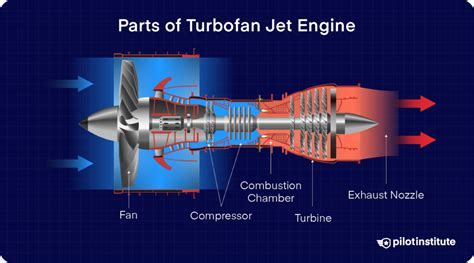
Every jet engine, from the earliest turbojets to today’s high-bypass turbofans, obeys Newton’s Third Law: push air backward, and the aircraft moves forward. That simplicity hides extraordinary complexity. Air is drawn in, compressed through multiple stages, mixed with fuel, ignited in a continuous burn, and expelled at high velocity through the exhaust. The faster and more massive the rearward airflow, the greater the forward thrust.
Inside the engine, large rotating assemblies—called spools—carry compressors and turbines. These spools have enormous inertia. Accelerating them instantly would be like asking a freight train to sprint. Instead, engines respond progressively to throttle input, increasing fuel flow, airflow, and rotational speed in a controlled sequence that preserves stability.
Unlike piston engines, jet engines depend on smooth, uninterrupted airflow. Any sudden disruption can destabilize the compressor stages, reducing efficiency or triggering dangerous phenomena. Spooling up exists to shepherd airflow safely through this transition from idle to high power, ensuring the engine remains aerodynamically well-behaved as it awakens.
Turbojet vs Turbofan: Why Modern Airliners Need Patience
Early turbojets produced thrust almost entirely from exhaust velocity. Modern airliners, however, rely on turbofan engines, where most thrust comes from a massive front fan moving large volumes of air at relatively lower speeds. This design is quieter, more fuel-efficient, and ideal for subsonic transport—but it adds rotational mass.
High-bypass turbofans like the CFM LEAP, Pratt & Whitney GTF, or Rolls-Royce Trent families contain multiple concentric spools, each accelerating at different rates. Coordinating them requires finesse. Spooling up allows these rotating systems to align their speeds gradually, preventing internal stress and airflow mismatch.
This is why modern jets sound as though they are “thinking” before rolling. They are. The engine control system and the pilots are negotiating a smooth ascent through power settings, ensuring that the fan, compressors, and turbines all agree on what happens next.
What “Spooling Up” Really Means in the Cockpit
In practical terms, spooling up means advancing the throttles to an intermediate power setting—often around 40–50% N1—before applying full takeoff thrust. Pilots pause briefly at this setting. During that pause, the engines stabilize, sensors verify normal behavior, and both engines are matched.
This is the aviation equivalent of aligning gears before acceleration. Temperatures settle. Fuel flow becomes predictable. Vibrations reveal whether anything is amiss. Only once both engines demonstrate stable, symmetric performance do pilots advance to takeoff power or engage autothrottle modes.
This pause is not about warming up. Jet engines do not need idling warm-ups like car engines. It is about synchronization and confirmation, the last checkpoint before commitment.
Preventing Thrust Asymmetry When Control Is Weakest
During the early takeoff roll, aircraft move slowly. Aerodynamic control surfaces—especially the rudder—are not yet fully effective. At this moment, thrust asymmetry is most dangerous.
If one engine produces more thrust than the other, the aircraft yaws toward the weaker side. On a narrow runway, even a brief imbalance can pull the aircraft off the centerline. Correcting it requires rudder authority that simply does not exist at low speed.
Jet engines do not spool identically. Slight differences in temperature, mechanical friction, airflow, or fuel delivery mean one engine may respond faster than the other. By spooling up gradually and holding, pilots allow both engines to reach matched rotational speeds before maximum thrust is demanded.
This reduces lateral forces, preserves directional control, and keeps the aircraft tracking straight when it is most vulnerable.
Why Instant Throttle Movements Are Dangerous for Compressors
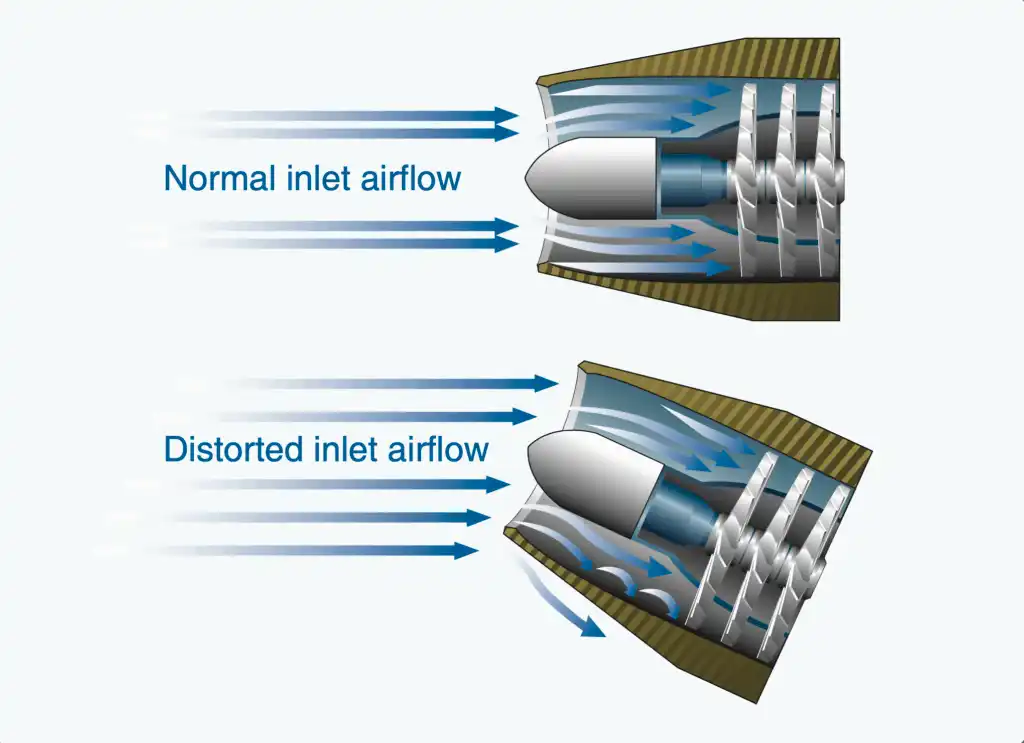
Inside a jet engine, air must strike compressor blades at precise angles. Sudden throttle movements can change airflow velocity faster than the blades can accommodate, causing flow separation. When this happens, the compressor cannot build pressure effectively.
A compressor stall occurs when airflow breaks down locally, leading to vibration, rumbling noises, or brief thrust loss. A compressor surge is more severe: airflow reverses direction, producing loud bangs, pressure shockwaves, and sometimes visible flames at the intake or exhaust.
Gradual spooling prevents these events by maintaining stable pressure ratios across compressor stages. The engine remains aerodynamically calm, even as power increases rapidly. This stability is essential during takeoff, when the aircraft depends entirely on engine reliability.
Thermal Management: Letting Metal Keep Its Shape
Jet engines operate at extreme temperatures. Turbine blades glow at conditions that would melt ordinary metals, protected only by advanced alloys and cooling airflow. Rapid temperature changes introduce thermal stress, causing uneven expansion.
Spooling up allows engine components to heat evenly. Shafts remain aligned. Bearings remain lubricated. Clearances between rotating and stationary parts stay within design limits. Sudden power application would challenge these tolerances, accelerating wear or risking damage.
Modern engines are robust, but they are also precise. Respecting their thermal rhythm improves reliability, longevity, and performance consistency over thousands of cycles.
Engine Instrument Cross-Checks Before Commitment
That brief pause during spool-up is the last chance to say no. Pilots monitor Exhaust Gas Temperature (EGT), fuel flow, vibration levels, oil pressure, and spool speeds. Any abnormality at this stage is grounds for rejecting the takeoff while stopping distance is still available.
Once full thrust is applied and the aircraft accelerates past decision speeds, options narrow. Spooling up is therefore a decision gateway, not merely a mechanical courtesy. It transforms raw data into confidence.
Human Factors: Giving the Crew Time to Feel the Airplane
Pilots do not fly by instruments alone. Subtle cues—vibration through the pedals, sound harmonics, yaw tendencies—are part of situational awareness. Spooling up gives crews a moment to sense whether the aircraft feels right.
This human feedback loop is vital. Automation assists, but judgment remains central. That short pause aligns the machine with the people responsible for it.
Does Autothrottle Change the Need to Spool Up?
Even with advanced FADEC (Full Authority Digital Engine Control) systems and autothrottles, spooling up remains standard. Automation manages fuel flow and protects the engine, but it cannot alter physics.
Pilots still advance thrust smoothly or command takeoff power from a stabilized baseline. The ritual persists because the underlying risks persist. Technology refines the process; it does not erase the need for it.
Do Turboprops Spool Up Too? Absolutely
Turboprop aircraft, though quieter and slower, rely on the same gas turbine principles. The turbine accelerates first, driving the propeller through a reduction gearbox. Spooling up ensures that torque, propeller RPM, and turbine temperature rise together.
In multi-engine turboprops, asymmetric torque can yaw the aircraft just as dangerously as thrust asymmetry in jets. Gradual power application aligns engines, protects gearboxes, and keeps control forces manageable.
Why Passengers Sometimes Feel a Pause Before Acceleration
That moment of stillness on the runway is not indecision. It is the aircraft listening to itself. Engines stabilize. Computers agree. Pilots confirm. Only then does the aircraft surge forward with confidence.
The pause exists so that acceleration can be decisive, not tentative.
Spooling Up as a Philosophy of Flight
Aviation is a discipline that values margins. Spooling up embodies that philosophy. It acknowledges that complex systems behave best when transitions are managed, not rushed. It respects airflow, metal, temperature, and human perception.
Every safe takeoff begins with restraint. Power is earned, not demanded.
The Takeaway: Precision Before Power
Pilots spool up jet engines before takeoff because control matters most before speed exists. They do it to synchronize thrust, protect compressors, manage heat, verify performance, and maintain directional authority when aerodynamic help is minimal.
It is not a habit. It is an engineered pause, a moment where physics is given the respect it demands. In that quiet buildup lies the difference between raw force and controlled flight, between motion and mastery.