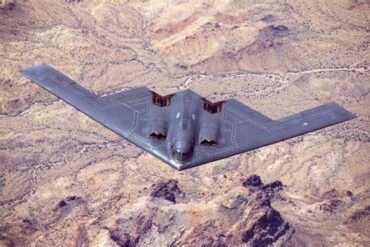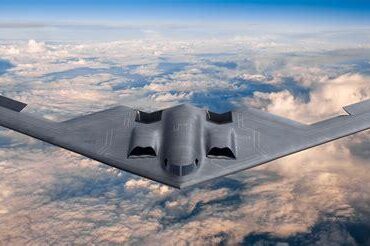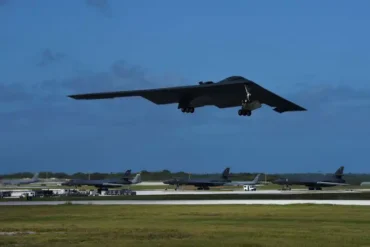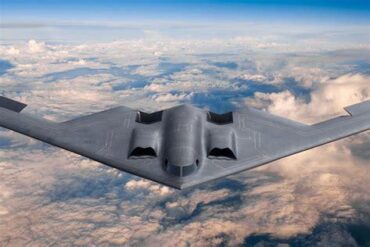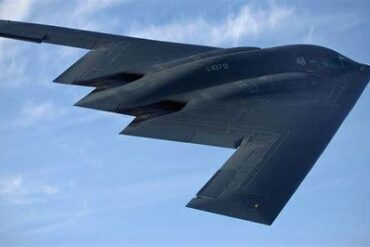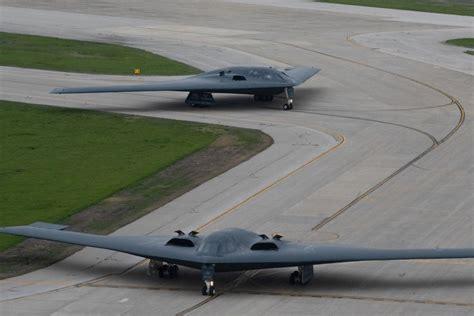
The B-2 Spirit stealth bomber is one of the most recognizable aircraft ever created. Its smooth, triangular silhouette gliding silently across the sky looks less like a traditional airplane and more like a fragment of futuristic engineering pulled straight from science fiction. There is no visible tail, no protruding fuselage, and none of the structural features that typically define large aircraft. Instead, the B-2 appears astonishingly flat — a wide, seamless wing with a cockpit blended into its center.
That unusual architecture was not created for visual drama. Every contour of the B-2 was shaped by stealth physics, aerodynamic efficiency, and strategic military doctrine. Engineers at Northrop Grumman, building on decades of experimental flying-wing research, realized that eliminating unnecessary vertical structures and blending the entire aircraft into a single lifting body could drastically reduce its radar visibility. The result was a bomber capable of penetrating some of the most heavily defended airspace in the world.
The aircraft’s “flatness” therefore reflects a deeper engineering philosophy: remove surfaces that reflect radar, distribute lift across the entire structure, and hide critical components within the wing itself. This design required revolutionary advances in materials science, computer-controlled flight systems, and aerodynamic modeling, turning what once seemed like an impractical concept into one of the most advanced strategic bombers ever produced.
Understanding why the B-2 Spirit looks the way it does requires a journey through the history of flying-wing aircraft, stealth technology, and modern computational aerodynamics. The aircraft represents the convergence of ideas that began nearly a century ago and matured into a weapon system capable of redefining aerial warfare.
The Origins of the Flying Wing Concept
Long before stealth bombers entered military service, engineers were fascinated by the possibility of building aircraft without traditional fuselages or tails. The concept of a flying wing emerged during the early twentieth century as researchers began questioning whether conventional aircraft structures were truly necessary.
Most traditional airplanes follow a tube-and-wing architecture. A cylindrical fuselage houses passengers or cargo, wings generate lift, and a tail assembly provides stability and control. While this design works well, it includes several components that do not contribute directly to lift. The fuselage produces drag, and the tail primarily exists to maintain stability rather than generate useful aerodynamic force.
Flying-wing advocates believed that removing these elements could create a more efficient aircraft. By distributing lift across the entire structure, a flying wing could theoretically achieve a much higher lift-to-drag ratio, meaning it could travel farther using less fuel.
One of the earliest pioneers of this idea was Jack Northrop, an American aerospace engineer who spent much of his career exploring radical aircraft configurations.
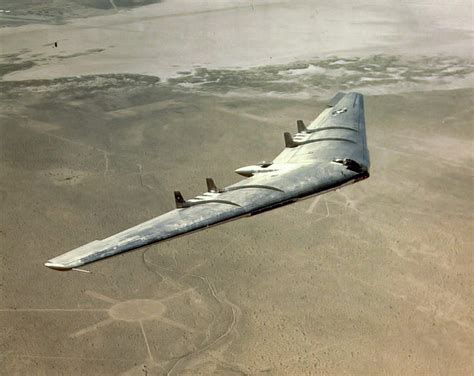
During the 1940s, Northrop developed the YB-49 Flying Wing bomber, an experimental aircraft that looked remarkably similar to the B-2 decades later. The YB-49 eliminated the conventional fuselage and tail entirely, creating a smooth wing that carried engines, crew, and weapons within its structure.
Although the aircraft demonstrated impressive aerodynamic efficiency, it also revealed a major challenge. Without a vertical tail, the aircraft lacked natural yaw stability, making it difficult to control. Pilots often struggled to maintain stable flight, especially in turbulent conditions.
At the time, the necessary technology to stabilize such aircraft simply did not exist. Mechanical flight controls were not capable of making the constant micro-adjustments required to keep a tailless aircraft stable. As a result, flying-wing projects were largely abandoned for several decades.
Yet the concept never truly disappeared. Engineers understood that if the stability problem could be solved, the flying wing might represent the most efficient aircraft configuration ever developed.
World War II Experiments and Early Stealth Clues
While Northrop pursued flying-wing experiments in the United States, engineers in Germany were exploring similar ideas during World War II. One of the most remarkable projects was the Horten Ho 229, a jet-powered flying wing designed to meet demanding Luftwaffe performance requirements.
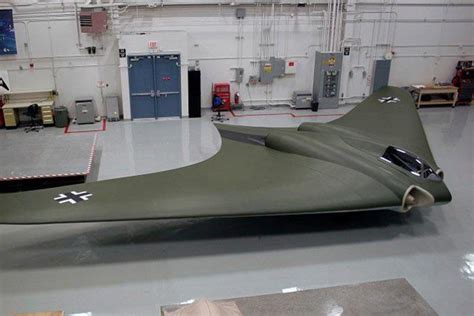
The Ho 229 incorporated two jet engines embedded within its wing structure and eliminated the traditional tail entirely. Its shape was primarily intended to improve aerodynamic efficiency and speed, but modern analyses have revealed an intriguing side effect: the aircraft may have had a reduced radar signature compared to conventional designs.
Radar technology was still in its infancy during the 1940s, and stealth was not yet a formal design goal. However, the Ho 229 demonstrated how eliminating vertical surfaces and external structures could naturally reduce radar reflections.
Only a few prototypes were built before the war ended, but the aircraft left a lasting impression on aviation researchers. Both American and Soviet engineers studied captured designs, recognizing that the flying-wing configuration held enormous potential if its stability issues could be solved.
Why the B-2 Spirit Needed a Flat Architecture
Decades later, the Cold War introduced a new strategic challenge. Air defense systems had become far more sophisticated, using powerful radar networks and surface-to-air missiles to detect and intercept incoming bombers.
Traditional strategies relied on speed, altitude, or large formations of aircraft to overwhelm defenses. By the 1970s, those approaches were becoming increasingly dangerous. Modern missile systems could track high-altitude targets and engage them from long distances.
The U.S. Air Force began exploring a different solution: stealth technology.
Stealth design attempts to make an aircraft extremely difficult for radar systems to detect. The effectiveness of radar detection depends heavily on an aircraft’s radar cross section (RCS) — essentially how much radar energy the aircraft reflects back to the transmitter.
Large bombers typically have a substantial radar cross section because their fuselages, tails, and engine intakes reflect radar waves strongly. Engineers realized that dramatically reducing these reflections could allow an aircraft to slip through air defenses with minimal detection.
The flying-wing configuration provided a perfect starting point.
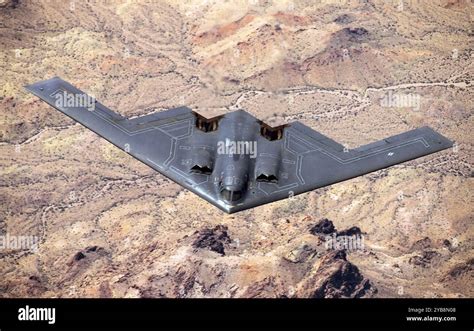
By eliminating the vertical tail and blending the fuselage into the wing, the B-2 Spirit removed many of the surfaces that typically reflect radar energy. Instead of sharp corners or perpendicular angles, the aircraft features smooth curves and carefully aligned edges designed to deflect radar waves away from their source.
From many radar angles, the B-2 behaves like a flat plate, scattering electromagnetic energy rather than reflecting it directly back to the radar receiver.
The result is a radar signature that is astonishingly small for such a large aircraft — often compared to the radar return of a small bird.
Radar Cross Section and Shape Engineering
To understand why the B-2 must appear flat, it helps to imagine radar waves behaving like beams of light. When light strikes a mirror, it reflects back toward its source. Radar waves behave similarly when they encounter flat, perpendicular surfaces.
Traditional aircraft contain numerous features that act like mirrors:
- Vertical tails
- Cylindrical fuselages
- Engine compressor faces
- Sharp structural intersections
Each of these surfaces can reflect radar waves directly back toward the radar system.
The B-2 Spirit’s architecture avoids this problem through careful geometric design. Engineers aligned the aircraft’s edges and surfaces so that radar energy is redirected sideways rather than back toward the emitter.
This approach represents a major evolution from earlier stealth aircraft such as the F-117 Nighthawk, which used sharply angled facets to control radar reflections. When the B-2 was designed in the 1980s, advances in computer modeling allowed engineers to create smooth aerodynamic curves that achieved the same radar-scattering effect with far better flight performance.
The flat, flowing surfaces of the B-2 therefore serve two purposes simultaneously: reducing radar visibility and maintaining efficient aerodynamics.
Hidden Engines and Infrared Signature Reduction
Radar stealth alone is not enough for a penetrating bomber. Modern air defense systems also rely on infrared sensors, which detect the heat produced by aircraft engines.
To address this challenge, the B-2 integrates its engines deep within the wing structure. Four General Electric F118 turbofan engines are buried inside the aircraft and connected to external air inlets through S-shaped ducts.
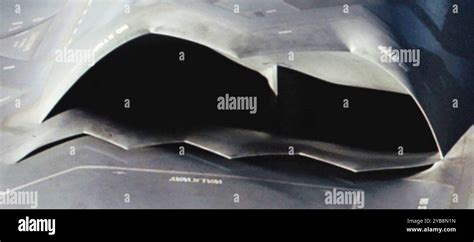
These curved ducts prevent radar waves from reaching the engine compressor blades, which are normally one of the strongest radar reflectors on any aircraft.
The aircraft’s exhaust system also reduces infrared emissions. Hot exhaust gases are mixed with cooler air and expelled across a wide, flattened outlet, reducing the thermal signature visible to infrared sensors.
Combined with radar-absorbent materials (RAM) covering the aircraft’s surface, these design elements create a multi-layered stealth strategy that makes the B-2 extremely difficult to detect.
Aerodynamic Efficiency of the Flying Wing
Although stealth drove the B-2’s overall architecture, the flying-wing configuration also offers significant aerodynamic advantages.
Because the aircraft lacks a separate fuselage or tail, nearly the entire structure contributes to producing lift. This improves the lift-to-drag ratio, a key measure of aerodynamic efficiency.
For a long-range strategic bomber, this efficiency translates into several operational benefits:
- Greater flight range
- Improved fuel efficiency
- Reduced need for mid-air refueling
- Longer loiter time over target areas
The smooth blending of the aircraft’s surfaces also reduces parasitic drag, which is created by airflow disturbances around protruding components.
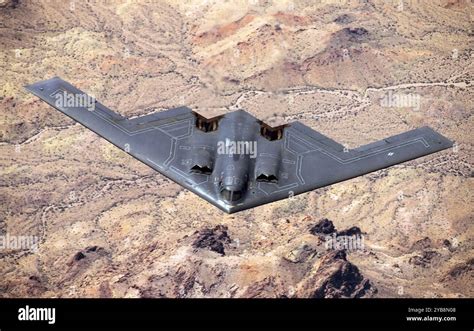
As a result, the B-2 can travel enormous distances despite its relatively modest cruising speed. Missions exceeding 10,000 miles are possible with aerial refueling, allowing the bomber to strike targets anywhere on the planet.
The aircraft also carries all of its weapons internally. External weapons pylons would dramatically increase radar visibility and aerodynamic drag, so the B-2 stores up to 40,000 pounds of ordnance inside concealed weapons bays within the wing.
Digital Flight Controls That Stabilize the Flying Wing
The aerodynamic elegance of the flying-wing design comes with a serious drawback: natural instability.
Traditional aircraft rely on vertical and horizontal tails to maintain stability in yaw and pitch. Without those surfaces, a flying wing tends to wander or oscillate unpredictably.
The B-2 solves this problem using a highly advanced fly-by-wire flight control system.
Instead of mechanical control linkages, the pilot’s inputs are interpreted by onboard computers that continuously adjust the aircraft’s control surfaces. These systems make hundreds of tiny corrections every second to maintain stable flight.
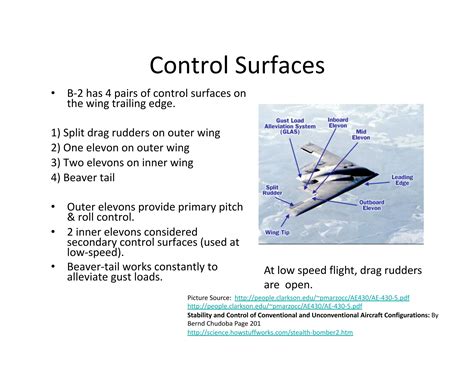
Key control mechanisms include:
- Elevons, which combine the functions of elevators and ailerons
- Split drag rudders near the wingtips that provide yaw control
- Quadruple-redundant flight computers that ensure reliability
Without these digital systems, the B-2 would be extremely difficult for a human pilot to control. Computers effectively act as an invisible tail, constantly stabilizing the aircraft while allowing it to retain its stealth-optimized shape.
Engineering a Bomber Inside a Wing
Designing an aircraft that is essentially a single wing created enormous engineering challenges. Every critical system had to fit inside a structure that was both aerodynamically smooth and stealth-optimized.
The B-2’s thick central wing section contains an astonishing amount of internal equipment. Engineers had to carefully integrate:
- Fuel tanks distributed across the wing
- Two large internal weapons bays
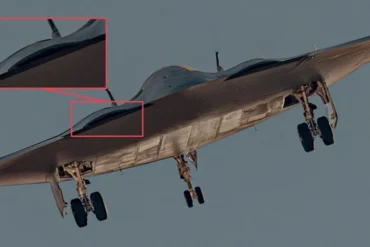
- Landing gear assemblies
- Avionics systems and sensors
- Crew compartments and life-support equipment
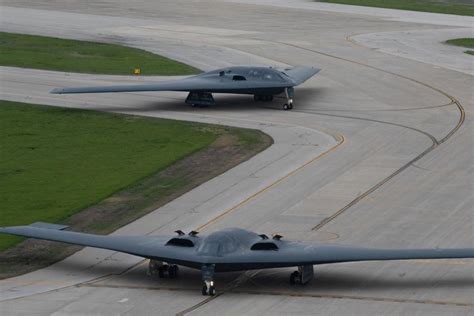
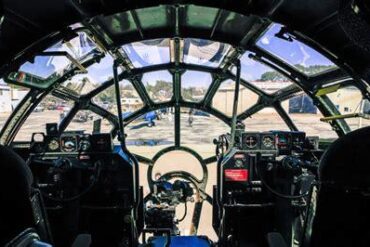
The cockpit itself sits within a slightly raised section of the wing’s centerline, providing pilots with forward visibility while maintaining the aircraft’s stealth profile.
Because the aircraft relies heavily on radar-absorbent materials, maintenance is particularly demanding. Specialized coatings must remain in perfect condition to preserve the bomber’s stealth characteristics, requiring careful inspections and repairs after many missions.
This complexity contributes to the B-2’s reputation as one of the most technologically sophisticated — and expensive — aircraft ever built.
The Future of Flying Wing Stealth Bombers
The architectural philosophy pioneered by the B-2 continues to influence modern aircraft design. Its successor, the Northrop Grumman B-21 Raider, retains the flying-wing concept while incorporating several decades of technological improvements.
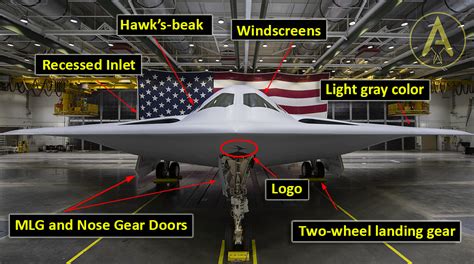
The B-21 is expected to feature even smoother surfaces, more advanced radar-absorbent materials, and improved electronic warfare systems. Although smaller than the B-2, it is designed to operate effectively against the sophisticated air defenses of the twenty-first century.
Beyond manned bombers, the flying-wing configuration is increasingly common in stealth drones and unmanned combat aircraft. Without the need for cockpits or life-support systems, unmanned aircraft can achieve even cleaner aerodynamic shapes, further reducing radar signatures.
Projects such as the Northrop Grumman X-47B and the BAE Systems Taranis demonstrate how the flying-wing architecture continues to evolve.
These aircraft represent the next stage in a design philosophy that began nearly a century ago — the pursuit of an aircraft that merges aerodynamic efficiency with near invisibility.
Conclusion: Flatness as a Product of Physics and Strategy
The distinctive flat architecture of the B-2 Spirit bomber is the result of a remarkable convergence of aerodynamic science, stealth technology, and computational engineering. What appears at first glance to be a futuristic shape is actually a carefully calculated solution to a complex problem: how to deliver strategic payloads deep inside defended airspace without being detected.
By eliminating vertical structures, blending the fuselage into a continuous wing, and integrating engines and weapons internally, the B-2 achieves one of the smallest radar signatures ever recorded for a large aircraft. At the same time, the flying-wing design improves aerodynamic efficiency, allowing the bomber to perform extremely long-range missions.
Equally important are the digital systems that make the design possible. Without computer-controlled flight stabilization, the B-2’s tailless configuration would be nearly impossible to fly safely.
The aircraft therefore represents more than just a stealth bomber. It is the culmination of decades of aerospace experimentation — a machine that combines early twentieth-century flying-wing theories with the computational power of modern engineering.
Its legacy is already shaping the next generation of stealth aircraft. From the B-21 Raider to emerging autonomous combat drones, the principles behind the B-2’s flat architecture continue to guide designers seeking the ultimate combination of efficiency, survivability, and technological sophistication.