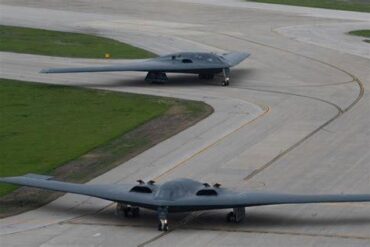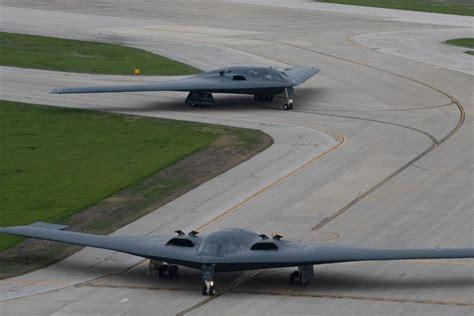
The B-2 Spirit bomber is not merely an aircraft—it is a calculated disappearance act engineered at the intersection of physics, material science, and tactical brilliance. Its iconic flat, flying-wing architecture is often mistaken for simplicity, yet beneath that smooth, continuous surface lies one of the most sophisticated stealth ecosystems ever built. Every curve, every coating layer, and every pilot decision contributes to a singular objective: remain unseen, or at worst, untrackable.
Unlike conventional bombers that rely on speed or altitude for survival, the B-2 thrives in contested airspace by exploiting the limitations of radar itself. Its design philosophy rejects brute force in favor of precision invisibility, where even the smallest reflection is treated as a liability. This is not just engineering—it’s strategy embedded into metal and composite.
The real story, however, begins where design meets human decision-making. The aircraft’s flat architecture provides the foundation, but it is the pilot’s understanding of radar behavior, electromagnetic signatures, and real-time threat environments that transforms the B-2 from a stealth platform into a near-mythical presence in the sky.
The Physics Behind Flat Architecture and Radar Deflection
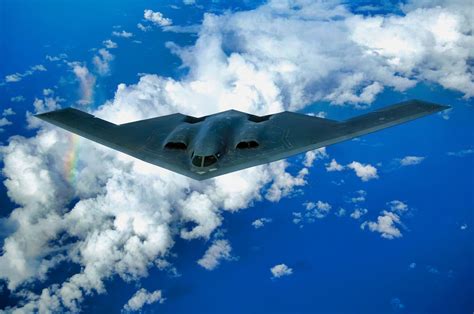
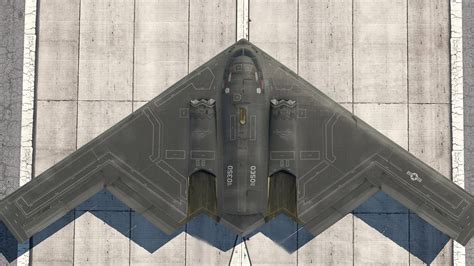
The defining characteristic of the B-2 is its flying wing configuration, a design that eliminates vertical stabilizers and traditional fuselage distinctions. This matters because radar systems rely on detecting reflected electromagnetic waves. Conventional aircraft, with their vertical tails and angular protrusions, act like mirrors bouncing signals back to the source.
The B-2 refuses to play that game.
Instead, its continuous curvature and aligned edges scatter incoming radar waves in controlled directions. The leading and trailing edges are deliberately set at matching angles, ensuring that any reflected energy is dispersed away from the radar receiver rather than back toward it. What little energy remains detectable appears as faint, fragmented spikes—too weak and inconsistent to form a reliable tracking solution.
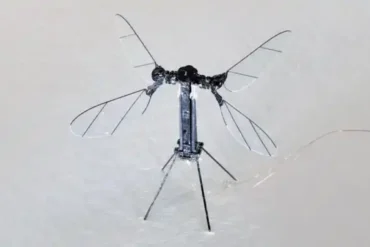
This is where the concept of Radar Cross Section (RCS) becomes crucial. While older bombers like the B-52 reflect radar signals equivalent to a large building, the B-2 reduces its signature to something closer to a honeybee. That’s not poetic exaggeration—it’s a functional reality that forces enemy radar operators to distinguish the bomber from background noise, weather interference, or even birds.
Flat architecture, then, is not about aesthetics. It is about controlling the geometry of invisibility, ensuring that detection systems are always one step behind.
Radar Absorbent Materials: Turning Energy Into Heat
Shaping alone cannot guarantee stealth. Even the most refined geometry still reflects some radar energy. That’s where the B-2’s Radar Absorbent Material (RAM) transforms the equation entirely.
The aircraft’s outer skin is coated with a specialized composite containing carbonyl iron particles, engineered to absorb electromagnetic waves rather than reflect them. When radar signals strike the surface, they are converted into thermal energy, effectively dissipating the signal before it can return to its source.
But the real ingenuity lies in the layered dielectric structure beneath the surface. Each layer is calibrated to gradually transition from air-like properties to denser materials, creating a trap for incoming waves. As radar energy penetrates deeper, it undergoes destructive interference, where overlapping waveforms cancel each other out.
Even microscopic imperfections can compromise this system. That’s why maintenance crews use conductive fillers—nicknamed “butter”—and precision-applied tapes to eliminate gaps between panels. The thickness of the RAM coating is also meticulously controlled, because even slight deviations can alter how radar frequencies interact with the surface.
This is stealth at the molecular level, where material science becomes a frontline defense system.
Thermal Camouflage: Managing the Invisible Spectrum
Radar isn’t the only threat. Infrared detection systems hunt for heat, and jet engines are essentially glowing beacons in that spectrum. The B-2 addresses this challenge with an equally calculated approach.
Its F118-GE-100 engines are buried deep within the wing, eliminating direct line-of-sight exposure to ground-based sensors. Unlike many military aircraft, these engines lack afterburners, reducing extreme heat spikes that would otherwise make the aircraft easy to track.
Exhaust management is where things get particularly clever. The B-2 uses upper-wing exhaust placement, allowing the aircraft’s own structure to shield thermal emissions. Additionally, V-shaped troughs lined with carbon tiles disperse and cool the exhaust plume rapidly, blending it into the surrounding air.
The result is not complete invisibility—but thermal ambiguity. Sensors may detect something, but not with enough clarity or consistency to generate a reliable lock.
Pilot Tactics: Navigating the Edges of Detection
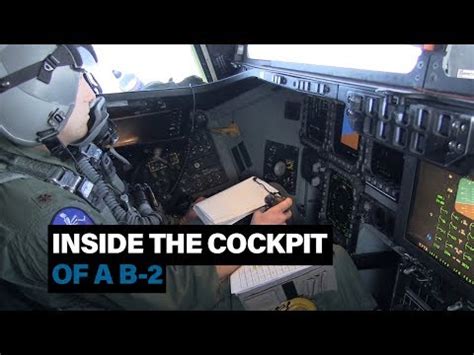
Technology alone doesn’t win the game. The B-2’s pilots operate with a level of situational awareness that borders on orchestration. Inside the cockpit, the Defensive Management System (DMS) acts as a real-time map of the electromagnetic battlefield.
Using a network of sensitive antennas embedded along the wing edges, the system detects radar emissions from hundreds of miles away. This data is translated into a “threat image”, allowing pilots to visualize where enemy radar coverage is strongest—and more importantly, where it isn’t.
Rather than charging directly through defended airspace, pilots weave through gaps in radar coverage, exploiting weak zones where detection probability drops dramatically. This tactic, combined with the aircraft’s low RCS, makes the B-2 appear as nothing more than intermittent noise on enemy screens.
Silence is another weapon. The aircraft typically operates in receive-only mode, avoiding active radar emissions that could reveal its position. Targeting data is received via passive data links, allowing the B-2 to strike without ever announcing its presence.
Electronic Warfare: Creating Ghosts in the Sky
When stealth is no longer enough, the B-2 transitions into active deception. Its electronic warfare systems are designed not just to hide the aircraft, but to confuse and overwhelm enemy sensors.
Highly classified modules, such as the AN/ZSR-62/63, intercept incoming radar signals and manipulate them in real time. By rebroadcasting altered signals with slight delays, the system creates false targets, effectively flooding enemy radar displays with phantom aircraft.
Imagine trying to track a single object when your screen suddenly shows multiple identical echoes, each moving differently. That’s the environment the B-2 creates. Missile guidance systems, relying on radar data, are forced to chase illusions—often missing the real aircraft by miles.
This capability turns the B-2 from a passive stealth platform into an active participant in electronic warfare, capable of reshaping the battlefield’s perception layer.
Head-to-Head: Outsmarting Advanced Air Defense Systems
Consider a theoretical engagement with a system like the S-400 Triumf, one of the most advanced surface-to-air missile platforms in operation. On paper, the S-400 boasts powerful radar systems designed to detect even stealth aircraft.
In practice, the B-2 exploits the system’s limitations.
At long range, the bomber’s tiny radar signature appears indistinguishable from environmental noise. As it approaches, pilots carefully maintain positions near the threshold of radar sensitivity, ensuring that any detection remains too weak to escalate into a tracking solution.
The critical moment occurs when fire-control radar attempts to lock on. Here, pilots use edge alignment tactics, orienting the aircraft so that radar reflections are minimized along the line of sight. This keeps the aircraft outside the “burn-through” zone, where radar power could otherwise overcome stealth features.
If a missile is launched, electronic countermeasures take over—introducing delays, false signals, and decoys that break the guidance chain. Meanwhile, the B-2 often eliminates the threat entirely using standoff weapons, striking from beyond the enemy’s effective range.
The encounter rarely becomes a direct confrontation. Instead, it unfolds as a game of perception, where the B-2 dictates what the enemy sees—and what it never sees at all.
Breaking the Kill Chain: Last-Line Defensive Strategies
In the rare event that detection escalates into engagement, the B-2 relies on a layered defense strategy designed to disrupt every stage of the enemy’s kill chain.
Without guns or air-to-air missiles, survival depends entirely on evasion and deception. The aircraft deploys chaff to confuse radar-guided missiles and flares to mislead infrared seekers. These countermeasures are not used casually—they are timed precisely to maximize their disruptive effect.
More importantly, the B-2 focuses on breaking the tracking lock itself. By interfering with radar signals and altering its flight profile, the aircraft forces enemy systems to lose continuity. Without a stable track, even the most advanced missile becomes ineffective.
This approach reflects a broader philosophy: avoid the fight by making it impossible to fight effectively.
Terrain Masking and Low-Observable Flight Paths
Altitude is often associated with safety in aviation, but the B-2 frequently does the opposite. By flying at low altitudes, it uses the Earth’s natural features—mountains, hills, and terrain—to block radar waves.
This tactic, known as terrain masking, allows the aircraft to remain physically hidden from line-of-sight radar systems. Combined with its already minimal radar signature, this creates layers of invisibility that are difficult to penetrate.
Pilots continuously adjust their routes based on terrain and threat data, effectively turning geography into an extension of the aircraft’s stealth system. It’s a reminder that stealth is not just built—it’s flown.
The Integrated Stealth Ecosystem: Beyond a Single Technology
What makes the B-2 truly exceptional is not any single feature, but the integration of multiple stealth disciplines into a cohesive system. Shape, materials, thermal management, electronic warfare, and pilot tactics all work in harmony to defeat detection.
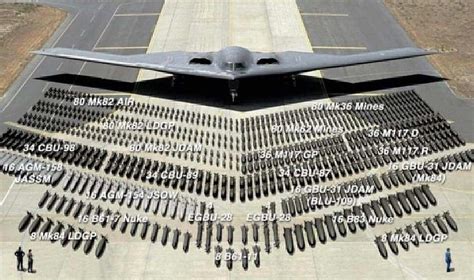
Weapons are stored internally to avoid external reflections. Engine intakes are hidden within S-shaped ducts, preventing radar from reaching reflective compressor blades. Even communication systems are designed to minimize emissions.
This holistic approach ensures that the aircraft remains effective against evolving threats. As radar systems become more advanced, the B-2’s layered defenses continue to adapt, maintaining its edge in contested environments.
The Enduring Dominance of the B-2 Spirit
Decades after its introduction, the B-2 Spirit remains one of the most formidable aircraft ever built. Its rumored successor, the B-21 Raider, may introduce new technologies, but the foundational principles established by the B-2 continue to define modern stealth design.
With a unit cost approaching $2 billion, the aircraft represents a massive investment—not just in hardware, but in knowledge. The breakthroughs achieved in its development have influenced generations of stealth platforms, ensuring its legacy extends far beyond its operational lifespan.
More importantly, the B-2 has redefined what it means to dominate the skies. It doesn’t rely on speed, firepower, or brute force. Instead, it wins by not being seen, not being tracked, and not being stopped.
In a world where detection often equals destruction, the B-2 Spirit remains a quiet contradiction—a machine that proves the most powerful presence is sometimes the one that never appears at all.