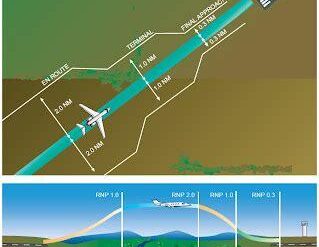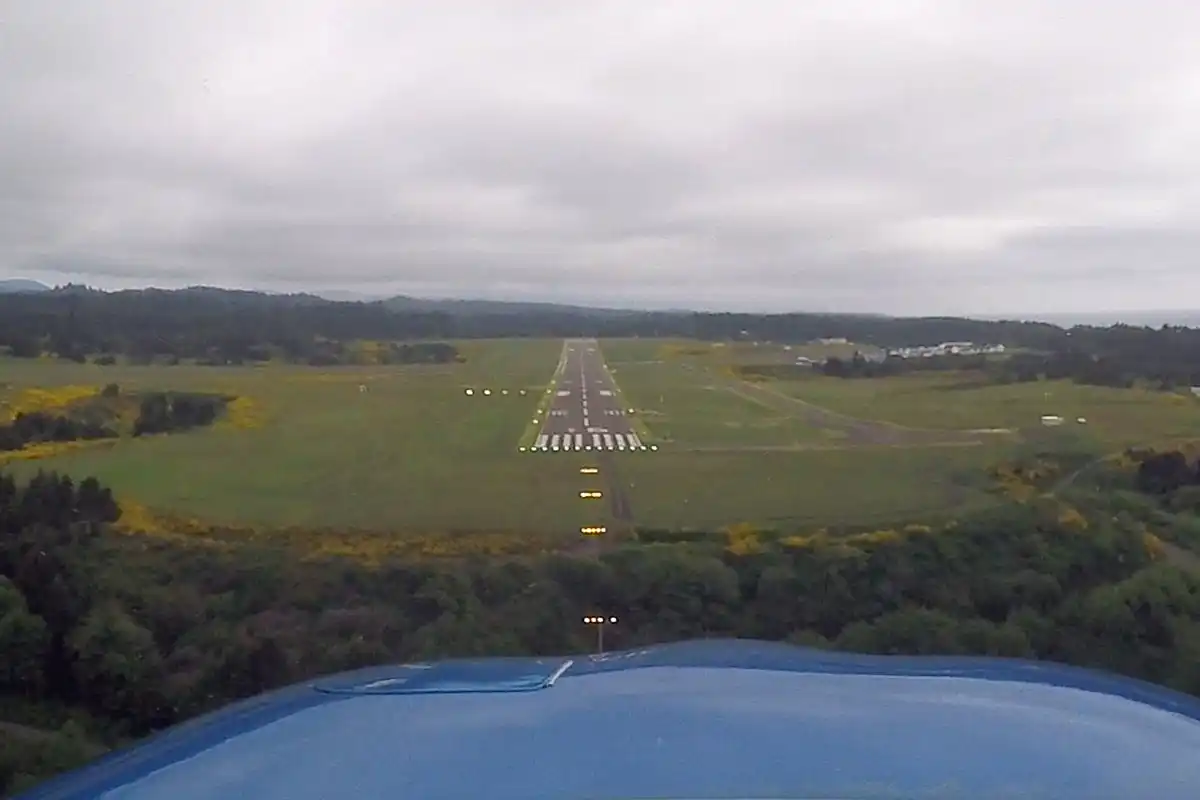
The Simplified Directional Facility (SDF) approach is one of the rarest and most unique procedures in the arsenal of instrument-rated pilots in the United States. While this approach type was once more common, today only one operational SDF approach remains, located at Moore-Murrell Airport (KMOR) in Morristown, Tennessee. This method of navigation, though fading into aviation history, embodies a fascinating chapter in the evolution of instrument flight.
For those who seek to master every nuance of non-precision instrument approaches, understanding the SDF system is essential—not merely as a historical curiosity, but as a testament to the adaptability of IFR procedures.
What Is a Simplified Directional Facility (SDF)?
The SDF approach is conceptually similar to a localizer (LOC) approach, but with several operational and technical differences that require thoughtful pilot interpretation. Most notably, an SDF is never paired with a glideslope, which immediately classifies it as a non-precision approach. Its primary function is to provide lateral guidance, enabling the aircraft to align with the runway during instrument meteorological conditions (IMC).
However, unlike a traditional localizer, the SDF signal is less precise. The course width of an SDF can be either 6 degrees or 12 degrees, compared to the much narrower 3–6 degrees of a localizer. This wider course has implications for off-course sensitivity: a one-dot deflection on an SDF instrument might indicate a deviation twice as far from centerline compared to a LOC.
In terms of runway alignment, an SDF approach is generally within 3 degrees of the runway centerline, although it may not be precisely aligned. Despite this, most SDF approaches still qualify for straight-in landing minimums, as FAA criteria allow up to a 30-degree offset for such classifications.
Why the SDF Exists: Terrain and Engineering Compromise
The installation of an SDF rather than a LOC is often a result of terrain constraints or infrastructure limitations. In mountainous regions or airports where obstructions prevent the alignment of a localizer antenna with the runway centerline, an SDF provides a practical alternative. It enables precision-like lateral navigation where true precision facilities would be infeasible or cost-prohibitive.
The usable course of an SDF spans 35 degrees on either side of the course centerline, offering pilots a broad detection area—but requiring increased vigilance to stay accurately on track. A lapse in situational awareness during an SDF approach can easily result in being significantly off-course by the time visual contact is expected.
SDF Approach Design and Obstacle Clearance Standards
Despite the lack of a vertical guidance component, the SDF approach maintains stringent obstacle clearance standards. The final approach segment ensures a minimum of 250 feet of clearance above terrain and obstacles within the designated approach corridor. This corridor is defined as follows:
- For a 6-degree course, the approach area is 1,000 feet wide at the runway threshold, expanding to a width of 10 nautical miles from the threshold.
- For a 12-degree course, the protected area becomes even broader, although still governed by a descent gradient that must not exceed 400 feet per nautical mile—equivalent to a 4-degree glide path.
These specifications provide ample clearance, but the pilot must account for the reduced precision and increased lateral variability inherent to the approach.
The Last SDF in the U.S.: KMOR Runway 05
As of 2025, Moore-Murrell Airport (KMOR) in Morristown, Tennessee, holds the distinction of hosting the last remaining operational SDF approach in the United States. Following the decommissioning of the SDF to Runway 34 at Marshfield Municipal Airport (KMFI) in 2018, KMOR’s SDF RWY 05 became the sole survivor of this approach type.
Tuned to frequency 109.5 MHz, the SDF at KMOR behaves like a localizer in terms of signal capture and needle movement. For Category A and B aircraft, the straight-in minimums are published at 1,860 feet MSL with 3/4 mile visibility, indicating a relatively forgiving threshold when compared to older non-precision procedures.
Notably, the approach chart includes an equipment advisory: ADF required. The Automatic Direction Finder (ADF) is traditionally used to identify the Initial Approach Fix (IAF), Final Approach Fix (FAF), and Missed Approach Point (MAP)—although modern IFR pilots can utilize a certified GPS-based RNAV system for the same purpose, provided it meets the FAA’s substitution criteria. RNAV cannot be used to substitute the SDF signal itself, but it can support procedural navigation around the approach.
Flying the SDF Approach: Execution and Techniques
Executing an SDF approach closely mirrors the method used for a localizer approach, with important caveats. The key lies in how one interprets the lateral guidance:
- Lateral sensitivity is lower, meaning aircraft deviations are less immediately apparent.
- Needle deflection of just one dot could represent hundreds of feet of off-track movement.
- Because the course might not be precisely aligned with the runway, pilots must mentally visualize or brief the visual segment before entering IMC.
This lack of alignment reinforces the need to thoroughly brief the missed approach procedure, be aware of terrain in the vicinity, and have an exact mental picture of the visual transition from instruments to landing.
Additionally, the absence of vertical guidance requires vigilant monitoring of descent rates. Without a glideslope, descent must be timed and controlled manually using distance information or step-down fixes. Excessive rates can jeopardize obstacle clearance, while insufficient descent can lead to unstable approaches and go-arounds.
The RNAV Alternative and Regulatory Notes
Though ADF receivers are no longer common in general aviation aircraft, pilots today can substitute IFR-certified RNAV equipment to identify navigational points referenced by non-directional beacons (NDBs) or VORs. According to FAA guidance, the pilot may:
- Track a VOR or NDB using RNAV.
- Measure distance to/from a VOR, NDB, or fix.
- Hold over a designated fix using RNAV guidance.
However, one must not substitute RNAV for the SDF signal itself. The FAA maintains this prohibition to ensure signal integrity and maintain standardized pilot expectations regarding lateral course interpretation.
Legacy and Significance of the SDF Approach
The fact that only one SDF approach remains active in the United States highlights the swift technological evolution in instrument procedures. As GPS-based RNAV approaches become standard—offering high precision, vertical guidance, and flexible routing—older systems like SDFs are being retired.
Yet the SDF is not a relic to be dismissed. It embodies the ingenuity of aviation infrastructure, providing reliable approaches in complex environments for decades. Its study and occasional use remind pilots of the value in mastering non-standard procedures, reinforcing adaptability and precision under all conditions.
For the current generation of aviators, the KMOR SDF RWY 05 stands as more than an approach—it is a rite of passage for those who seek to experience the full scope of IFR proficiency.
Conclusion
As modern aviation continues its progression toward satellite-based navigation and fully digital procedures, it is important to reflect on and understand the systems that laid the foundation. The Simplified Directional Facility approach, though nearly extinct, offers deep instructional value. It emphasizes manual precision, interpretive judgment, and non-standard scenario management—skills that define safe and skilled instrument pilots.
Flying the last remaining SDF approach at KMOR is not just an exercise in historical aviation; it is an act of mastery over a complex, fading art.