In the complex choreography of flight, the final approach stands as one of the most critical segments before touchdown. It is here—on the final leg of an aircraft’s arrival—that skill, precision, and timing converge in real-time as pilots guide their aircraft through the last descent, aligned with the runway, and primed for landing. This phase is more than just a visual spectacle; it is a culmination of airspace control, navigational calculation, and strict adherence to safety protocols.
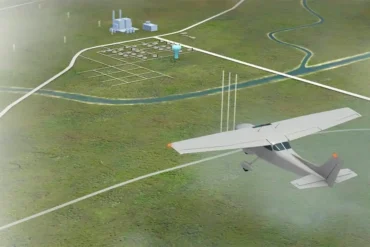
The final approach, also known in aviation terminology as the “final leg” or simply “final,” typically begins when an aircraft is fully lined up with the runway centerline and descending along a planned path. Under visual meteorological conditions (VMC), this final segment is usually the last of a four-leg pattern: upwind, crosswind, downwind, base, and then final. In the standard traffic pattern, aircraft transition from the base leg to final between 0.5 to 2 miles from the runway.
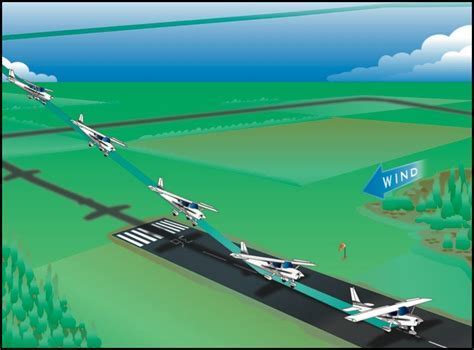
However, instrument approaches may bypass the standard pattern altogether, especially at controlled airports or under instrument flight rules (IFR). These often employ straight-in approaches, allowing aircraft to join the final approach without flying the preceding legs. While this streamlines arrival at busy hubs, straight-ins are discouraged at non-towered airports in the U.S. due to safety concerns arising from limited communication and situational awareness.
Approach Slope and Descent Angles
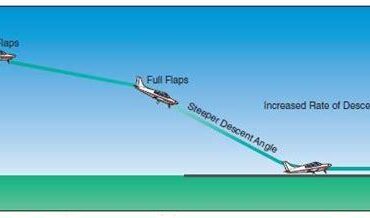
A fundamental component of any final approach is the approach slope, the downward glide path an aircraft follows to safely descend and land. Standard approach slopes are set at 3 degrees, balancing terrain clearance, visual range, and braking distance. However, exceptions exist, driven by topography or noise abatement procedures. London City Airport, for instance, mandates a 5.5° approach slope, classifying it as a steep approach airport under UK regulations.

In the UK, approaches above 4.5° require special operational approval, as they necessitate precise descent management, often with aircraft configured for a stabilized approach much earlier. Steeper approaches increase landing roll distances, thereby reducing runway throughput and efficiency—especially significant at congested airports. Some airports, like Heathrow and Luton, have tested 3.2° approach angles to mitigate community noise while preserving operational fluidity.
In the U.S., TERPS (Terminal Instrument Procedures) guide permissible descent profiles based on aircraft categories. This ensures safety across varied aircraft performance characteristics while maintaining standardization in approach design.
Glide Slope vs. Approach Slope
Although often used interchangeably, the terms glide slope and approach slope denote different aspects. The glide slope specifically refers to the vertical guidance component of the Instrument Landing System (ILS), electronically transmitted to aircraft during precision approaches. In contrast, the approach slope is a general term describing the physical descent path an aircraft follows, whether visually or via instruments.
Final Approach Fix (FAF) and Final Approach Point (FAP)
The transition into the final segment of an instrument approach begins at clearly defined points—either the Final Approach Fix (FAF) for non-precision approaches or the Final Approach Point (FAP) for precision approaches. These navigational landmarks serve as vital cues, informing pilots when to commence their final descent.
Under ICAO standards, the final approach segment begins at the FAF or FAP and continues to the Missed Approach Point (MAPt). These points are typically anchored to navigational aids like VORs, DMEs, or non-directional beacons (NDBs), though modern procedures increasingly rely on GPS-defined waypoints.
For instance, the FAF for the VOR+DME approach to Runway 10 at Alicante–Elche Airport is located at 3600 feet and 9.5 nautical miles from the Alicante VOR/DME (ATE). Meanwhile, the FAP for the ILS approach to the same runway is slightly lower, at 3300 feet, yet identically distanced from the ILS/DME—highlighting how different approach types use distinct altitude profiles.
In practice, the FAF/FAP distinction has blurred, with both commonly referred to collectively on approach charts. These are marked with standardized symbols: a maltese cross for non-precision FAFs and a lightning bolt or glideslope intercept marker for precision approaches.
Short Final and Stabilized Approach Criteria
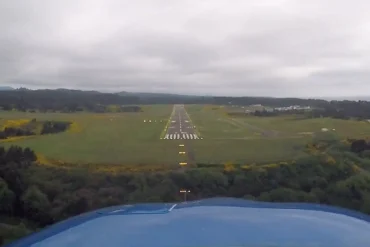
As the aircraft descends below 500 feet above ground level (AGL), it enters the short final—a zone where margin for error tightens considerably. At this stage, the flight crew must adhere to stabilized approach criteria: constant descent rate, target airspeed, full landing configuration, and alignment with the runway centerline. Deviations can trigger a go-around or missed approach, particularly in poor visibility or strong crosswind conditions.
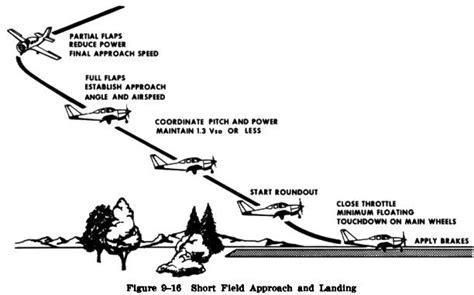
A stabilized final approach enhances runway occupancy awareness, reduces the likelihood of runway excursions, and ensures touchdown occurs within the touchdown zone. The approach path also becomes more sensitive to external variables such as gusting winds, wake turbulence, or runway contamination (e.g., water, snow, rubber buildup).
Controlled vs. Non-Towered Airport Procedures
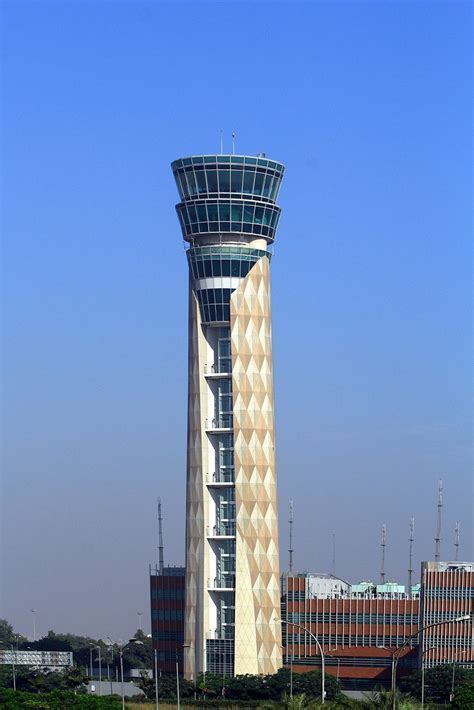
In high-density airspace, controlled airports manage final approach sequences via air traffic control (ATC). Pilots receive clearances, headings, and descent instructions that guide them precisely onto the final approach course. These procedures, often executed through STARs (Standard Terminal Arrival Routes) and precision approaches, maximize safety and spacing.
At non-towered airports, however, pilots rely on self-announced position reports and visual coordination with other traffic in the pattern. While straight-in approaches are legally permitted, they are discouraged in the U.S. unless visibility, traffic, and communication support safe integration. Here, pilots typically follow standard rectangular traffic patterns to establish separation and right-of-way priorities.
Impact of Terrain, Obstacles, and Urban Constraints
In some locations, the final approach path must be tailored around physical constraints such as mountains, high-rise buildings, or limited airspace corridors. Airports like Toncontín International (Honduras) or Courchevel Altiport (France) exemplify high-demand approach environments, where terrain and runway length force curved or segmented final approaches.
Approaches at these airports often require special pilot training, visual segment authorization, and airport-specific briefing materials. Even in well-equipped aircraft, the necessity to manually navigate tight corridors before realignment with the runway requires exacting airmanship and situational awareness.
Technological Evolution and Future of Final Approaches
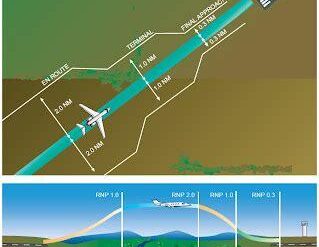
With the advancement of Performance-Based Navigation (PBN) and satellite-guided systems, the nature of final approaches is evolving. RNP AR (Required Navigation Performance – Authorization Required) approaches now allow curved and terrain-avoiding paths, particularly in congested or mountainous regions. These procedures use onboard GPS, enhanced flight management systems (FMS), and strict aircraft equipage to maintain lateral and vertical integrity.
Moreover, NextGen airspace initiatives in the U.S. and SESAR in Europe continue to push for more efficient descent paths, noise reduction strategies, and fuel optimization—all deeply influencing how final approaches are designed and flown.
Conclusion: Where Skill Meets Precision
The final approach phase is the decisive moment in every flight, where navigation, human judgment, and environmental factors converge. It demands not only technical proficiency but also the situational mastery to adapt to varying conditions—from bustling controlled airfields to isolated mountain strips. With emerging technologies and evolving procedures, final approaches are becoming smarter, more flexible, and better tailored to a modern aviation landscape—yet the essential responsibility remains unchanged: to land safely, accurately, and efficiently.