At towered airports, especially busy Class D airfields, timing the base leg turn is one of the most critical and nuanced decisions in the traffic pattern. This stage of flight requires heightened situational awareness, clear communication, and an understanding of both ATC expectations and standard pattern conventions. Misjudging this moment can disrupt traffic flow, risk separation loss, or even trigger a go-around. While every airport operates with subtle procedural differences, there are foundational rules and best practices every pilot must know.
Understanding when to turn base leg at a towered airport is not simply a mechanical action—it is a dialogue with the tower, informed by aeronautical decision-making (ADM), pattern positioning, and proactive radio calls. Let us explore how this moment is managed, and what the pilot-in-command must consider before banking left or right toward final.
The Standard Traffic Pattern and ATC Role
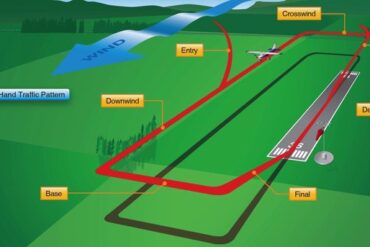
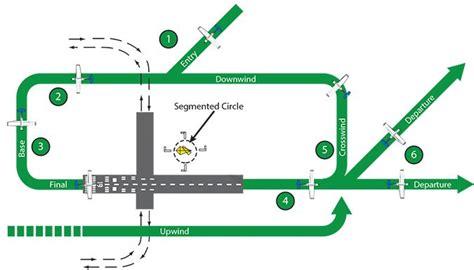
In general aviation, the standard traffic pattern involves flying a rectangular circuit: upwind, crosswind, downwind, base, and final. At non-towered airports, pilots self-sequence and use position reports to maintain safe spacing. However, at towered airports, Air Traffic Control (ATC) sequences traffic by issuing takeoff, pattern, and landing instructions.
At most towered fields, unless otherwise instructed, the expectation is to fly a standard pattern and make turns at conventional locations. A base turn typically occurs when the aircraft is 45° off the runway threshold, unless ATC directs otherwise. However, this general rule can become blurred by local procedures, controller workload, or incoming IFR traffic blending with VFR patterns.
Do You Wait for Clearance Before Turning Base?
A common point of confusion among student and private pilots is whether to await explicit clearance before turning base. The short answer is no—you do not need landing clearance to turn base unless instructed otherwise by ATC. The base leg is part of the traffic pattern, and unless the tower specifically requests that you extend downwind, hold, or report a specific position, the pattern should be flown normally.
That said, clearance to land must always be obtained prior to touchdown. Turning base without clearance is acceptable, but landing without it is a regulatory violation. Therefore, timing and awareness are crucial.
If you’re abeam the numbers and still haven’t heard from the tower by midfield downwind, it’s appropriate to make a position report, such as:
“Tower, Cessna 123AB, midfield downwind, runway 27.”
This prompt can act as a gentle nudge for the controller, who may be sequencing multiple aircraft. If you’re still not cleared by the time you turn base, you may radio again:
“Tower, Cessna 123AB, turning base, runway 27.”
This method ensures you’re seen and sequenced without guessing ATC’s intentions.
When ATC Delays Your Base Turn
At busier Class D fields or when operating during peak hours, ATC may hold you on the downwind leg to ensure adequate spacing between arrivals. This can be done explicitly:
“Extend downwind; I’ll call your base.”
In these cases, pilots must not turn base until cleared or prompted. These instructions are typically based on traffic volume, runway occupancy, or IFR arrivals blending with VFR traffic.
However, not all controllers vocalize extensions unless necessary. At some airports, institutional norms dictate that you simply fly the full pattern unless you hear otherwise. Knowing the local procedures—especially for training-heavy fields—is key.

Judgment and Situational Awareness in the Pattern
The moment to turn base is often less about regulations and more about judgment. A pilot must constantly scan for:
- Aircraft ahead on final: Are they about to touch down, or still several miles out?
- Spacing with traffic behind: Could turning now disrupt another aircraft’s flow?
- Tower’s radio tone and workload: Is the frequency saturated, or is the controller actively issuing clearances?
Using your eyes, ears, and experience will allow you to make a safe base turn, even when ATC communication is brief. It is also vital to avoid complacency—never assume that just because you weren’t told to extend downwind that it’s automatically clear to proceed. Always scan the final leg before initiating your turn.
Institutional Knowledge and Pilot Responsibility
Every airport has idiosyncrasies. Controllers at one field might regularly issue base calls; at another, they expect pilots to fly the pattern independently until it’s time to land. For this reason, institutional knowledge is powerful. Flight instructors, local pilots, and airport managers can provide valuable insight into how traffic is typically sequenced.
This local expertise is not just useful—it can prevent critical misunderstandings, especially in training environments where multiple aircraft may be flying overlapping patterns.
That said, the burden remains on the pilot to ask when unsure. A quick position call beats miscommunication. If there’s any doubt about whether to turn, ask:
“Tower, Cessna 123AB, should I turn base now?”
Controllers appreciate clarity over silence.
Sample Scenarios and Best Practices
Let us consider a few typical scenarios:
Scenario 1: Busy Midday at Class D Field
You’re on downwind with one aircraft ahead on final. Tower hasn’t yet cleared you to land, and there’s no instruction to extend. At 45° to the numbers, you begin your base turn and report:
“Tower, Cessna 123AB, turning base, runway 27.”
Shortly after, tower clears you to land. This is correct procedure. You flew the pattern normally and stayed in communication.
Scenario 2: Controller Says “I’ll Call Your Base”
Here, you must hold on downwind. Fly parallel to the runway until you’re told to turn. If you approach airspace limits or traffic builds behind, ask:
“Tower, Cessna 123AB, request base turn, traffic at my six.”
This shows proactive decision-making while respecting sequencing.
Scenario 3: No Landing Clearance by Base
If you reach the base turn and still have no clearance, call tower again. Do not land without it. A position report from base is the nudge they may need to clear you:
“Tower, Cessna 123AB, base runway 27.”
Always ensure your landing clearance is received before final approach. If not, prepare to go around.
Common Mistakes to Avoid
- Turning base without checking final: A quick glance before the turn ensures safe spacing.
- Assuming ATC forgot about you: Delays may be intentional. Always confirm.
- Landing without clearance: Even if all seems clear, do not touch down unless you’ve heard “cleared to land.”
- Excessive downwind extension without querying: Know when the delay becomes a communication gap.
These errors stem not from malice but from inexperience or hesitation. As pilots, our job is to maintain safety through communication and predictability.
Conclusion: Communicate, Navigate, Aviate
At a towered field, the decision of when to turn base blends procedural knowledge with real-time judgment. Fly a normal pattern unless told otherwise. Be assertive on the radio, but not aggressive. Use position reports to prompt action if needed, and always verify clearance before landing. Local norms may shape pattern flow, but Federal Aviation Regulations (FARs) and clear communication govern your safety.
Ultimately, a safe base turn comes down to anticipating the tower’s needs, protecting traffic flow, and staying engaged in the pattern. With awareness and professionalism, pilots can navigate even the busiest Class D environments with confidence.