Required Navigation Performance (RNP) approaches have fundamentally redefined modern aviation navigation by enhancing precision, increasing safety, and enabling access to runways that lack traditional precision landing aids. As air traffic density grows and infrastructure limitations persist, RNP approaches have become essential to ensuring efficiency and safety across global aviation networks.
In the context of the International Civil Aviation Organization (ICAO)‘s broader Performance Based Navigation (PBN) framework, Required Navigation Performance (RNP) specifications empower aircraft to maintain a highly accurate and predictable flight path. Through onboard performance monitoring and alerting capabilities, RNP enables aircraft to navigate through complex airspace with a significantly reduced reliance on ground-based infrastructure.
Understanding Required Navigation Performance (RNP)
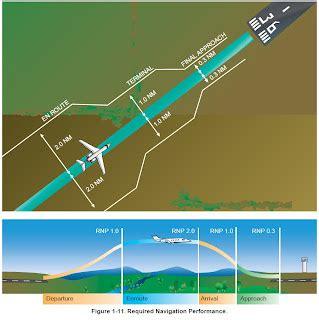
RNP is defined by the aircraft’s ability to operate precisely along a specified route, ensuring that the aircraft’s positional accuracy and integrity meet stringent standards. Unlike traditional navigation methods, RNP integrates real-time monitoring and alerting, providing pilots and controllers with a high level of confidence in the aircraft’s navigation capabilities.
Key features of RNP include:
- Onboard Performance Monitoring: Systems continuously verify navigation accuracy.
- Defined Lateral and Vertical Paths: Aircraft follow pre-defined 3D routes.
- Integrity Alerts: Immediate notifications in case of deviations beyond set tolerances.
These capabilities are vital for operations in challenging terrain, congested airspace, and airports lacking Instrument Landing Systems (ILS).
Regulatory Mandates for RNP Approach Implementation
In Europe, the European Commission Implementing Regulation (EU) 2018/1048 mandates the widespread adoption of RNP approaches with vertical guidance. Specifically, the regulation requires that RNP procedures supporting LNAV, LNAV/VNAV, and LPV minima be available by:
- December 2020 for runways previously served only by non-precision approaches.
- January 2024 for runways already served by precision approaches.
These deadlines reflect the critical importance of transitioning from traditional non-precision procedures to satellite-based navigation solutions that enhance approach safety and reliability.
Types of RNP Approach Procedures
Within the ICAO PBN framework, several RNP approach categories are defined, each supporting different levels of guidance and minima:
RNP Approach Operations to LNAV and LNAV/VNAV Minima
- Lateral Navigation (LNAV): Provides lateral guidance through the Global Navigation Satellite System (GNSS).
- Lateral and Vertical Navigation (LNAV/VNAV): Couples lateral GNSS-based navigation with barometric vertical navigation.
RNP Approach Operations to LP and LPV Minima
- Localizer Performance (LP): Delivers precise lateral guidance, enhanced through Satellite-Based Augmentation Systems (SBAS).
- Localizer Performance with Vertical Guidance (LPV): Offers both lateral and vertical guidance via SBAS, rivaling ILS in accuracy.
These varying minima allow airports and operators to tailor approach procedures to their specific operational needs and available technologies.
The Role of EUROCONTROL in RNP Implementation
EUROCONTROL plays a pivotal role in facilitating the implementation of RNP approaches across Europe. Through the RNP Implementation Support Group (RAiSG), stakeholders collaboratively share best practices, address challenges, and promote harmonized deployment.
EUROCONTROL’s contributions include:
- PBN Map Tool: Visualizes the status and future plans for RNP approach deployment within the European Civil Aviation Conference (ECAC) area.
- Final Approach Segment Data Block (FAS DB) Tool: Supports LPV procedure publication by calculating the cyclic redundancy check (CRC) and generating both electronic and textual FAS data.
These tools have significantly enhanced regional coordination, enabling consistent and systematic implementation efforts.
Transition of SBAS Channel Management to ICAO
Initially, EUROCONTROL managed the allocation of SBAS (Satellite-Based Augmentation System) channel numbers required for LPV and LP procedures. However, as part of global harmonization efforts, this responsibility transitioned to ICAO in 2019. Today, a unique, worldwide allocation mechanism ensures consistent channel assignments, fostering seamless international operations.
This shift underscores the global dimension of RNP implementation, emphasizing the necessity for worldwide standardization and cooperation.
Benefits of RNP Approaches for Aviation Safety and Efficiency
The adoption of RNP approaches delivers tangible operational benefits that extend across all aviation sectors:
- Enhanced Access: Airports without ground-based precision aids can accommodate precision-like approaches.
- Reduced Weather Minima: Lower landing minima increase airport accessibility during adverse weather.
- Optimized Airspace Utilization: RNP enables the design of more efficient flight paths, minimizing fuel consumption and environmental impact.
- Improved Safety: The precise, monitored navigation path reduces the risk of Controlled Flight Into Terrain (CFIT) accidents.
- Cost Savings: Less reliance on expensive ground infrastructure reduces long-term operational costs.
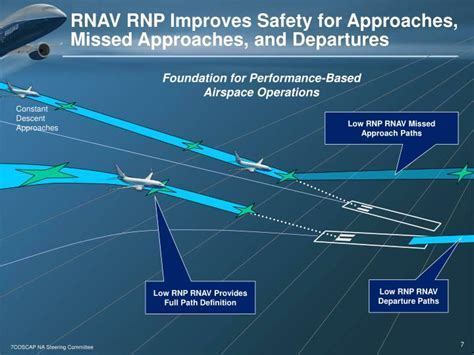
These advantages not only enhance safety but also contribute significantly to the economic and environmental sustainability of the aviation industry.
Challenges and Lessons Learned in RNP Implementation
Despite its numerous advantages, implementing RNP procedures has presented notable challenges. These include varying levels of operator readiness, differences in avionics capabilities, and the need for pilot and air traffic controller training.
The RAiSG has been instrumental in addressing these obstacles by fostering open dialogue among stakeholders, disseminating implementation guidance, and sharing lessons learned from early adopters. Standardized documentation, such as the EUR RNP APCH Guidance Material (EUR Doc 025), has been critical in harmonizing practices and ensuring consistent application across different jurisdictions.
Looking Ahead: The Future of RNP and Performance-Based Navigation
The aviation industry’s trajectory towards greater reliance on performance-based navigation continues to accelerate. As new satellite constellations and augmentation systems become operational, the precision and reliability of RNP procedures will only improve.
Future developments likely to shape RNP evolution include:
- Integration of Dual-Frequency, Multi-Constellation (DFMC) GNSS: Enhancing accuracy and robustness.
- Advanced PBN Concepts: Including time-based operations and dynamic airspace management.
- Broader Global Harmonization: Driven by ICAO initiatives and regional cooperation.

With these advancements, RNP will continue to serve as a foundational pillar of global aviation, ensuring that air transport remains safe, efficient, and environmentally responsible for decades to come.