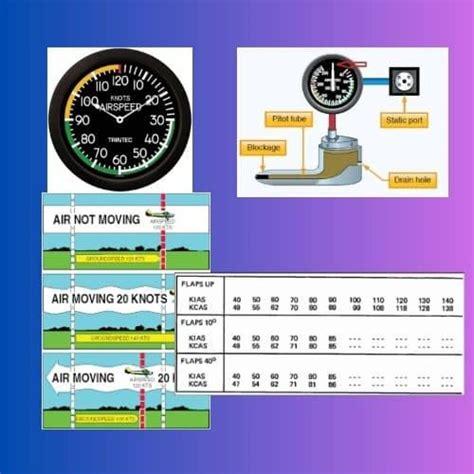
True airspeed (TAS) is a critical concept in aviation that defines the speed of an aircraft relative to the air mass through which it is flying. It plays a pivotal role in the navigation and flight planning of an aircraft, ensuring that pilots can accurately calculate the aircraft’s performance and range under varying atmospheric conditions. In this article, we will explore the nuances of true airspeed, how it is calculated, and why it is essential for aircraft operations.
What is True Airspeed?
True airspeed refers to the actual speed of an aircraft as it moves through the surrounding air, regardless of the aircraft’s altitude or the temperature of the air. This measurement is crucial for understanding the aircraft’s behavior in various conditions. Unlike indicated airspeed (IAS), which is the speed shown on the aircraft’s airspeed indicator, true airspeed accounts for variations in air density that change with altitude and temperature.
The Importance of True Airspeed in Aircraft Navigation
True airspeed is an important metric in aviation for several reasons. It is typically used in flight planning and navigation, particularly when calculating the aircraft’s range. The true airspeed provides pilots with the real speed of the aircraft, allowing them to make accurate calculations and adjustments during the flight.
One of the most critical applications of true airspeed is in the calculation of the aircraft’s range. For example, a flight plan might list the aircraft’s true airspeed, which can then be used to estimate the total distance the aircraft can travel given its fuel capacity. Since true airspeed is independent of ground speed, it provides a more reliable measure of performance during flight, particularly when considering factors such as wind conditions.
How True Airspeed Differs from Indicated Airspeed
Indicated airspeed is what the pilot sees on the airspeed indicator. It is based on the pressure difference between the pitot tube (which faces into the airflow) and the static port (which measures the surrounding air pressure). However, indicated airspeed does not account for changes in air density, which vary with altitude and temperature.
At sea level, where air density is standard, IAS and TAS are roughly equal. But as an aircraft climbs to higher altitudes, the air becomes thinner, meaning the air density decreases. As a result, the IAS will show a lower value compared to the true airspeed. This discrepancy increases with altitude, which is why pilots need to know the true airspeed for navigation.
True Airspeed and Its Role in Performance Calculations
True airspeed is essential for calculating various performance metrics, such as fuel consumption, range, and time to destination. Unlike IAS, which can mislead pilots at higher altitudes, true airspeed provides the most accurate representation of the aircraft’s velocity relative to the air.
For instance, if an aircraft is flying at 15,000 feet with an IAS of 100 knots, the true airspeed would be approximately 126 knots in the International Standard Atmosphere (ISA). This difference between IAS and TAS can be substantial at cruising altitudes, particularly for larger aircraft.
How to Calculate True Airspeed
The calculation of true airspeed can be complex, but it is essential for accurate navigation and performance assessments. The method used depends on the conditions the aircraft is flying in, such as its altitude, speed, and the air density around it.
Low-Speed Flight:
At lower speeds and altitudes, indicated airspeed and calibrated airspeed are close to equivalent. In this case, true airspeed can be calculated using the equation:
TAS = EAS × (ρ₀ / ρ)^(1/2)
Where EAS is the equivalent airspeed, ρ₀ is the air density at sea level, and ρ is the air density at the aircraft’s altitude.
High-Speed Flight:
At higher speeds, particularly above 100 knots, the compressibility factor of the air becomes significant. In this case, true airspeed is often calculated using the Mach number and static air temperature. The equation for high-speed flight is:
TAS = a₀ × M × (T / T₀)^(1/2)
Where a₀ is the speed of sound at sea level, M is the Mach number, T is the static air temperature, and T₀ is the temperature at standard sea level.
For most modern aircraft, true airspeed is calculated automatically by the aircraft’s air data computer, which takes into account variables such as static pressure, impact pressure, and total air temperature. This allows for real-time display of the TAS on the aircraft’s electronic flight instrument system (EFIS), providing pilots with the necessary data to ensure safe and accurate flight operations.
The Role of True Airspeed in Navigation and Flight Planning
In flight planning, true airspeed is an essential component when determining an aircraft’s route and fuel requirements. By using true airspeed, pilots can determine the optimal flight path to minimize the effects of wind and other environmental factors.
For example, during a flight, if the aircraft encounters a headwind or tailwind, the true airspeed helps pilots adjust the flight path or the aircraft’s heading to maintain the desired ground track. True airspeed is particularly useful in the context of long-haul flights, where winds at cruising altitude can significantly affect fuel efficiency and time to destination.
Conclusion
True airspeed is a fundamental concept in aviation, providing accurate data essential for navigation and performance calculations. By understanding the distinction between indicated airspeed and true airspeed, pilots can ensure that their aircraft operates at optimal efficiency and safety. Whether through manual calculations or advanced flight systems, the measurement and application of true airspeed remain integral to modern aviation operations.