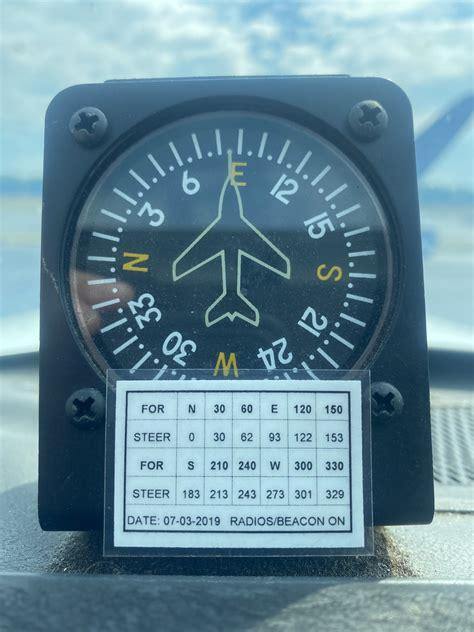
In the world of aviation, accurate navigation is crucial. Among the instruments that ensure safe and precise flight paths, the magnetic compass remains fundamental. However, due to the inherent magnetic interferences present within an aircraft, pilots rely on an essential tool known as the deviation card compass. This article explores, in comprehensive detail, the role, function, and practical use of the deviation card, solidifying its place in flight operations.
What Is a Deviation Card Compass?
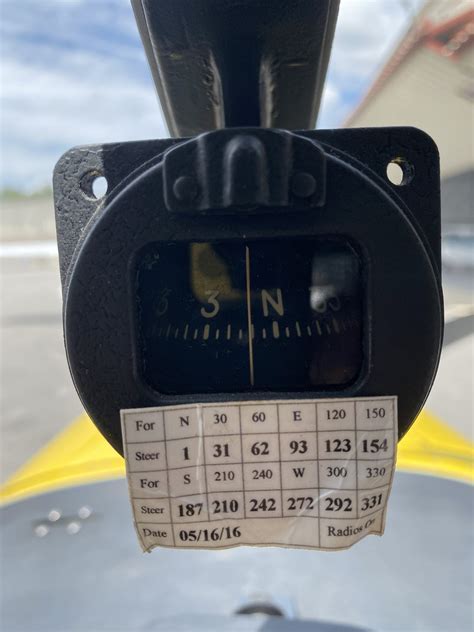
The deviation card is a small but critical label affixed near the aircraft’s magnetic compass. It lists the differences between the indicated compass headings and the aircraft’s actual magnetic headings. Despite efforts to correct compass readings, small errors persist due to nearby ferrous metals and electrical systems. The deviation card documents these residual inaccuracies, allowing pilots to account for them during navigation.
How Deviation Errors Are Identified: The Compass Swing Procedure
According to CAR 571, aircraft maintenance regulations require that a compass swing be performed annually. This involves positioning the aircraft in a remote area free from external magnetic influences and methodically rotating it through 360 degrees. A master compass, handled by ground personnel, provides the true magnetic heading against which the aircraft’s internal compass is compared.
The technician uses a non-magnetic screwdriver to adjust two critical compensating screws beneath the aircraft’s compass housing. These screws manipulate built-in compensating magnets, which counteract local magnetic fields within the aircraft. The adjustments address two planes: left-right (athwartship) and front-back (fore-and-aft) deviations. Even after fine-tuning, small errors persist, which are then measured and recorded at thirty-degree intervals to create the deviation card.
Reading and Interpreting a Deviation Card
The data presented on a deviation card typically shows the compass reading and the corresponding actual magnetic heading. An example format may look like:
| Compass Heading | Steer Heading |
|---|---|
| N (360°) | 358° |
| 030° | 030° |
| 060° | 062° |
| E (090°) | 092° |
| 120° | 121° |
| 150° | 151° |
| S (180°) | 182° |
| 210° | 209° |
| 240° | 238° |
| W (270°) | 268° |
| 300° | 301° |
| 330° | 330° |
For instance, when the compass indicates 092°, the aircraft is actually flying directly east (090°). This two-degree difference must be mentally corrected by pilots when setting or verifying their heading.
The Critical Role of the Deviation Card During Flight
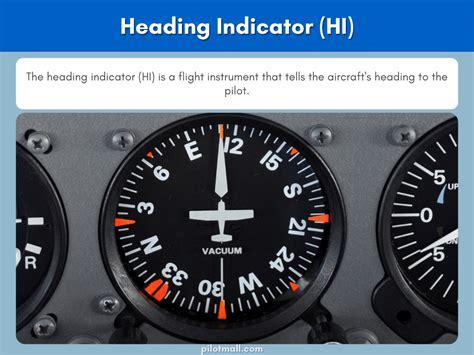
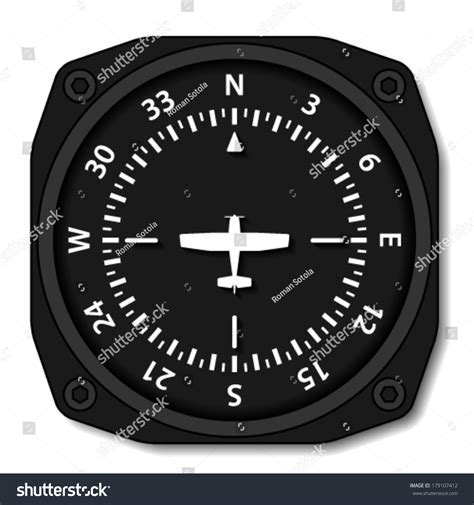
Pilots primarily use the deviation card when resetting the gyroscopic heading indicator (HI). Gyroscopic instruments, though accurate, suffer from drift over time and must be realigned with the magnetic compass. Whenever the heading indicator is reset, the pilot must reference the deviation card to ensure the heading is true.
For example, during level and unaccelerated flight, a pilot reads a compass heading of 092°. Referring to the deviation card reveals that the actual heading is 090°, prompting the pilot to adjust the heading indicator to show exactly east. This process minimizes cumulative navigation errors during flight.
Common Pitfalls: Misusing the Deviation Card in Flight Planning
Some pilots mistakenly attempt to factor compass deviations into their pre-flight navigation planning. Although seemingly logical, this practice is flawed. Compass deviations should not be preloaded into cross-country navigation calculations but applied dynamically during flight when resetting the heading indicator.
Consider a scenario where a pilot, planning a northbound course, pre-adjusts for deviation before flight. If they set their HI based on incorrect assumptions at the Set Heading Point (SHP), they could misalign the aircraft’s heading by several degrees. Although deviations are minor, errors could accumulate across long distances, potentially leading to significant navigational inaccuracies.
Therefore, the correct practice is to reset the HI accurately based on the deviation corresponding to the current heading — at the time of reset, not before.
Why Aircraft Compasses Cannot Be Made Perfectly Accurate
Despite the precise manufacturing and calibration of aircraft compasses, several unavoidable factors contribute to residual deviation:
- Ferrous materials in the aircraft’s construction
- Electrical currents from avionics and wiring
- Magnetic field changes caused by cargo or equipment placement
- Environmental variations such as moving through different geographic magnetic fields
These influences mean a compass can only ever be tuned to near-perfection, never absolute perfection. This reality underscores the continued necessity of the deviation card.
Practical Tips for Pilots Using the Deviation Card
To ensure maximum navigational accuracy, pilots should adhere to the following best practices:
- Reset the heading indicator regularly during flight, particularly after maneuvers.
- Apply deviation corrections dynamically, using the deviation card corresponding to the aircraft’s current heading.
- Maintain unaccelerated flight when taking compass readings to reduce dip and turning errors.
- Understand linear interpolation between listed headings if exact compass readings are not listed.
- Stay vigilant for signs of compass discrepancies during cross-country legs and adjust promptly.
The Consequences of Neglecting Deviation Corrections
Although modern avionics offer GPS navigation, a magnetic compass remains a backup instrument essential for legal and safe operation. Neglecting deviation corrections can lead to:
- Progressive navigational drift over long flights
- Increased pilot workload during course corrections
- Potential airspace incursions if off-course
- Compromised flight safety in situations where electronic navigation aids fail
Pilots must remember that small compass errors, left unchecked, magnify over time and distance.
Conclusion: Honoring the Deviation Card for True Navigation Mastery
The deviation card compass embodies aviation’s blend of tradition and precision. It is a small, often overlooked component that plays a pivotal role in maintaining navigational accuracy. By understanding its purpose, respecting its usage procedures, and applying its corrections properly, pilots enhance both their situational awareness and their operational discipline. True navigators do not merely glance at their instruments; they comprehend and compensate for their subtle imperfections. In doing so, they uphold the highest standards of airmanship.
We recognize that mastering the use of the deviation card is not merely about adhering to regulations — it is about committing to excellence in every phase of flight.