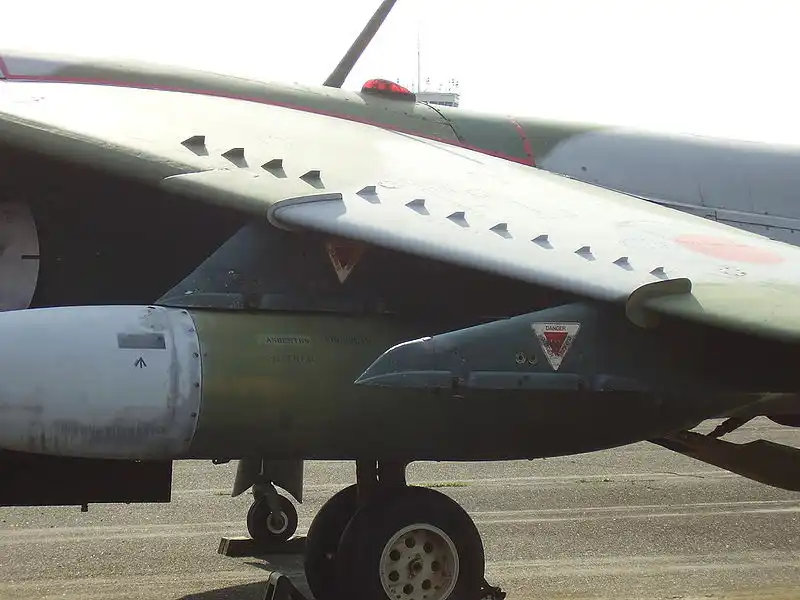
Vortex generators are small, yet essential components of modern aircraft design, playing a pivotal role in enhancing aerodynamic performance, improving stall characteristics, and maintaining control at both low and high speeds. These miniature devices are most commonly seen on aircraft wings, fuselages, and stabilizers, where they create vortexes that interact with the boundary layer of airflow over the surface. In this article, we explore the functionality of vortex generators, their critical role in aircraft stability, and their applications in preventing stalls at both low and high speeds.
What Are Vortex Generators?
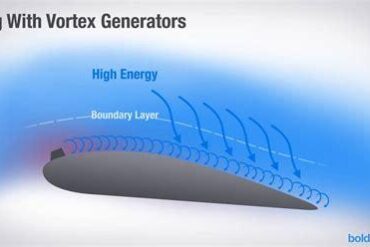
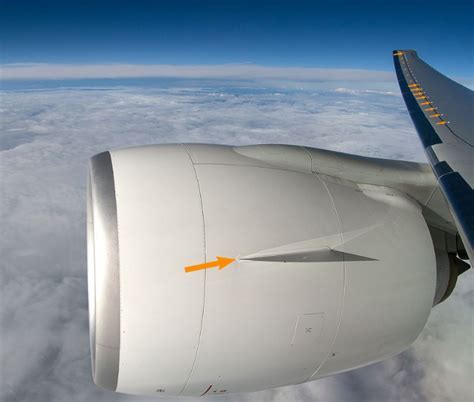
At their core, vortex generators are small, fin-like structures attached to the surfaces of an aircraft. They protrude from the aircraft’s wing or stabilizer, generating vortices in the airflow. These vortices mix high-energy air from the free-stream flow into the lower-energy boundary layer, thereby enhancing the airflow’s stability. This phenomenon, often referred to as energizing the boundary layer, helps delay airflow separation, a condition that can lead to a stall.
Vortex generators come in various sizes and configurations, depending on the design and purpose of the aircraft. Some are mounted on the leading edges of wings, while others may be placed closer to control surfaces such as ailerons, elevators, or stabilizers. By doing so, they allow the aircraft to operate at higher angles of attack without stalling, which is crucial in both low-speed maneuvers and at high-speed conditions.
How Do Vortex Generators Work?
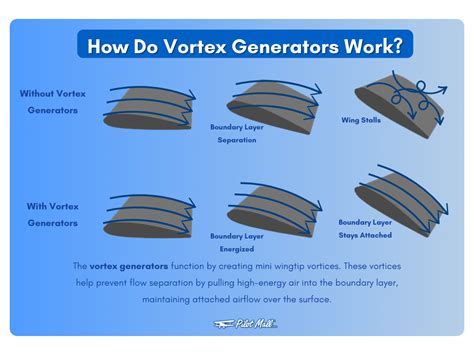
Vortex generators work by inducing turbulence in the boundary layer of airflow over the aircraft’s surfaces. When air flows across an airfoil, it encounters a decrease in pressure, creating an adverse pressure gradient that slows down the airflow. This, in turn, increases the likelihood of flow separation, where the smooth airflow detaches from the surface, causing a stall.
The boundary layer itself is a thin layer of air just above the surface of the aircraft. In regions where the airflow slows significantly, the boundary layer becomes more prone to separation. By generating small vortices, vortex generators help mix high-energy air from the free-stream flow into this boundary layer, thus preventing separation. As the vortex mixes the free-stream air with the boundary layer, it delays flow separation, allowing the aircraft to maintain controlled flight at higher angles of attack and lower speeds.
Applications of Vortex Generators in Aircraft Design
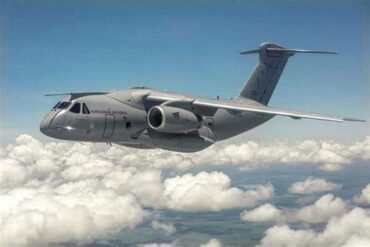
Vortex generators are used on a wide range of aircraft, from general aviation to commercial airliners and military aircraft. Their primary application is to reduce the risk of stalls, particularly during low-speed operations or high angles of attack, which are critical during takeoff, landing, and in turbulent conditions.
On Short Takeoff and Landing (STOL) aircraft, vortex generators are often mounted along the leading edge of the wing to improve lift and delay stall during the critical phases of flight. In such aircraft, vortex generators enable the aircraft to maintain a higher angle of attack without the risk of airflow separation, which is essential for short-field performance.
On commercial airliners, vortex generators are typically placed ahead of the flaps or other control surfaces, where large adverse pressure gradients develop. The vortices help maintain airflow attachment over the wings and stabilizers, ensuring that the aircraft retains full control during takeoff and landing, even when operating near its stall speed.
Vortex Generators and High-Speed Aerodynamics
While vortex generators are widely associated with low-speed flight and stall prevention, they also play a crucial role in high-speed aerodynamics, particularly on aircraft approaching transonic and supersonic speeds. At these speeds, shock waves form on the airfoil surfaces, leading to a sudden drop in airflow energy. This energy loss can cause airflow separation, which not only reduces the effectiveness of control surfaces but can also make the aircraft difficult to control.
Vortex generators help mitigate this phenomenon by mixing high-energy air into the boundary layer, delaying separation even at high speeds. They also disrupt shock waves forming on the airfoil surfaces, reducing the overall energy loss and improving the control surface effectiveness. This function is especially vital for transonic aircraft and those with high-speed capabilities, such as military jets.
A classic example of this application is the L-39 Albatros, a subsonic military aircraft equipped with vortex generators on the horizontal stabilizer. Despite its subsonic design, airflow over the stabilizer can reach transonic speeds, forming shock waves that would typically reduce control effectiveness. By placing vortex generators on the underside of the stabilizer, engineers ensure that the airflow remains attached to the airfoil, thus maintaining pitch control even at high speeds.
Benefits of Vortex Generators in Aviation
Vortex generators are indispensable for improving overall aircraft performance. Their ability to enhance airflow characteristics provides several notable benefits:
- Improved Stall Prevention: Vortex generators help prevent stall at both low and high speeds by maintaining controlled airflow, even at high angles of attack or during high-speed flight.
- Enhanced Stability: By energizing the boundary layer, vortex generators improve the aircraft’s stability and maneuverability, especially during critical flight phases like takeoff, landing, and high-speed flight.
- Better Control Surface Effectiveness: Vortex generators ensure that airflow remains attached to the control surfaces, maintaining their effectiveness, even at extreme flight conditions.
- Increased Safety: By reducing the likelihood of stalls and maintaining better control, vortex generators contribute to overall flight safety, particularly in challenging weather conditions or during emergency maneuvers.
Vortex Generators in Modern Aircraft
Vortex generators have become a standard feature in modern aircraft design, with their usage spanning a wide variety of aircraft types, from small private planes to large commercial airliners and high-performance military jets. Their application is particularly crucial in aircraft operating in environments where high-speed control and stall prevention are vital.
In the context of commercial aviation, vortex generators are often integrated into the design of Boeing 737, Airbus A320, and other modern airliners. These aircraft utilize vortex generators to optimize the flow over critical components such as the wing flaps and horizontal stabilizers, ensuring smooth, efficient flight even under adverse conditions.
Conclusion: The Vital Role of Vortex Generators
Vortex generators are a prime example of how small aerodynamic modifications can have a significant impact on aircraft performance. From preventing stalls at both high and low speeds to ensuring better control surface effectiveness, these devices enhance the stability, safety, and overall efficiency of the aircraft. Whether it’s for improving takeoff performance on a STOL aircraft or ensuring smooth control during high-speed flight on a supersonic jet, vortex generators are essential for maintaining optimal aerodynamic conditions in diverse flight regimes.
Incorporating vortex generators into an aircraft’s design is not just about performance; it’s about safety, stability, and control. As aviation technology continues to evolve, the role of vortex generators will likely remain pivotal in ensuring that aircraft operate efficiently, safely, and with greater precision.