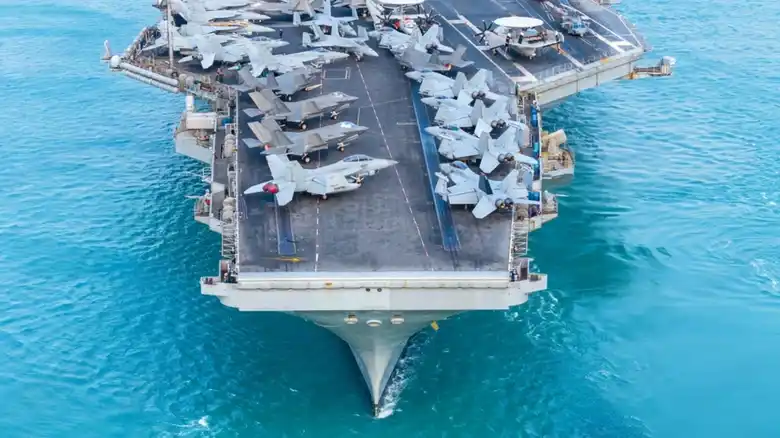
Modern aircraft carriers are not merely warships—they are self-sustaining floating megacities, engineered to project power across oceans without relying on constant resupply. At the heart of this capability lies an immense and often overlooked factor: power generation. The transition from conventional fuel systems to nuclear-powered reactors has redefined naval engineering, but even nuclear energy is now being pushed to its limits by the staggering energy demands of next-generation carrier technology.
From Oil Dependency to Nuclear Dominance
The logistical burden of fueling a conventional aircraft carrier is immense. A ship like the retired USS Kitty Hawk consumed approximately 700,000 barrels of oil annually, translating into tens of millions of dollars in operational costs. Beyond expense, this dependency required a constant chain of support vessels, intricate refueling operations at sea, and significant onboard storage dedicated to fuel rather than combat capability.
Nuclear propulsion fundamentally eliminates these constraints. A single nuclear reactor can operate for 20 years or more without refueling, dramatically reducing logistical complexity and freeing up valuable internal space. Instead of carrying massive fuel reserves, carriers can allocate that space to aircraft, weapons systems, and crew facilities. The strategic advantage is clear: extended deployment durations, reduced vulnerability during refueling, and enhanced operational independence.
How Nuclear Reactors Power a Floating City
At its core, a pressurized water reactor (PWR) transforms atomic energy into mechanical and electrical power through a carefully controlled process. Nuclear fission splits uranium atoms, releasing heat that superheats pressurized water. This heated water transfers energy to a secondary system, producing steam that drives turbines connected to propellers and electrical generators.
Unlike simpler energy systems, this process operates as a closed-loop cycle, maximizing efficiency and minimizing waste. Control rods regulate the reaction, ensuring stable output, while condensation systems recycle steam back into water for continuous reuse. The design prioritizes both efficiency and safety, isolating radioactive materials within controlled environments.
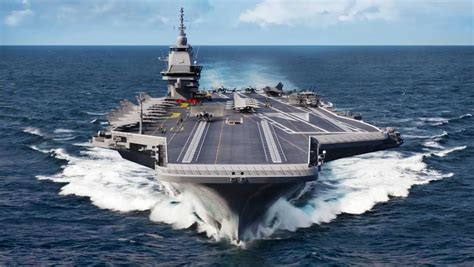
The result is a highly reliable power source capable of sustaining propulsion, onboard systems, and mission-critical operations simultaneously—without interruption for decades.
The Exploding Energy Demands of Modern Carriers
While nuclear power provides longevity and efficiency, modern aircraft carriers demand unprecedented levels of energy. The reason is simple: today’s carriers are equipped with technologies that far surpass the needs of their predecessors.
A contemporary carrier supports:
- 60 to 90 aircraft
- Over 4,000 personnel
- Complex onboard infrastructure rivaling a small city
Every aspect of this ecosystem consumes power—from lighting and climate control to advanced combat systems. However, the true surge in demand comes from cutting-edge military technologies that redefine how carriers operate in combat scenarios.
EMALS: The Power-Hungry Launch Revolution
One of the most transformative innovations is the Electromagnetic Aircraft Launch System (EMALS). Unlike traditional steam catapults, EMALS uses linear electromagnetic motors to accelerate aircraft along the flight deck.
This system offers several advantages: smoother acceleration, reduced stress on airframes, and improved launch precision. However, these benefits come at a steep cost—EMALS requires up to three times the electrical power of older steam-based systems.
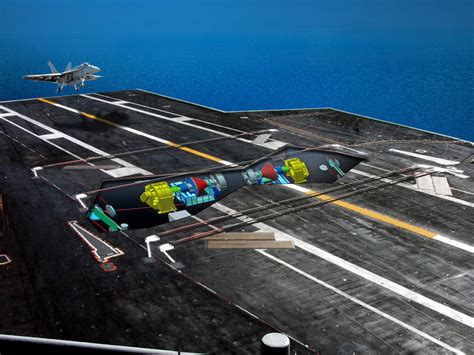
This shift from mechanical to electromagnetic systems marks a broader trend: replacing physical systems with energy-intensive electrical alternatives that demand higher and more consistent power output.
Beyond Launch Systems: A Network of Energy Consumers
EMALS is only one piece of the puzzle. Modern carriers integrate an array of advanced technologies, each contributing to escalating energy requirements.
High-powered radar and sensor arrays operate continuously, scanning vast areas for threats. Advanced arresting gear systems safely recover aircraft using precision-controlled mechanisms. Weapons elevators rapidly transport munitions between decks, while onboard desalination plants convert seawater into potable water for thousands of crew members.
More significantly, next-generation carriers are being designed to support directed-energy weapons, including solid-state lasers capable of neutralizing drones and incoming threats. These systems demand enormous bursts of electrical power, far exceeding traditional weapon platforms.
Why “Bigger Reactors” Is the Only Answer
As systems evolve, incremental power increases are no longer sufficient. Modern carriers require massive reactors and generators capable of delivering both sustained output and rapid energy surges. This necessity has driven the development of reactors so large that their compartments resemble multi-story industrial facilities embedded within the ship’s hull.
The Ford-class aircraft carriers exemplify this shift. Designed with significantly higher electrical generation capacity than earlier classes, they are built not only for current technologies but also for future systems that have yet to be deployed. This forward-looking approach ensures adaptability in an era of rapidly advancing military innovation.
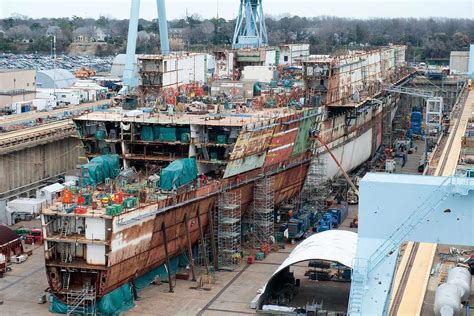
The scale of these reactors reflects a critical reality: energy is now the limiting factor in naval capability. The more power a carrier can generate, the more advanced—and effective—its systems can become.
The Strategic Edge of Unlimited Power
In modern naval warfare, power generation is no longer just a support function—it is a strategic asset. The ability to sustain high-energy systems, deploy advanced weapons, and operate independently for decades provides a decisive advantage on the global stage.
Aircraft carriers have evolved into platforms where energy defines capability. From launching aircraft to powering lasers, every function depends on a robust and scalable energy infrastructure. As technology continues to advance, the demand for even greater power will only intensify, pushing reactor design to new extremes.
The future of naval dominance will not be determined solely by firepower or fleet size, but by a carrier’s ability to generate, manage, and deploy energy efficiently. In this high-stakes equation, giant generators are not excess—they are essential.