Modern aircraft carriers are often described as floating airbases, but one of their most important capabilities remains largely hidden from public view. While fighter jets, flight decks, and massive propulsion systems attract most of the attention, the true nerve center of a carrier’s defensive and offensive awareness lies within its radar systems. These sophisticated networks of sensors allow a carrier strike group to detect, track, classify, and respond to threats across hundreds of miles of ocean and airspace.
From the primitive radar displays of World War II to the highly integrated digital combat systems aboard today’s supercarriers, aircraft carrier radar technology has undergone a remarkable transformation. Looking closely at these systems reveals not only how they physically appear but also how they function as the eyes and ears of some of the most powerful warships ever built.
The Hidden World Behind Aircraft Carrier Radar Screens
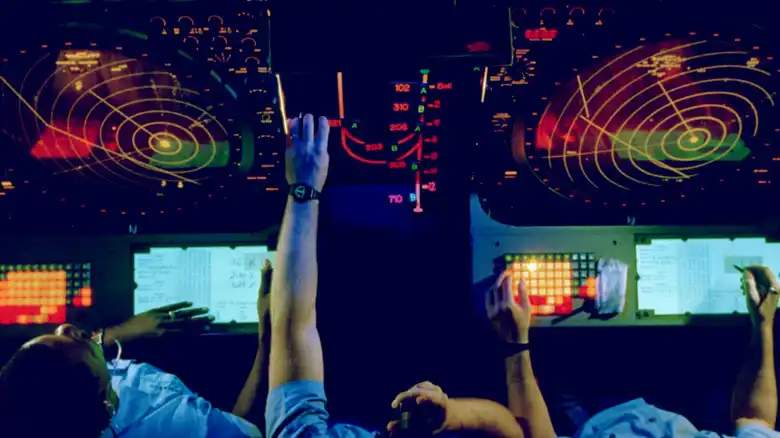
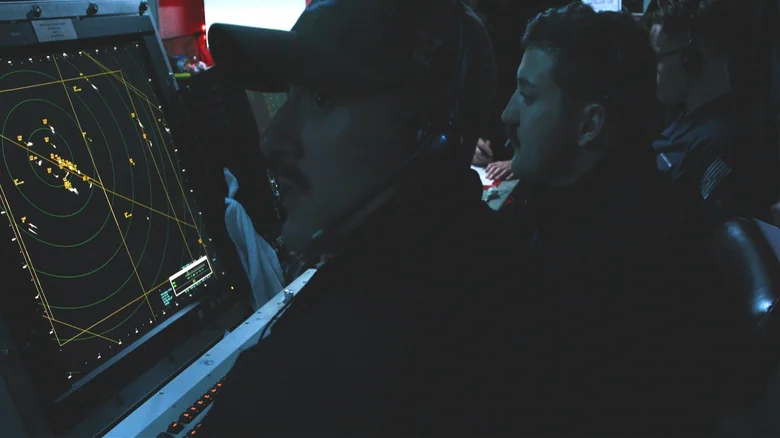
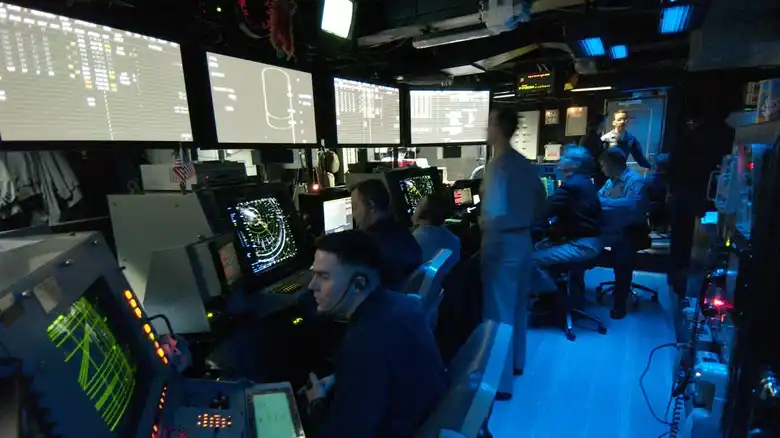
Unlike popular depictions that show glowing green circles and sweeping radar lines, modern aircraft carrier radar systems look far more like advanced command centers than traditional radar rooms. Inside the Combat Information Center (CIC), sailors sit before rows of large LCD displays, data terminals, and integrated tactical consoles. The environment is intentionally dimly lit, allowing operators to focus on vast amounts of information displayed across multiple screens.
Rather than viewing a single radar feed, personnel now monitor a fused operational picture generated from numerous sensors located both on and off the ship. Information arrives from onboard radar arrays, escort vessels, aircraft, satellites, and networked military systems. The result is a constantly updated battlefield overview that gives commanders unprecedented situational awareness.
The modern CIC aboard the USS Gerald R. Ford demonstrates how naval warfare has shifted from simple target detection to sophisticated information management. Operators no longer interpret isolated radar echoes. Instead, they analyze comprehensive digital representations of the surrounding battlespace in real time.
What Early Aircraft Carrier Radar Systems Looked Like
The first operational carrier radar installations appeared during the early stages of World War II. In 1940, the U.S. Navy installed the CXAM radar aboard the USS Yorktown, marking a significant technological breakthrough.
These early systems were enormous, mechanically complex, and relatively primitive by modern standards. Operators observed A-scan displays that presented information as simple electronic spikes. Every radar return required manual interpretation, and sailors often plotted detected targets by hand using charts and plotting tables.
The displays themselves were basic cathode-ray tube screens that offered limited information. A target appeared merely as a blip, requiring trained personnel to estimate range, bearing, and movement. Despite these limitations, the technology provided a revolutionary advantage. Aircraft and ships could be detected long before they became visible to lookouts, dramatically improving fleet defense capabilities.
Large rotating antennas mounted high on carrier structures performed the scanning process. As the antennas turned, they transmitted radio waves and received reflected signals from aircraft or ships. While groundbreaking for the era, these systems struggled to keep pace with the increasing speed and complexity of postwar aviation.
The Rise of Phased-Array Radar Technology
As military aircraft became faster and missile threats emerged, naval radar systems required a dramatic evolution. The answer came in the form of phased-array radar technology.
Unlike traditional rotating antennas, phased-array systems electronically steer radar beams without moving large mechanical structures. This capability allows radar arrays to track multiple targets simultaneously while rapidly scanning vast sections of airspace.
The introduction of advanced frequency-scanning radar systems aboard carriers such as the nuclear-powered USS Enterprise represented a major leap forward. These massive installations, often compared in size to billboards, extended detection ranges beyond 200 nautical miles and significantly improved tracking accuracy.
Operators still relied on circular radar displays featuring green indicators and sweeping lines, but the amount of information available increased substantially. Faster refresh rates and improved target discrimination allowed naval commanders to respond more effectively to evolving threats.
The Advanced Radar Systems of the USS Gerald R. Ford
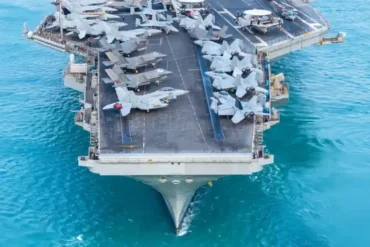
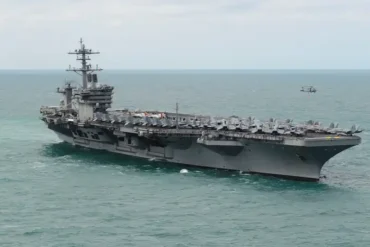
Today’s most advanced American aircraft carrier, the USS Gerald R. Ford, showcases how far radar technology has progressed. The ship’s radar architecture combines multiple sophisticated sensors into a highly integrated surveillance and defense network.
Central to this capability are the SPY-3 Multi-Function Radar and SPY-4 Volume Search Radar systems, which together form the carrier’s Dual Band Radar configuration. These sensors can detect and track targets hundreds of miles away while simultaneously supporting air traffic control, missile defense, and surface surveillance operations.
What makes these systems remarkable is not simply their detection range but their ability to process enormous quantities of information. Hundreds of potential contacts can be tracked concurrently, with software automatically prioritizing threats and distributing critical data throughout the strike group.
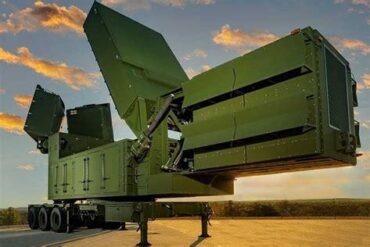
The physical appearance of these radar systems differs dramatically from older designs. Instead of large rotating dishes, many radar arrays are integrated directly into the carrier’s island structure. Flat-panel antenna faces blend into the ship’s architecture, creating a cleaner profile while enhancing performance and reliability.
The Future of Aircraft Carrier Radar Technology
Aircraft carrier radar systems are moving toward even greater levels of integration and automation. Future upgrades, including the SPY-6 radar family, promise increased detection ranges, improved sensitivity, and superior tracking performance against advanced threats.
Perhaps the most significant development is the growing emphasis on network-centric warfare. Through initiatives such as Project Overmatch, radar data gathered by carriers will increasingly be combined with information from destroyers, submarines, aircraft, satellites, and other military assets. This interconnected approach creates a shared operational picture that extends far beyond the horizon visible to any single vessel.
Future carriers such as the USS John F. Kennedy are expected to incorporate even more advanced sensor technologies, artificial intelligence-assisted tracking systems, and enhanced data-sharing capabilities. Up close, these radar systems may resemble ordinary computer workstations and flat-panel arrays, but behind their modest appearance lies some of the most sophisticated military technology ever deployed at sea.
Far removed from the simple radar blips of the 1940s, modern aircraft carrier radar systems have become intelligent sensor networks capable of shaping the outcome of naval operations across entire regions. They remain among the most critical and impressive technologies aboard the world’s largest warships.