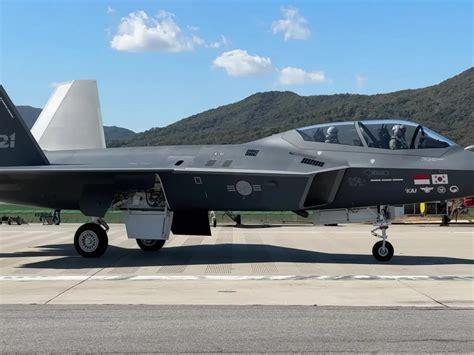
In modern aerial warfare, radar superiority is no longer a supporting capability—it is the decisive edge. While stealth often dominates headlines, it is the invisible war of electromagnetic waves that determines who sees first, shoots first, and survives. The evolution from mechanically scanned arrays to Active Electronically Scanned Array (AESA) radar has fundamentally reshaped the balance of power in the skies.
AESA radar represents a quantum leap. Instead of physically moving components, it uses thousands of small transmit/receive modules to steer beams electronically at near-instant speeds. This allows fighter jets to track multiple targets, resist jamming, and perform surveillance and targeting simultaneously—without compromising performance.
The result is a new generation of aircraft that are not just fighters, but flying sensor hubs. From stealth-detecting multi-band arrays to synthetic aperture imaging capable of identifying ground targets with surgical precision, radar has become the brain behind the brawn of modern airpower.
Understanding which aircraft lead this domain reveals a deeper truth: the future of air combat belongs to those who control the electromagnetic spectrum.
5. Sukhoi Su-57 Felon — The Multi-Band 360° Radar Hunter
Russia’s stealth contender, the Sukhoi Su-57 Felon, introduces one of the most unconventional radar architectures ever deployed on a fighter jet. Rather than relying on a single nose-mounted array, the aircraft employs a distributed radar ecosystem known as the N036 Byelka system.
This setup integrates multiple AESA antennas positioned across the airframe, including forward-facing arrays, side-looking sensors embedded in the fuselage, and even rear-facing radar coverage. The result is a rare and formidable capability: near 360-degree situational awareness.
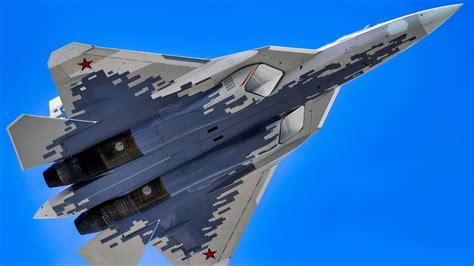
What truly distinguishes the Su-57 is its use of multi-band radar frequencies, particularly the combination of X-band and L-band signals. While X-band provides high-resolution targeting data, L-band operates at longer wavelengths that are less affected by radar-absorbent materials used in stealth aircraft. This dual-frequency approach is designed to counter low-observable targets, giving the Felon a theoretical advantage against stealth fighters.
This architecture enables pilots to maintain radar lock while performing aggressive maneuvers—an ability that enhances both survivability and lethality. The aircraft can reposition itself to minimize its own radar signature while continuing to track adversaries, effectively turning evasion and engagement into a simultaneous act.
Despite its limited production numbers, the Su-57’s radar philosophy reflects a bold attempt to challenge Western stealth dominance through sensor innovation rather than sheer invisibility.
4. Dassault Rafale — Sensor Fusion Meets Electronic Warfare Mastery
The Dassault Rafale represents the pinnacle of 4.5-generation fighter evolution, and its RBE2-AA AESA radar exemplifies how intelligent integration can rival raw power.
Unlike earlier radar systems that functioned as standalone sensors, the Rafale’s radar operates as part of a tightly interconnected ecosystem. It merges data from infrared sensors, electronic warfare systems, and onboard computing into a single, coherent battlefield picture. This process, known as sensor fusion, dramatically reduces pilot workload while enhancing situational awareness.
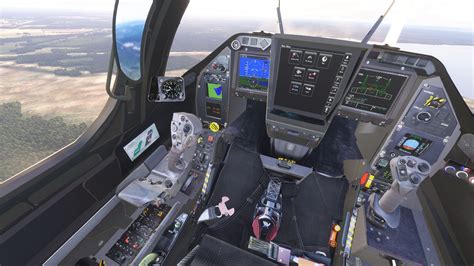
The RBE2-AA radar excels in multi-target tracking and simultaneous mode operation. It can scan for airborne threats, map terrain in three dimensions, and generate high-resolution ground imagery—all at the same time. This versatility transforms the Rafale into a true multirole platform, capable of switching seamlessly between air superiority and strike missions.
A defining feature of the Rafale’s radar capability is its integration with the SPECTRA electronic warfare suite. This advanced system not only detects enemy radar emissions but actively disrupts them using focused jamming techniques. By coordinating radar and electronic attack functions, the Rafale can reduce its visibility to adversaries without relying on stealth shaping alone.
The result is a fighter that thrives in contested environments, leveraging electronic dominance and data superiority to offset its lack of stealth. In many ways, the Rafale proves that information warfare is just as lethal as kinetic firepower.
3. Eurofighter Typhoon — Expanding the Battlefield with ECRS Mk.2
The Eurofighter Typhoon has undergone a dramatic transformation with the introduction of the ECRS Mk.2 AESA radar, positioning it as one of the most capable non-stealth fighters in the world.
This radar system pushes beyond traditional limitations by incorporating a mechanically repositionable AESA array, effectively expanding its field of view by up to 50%. This means the Typhoon can track targets across a wider arc without needing to point its nose directly at them—a crucial advantage in high-speed aerial engagements.
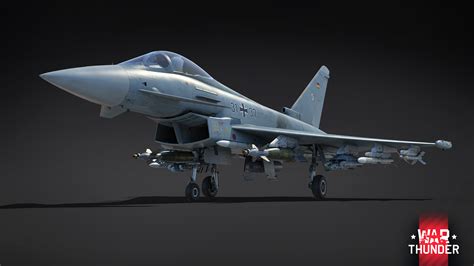
The ECRS Mk.2 is not just about detection; it is also a powerful electronic attack platform. It can simultaneously track multiple targets while conducting jamming operations, effectively blinding enemy sensors while maintaining its own situational awareness. This dual capability transforms the Typhoon into a hybrid fighter-electronic warfare asset.
One of the most significant implications of this upgrade is its synergy with long-range weapons like the Meteor missile. By combining extended detection range with advanced tracking and targeting, the Typhoon gains a formidable beyond-visual-range (BVR) engagement capability.
The investment in this radar reflects a broader strategic shift. Rather than relying solely on stealth, European air forces are embracing high-performance sensors and electronic warfare to maintain air superiority in increasingly contested environments.
2. Lockheed Martin F-35 Lightning II — The Sensor Fusion Powerhouse
The Lockheed Martin F-35 Lightning II redefines what radar means in modern warfare. Its AN/APG-81 AESA radar is not just a detection tool—it is a multi-domain intelligence system capable of performing roles far beyond traditional air combat.
At the heart of the F-35’s capability is its synthetic aperture radar (SAR) function. This technology allows the aircraft to generate incredibly detailed images of ground targets, even from long distances and through adverse weather conditions. The level of precision is so high that the F-35 can identify, track, and guide weapons onto targets with near-surgical accuracy.
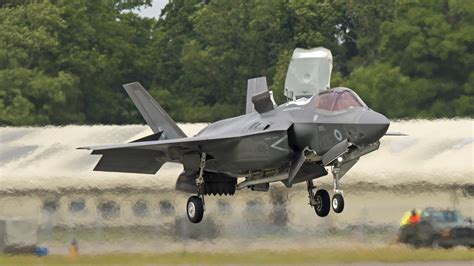
What truly sets the F-35 apart is its unparalleled sensor fusion architecture. The radar works in concert with distributed aperture cameras, electronic warfare systems, and secure data links to create a comprehensive, real-time picture of the battlefield. This information is not confined to the pilot—it is shared across a network of allied platforms, effectively turning the F-35 into a force multiplier.
This capability allows legacy aircraft to benefit from the F-35’s advanced sensors, extending its influence far beyond its own weapons range. In essence, the aircraft acts as a flying command node, orchestrating operations across air, land, and sea domains.
Despite compromises in speed and payload compared to specialized fighters, the F-35’s radar and sensor suite make it the most versatile combat aircraft in service today. Its true strength lies not in individual performance metrics, but in its ability to connect, inform, and dominate the battlespace.
1. Lockheed Martin F-22 Raptor — The Silent Apex Predator
The Lockheed Martin F-22 Raptor remains the benchmark for air superiority, and its AN/APG-77 AESA radar is a critical component of that dominance. Designed during an era of uncompromising engineering, the Raptor’s radar prioritizes stealth, power, and precision above all else.
Unlike many modern systems that emphasize networking and data sharing, the F-22’s radar is optimized for low probability of intercept (LPI). This means it can emit signals that are extremely difficult for enemy sensors to detect, allowing the Raptor to see without being seen.
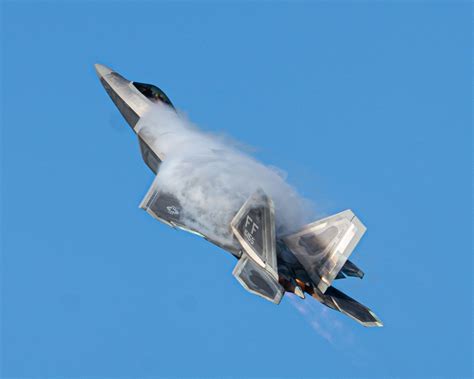
The APG-77 excels in long-range target detection and tracking, particularly in air-to-air combat scenarios. Its ability to engage multiple targets simultaneously, combined with the aircraft’s stealth and supercruise capabilities, makes it a lethal first-strike platform.
What sets the Raptor apart is its singular focus. While newer aircraft like the F-35 emphasize versatility, the F-22 is built to dominate the skies with unmatched efficiency and lethality. Its radar system reflects this philosophy, delivering exceptional performance while maintaining a minimal electromagnetic footprint.
Even in 2026, the full capabilities of the F-22’s radar remain classified, fueling its reputation as an aircraft that operates several steps ahead of its adversaries. It is not just a fighter—it is a hunter designed to control the very fabric of aerial combat.
The Future of Fighter Radar — Dominance Through Information
As air combat continues to evolve, the importance of radar will only intensify. The next generation of systems will push beyond AESA into cognitive radar, artificial intelligence integration, and quantum sensing technologies.
The trend is clear: victory will belong to those who can process, interpret, and act on information faster than their adversaries. Fighter jets are no longer defined solely by speed or maneuverability, but by their ability to dominate the electromagnetic spectrum.
From the multi-band innovations of the Su-57 to the network-centric power of the F-35 and the stealth precision of the F-22, these aircraft represent the cutting edge of radar technology. They are not just machines of war—they are gatekeepers of the invisible battlefield, where detection equals survival, and information equals power.