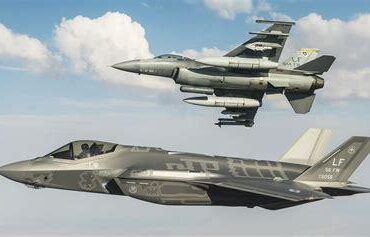
In an era where technological innovation moves at lightning speed, it’s remarkable that a select group of fighter jets born in the 1970s still dominate the skies. These aircraft are not merely relics of the Cold War — they are enduring symbols of aeronautical engineering brilliance, military pragmatism, and global defense geopolitics. With continual upgrades and strategic usage, these jets remain combat-relevant, proving that some machines are simply too effective to retire.
Grumman F-14 Tomcat: The Persian Lion Still Roars
The Grumman F-14 Tomcat, an icon of naval aviation and Hollywood fame, first took to the skies in 1970 and rapidly became one of the U.S. Navy’s most recognizable interceptors. Despite being retired by the United States in 2006, the F-14 lives on, uniquely and defiantly, in Iranian service.
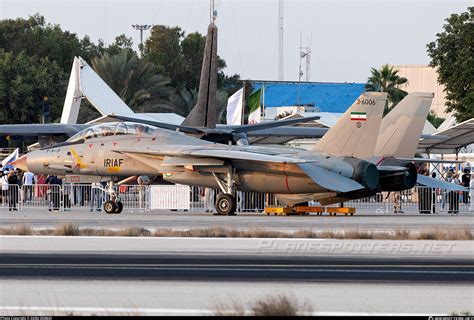
Developed initially to replace the F-4 Phantom II, the F-14 introduced radical innovations. Among the most revolutionary were its variable-sweep wings, which allowed pilots to adjust the wing geometry mid-flight for optimal performance in different speed regimes. This design, along with its twin Pratt & Whitney TF30-P-414A turbofans, offered the original F-14A impressive thrust, albeit with notable reliability issues that plagued early deployments.
Iran purchased 79 F-14As in the 1970s before the Islamic Revolution. Following the 1979 U.S. embargo, Iran was forced into a role of reverse-engineering and cannibalization, keeping its aging fleet airborne through ingenuity and black-market sourcing. Today, the aircraft continues to patrol Iranian airspace — the only nation still flying F-14s — with incremental domestic upgrades and constant maintenance support.
Despite its limitations, Iran’s F-14s still pose a credible aerial threat in regional conflicts, particularly with overhauled radars and adapted missile systems. Their continued operation underscores a simple truth: some machines are too valuable to discard.
SEPECAT Jaguar: Anglo-French Precision in Indian Skies
The SEPECAT Jaguar, a joint venture between British and French defense industries, emerged as a multirole aircraft aimed at close air support and tactical nuclear strike missions. With a maiden flight in 1968, the Jaguar officially entered service in the 1970s and rapidly gained prominence in the arsenals of several NATO-aligned countries.
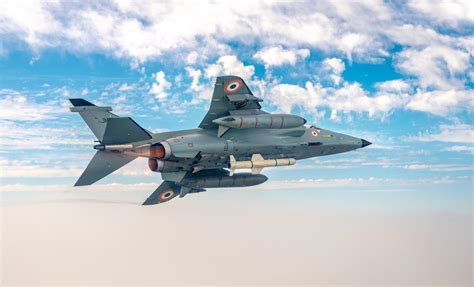
While the UK and France have since retired their Jaguars, India remains the last active operator, using a specially modified variant known as the Jaguar IS and IM for strike and maritime missions. India’s fleet, domestically maintained and upgraded with new avionics, targeting pods, and even DARIN III navigation systems, continues to provide crucial ground attack capabilities.
Powered by twin Rolls-Royce/Turbomeca Adour Mk 811 engines, India’s Jaguars boast a speed of Mach 1.3 and a combat radius of 1,000 miles. They are capable of delivering both conventional and nuclear payloads, making them a strategic asset in South Asia.
Despite the Indian Air Force’s modernization drive, the Jaguar’s rugged airframe and low-altitude penetration capability keep it relevant, especially with new Active Electronically Scanned Array (AESA) radars being trialed for integration.
Panavia Tornado: Germany’s Workhorse Under Threat of Retirement
The Panavia Tornado, a trinational European effort led by the UK, Germany, and Italy, was an ambitious project that produced one of the most versatile multirole combat platforms of the Cold War. Designed to operate in all weather conditions at low altitudes, the Tornado debuted in 1974 and entered active service in 1980.
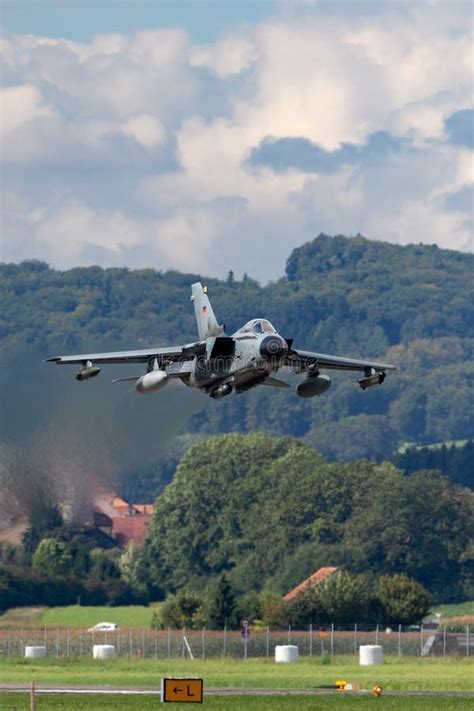
With variants tailored for strike (IDS), electronic combat/reconnaissance (ECR), and interception (ADV), the Tornado fleet became the backbone of NATO’s tactical air power for decades. Powered by Turbo-Union RB199 engines, the IDS variant — currently the only version still in German service — delivers a blistering top speed of Mach 2.2 and a range of over 2,400 miles.
Armed with AIM-9 Sidewinders, anti-ship missiles, 1,000-pound bombs, and a 27mm Mauser cannon, the Tornado still packs a punch. Germany, however, is steadily retiring these aircraft in favor of Eurofighter Typhoons, signaling the end of an era. Despite this, Tornados remain active, flying critical strike missions, including NATO drills and joint operations.
Their operational flexibility, combined with high-speed low-level strike capability, continues to make them indispensable — at least for now.
McDonnell Douglas F-15 Eagle: Still Reigning in Global Dominance
No list of enduring jets would be complete without the McDonnell Douglas F-15 Eagle — a name synonymous with air superiority. First flown in 1972, the F-15 has remained undefeated in air-to-air combat for over four decades, with over 100 confirmed kills and zero losses.
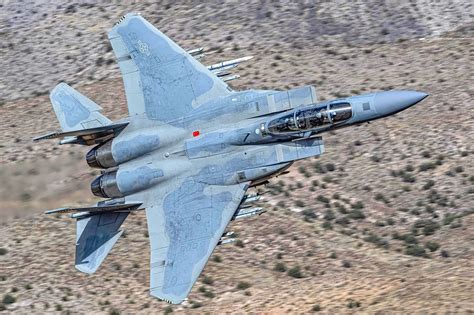
Initially designed purely for air dominance, the F-15 evolved into a strike fighter with the introduction of the F-15E Strike Eagle and, most recently, the F-15EX II. With a combat loadout that includes AMRAAMs, JDAMs, and precision-guided bombs, the F-15 offers unparalleled mission flexibility.
Powered by dual General Electric F110 or Pratt & Whitney F100 engines, the latest variants can reach speeds of Mach 3 and altitudes exceeding 65,000 feet. These jets offer ranges over 3,000 miles, depending on payload and configuration, allowing for both defensive and long-range strike capabilities.
Nations like the United States, Japan, Israel, Saudi Arabia, and Qatar continue to operate — and even procure — new F-15 variants. The F-15QA delivered to Qatar and the F-15EX to the USAF feature fly-by-wire controls, glass cockpits, and state-of-the-art radar systems, ensuring that the Eagle continues to soar far into the 21st century.
Lockheed Martin F-16 Fighting Falcon: The Global Warrior
Dubbed the “Fighting Falcon”, though more affectionately known as the “Viper” among pilots, the F-16 is arguably the most prolific and exported fourth-generation fighter in history. Since its first flight in 1974 and U.S. Air Force deployment in 1979, the F-16 has become a global aviation success story.
What sets the F-16 apart is its perfect balance of agility, cost-efficiency, and combat capability. It was the first aircraft designed to withstand 9G maneuvers and integrated with fly-by-wire flight controls — revolutionary at the time. It remains relevant through continuous upgrades, such as the F-16V (Viper) variant, which integrates advanced AESA radar, upgraded mission computers, and enhanced electronic warfare suites.
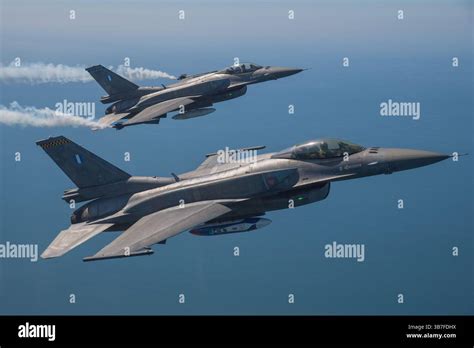
The F-16’s General Electric F110 or Pratt & Whitney F100 engines deliver thrust capable of propelling the jet to speeds of Mach 2, with a combat radius of over 500 miles, or extended ferry range exceeding 2,000 miles. Its arsenal is extensive, from air-to-air and air-to-ground missiles to precision-guided bombs and electronic pods.
Over 3,000 F-16s remain active across 29 nations, including the U.S., Turkey, Egypt, Pakistan, Greece, and Taiwan. Continuous production in new variants and modernization programs ensure the F-16 will remain a mainstay of global air power well beyond 2030.
Conclusion: When Engineering Excellence Defies Time
In the face of rapidly evolving drone warfare, stealth fighters, and space-based defense platforms, these 1970s-era jets remain enduring sentinels of air superiority. Their sustained relevance is not accidental; it is a product of visionary design, upgradeability, and pragmatic military economics. Each of these aircraft — the F-14 Tomcat, SEPECAT Jaguar, Panavia Tornado, F-15 Eagle, and F-16 Fighting Falcon — tells a unique story of technological foresight and operational resilience.
In many ways, their longevity is a quiet rebuke to disposable design philosophies. When machines are built with excellence and purpose, they don’t just survive — they thrive, even half a century later.