For many travelers, the 1970s represent the glamorous final chapter of aviation’s so-called Golden Age. Flying was still treated as an event rather than a chore. Airports felt elegant instead of industrial, airline cabins were spacious, and flight attendants delivered meals on real plates while passengers dressed for the occasion. Commercial aviation projected sophistication, exclusivity, and excitement in equal measure.
Fast-forward to today, and the experience has been radically reinvented. Modern aviation is safer, faster, more accessible, and far more efficient than it was half a century ago. Yet many of the comforts and luxuries that once defined air travel have disappeared in the pursuit of lower fares and higher passenger volumes. The transformation has been so dramatic that stepping onto a 1970s jumbo jet would feel almost surreal to modern travelers accustomed to crowded boarding gates, baggage fees, and tightly packed economy cabins.
The evolution of flying since the 1970s reflects broader social and technological changes. Security concerns reshaped airports. Deregulation revolutionized pricing. Airlines redesigned cabins for profitability. At the same time, advances in engineering and safety standards turned commercial aviation into one of the safest forms of transportation in human history.
The result is an airline industry almost unrecognizable from the one travelers experienced during the disco era.
Smoking Once Filled Airplane Cabins
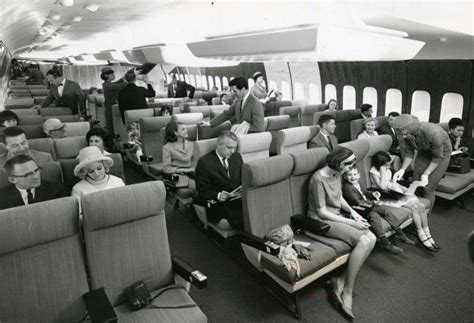
One of the most shocking differences between modern aviation and 1970s air travel was the widespread acceptance of smoking onboard aircraft. Today, the thought of cigarette smoke drifting through a pressurized cabin packed with hundreds of passengers seems unbelievable. In the 1970s, however, smoking was deeply embedded in everyday life, and airplanes were no exception.
Passengers routinely boarded flights carrying cigarette packs, cigars, and lighters without hesitation. Airlines designated smoking and non-smoking sections, but the separation was often symbolic at best. Smoke drifted freely through cabins, saturating seats, curtains, carpets, and ventilation systems. Even travelers seated in non-smoking areas frequently endured hours of secondhand smoke during long-haul journeys.
The Civil Aeronautics Board officially required domestic airlines in 1973 to provide both smoking and non-smoking seating sections. Flight attendants commonly asked passengers the now-iconic question: “Smoking or non-smoking?” The phrase became synonymous with air travel for an entire generation.
The dangers associated with onboard smoking gradually became impossible to ignore. Health concerns surrounding secondhand smoke grew throughout the 1980s, while fire risks remained a persistent danger in aircraft cabins. One of aviation’s deadliest smoking-related tragedies occurred in 1973 when a discarded cigarette ignited a fire aboard a Varig flight in Brazil, contributing to the deaths of 123 people after an emergency landing.
Restrictions slowly tightened over time. Short domestic flights began banning smoking in the late 1980s, and President George H.W. Bush signed legislation in 1990 prohibiting smoking on flights lasting six hours or less. Full bans on all commercial flights did not arrive until 2000.
Ironically, despite smoking bans becoming universal, commercial aircraft are still legally required to contain ashtrays. Aviation regulators concluded that if a passenger illegally lights a cigarette, a safe disposal method is still necessary to prevent fires. Few design details better capture the strange transition between aviation’s smoky past and its highly regulated present.
Airport Security Became Intensely Strict
Flying in the 1970s involved astonishingly little security compared to modern standards. Travelers could arrive at airports minutes before departure, walk directly to gates without elaborate screening, and board planes with minimal oversight. Friends and family often accompanied passengers all the way to departure gates simply to wave goodbye.
That relaxed environment changed because of rising security threats throughout the late 20th century.
During the 1960s and early 1970s, commercial aviation faced a surge in hijackings, many involving flights diverted to Cuba or other destinations. In response, the Federal Aviation Administration introduced stronger cockpit protections and increased the presence of armed Sky Marshals on selected routes.
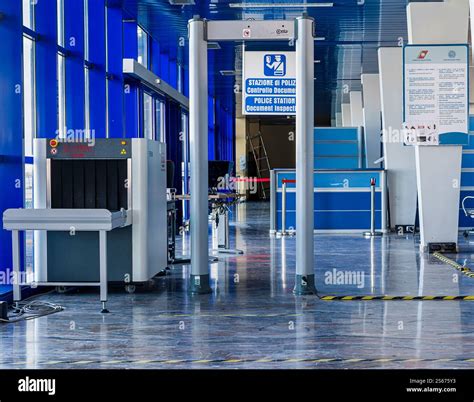
Metal detector screenings for passengers became mandatory in 1973, marking one of the first major shifts toward modern airport security. Bomb-sniffing dogs also appeared in major airports during this period, though procedures still remained relatively relaxed by today’s standards.
For decades afterward, airport terminals retained an openness that now feels unimaginable. Before September 11, 2001, non-ticketed visitors could pass through security checkpoints freely. Families greeted arriving passengers directly at gates, and airports functioned more like public gathering spaces than tightly controlled transportation hubs.
The terrorist attacks of September 11 fundamentally reshaped global aviation security forever. The creation of the Transportation Security Administration introduced centralized federal oversight of passenger screening in the United States. Cockpit doors became heavily reinforced. Restrictions on liquids, shoes, electronics, and identification requirements became permanent parts of air travel.
Modern travelers now navigate layered security systems involving full-body scanners, biometric identification technology, explosive trace detection, advanced baggage imaging, and no-fly databases. International airports increasingly rely on facial recognition and automated border control systems that would have seemed futuristic in the 1970s.
While passengers often complain about long TSA lines and strict rules, the numbers reveal the impact. Modern commercial aviation security is dramatically stronger than it was during the Golden Age of travel.
Airline Deregulation Completely Changed Ticket Pricing
Perhaps no single event transformed commercial aviation more than airline deregulation in 1978. Before deregulation, the federal government tightly controlled airline routes and ticket prices through the Civil Aeronautics Board. Airlines could not freely slash prices to attract customers, which meant competition focused heavily on luxury, service quality, and onboard amenities instead.
That environment created the famously glamorous flying experience many people nostalgically associate with the 1960s and 1970s. Airlines competed through elegant lounges, elaborate meals, complimentary alcohol, and superior customer service because ticket prices were largely fixed.
Flying was expensive, but passengers generally received an all-inclusive experience. Checked luggage, meals, drinks, and seat selection came bundled with the fare. Airlines viewed comfort as a core part of their brand identity rather than an optional upgrade.
Deregulation changed the economics of aviation almost overnight.
Airlines suddenly gained freedom to set their own routes and fares, triggering intense competition across the industry. Ticket prices rapidly declined, particularly after adjusting for inflation. Modern passengers often pay roughly half what travelers paid in the late 1970s for equivalent routes.
The democratization of air travel followed quickly. Millions of middle-class travelers who once viewed flying as financially unreachable suddenly gained access to affordable flights. Budget carriers expanded aggressively, new routes emerged, and passenger numbers surged worldwide.
Yet lower fares came with tradeoffs. Airlines shifted toward unbundled pricing models that monetized virtually every aspect of the travel experience. Checked bags, onboard meals, Wi-Fi access, priority boarding, and even seat assignments evolved into separate revenue streams.
Modern airline profitability increasingly depends on ancillary fees rather than ticket sales alone. Travelers who purchase the cheapest fares often encounter a maze of restrictions and extra charges that barely existed during the regulated era.
The transformation reflects a broader shift in consumer priorities. Most passengers ultimately chose affordability over luxury. Airlines adapted accordingly.
Economy Seats Became Smaller And More Crowded
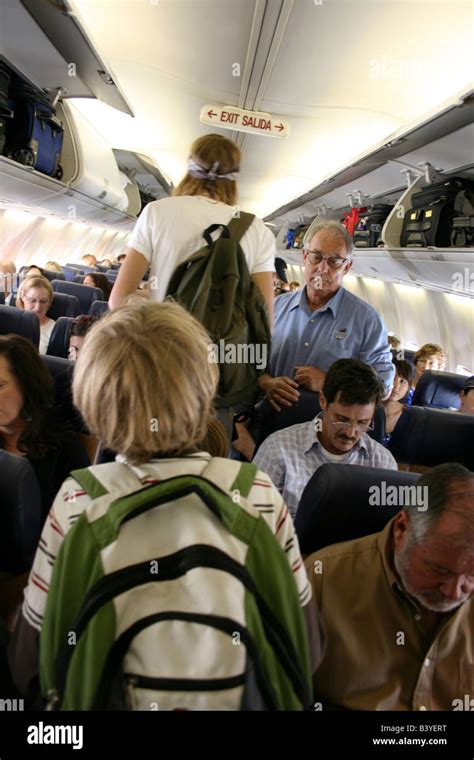
One of the most physically noticeable changes in modern aviation is the shrinking amount of personal space available in economy class cabins. Travelers who remember flying decades ago are not imagining things — airline seats really were larger and more spacious in the 1970s.
Before deregulation intensified financial pressure on airlines, carriers had less incentive to maximize passenger density. Cabins prioritized comfort because airlines competed primarily through service quality rather than low fares.
In the 1970s, economy seats commonly measured around 18 inches wide with approximately 34 inches of seat pitch, the industry term describing the distance between rows. That configuration provided noticeably more shoulder room and legroom than most economy cabins today.
Modern airlines aggressively optimize cabin layouts to increase revenue per flight. Average seat width has dropped by roughly an inch on many aircraft, while seat pitch frequently shrank to around 30 or 31 inches. On certain ultra-low-cost carriers, legroom can feel exceptionally tight even for average-sized adults.
The cumulative effect becomes especially uncomfortable during long-haul flights. Passengers compete for elbow space, knees press into seatbacks, and reclining disputes have become routine features of modern travel culture.
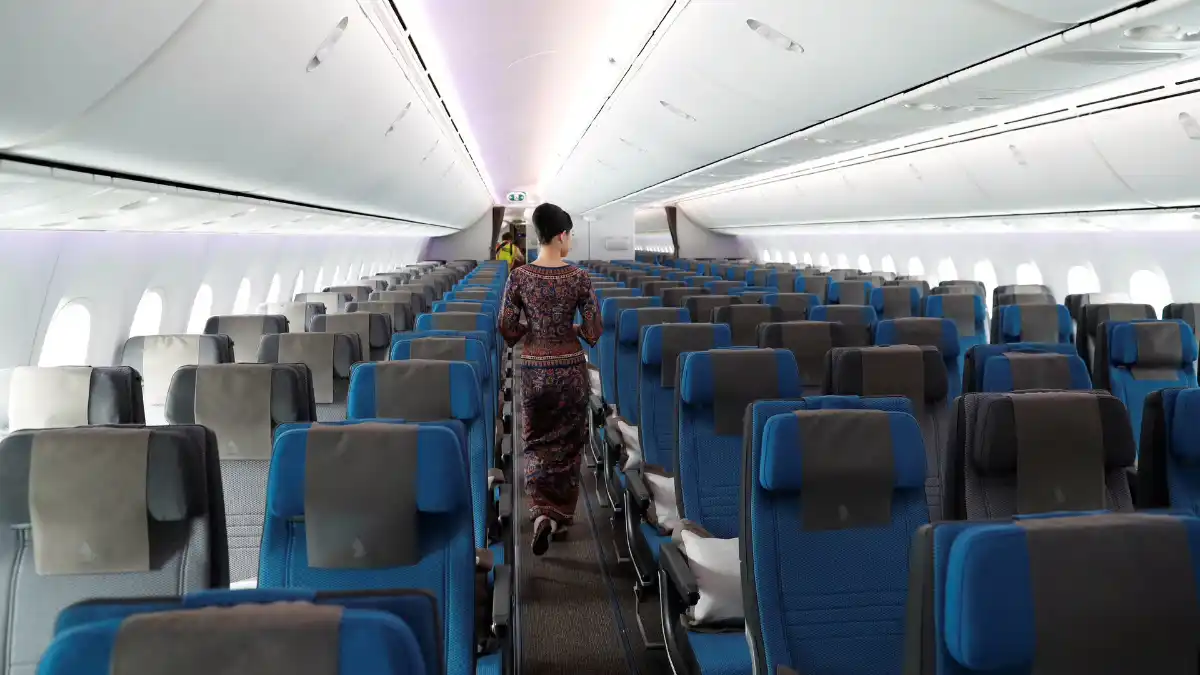
Airlines attempted to soften passenger frustration through redesigned seat engineering. Modern seats often feature thinner profiles intended to create the illusion of additional space while allowing carriers to install extra rows. Unfortunately, thinner padding can also reduce comfort during long flights.
Cabin densification became particularly important after the rise of low-cost carriers. Budget airlines demonstrated that travelers were willing to sacrifice personal space in exchange for dramatically cheaper fares. Legacy airlines responded by adopting similar configurations to remain competitive.
The result is an aviation industry that carries far more passengers than ever before but often delivers a significantly less comfortable experience in economy class.
Modern Flying Is Dramatically Safer Than It Was In The 1970s
Despite complaints about cramped cabins, airport delays, and security lines, one aspect of aviation has improved beyond almost anyone’s expectations: safety.
The 1970s may evoke nostalgia for glamorous travel experiences, but commercial aviation was significantly more dangerous during that era. Fatal accident rates were substantially higher, and safety technologies remained relatively primitive compared to modern systems.
Between the mid-1960s and late 1970s, commercial aviation averaged roughly one passenger death per 350,000 travelers. Fatal crashes occurred with unsettling regularity by today’s standards, and many accidents revealed weaknesses in pilot training, air traffic control systems, weather forecasting, aircraft design, and maintenance oversight.
Modern aviation transformed safety through relentless investigation and technological advancement.
The National Transportation Safety Board played a crucial role by rigorously examining crashes and identifying root causes. Each accident generated lessons that reshaped procedures, regulations, and aircraft engineering standards across the industry.
Today’s aircraft contain advanced collision-avoidance systems, terrain awareness warnings, sophisticated autopilot technology, enhanced weather radar, and real-time diagnostic monitoring systems unimaginable in the 1970s. Cockpit resource management training dramatically improved pilot communication and decision-making under pressure.
Air traffic control systems also evolved significantly. Radar coverage expanded, satellite navigation increased precision, and computerized monitoring reduced the risk of midair collisions.
As a result, commercial aviation is now extraordinarily safe. Modern fatality rates average roughly one death per 13.7 million passengers, representing one of the most remarkable safety improvements in transportation history.
Even when high-profile incidents dominate headlines, the broader statistics remain astonishingly reassuring. Millions of flights operate safely every year across increasingly crowded global skies.
The Golden Age of flying may have delivered glamour, spacious cabins, and fine dining at 30,000 feet. But modern aviation achieved something far more important: making air travel accessible and overwhelmingly safe for billions of people worldwide.