Commercial aviation did not evolve in gentle steps—it leaped forward in bold, engineering-driven revolutions. At the center of many of those leaps stands Boeing, a manufacturer whose aircraft have repeatedly reset the boundaries of speed, scale, efficiency, and passenger experience. From the early days of metal monoplanes to composite-built long-haul marvels, six aircraft in particular reshaped not just fleets, but the very economics and psychology of air travel.
What makes these aircraft remarkable is not simply their technical specifications, but the way each one arrived at precisely the right moment—when the industry was ready to expand, when passengers demanded more, and when airlines needed new tools to survive and thrive. Each of these Boeing jets did more than fly; they rewrote expectations.
Boeing 247: The Aircraft That Professionalized Air Travel
In 1933, the Boeing 247 didn’t just enter service—it quietly declared that commercial aviation had grown up. At a time when many aircraft still resembled fragile experiments, the 247 introduced an all-metal airframe, retractable landing gear, and a cantilever wing design that eliminated the need for external bracing. These features may sound standard now, but back then, they were nothing short of radical.
Passengers stepping aboard the 247 encountered something new: a fully enclosed, streamlined cabin that prioritized comfort and reliability. With a capacity of ten passengers and a three-person crew, it wasn’t large—but it was fast, dependable, and efficient. Cruising at approximately 189 mph, it outpaced competitors by nearly 50%, turning long, exhausting journeys into something approaching routine travel.
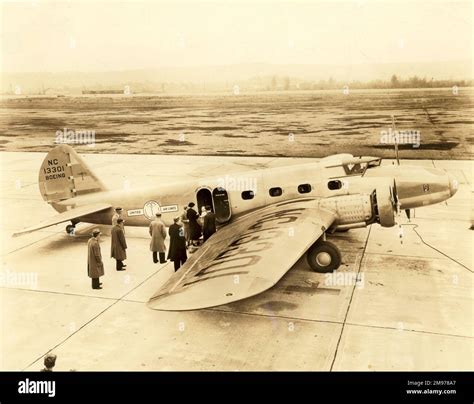
Its real breakthrough, however, lay in operational consistency. Airlines like United Air Lines used the 247 to dramatically reduce transcontinental travel times, achieving a record-setting 19.5-hour journey from San Francisco to New York. For the first time, passengers could trust that schedules meant something.
Though only 75 units were built, the Boeing 247 established the blueprint for modern airliners—metal construction, aerodynamic efficiency, and system reliability. It wasn’t just a product; it was a declaration that aviation had entered a new era of seriousness.
Boeing 707: The Jet That Shrunk the World
By the late 1950s, demand for faster travel had reached a boiling point. The answer arrived in the form of the Boeing 707, the aircraft that ushered in the jet age and made propeller-driven airliners feel instantly obsolete.
With cruising speeds approaching Mach 0.8, the 707 didn’t just improve travel times—it slashed them. Flights that once required long, multi-stop itineraries became direct and dramatically shorter. Suddenly, crossing oceans felt less like an expedition and more like a commute.
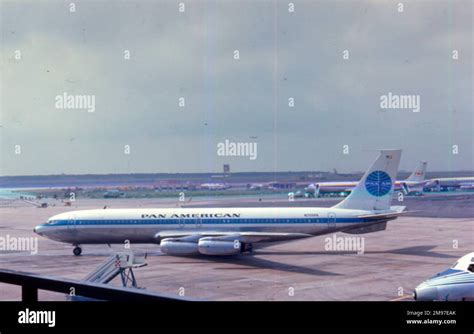
The aircraft could carry between 140 and 189 passengers, a significant increase over earlier designs. Airlines such as Pan American World Airways and Trans World Airlines quickly embraced the 707, recognizing its ability to meet surging post-war travel demand.
What truly set the 707 apart was its role in democratizing international travel. While still not inexpensive, jet travel became accessible to a broader segment of society. Business trips across continents became practical, and leisure travel began its transformation into a global phenomenon.
Even decades later, the 707’s DNA persists. Its military derivatives, like the KC-135 Stratotanker and E-3 Sentry, continue to operate, a testament to the aircraft’s robust design and enduring relevance.
Boeing 737: The Relentless Workhorse of Short-Haul Aviation
If the 707 made long-distance travel faster, the Boeing 737 made frequent travel possible. Introduced in 1967, this narrowbody aircraft became the backbone of short- and medium-haul aviation, quietly revolutionizing how airlines structured their networks.
At first glance, the 737’s initial capacity—around 85 to 130 passengers—seemed modest. But its brilliance lay in flexibility. It could operate from smaller airports, handle high-frequency routes, and deliver reliable performance day after day. Airlines quickly realized that the 737 wasn’t just an aircraft—it was a business model enabler.
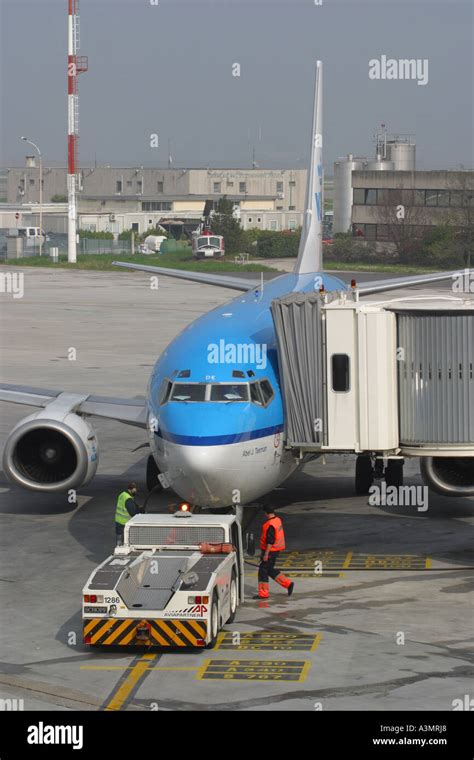
Carriers like Southwest Airlines and Ryanair built entire strategies around the 737, pioneering the point-to-point network model. This approach bypassed traditional hubs, offering passengers more direct routes and higher flight frequencies.
Over time, the 737 evolved through multiple generations—Classic, Next Generation, and MAX—each introducing improved engines, avionics, and passenger capacity. With over 12,000 aircraft produced, it became one of the most successful commercial aircraft families in history.
Its true legacy is subtle but profound: the normalization of frequent, affordable air travel. Today’s expectation that flights should be available at almost any time of day owes much to the 737’s relentless efficiency.
Boeing 747: The Jumbo Jet That Made Mass Travel Possible
Few aircraft have captured the public imagination like the Boeing 747. Introduced in the late 1960s, it didn’t just expand capacity—it redefined what scale meant in aviation.
With its unmistakable upper-deck “hump” and widebody configuration, the 747 could carry over 350 passengers in its early variants—more than double that of many contemporaries. This massive increase in capacity drove down the cost per passenger, making long-haul travel significantly more affordable.
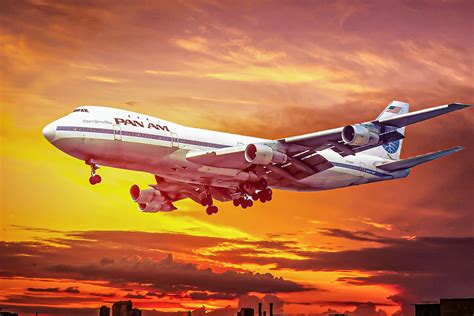
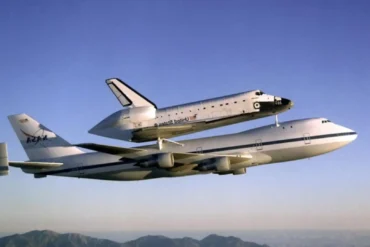
The story of the 747 is as ambitious as the aircraft itself. To build it, Boeing constructed the world’s largest building by volume in Everett, Washington. Inside that facility, over 1,500 aircraft would eventually be assembled—a production run spanning more than half a century.
Airlines such as British Airways and Pan Am used the 747 to expand global connectivity, opening routes that once seemed impractical. Later variants like the 747-400 pushed range beyond 7,000 nautical miles, enabling nonstop intercontinental flights.
But the 747 wasn’t just about numbers—it elevated the passenger experience. Wider cabins, multiple aisles, and even onboard lounges transformed flying into something closer to an event than a necessity. For decades, boarding a 747 carried a sense of occasion.
Boeing 777: The Twin-Engine Giant That Rewrote Efficiency
When the Boeing 777 entered service in 1995, it quietly dismantled a long-held assumption: that long-haul flights required three or four engines. Powered by two enormous turbofans, the 777 proved that twin-engine aircraft could dominate long-distance travel.
This wasn’t just an engineering feat—it was an economic revolution. With fewer engines to maintain and improved fuel efficiency, airlines could operate long-haul routes at significantly lower cost. The introduction of ETOPS certification allowed the 777 to fly extended routes over oceans, opening new possibilities for global connectivity.
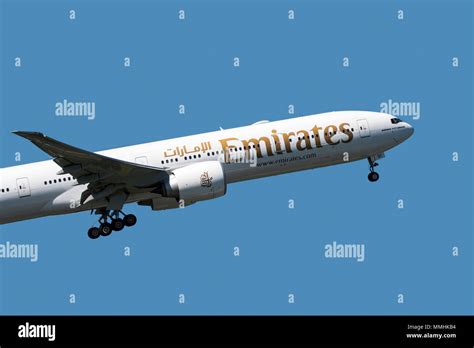
The 777 also marked a technological leap. It was Boeing’s first aircraft designed entirely using computer-aided design, and it introduced fly-by-wire controls, replacing traditional mechanical systems. Combined with advanced avionics and glass cockpits, these innovations improved both safety and pilot workload.
Variants like the 777-300ER became industry favorites, capable of carrying up to nearly 500 passengers over distances exceeding 7,000 nautical miles. It effectively replaced older quadjets like the 747 and Airbus A340 on many routes, signaling a shift toward more efficient long-haul operations.
Today, the upcoming 777X continues that legacy, pushing the boundaries of size and efficiency even further.
Boeing 787 Dreamliner: The Aircraft That Redefined Modern Efficiency
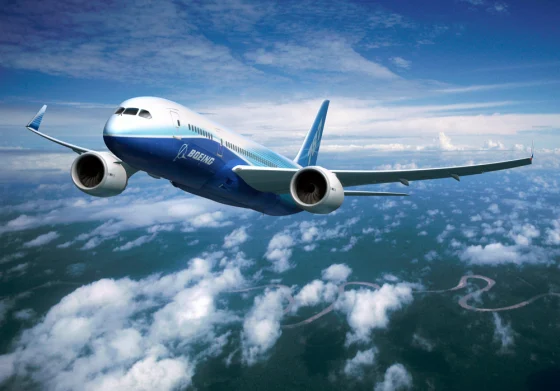
The Boeing 787 Dreamliner, introduced in 2011, represents a different kind of revolution—one focused on materials, efficiency, and passenger well-being. Built with approximately 50% composite materials, the 787 is lighter, more corrosion-resistant, and significantly more fuel-efficient than previous widebody aircraft.
This reduction in weight translates directly into performance. The 787 consumes around 20% less fuel, enabling airlines to operate long-haul routes with lower costs and reduced environmental impact. Its range—up to 7,565 nautical miles for the 787-9—allows airlines to open long, thin routes that would be unprofitable with larger aircraft.
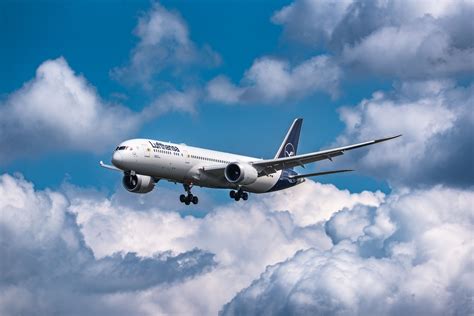
But the Dreamliner’s impact isn’t limited to economics. It fundamentally reimagines the passenger experience. Higher cabin humidity, larger windows, and lower cabin altitude reduce fatigue, making ultra-long-haul flights more tolerable—even enjoyable.
Airlines have leveraged the 787 to push boundaries, launching routes like Auckland to New York, stretching close to 18 hours. At the same time, premium cabin innovations—such as next-generation business class suites—have elevated expectations for comfort and privacy.
The 787 doesn’t just connect cities; it connects them more intelligently, efficiently, and comfortably than ever before.
The Lasting Legacy of Boeing’s Game-Changers
What ties these six aircraft together is not just innovation, but timing. Each arrived when the industry stood at a crossroads—when existing technology could no longer meet demand, and bold ideas were needed to move forward.
The Boeing 247 introduced professionalism. The 707 delivered speed. The 737 enabled frequency. The 747 unlocked scale. The 777 perfected efficiency. The 787 redefined sustainability and comfort.
Together, they didn’t just shape commercial aviation—they made the modern, interconnected world possible. And if history is any indication, the next revolution is already taking shape somewhere on a Boeing drawing board, waiting for its moment to take flight.