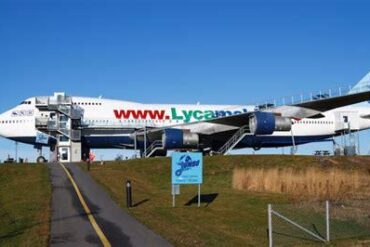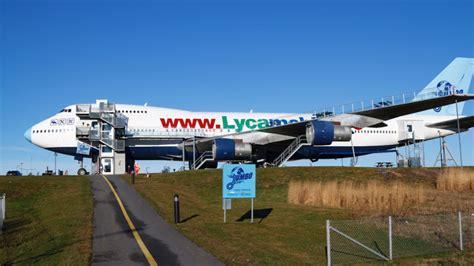
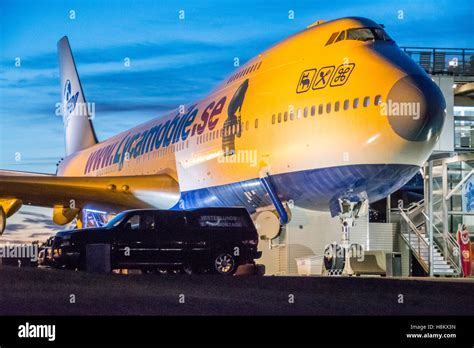
Nestled on the outer edge of Stockholm Arlanda Airport, the now-closed Jumbo Stay stood as a magnificent testament to innovative hospitality. This extraordinary hostel, ingeniously housed within a decommissioned Boeing 747-212B, captured the imagination of global travelers, aviation enthusiasts, and architecture admirers alike. Officially opened on January 15, 2009, and permanently shuttered in March 2025, Jumbo Stay represented more than just accommodation — it embodied the seamless fusion of aeronautical heritage and modern hospitality.
Once an airborne marvel for the likes of Singapore Airlines, Pan Am, and Cathay Pacific, this wide-bodied jetliner found an unexpected second life thanks to Oscar Diös, a Swedish entrepreneur with a vision to convert unusual structures into youth hostels. Diös saw potential in the grounded giant when it lay idle after its last stint with the bankrupt airline Transjet. What followed was a meticulous, multimillion-dollar transformation that reinvented the jet into one of the world’s most unconventional hotels.
Aviation History Embedded in Steel and Spirit
Originally registered as 9V-SQE, the aircraft began its service with Singapore Airlines in 1976. From there, it was rebadged as N727PA Clipper Belle of the Sky under Pan Am and continued its global voyage with carriers such as Garuda Indonesia. After decades of faithful service, the jet was parked at Arlanda, seemingly destined for dismantling — until Diös intervened. His ambition to open a themed hostel near the airport coincided perfectly with the availability of the aircraft. The idea, bold and untested, was embraced by the Sigtuna Municipality, which granted him the necessary permits by late 2007.
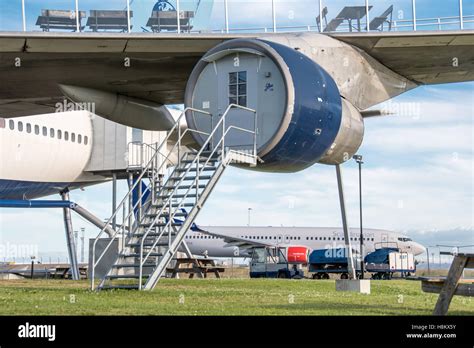
The transformation process began in January 2008, involving a comprehensive interior strip-down — over 450 passenger seats were removed, and only a few iconic features were preserved, such as the cockpit controls and selected original windows. The aircraft was placed atop a concrete base, with steel cradles securing the landing gear. Accessibility was ensured via a set of external metal stairs and an elevator, turning the static plane into a fully functional building. The cost? Over $3 million USD.
Rooms with Wings: Accommodations Onboard the Jumbo Stay
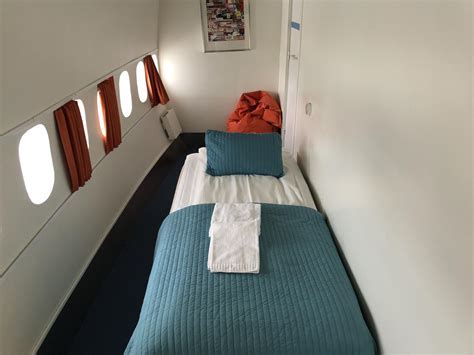
The interior of the aircraft was repurposed to house 33 rooms and a total of 76 beds, making efficient use of the limited 353 m² available. Every inch had to serve a function, resulting in a layout that married creativity with precision. The rooms were compact, averaging 6 m² in size, yet thoughtfully designed for comfort. Some were nestled in unconventional locations like the engine nacelles and wheel wells, adding to the novelty factor.
Jumbo Stay offered two standout suites:
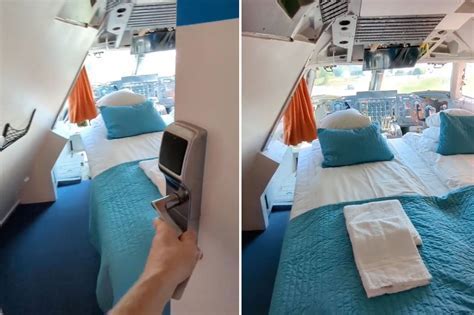
- The Cockpit Suite: Located on the upper deck, this flagship room provided a panoramic view from the pilot’s original windows. Outfitted with a private ensuite bathroom, it allowed guests to sleep where pilots once commanded the skies.
- The Black Box Suite: Another upper deck gem with private amenities and aviation-themed decor.
For budget travelers, shared bathrooms served the majority of rooms, but clever design and pristine upkeep ensured a positive guest experience.
Beyond Sleeping Quarters: Café, Lounge, and Observation Deck
Transforming the aircraft’s first-class section into a public café allowed for a lively communal space. Open to both guests and day visitors, the café served light snacks, continental breakfasts, and beverages. With microwave ovens available, self-catering was also possible. Whether awaiting a late-night flight or simply curious about the aircraft, travelers could stop in for coffee beneath the preserved cabin walls.
Above the main floor, a conference lounge featuring eight first-class airline seats offered a unique business meeting location — the only one of its kind within a jet still sitting on its wheels. For plane spotters, the converted wing patio on the aircraft’s left side provided an unmatched view of taxiing aircraft at Arlanda.
From Hostel to Landmark: An Engineering and Cultural Marvel
Executing such a renovation inside an aircraft shell presented monumental challenges. The cylindrical fuselage imposed spatial restrictions unlike traditional hotels. Engineers had to find inventive solutions for plumbing, wiring, and insulation, all while respecting aviation heritage and local building codes. The finished product retained just enough of the plane’s original identity to delight aviation fans while ensuring comfort met hostel standards.
This wasn’t just a hotel — it was an icon, often featured in travel documentaries, blogs, and news outlets. It earned a place in countless travel bucket lists, especially for those intrigued by aviation nostalgia. Civil wedding ceremonies took place on the observation deck, and themed receptions were hosted in the lounge, turning the hostel into a memory-making machine.
The Final Descent: Bankruptcy and Closure in 2025
In March 2025, after 16 years of quirky yet beloved operation, the Jumbo Stay project came to a halt. Oscar Diös declared bankruptcy, citing rising operational costs, a drop in tourism, and the increasing maintenance demands of the aging structure. The announcement was met with public sadness and nostalgic tributes across social media. Rumors swirled about potential buyers, but the future of the aircraft remained uncertain — with some sources warning it might be scrapped entirely.
The loss wasn’t merely of a business. It was a cultural and engineering gem — an emblem of what imagination can accomplish when met with the boldness to defy convention. It was also one of the few tangible links between Stockholm’s hospitality scene and a global aviation legacy.
Legacy in the Skies: Jumbo Stay’s Enduring Appeal
Although its doors are closed, the memory of Jumbo Stay continues to fly high. It remains one of the most innovative examples of adaptive reuse architecture, where the soul of a machine was preserved and reshaped into a space of warmth, comfort, and storytelling. From the roar of jet engines to the murmur of hostel guests, the aircraft journeyed through decades, airlines, and continents before becoming an international icon of sustainable travel.
The idea that something as monumental and industrial as a Boeing 747 could be repurposed into a space of human connection inspired designers, hostel operators, and travel enthusiasts around the world. The project’s success paved the way for similar ventures — from train carriage hotels to boat hostels — but none captured hearts quite like this.
Jumbo Stay was not just an accommodation choice — it was a destination, a conversation piece, and for many, the only time they would sleep inside a jet without ever leaving the ground. That sentiment alone ensures that, though grounded, Jumbo Stay will never truly be forgotten.