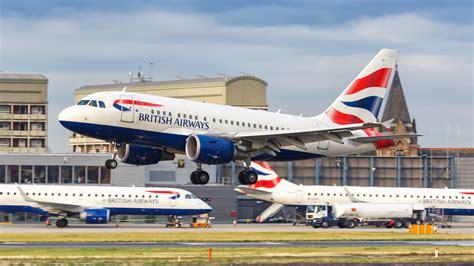
British Airways has operated some of the world’s most recognizable long-haul aircraft, from the supersonic Concorde to the iconic Boeing 747. Yet one of its most fascinating transatlantic operations involved an aircraft that seemed completely out of place on such a prestigious route. Between 2009 and 2020, the airline deployed the tiny Airbus A318 on exclusive flights between London and New York, creating a premium travel experience unlike anything else in commercial aviation.
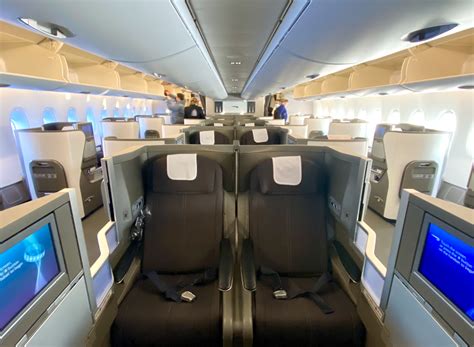
Instead of relying on large, widebody aircraft filled with hundreds of passengers, British Airways transformed the smallest member of the Airbus A320 family into a boutique business-class jet. With only 32 fully flat Club World seats, personalized service, and departures from London City Airport, the aircraft became a favorite among executives seeking speed, convenience, and comfort over sheer capacity.
The concept demonstrated that luxury air travel was not always about flying on the biggest aircraft. Instead, British Airways built an experience around efficiency, exclusivity, and access to the heart of London’s financial district, offering a product specifically designed for premium corporate travelers.
Why British Airways Chose the Airbus A318 for New York Flights
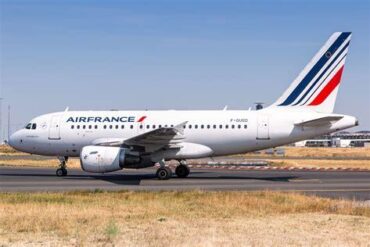
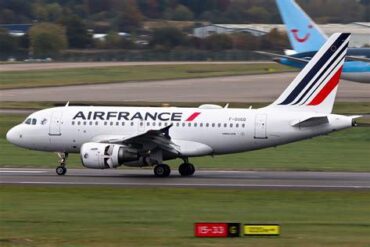
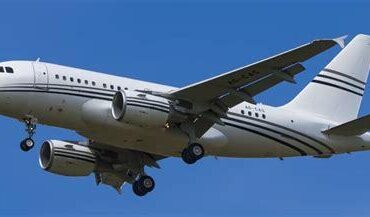
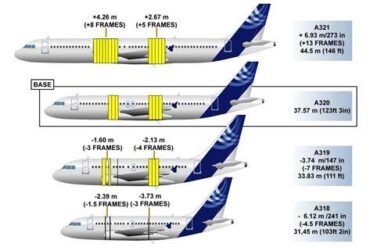
At first glance, the Airbus A318 appeared to be an unusual choice for crossing the North Atlantic. Nicknamed the “Baby Bus,” the aircraft was primarily designed for short-haul operations, regional services, and airports with limited demand. Its relatively small size made it uncommon even among European carriers, while most airlines preferred the larger A319 and A320 variants.
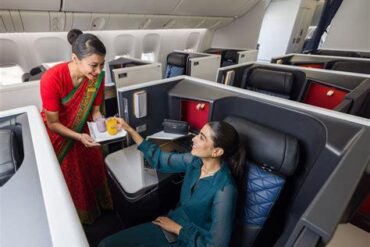
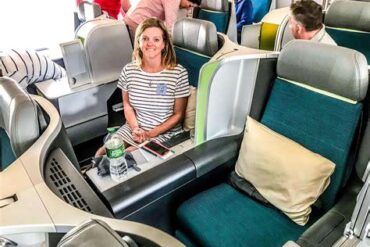
British Airways saw an opportunity that other airlines largely ignored. Rather than maximizing passenger numbers, it focused on maximizing convenience for high-paying business travelers. The airline completely reconfigured both A318 aircraft into an all-business-class layout, reducing capacity to only 32 seats arranged in a spacious 2-2 configuration. Every passenger enjoyed a fully flat bed, generous personal space, and premium onboard service normally associated with flagship long-haul aircraft.
This exclusive cabin transformed the A318 into a flying private club. Without economy passengers or crowded aisles, boarding was quick, cabin service was highly personalized, and travelers experienced a quieter atmosphere throughout the journey.
London City Airport Created a Major Competitive Advantage
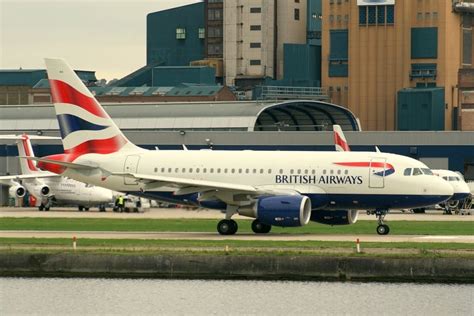
Perhaps the biggest innovation was not the aircraft itself but its departure airport. Rather than operating from Heathrow, British Airways based the service at London City Airport, which sits much closer to London’s financial center than the capital’s primary international hub.
For executives working in Canary Wharf or the City of London, reaching London City Airport often required significantly less travel time than commuting to Heathrow. Business travelers could leave the office later, spend less time in traffic, and complete airport formalities much faster thanks to the smaller terminal.
This convenience became one of the route’s strongest selling points. Although Heathrow offered numerous nonstop services to New York, few could match the overall time savings achieved by combining a downtown airport with an expedited premium travel experience.
The Clever Shannon Stop That Saved Time Overall
Although the Airbus A318 possessed impressive capabilities, operating nonstop from London City Airport presented performance challenges. The airport’s short runway limited the aircraft’s maximum takeoff weight, preventing it from carrying enough fuel for a fully loaded westbound Atlantic crossing.
British Airways solved the problem with an innovative operational strategy. Westbound flights stopped briefly at Shannon Airport in Ireland, where the aircraft refueled while passengers completed United States immigration and customs through preclearance facilities.
Rather than viewing the stop as an inconvenience, many travelers appreciated its advantages. Upon landing at New York’s John F. Kennedy International Airport, passengers arrived as domestic travelers, bypassing the often lengthy immigration lines that greeted most international arrivals. Despite the intermediate stop, the overall travel experience frequently remained competitive with nonstop alternatives because of the significant time saved both before departure and after arrival.
A Premium Service Inspired by Concorde
British Airways emphasized the importance of the route by assigning prestigious flight numbers once reserved for Concorde operations. Services operated as BA1, BA2, BA3, and BA4, immediately associating the A318 flights with one of the airline’s most legendary products.
While the aircraft itself could not match Concorde’s speed, the overall philosophy shared several similarities. Both services targeted premium travelers, emphasized convenience over capacity, and aimed to minimize the total journey time between London’s business district and New York.
The boutique nature of the operation also reflected an era when airlines increasingly experimented with specialized premium products rather than simply expanding aircraft size.
The Two Aircraft That Defined the Operation
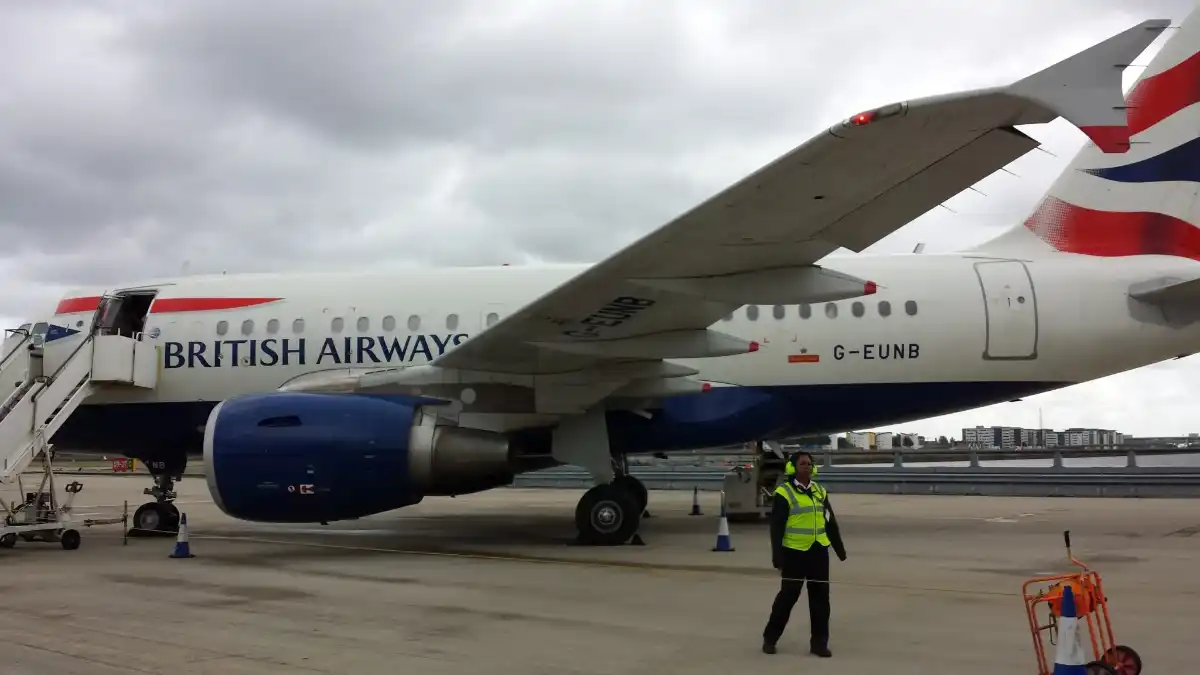
Only two Airbus A318 aircraft ever performed this unique mission. Registered as G-EUNA and G-EUNB, both entered British Airways service during 2009 and remained dedicated primarily to the London City-New York route.
Each aircraft featured identical interiors with 32 fully flat Club World seats, offering one of the highest passenger-to-crew service ratios in the airline’s network. Every aspect of the cabin emphasized comfort instead of density, reinforcing the exclusive character of the service.
G-EUNA remained with British Airways until the route ended in 2020 before eventually being scrapped in 2021 after pandemic-related storage. G-EUNB followed a different path, leaving British Airways in 2017 for Titan Airways, but it too was ultimately retired and dismantled during 2021.
Why the Airbus A318 Service Eventually Disappeared
Despite attracting loyal customers, the economics behind operating such a specialized fleet became increasingly difficult. Maintaining just two aircraft for a niche premium service created high operating costs, while newer long-range narrowbody aircraft and improved business-class products on conventional flights reduced the route’s competitive advantage.
By early 2020, British Airways had already reduced flight frequencies before the global pandemic dramatically accelerated changes across international aviation. The final scheduled Airbus A318 service took place in March 2020, bringing an end to one of the industry’s most distinctive premium offerings.
Although the pandemic played a decisive role, shifting corporate travel patterns and changing airline economics meant the service was unlikely to survive indefinitely.
The Airbus A318 Has Become an Aviation Rarity
The retirement of British Airways’ transatlantic operation also reflected the Airbus A318’s broader decline worldwide. Airlines generally favored larger members of the A320 family, whose additional seating capacity generated stronger financial returns while maintaining similar operating costs.
Today, the aircraft has become one of commercial aviation’s rarest active airliners. Only a handful remain in scheduled passenger service, highlighting just how unusual British Airways’ ambitious transatlantic experiment truly was.
Although its career lasted barely a decade, the Airbus A318 carved out a unique chapter in aviation history. By pairing a small aircraft with an exceptional premium product, British Airways proved that innovation sometimes comes not from flying larger airplanes, but from completely rethinking how business travelers value time, convenience, and exclusivity. Even years after its retirement, the “Baby Bus” remains one of the most memorable and unconventional aircraft ever to cross the Atlantic.