The Airbus A318 stands as the smallest member of the A320 family, yet it encapsulates a compelling blend of versatility, advanced engineering, and niche-market agility. Designed to service airports with stringent operational constraints and lower passenger demand, the A318 offers a unique solution for operators seeking mainline aircraft features in a compact footprint. Though its commercial success was limited, its technological contributions and continued relevance in executive and government fleets underscore its enduring value.
Origins of the A318: From Global Vision to Tailored Design
The A318’s genesis can be traced to the ambitious AE31X program—a late-1990s joint venture between Airbus, AVIC, and Singapore Technologies Aerospace (STAe). The project envisioned two designs, the AE316 and AE317, optimized for regional performance and aimed at penetrating the burgeoning Asian market. Despite sound planning, the initiative collapsed in 1998 due to disagreements over intellectual property rights and technology transfer logistics.
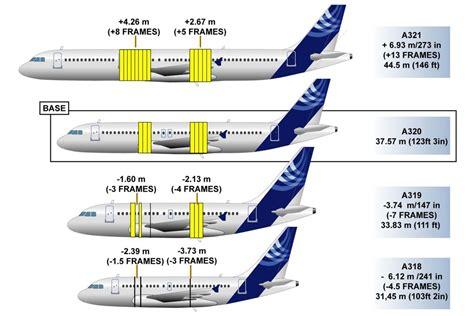
Unfazed, Airbus repurposed the design under its A319M5 initiative, which eventually gave birth to the A318. It was a shortened variant of the A319, trimmed by 0.79 meters ahead and 1.6 meters behind the wing, yielding a base configuration of 107 seats in a two-class layout and an initial range of 3,350 km.
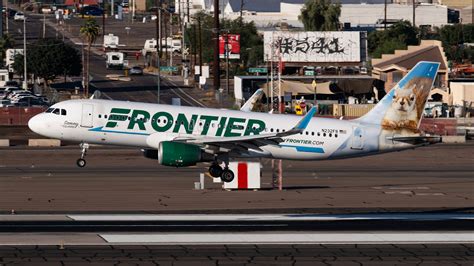
The timing of its launch was unfortunate—coming on the heels of September 11, 2001, when air travel demand dipped dramatically. Compounding the challenge, early Pratt & Whitney PW6000 engines failed to meet expected fuel burn targets, leading to critical customer cancellations. Nonetheless, Airbus persisted, and the A318 took its first flight on January 15, 2002, followed by entry into service with Frontier Airlines in July 2003.
Design Philosophy: Compact Yet Fully Capable
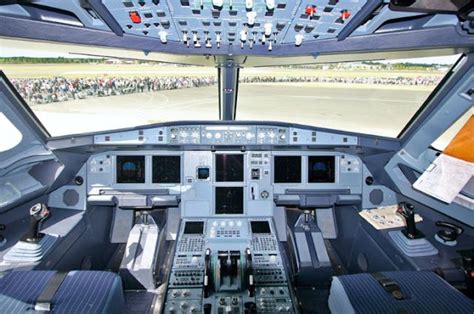
The Airbus A318 was engineered to provide maximum commonality with its larger siblings. It shared a type rating with the rest of the A320 family, simplifying crew training and enabling operational flexibility across fleets. Structurally, it retained the low-wing monoplane design with tricycle landing gear and featured a larger vertical fin to maintain stability due to its reduced fuselage length.
Powered by either CFM56-5B8/P or PW6000 engines, the A318 offered thrust levels tailored for short-field performance. Its maximum takeoff weight (MTOW) ranged between 59 to 68 tonnes, while its operating empty weight (OEW) stood at approximately 39,500 kg. The aircraft was notably efficient on marginal and regional routes, boasting fuel capacity of 24,210 liters and a cruise speed of Mach 0.78 (829 km/h).
Its cabin configuration allowed up to 132 passengers, though typical layouts featured 117 seats in a one-class and 107 in a two-class configuration. The cabin retained the 3.70-meter width standard to the A320 line, enabling six-abreast seating and consistent passenger comfort across the family.
Navigating the Steep: London City and the 5.5° Approach Certification
A standout feature of the A318 was its ability to execute steep 5.5° approaches, certified by EASA in March 2006. This capability was critical for operations at London City Airport (LCY), where aircraft must land on a short runway surrounded by high-rise buildings.
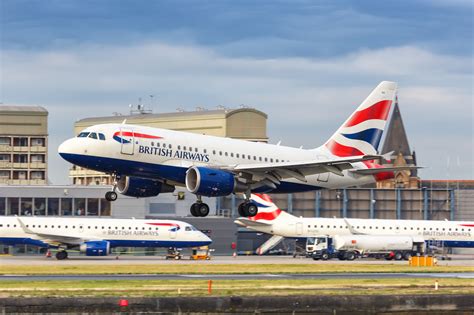
To enable such approaches, Airbus integrated software enhancements, automatic spoiler deployment, and aural cockpit alerts into the flight control systems. The steep approach package was successfully tested in May 2006, and British Airways received its first A318 configured for the “Club World London City” service in August 2009.
This version operated a 32-seat all-business configuration on transatlantic routes, with a westbound fuel stop in Shannon for customs pre-clearance. Despite being withdrawn in July 2020, the BA A318s showcased the aircraft’s adaptability to premium services.
The A318 Elite and Executive Market Transition
With limited traction in commercial aviation, Airbus pivoted the A318 toward the corporate and government sectors. In November 2005, it introduced the A318 Elite, a bespoke business jet variant capable of flying up to 18 passengers over 4,000 nautical miles. The inaugural customer, Comlux Aviation, leveraged the platform’s spacious cabin and high-performance specs to serve VIP clientele.
The Elite configuration offered luxurious fittings, long-range endurance, and access to airports that traditional business jets could not serve due to performance or runway limitations. Even today, over 18 units remain active in executive or government fleets, testament to the aircraft’s continued utility in niche markets.
Orders, Deliveries, and Fleet Longevity
Despite its technical merit, the A318’s commercial uptake was modest. By September 2017, Airbus had received just 81 total orders—a figure slightly above Boeing’s 737-600, its nearest competitor. Airbus delivered units steadily through the 2000s:
- 2003: 9 aircraft
- 2004: 10
- 2005: 9
- 2006: 8
- 2007: 17 (peak year)
- 2008: 13
- 2009: 6
- 2010–2013: 2–3 per year
Frontier Airlines, once its launch customer, retired its A318s by 2013, and other operators gradually phased out the model in favor of newer, more fuel-efficient options.
As of November 2024, just 54 A318s remain in operation:
- Air France: 6 aircraft
- Executive/Private/Government: 18 aircraft
- Undisclosed/Other: 30 aircraft
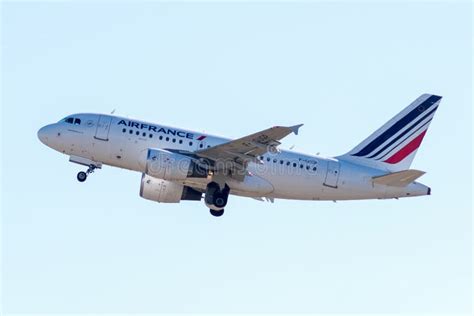
No A318neo: The End of the Line
Airbus elected not to pursue a re-engined A318neo, focusing its efforts on the more commercially viable A319neo, A320neo, and A321neo programs. The A318’s constrained order book, higher operating costs compared to regional jets, and evolving airline economics made further development impractical.
Although some operators hoped for improved efficiency via Sharklet winglets, which added up to 185 km in range, this was not enough to offset the model’s declining demand. The lack of demand from large carriers further diminished the case for investment in a neo upgrade.
Technical Specifications: Airbus A318 (Typical Two-Class Configuration)
- Crew: 2
- Passenger Capacity: 107 (two-class), up to 132 max
- Length: 31.44 meters
- Wingspan: 34.10 meters
- Tail Height: 12.56 meters
- Cabin Width: 3.70 meters
- Cruise Speed: Mach 0.78 (829 km/h)
- Maximum Speed: Mach 0.82
- Range: 3,100 nmi (5,750 km); ACJ Elite: 4,200 nmi
- Service Ceiling: 39,100–41,000 ft
- Takeoff Distance: 1,780 m
- Landing Distance: 1,230 m
- Fuel Capacity: 24,210 liters
- Engines:
- A318-111/-112: CFM56-5B8/P
- A318-121/-122: PW6122A/PW6124A
- Certification Dates: May 2003 (CFM56), Dec 2005 (PW6000)
Conclusion: A Specialist, Not a Mass-Market Player
The Airbus A318 may never have achieved mass-market acclaim, but its role in the A320 family remains significant. As a technological testbed, a steep-approach specialist, and an executive platform, it demonstrated remarkable adaptability. For select missions requiring robust performance in constrained environments, the A318 provided an ideal solution with unmatched cockpit commonality and structural reliability.
Though production has ended and most have retired from scheduled passenger service, the A318 lives on in VIP hangars, government fleets, and aviation history. It is a reminder that in aerospace, innovation does not always equate to commercial dominance—but it can still define legacy.