For nearly six decades, the Boeing 737 represented one of the most remarkable industrial achievements in aviation history. Introduced in the late 1960s, the aircraft evolved through multiple generations, carried billions of passengers, and became the backbone of short-haul air travel across every continent. The narrowbody jet established delivery records that appeared untouchable, cementing Boeing’s position as the dominant force in the single-aisle market.
Yet aviation history is filled with moments when seemingly permanent advantages disappear. In October 2025, Airbus officially achieved what many industry observers once considered impossible. The European manufacturer surpassed the Boeing 737 family in total deliveries, ending a reign that had lasted 58 years and fundamentally reshaping the balance of power in commercial aerospace.
The milestone was more than a symbolic victory. It reflected decades of strategic planning, manufacturing excellence, technological innovation, and market adaptation. Airbus did not simply catch Boeing; it built an industrial machine capable of producing aircraft at a pace and scale that ultimately changed the trajectory of the global airline industry.
By overtaking the 737 family, Airbus marked the beginning of a new chapter in aviation, one defined by the extraordinary success of the A320 program and the company’s growing influence over the future of narrowbody air travel.
The Historic Moment That Changed Aviation Records
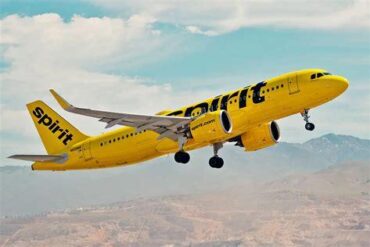
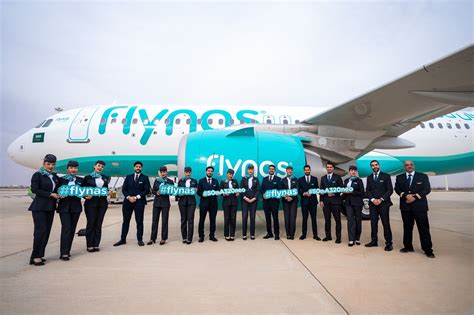
The record-breaking aircraft arrived in October 2025 when Saudi Arabian low-cost carrier flynas accepted delivery of an Airbus A320neo family jet. That aircraft became the 12,260th A320-family delivery, officially pushing Airbus ahead of Boeing’s cumulative 737 delivery count.
The significance of the achievement becomes even more impressive when viewed through the lens of time. Boeing delivered the first 737 in 1967 and spent decades building an enormous lead over competitors. Airbus, meanwhile, launched the A320 program much later, entering commercial service in 1988.
Despite beginning more than two decades behind its American rival, Airbus erased Boeing’s advantage and established a new benchmark for commercial aircraft production. The company accomplished in 38 years what took Boeing nearly six decades to achieve.
This was not merely a numerical victory. It demonstrated how rapidly market dynamics can shift when technological innovation aligns with industrial efficiency and sustained customer demand.
The achievement also highlighted the transformation of Airbus from a challenger brand into the dominant force in the world’s largest commercial aviation segment.
How The Airbus A320 Challenged Boeing’s Longstanding Monopoly
When Airbus introduced the A320 during the 1980s, Boeing appeared virtually unassailable in the short-haul market. Airlines around the world relied heavily on the 737, while Airbus remained a relatively young manufacturer still building credibility among major carriers.
The A320 arrived with several advantages that immediately distinguished it from existing aircraft. One of the most revolutionary features was its fly-by-wire flight control system. Rather than relying solely on traditional mechanical controls, the aircraft used electronic signals to translate pilot inputs into aircraft movements.
This technology offered greater precision, reduced pilot workload, and laid the foundation for a new generation of commercial aircraft design.
Equally important was the aircraft’s wider fuselage. The cabin cross-section allowed airlines to offer slightly broader seating and wider aisles compared with the Boeing 737. While seemingly minor, these characteristics became valuable differentiators in a highly competitive airline environment where passenger comfort increasingly influenced purchasing decisions.
Over time, airlines recognized additional benefits. Common cockpit philosophy across Airbus fleets simplified pilot training, reduced operational complexity, and generated significant cost savings.
As carriers expanded their fleets, these advantages gradually eroded Boeing’s long-standing dominance and helped Airbus secure a growing share of global narrowbody orders.
Winning The Sky Before Winning The Delivery Race
Long before Airbus officially surpassed Boeing in deliveries, evidence suggested that the A320 family had already become the world’s most influential narrowbody aircraft.
Flight activity data from September 2025 revealed a remarkable shift in global utilization patterns. During that month alone, the A320 family completed approximately 1.41 million flights, significantly exceeding the Boeing 737 family’s 1.10 million operations.
These figures reflected a broader reality. Across Europe, Asia, the Middle East, Africa, and increasingly North America, Airbus aircraft were becoming the preferred workhorses of airline fleets.
The importance of utilization statistics cannot be overstated. Aircraft deliveries measure production success, but flight activity demonstrates operational relevance. Airlines deploy aircraft that generate profits, maximize efficiency, and satisfy customer requirements.
The growing prevalence of the A320 family in daily operations indicated that Airbus had already become the dominant player in practical market terms. The delivery milestone merely confirmed what travelers, airlines, and aviation analysts had been observing for years.
Airbus Built A Manufacturing System Boeing Could Not Match
One of the most decisive factors behind Airbus’ rise was its ability to scale production efficiently across multiple assembly locations.
Rather than concentrating narrowbody manufacturing in a single location, Airbus developed a diversified global network. Final assembly lines were established in France, Germany, China, and the United States, creating a highly flexible production ecosystem capable of responding to demand fluctuations and supply chain challenges.
This decentralized strategy provided resilience and capacity growth that few aerospace companies have ever achieved.
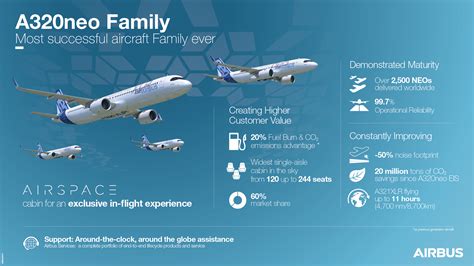
By September 2025, Airbus was producing approximately 68 A320neo-family aircraft per month. Boeing, constrained by operational and regulatory pressures, was producing roughly 36 737 MAX aircraft during the same period.
The gap represented far more than a monthly production difference. Over years of sustained output, the disparity translated into hundreds of additional aircraft deliveries and billions of dollars in revenue.
Manufacturing scale became a competitive weapon.
Every month that Airbus maintained higher production rates allowed the company to strengthen customer relationships, expand market share, and accelerate its lead over Boeing.
The result was a self-reinforcing cycle in which stronger demand justified higher production, while higher production attracted even more customers seeking earlier delivery slots.
Boeing’s Regulatory Challenges Changed The Competitive Landscape
While Airbus executed an aggressive expansion strategy, Boeing faced significant regulatory obstacles that limited its ability to respond effectively.
Following extensive scrutiny from aviation authorities, Boeing’s manufacturing processes became subject to heightened oversight and quality-control requirements. These measures affected production growth and slowed the certification timeline for key aircraft variants.
The delays surrounding the 737-7 and 737-10 became particularly significant.
Both aircraft represented critical components of Boeing’s long-term strategy. The 737-7 targeted airlines requiring lower-capacity flexibility, while the 737-10 was designed to compete directly with larger Airbus narrowbody aircraft.
Repeated certification delays pushed both programs into 2026, preventing Boeing from fully addressing market demand during a crucial period.
Airlines planning fleet renewals often operate on strict timelines. When deliveries become uncertain, carriers must evaluate alternative options. In numerous cases, those alternatives increasingly pointed toward Airbus.
The inability to bring important variants into service created openings that Airbus exploited successfully, particularly in the high-capacity narrowbody segment.
The A321neo And A321XLR Revolution
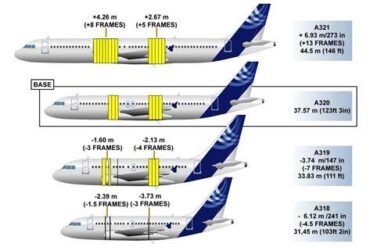
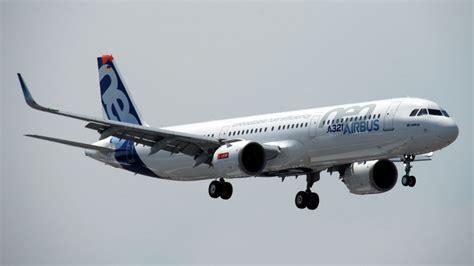
Perhaps the most transformative development within the Airbus portfolio was the emergence of the A321neo and A321XLR.
Historically, narrowbody aircraft primarily served short- and medium-haul routes. Longer international sectors generally required larger widebody aircraft capable of carrying more passengers and fuel.
The A321XLR fundamentally altered that equation.
With a range of approximately 4,700 nautical miles, the aircraft expanded the capabilities of single-aisle operations to an unprecedented level. Airlines could suddenly connect city pairs that previously lacked sufficient demand to justify widebody service.
Routes across the Atlantic became viable for narrowbody operations. Secondary cities gained direct international links. Airlines acquired new tools for market experimentation without assuming the financial risk associated with larger aircraft.
The economics proved exceptionally attractive.
Operating a narrowbody aircraft on long-distance routes significantly reduces trip costs while preserving flexibility. Airlines can maintain service during periods of lower demand and scale operations more effectively throughout seasonal fluctuations.
This innovation created an entirely new market category, one in which Boeing lacked an equivalent competitor.
The Massive Backlog Advantage
Aircraft orders provide one of the clearest indicators of future market leadership.
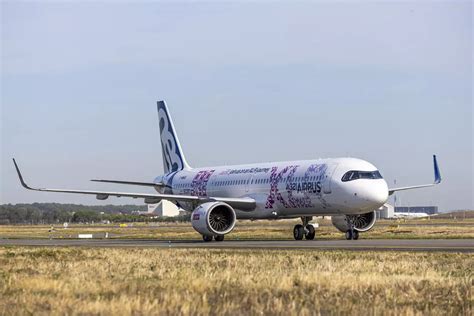
By late 2025, the Airbus A320neo family possessed an extraordinary backlog of approximately 7,164 aircraft. Boeing’s 737 family, while still highly successful, held roughly 4,826 outstanding orders.
The difference represented far more than numerical superiority.
Backlogs provide manufacturers with production visibility, revenue predictability, and long-term strategic stability. They also influence airline purchasing decisions because carriers seek confidence that manufacturers will remain capable partners for decades.
Airbus’ enormous order book effectively guaranteed years of sustained production.
Many airlines found themselves competing for limited delivery slots. In some cases, carriers accepted aircraft delivery dates extending toward the end of the decade simply to secure positions within the production queue.
The dynamic altered traditional negotiating power.
For decades, airlines leveraged competition between Boeing and Airbus to secure favorable pricing. As Airbus accumulated a larger backlog and stronger demand, customers increasingly accepted longer wait times and reduced bargaining leverage.
The market had shifted decisively in Airbus’ favor.
Why Boeing’s Recovery Will Be Difficult
Boeing remains one of the world’s most important aerospace companies, possessing immense engineering expertise, a massive installed fleet, and deep relationships with airlines worldwide.
However, reclaiming leadership in the narrowbody segment presents a formidable challenge.
The company must simultaneously increase production, resolve certification issues, satisfy regulators, and maintain customer confidence. Each objective is difficult individually; accomplishing all of them simultaneously requires exceptional execution.
Furthermore, Airbus continues to strengthen its position rather than standing still.
The European manufacturer benefits from higher production rates, stronger order momentum, a broader narrowbody portfolio, and substantial advantages in delivery availability. Every additional year of sustained leadership makes the competitive gap harder to close.
Industry observers increasingly recognize that the future battle may depend on entirely new aircraft programs rather than incremental upgrades to existing designs.
Whether Boeing ultimately launches a clean-sheet narrowbody successor could determine how effectively it competes during the next generation of commercial aviation.
A New Era In Global Commercial Aviation
The Airbus victory over Boeing’s legendary 737 family represents one of the most significant shifts in modern aerospace history.
For decades, the Boeing 737 symbolized industrial excellence and unmatched market dominance. Its influence on commercial aviation remains immense, and its legacy as one of the most successful aircraft ever built is secure.
Yet markets evolve, technologies advance, and competitive advantages eventually change hands.
Airbus combined innovative aircraft design, efficient manufacturing systems, regulatory stability, and strategic product development to create a narrowbody family that reshaped airline economics worldwide. The company’s ability to scale production while simultaneously expanding the operational capabilities of its aircraft ultimately proved decisive.
The delivery of the 12,260th A320-family aircraft was therefore much more than a statistical milestone. It marked the culmination of nearly four decades of relentless growth and the formal transfer of leadership within the world’s most important aircraft market.
As airlines continue ordering thousands of additional narrowbody jets and global air travel expands throughout the coming decades, the A320 family’s rise stands as one of the most remarkable success stories in aviation history. Airbus did not merely surpass the Boeing 737. It transformed the rules of competition and ushered in a new era where the A320 family defines the standard for commercial narrowbody aviation.