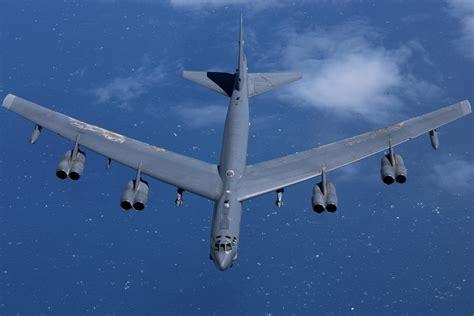
The idea that a 70-year-old bomber could shape the outcome of a modern, high-intensity conflict sounds almost paradoxical. Yet, in the evolving dynamics of Operation Epic Fury, the B-52 Stratofortress did exactly that—transforming from a vulnerable Cold War relic into a decisive instrument of overwhelming force. Its role was not immediate, nor was it obvious. But once the conditions were set, the aircraft’s unique strengths reshaped the battlefield in ways few modern platforms could replicate.
At the heart of this transformation lies a simple but powerful truth: air superiority changes everything. The campaign over Iran was not merely about striking targets—it was about systematically dismantling the very systems that made resistance possible. Within days, coordinated operations between the United States Air Force and the Israeli Air Force turned dense, layered defenses into fractured remnants. The result was a battlespace where older, heavier platforms could operate freely, amplifying destruction at scale.
What followed was not just an escalation of firepower, but a shift in strategy. The introduction of the B-52 into contested airspace signaled that the war had entered a new phase—one defined by sustained bombardment, logistical paralysis, and psychological dominance.
Operation Epic Fury and the Relentless Pursuit of Air Superiority
The opening phase of Operation Epic Fury was a masterclass in modern air warfare. Speed, precision, and coordination defined the initial assault. Within the first 24 hours alone, over 1,750 targets were struck by coalition forces. These weren’t random hits—they were carefully selected nodes in Iran’s integrated air defense system, command structures, and missile infrastructure.
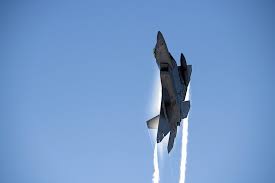
This early wave relied heavily on stealth aircraft like the F-35 Lightning II and multirole platforms such as the F/A-18 Super Hornet. Their mission was surgical: eliminate radar installations, neutralize S-300 and Bavar-373 surface-to-air missile systems, and fracture the command networks that coordinated Iran’s defensive posture.
By Day 14, more than 15,000 targets had been destroyed. Airfields were cratered, communication hubs silenced, and missile stockpiles reduced to smoldering debris. Iran’s military apparatus was not just weakened—it was disoriented and functionally impaired.
This level of degradation created a rare strategic window. For the first time, non-stealth aircraft could operate with relative safety over hostile territory. And that’s when the B-52 Stratofortress entered the equation—not as a backup option, but as a force multiplier.
The B-52’s Apparent Weakness: A Radar Giant in a Stealth Age
On paper, the B-52 seems ill-suited for modern warfare. Its radar cross-section, roughly equivalent to a barn door, makes it one of the most visible aircraft in the sky. Its eight engines, massive fuselage, and towering vertical stabilizer reflect radar signals with remarkable clarity. In an environment saturated with advanced air defenses, this would typically make it an easy target.
And initially, it was treated as such.
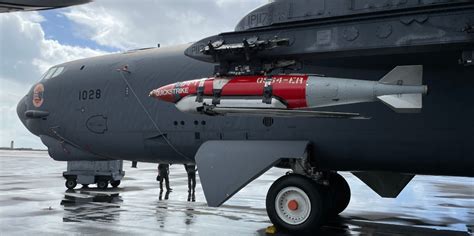
During the early stages of the campaign, the B-52 was kept at a safe distance, launching AGM-158 Joint Air-to-Surface Standoff Missiles (JASSM) from hundreds of kilometers away. These missiles, equipped with GPS guidance and infrared seekers, could strike fortified or mobile targets with high precision—all while keeping the bomber خارج the خطر zone.
This approach leveraged the B-52’s payload capacity without exposing it to unnecessary risk. But it also meant that its full potential remained untapped—waiting for the right moment.
From Standoff to Stand-In: A Strategic Pivot
That moment arrived when Iran’s air defenses collapsed under sustained pressure. What had once been a lethal environment transformed into a permissive airspace. And in that shift, the B-52’s greatest liability—its visibility—became largely irrelevant.
Now free to operate directly over Iranian territory, the B-52 transitioned from a standoff platform to a stand-in bomber. This was more than a tactical adjustment; it was a strategic escalation.
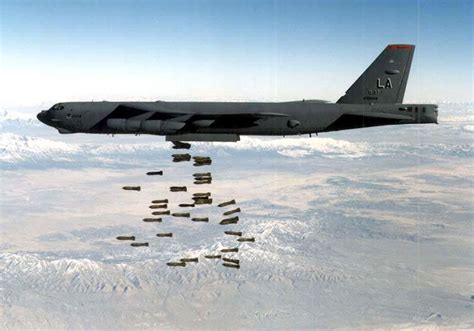
Unlike stealth fighters, which trade payload for survivability, the B-52 thrives on volume. With a maximum payload of 70,000 pounds, it can deliver more ordnance in a single sortie than multiple fighter jets combined. This capability allowed it to saturate targets, overwhelm hardened facilities, and strike multiple objectives in a single pass.
Targets during this phase included:
- Missile production facilities
- Underground bunkers
- Command and control centers
- Logistical hubs and supply depots
- Remaining operational airfields
The effect was cumulative and devastating. Each strike didn’t just destroy infrastructure—it compounded the paralysis already gripping Iran’s military.
JDAM: The Smart Transformation of Conventional Firepower
Central to the B-52’s effectiveness in this phase was the Joint Direct Attack Munition (JDAM). Often referred to as a “smart dumb bomb,” the JDAM represents a fusion of simplicity and precision. By attaching a GPS-guided tail kit to conventional bombs, it transforms them into highly accurate weapons capable of striking within meters of their intended targets.
This matters because precision changes the economics of warfare. Instead of relying on sheer volume to ensure a hit, each bomb becomes a reliable, targeted strike. And when you combine that precision with the B-52’s massive payload capacity, the result is a platform capable of delivering both scale and accuracy simultaneously.
A single B-52 can carry:
- 20 x 2,000-pound JDAMs, or
- 30 x 1,000-pound JDAMs
This allows for multi-target engagement in a single sortie, reducing the need for repeated missions and increasing operational efficiency. Even in adverse weather or GPS-contested environments, JDAMs maintain a high level of accuracy, making them indispensable in complex combat scenarios.
Psychological and Strategic Shock: The Invisible Impact
Beyond the physical destruction, the presence of the B-52 introduced a powerful psychological dimension to the conflict. There’s something uniquely intimidating about a bomber that has been in service since the early Cold War—and is still capable of delivering devastating force with modern precision.
For Iranian forces, the implications were clear: no target was safe, no depth sufficient, no shelter guaranteed.
This psychological pressure compounds operational stress. Commanders are forced to relocate constantly, communication becomes fragmented, and decision-making slows. In warfare, these intangible effects often prove as decisive as physical destruction.
The B-52, with its persistent presence and overwhelming payload, became a symbol of inevitability—a reminder that the airspace above was no longer contested, but controlled.
Why the B-52 Still Matters in Modern Warfare
It’s tempting to view the B-52 Stratofortress as an anachronism—a relic kept alive by nostalgia. But its continued relevance tells a different story. In an era dominated by stealth and speed, the B-52 offers something equally valuable: endurance, reliability, and unmatched payload capacity.
Compared to more complex bombers like the B-1B Lancer, the B-52 is easier to maintain, has a higher mission-capable rate, and costs less per flight hour. These factors matter in prolonged operations, where sustainability becomes as critical as capability.
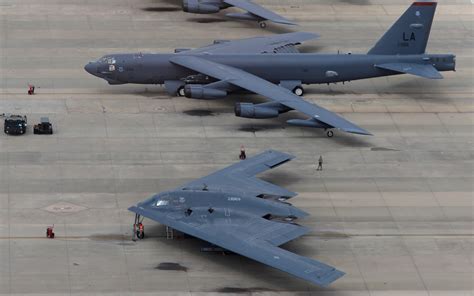
Moreover, ongoing modernization efforts—including new engines, upgraded avionics, and enhanced weapon integration—are expected to keep the aircraft operational into the 2050s and beyond. This longevity isn’t just a testament to its design; it reflects a strategic calculation that no other platform currently replicates its unique combination of attributes.
A Tactical Advantage Forged Through Integration
The success of the B-52 in Operation Epic Fury wasn’t due to the aircraft alone. It was the result of integration—a carefully orchestrated sequence of actions involving stealth aircraft, electronic warfare, intelligence assets, and precision munitions.
First came the disruption phase, where advanced fighters dismantled air defenses. Then came the exploitation phase, where the B-52 leveraged that disruption to deliver overwhelming force. This layered approach ensured that each platform operated within its optimal envelope, maximizing effectiveness while minimizing risk.
In this context, the B-52 didn’t replace modern aircraft—it amplified their impact.
The Enduring Logic of Overwhelming Force
There’s a reason the B-52 continues to feature prominently in U.S. military strategy. Despite decades of technological evolution, the fundamental principles of warfare remain unchanged. Control the air, disrupt the enemy’s ability to respond, and apply force where it hurts the most.
The B-52 excels at the final step. Once the path is cleared, it delivers sustained, high-volume, precision-guided bombardment that few platforms can match. It turns temporary advantage into lasting dominance.
And that’s the real story here—not just how an old bomber found relevance again, but how strategic sequencing and technological integration turned it into a decisive factor in modern conflict.
In a world obsessed with the next generation, the B-52 quietly proves that sometimes, enduring capability beats novelty.