The Boeing 737 stands as a monument in the history of aviation, a narrow-body workhorse that redefined commercial air travel for over half a century. From its inaugural flight in 1967 to its latest iterations in the MAX family, the 737 has embodied continuous innovation, unmatched reliability, and global ubiquity. Built in Renton, Washington, the aircraft remains the best-selling commercial jetliner in history, with over 12,000 units delivered as of March 2025. Its legacy spans multiple generations, from early short-range variants to transcontinental models operating today.
The Genesis of a Legend: Design Origins and Early Development
Boeing began designing the 737 in 1964 as a direct response to market demand for a smaller, more economical jetliner to serve short- and medium-haul routes. Leveraging the 148-inch fuselage cross-section inherited from the Boeing 707 and 727, the 737 was tailored for six-abreast seating, allowing for both high-density configurations and passenger comfort.
Unlike earlier jets, the 737 featured a low-to-ground stance, eliminating the need for ground stairs or jetbridges—a crucial advantage for smaller airports and emerging markets. It also relocated its engines to underwing pods, rather than rear-mounted configurations common at the time, allowing for easier maintenance and improved aerodynamics. This configuration, pioneered under Joe Sutter’s guidance, shortened the landing gear and gave the aircraft its distinctive squat appearance.
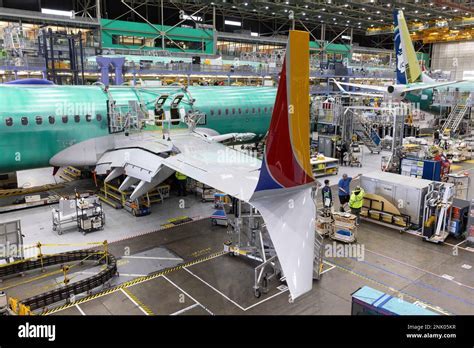
The first model, the 737-100, flew on April 9, 1967, and was delivered to Lufthansa—the launch customer—on February 10, 1968. Although only 30 units of the -100 were produced, the extended 737-200 quickly gained traction, selling over 1,100 units. Boeing’s decision to reuse 60% of the 727’s structure and systems drastically accelerated the development cycle and reduced costs.
Evolution Through Generations: From Original to MAX
The 737 family is not a single aircraft but an evolving platform segmented into four major generations, each representing technological leaps and market adaptations.
Original Series (-100/-200)
The Original 737s were powered by Pratt & Whitney JT8D low-bypass turbofans and typically carried 85 to 130 passengers. With minimal systems and analog flight decks, these aircraft were praised for their rugged simplicity and operational efficiency. Military variants like the T-43 and CT-43 further extended its utility.
Classic Series (-300/-400/-500)
Responding to the 1980s airline deregulation and rising fuel costs, Boeing introduced the 737 Classic series featuring CFM56-3 high-bypass engines. These offered significant fuel efficiency gains (up to 25%), quieter performance, and increased thrust.
The models expanded capacity, with the -300 seating up to 149, the -400 extending to 168, and the -500 offering a shorter, more economical option. Entering service in 1984, the Classics accumulated 1,988 deliveries, with several aircraft later converted to freighter or combi configurations.
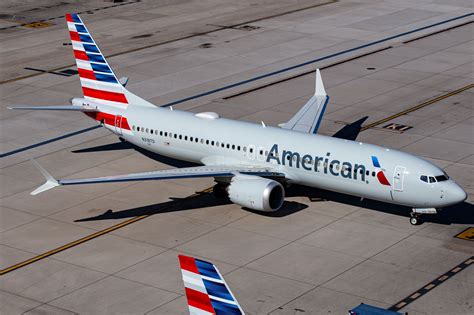
Next Generation (NG) Series (-600/-700/-800/-900)
Launched in 1997, the Next Generation (NG) family represented the most substantial redesign in the 737’s history. With the introduction of the CFM56-7B engines, an updated glass cockpit, larger wings, and enhanced range, the NG models could now serve routes up to 3,000 nautical miles with seating up to 215 passengers.
- The 737-700 replaced the -300 and became a favorite for low-cost carriers.
- The 737-800 became the most popular variant globally.
- The 737-900ER pushed the limits of the airframe with extended range and maximum capacity of 220 passengers.
These enhancements led to orders surpassing 7,000 units, with military offshoots like the P-8 Poseidon further strengthening the type’s versatility.
737 MAX Series (MAX 7/8/9/10)
The latest evolutionary step arrived with the 737 MAX, launched in 2011 to rival the Airbus A320neo. Featuring LEAP-1B engines with 69-inch fans, redesigned winglets, and aerodynamic refinements, the MAX series achieved 10–12% better fuel efficiency than its NG predecessors.
The MAX family includes:
- MAX 7 (up to 172 passengers, range 3,850 nmi)
- MAX 8 (up to 210 passengers)
- MAX 9 and MAX 10 (extended fuselages for high-density seating)
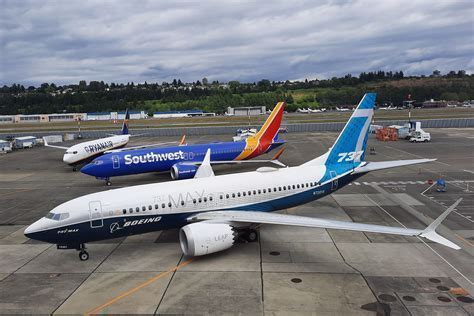
However, the program suffered a major setback with two fatal crashes involving Lion Air Flight 610 and Ethiopian Airlines Flight 302, both attributed to faulty MCAS software. The global fleet was grounded from March 2019 to November 2020, leading to intense scrutiny, software redesigns, and regulatory overhauls. Despite the controversy, deliveries and orders have resumed, and MAX 7 certification is expected in late 2025.
Technical Design and Engineering Innovations
The enduring success of the Boeing 737 lies in its adaptability. While retaining its fuselage dimensions from the 707, the aircraft evolved through a series of technical upgrades without altering the basic type certificate.
Early models featured “eyebrow” cockpit windows for celestial navigation—phased out post-2004. The aircraft’s landing gear configuration, with main wheels retracting into the belly, allows for robust field performance and uncomplicated maintenance access. The 737’s carbon brakes, introduced in NG models, reduced weight and improved braking efficiency.
Unlike larger wide-bodies, the 737 omits fuel dump systems, relying instead on burn-off procedures or landing overweight when required. This reflects the aircraft’s design philosophy: simplicity, reliability, and cost-effective operation.
Engine Technology: From JT8D to LEAP-1B
Each generation of the 737 introduced substantial propulsion advancements:
- JT8D (Original): Low-bypass design offering 14,500 lbf thrust.
- CFM56-3 (Classic): Improved thrust and fuel economy (~25%).
- CFM56-7B (NG): Higher thrust and 7% greater efficiency.
- LEAP-1B (MAX): Latest tech with ceramic matrix composites, 3D printed fuel nozzles, and advanced fan blade aerodynamics.
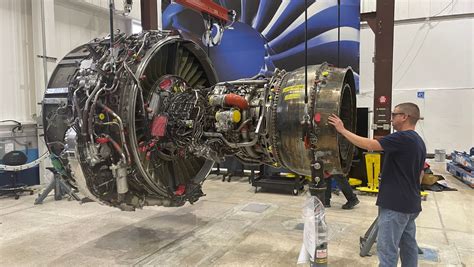
These innovations underpin the 737’s ability to serve both high-frequency short-haul and long-range missions with equal competence. Moreover, they align with airline demands for lower operating costs, reduced emissions, and compliance with evolving noise regulations.
Market Impact and Global Reach
The Boeing 737’s real-world influence is profound. It has flown over 184 million flights, logging 264 million block hours by 2013 alone. Every 1.5 seconds, a 737 is either taking off or landing somewhere on Earth.
Used by over 500 operators, the aircraft is a staple of low-cost carriers, legacy airlines, and military agencies. It dominates in markets like North America, Europe, and Asia-Pacific, and maintains operational presence from remote airfields in Africa to the Arctic Circle.
Notably, the aircraft’s military and governmental derivatives—such as the P-8 Poseidon, C-40 Clipper, and T-43 Navigator trainer—demonstrate the type’s unparalleled flexibility.
A Legacy Still in Motion
More than a jetliner, the Boeing 737 is a symbol of modern air transport. Its enduring production run of nearly 60 years, unmatched delivery record, and multigenerational design resilience illustrate its foundational role in global aviation.
As the aerospace sector pushes toward decarbonization and next-gen air mobility, the 737 remains a transitional pillar. Its continued development, including advanced avionics, synthetic vision systems, and enhanced navigation capabilities, ensures that it will stay relevant well into the 2030s and beyond.

With thousands still on order and new variants on the horizon, the 737’s story is far from over. It is not merely the most-delivered jet—it is aviation’s most enduring promise of connectivity, efficiency, and innovation.