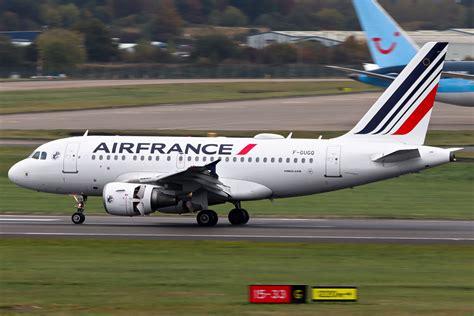
The aviation industry has always loved bigger aircraft. More seats usually mean lower costs per passenger, stronger margins, and better economics for airlines operating razor-thin businesses. That reality explains why the Airbus A320 became one of the most successful commercial aircraft families in history. Yet hidden inside that success story is one of Airbus’ strangest experiments: the Airbus A318, a jet so commercially awkward that most travelers never even saw one in person.
Today, however, the tiny aircraft has become something else entirely — an endangered aviation curiosity. With Air France preparing to retire the last commercial Airbus A318s by the end of 2026, enthusiasts are now scrambling to book flights before the unusual narrowbody disappears forever.
The irony is impossible to ignore. Airbus spent years trying to convince airlines they needed the smallest member of the A320 family. Most carriers disagreed. But now, as the aircraft approaches extinction, the A318 has become one of the most sought-after experiences among aviation enthusiasts who want to fly the quirky “Baby Bus” while they still can.
The story of the A318 is not simply about a failed aircraft. It is about the brutal economics of airline operations, unfortunate timing, engineering compromises, and a market segment that never truly worked for traditional narrowbody jets.
For Airbus, the A318 was supposed to complete the A320 family. Instead, it became one of the company’s rare commercial disappointments.
After all, airlines bought thousands of A319s, A320s, and A321s. Only 80 A318s were ever delivered.
Why Airbus Created The Airbus A318
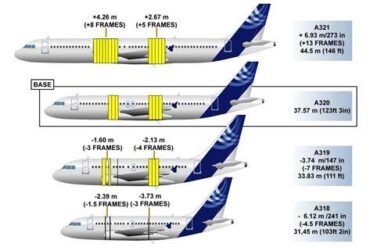
Aircraft manufacturers almost always develop airplane families around a baseline model. In Airbus’ case, the A320-200 became the foundation. The company successfully stretched the design into the larger A321 and slightly shrank it into the A319. Both variants proved enormously successful because they preserved the economics and flexibility airlines wanted.
The next logical step was creating an even smaller version.
That aircraft became the Airbus A318-100.
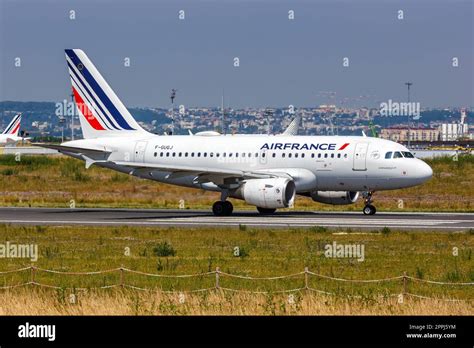
Airbus envisioned the A318 as a premium regional jet with the comfort of a mainline narrowbody and the operational flexibility to serve challenging airports. The company believed airlines would want a smaller aircraft that still shared pilot training, maintenance infrastructure, and cockpit commonality with the rest of the A320 family.
On paper, the strategy sounded smart.
The aircraft retained the familiar six-abreast Airbus cabin, advanced fly-by-wire controls, and strong runway performance. Airbus also attempted to optimize the jet by reducing structural weight and lowering engine thrust compared to larger A320 family members.
But there was one major problem.
The A318 inherited too much from the larger aircraft around it.
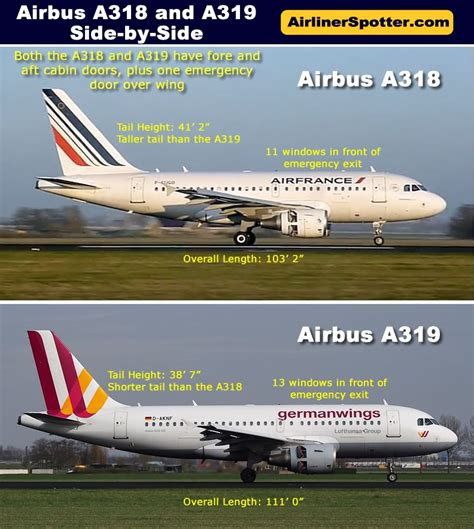
Its fuselage was shortened, but the jet still carried oversized wings, heavy landing gear, and a cabin cross-section originally designed for aircraft carrying 150 to 180 passengers. The result was a plane that consumed nearly as much fuel as an A319 while carrying far fewer travelers.
That destroyed the economics airlines care about most.
The Brutal Economics That Killed The Baby Bus
Commercial aviation rewards efficiency above almost everything else. Airlines do not simply buy aircraft because they are technologically interesting or operationally unique. They buy airplanes that generate profits.
The A318 struggled immediately because it landed in a dangerous middle ground.
At around 100 seats, the aircraft was too small to achieve strong mainline economics but too large and expensive to operate like a regional jet. Fixed costs such as crew salaries, airport fees, maintenance support, and gate handling became disproportionately high relative to passenger revenue.
This created a nightmare scenario.
An airline could operate a slightly larger Airbus A319 with dramatically better revenue potential while burning only marginally more fuel. Alternatively, carriers could deploy cheaper regional aircraft like the Embraer E190 or Bombardier CRJ1000 through regional subsidiaries operating with lower labor costs.
The A318 offered neither advantage convincingly enough.
Its economics became especially problematic because labor unions and airport operators generally classified it as a mainline aircraft. That meant higher operating expenses than regional competitors despite offering similar passenger capacity.
The aircraft’s six-abreast cabin also became an unexpected disadvantage. While passengers appreciated the wider fuselage, airlines cared more about cost efficiency. Competing regional jets carried fewer passengers but were substantially cheaper to operate.
In simple terms, the A318 burned too much fuel for the number of seats it offered.
That became fatal in a fiercely competitive industry.
Why The Airbus A318 Was Surprisingly Rare
Even during its production years, spotting an A318 was unusual.
Only a tiny number of airlines ever operated the aircraft in meaningful quantities. Air France became the largest customer with just 18 units. Other operators included Frontier Airlines, LAN Airlines, TAROM, British Airways, and a handful of leased examples scattered across smaller carriers.
Several airlines experimented with the type briefly before abandoning it.
LAN’s A318 fleet eventually migrated to Avianca Brasil, where the aircraft remained only temporarily before retirement. Mexicana operated leased examples. Titan Airways flew one aircraft during the late 2010s. None of these operations transformed into long-term success stories.
The aircraft never established widespread market momentum.
Part of the problem was timing. The A318 entered service in 2003, arriving shortly after the September 11 attacks devastated airline finances globally. Airlines suddenly became extremely cautious about fleet expansion and far more focused on operational efficiency.
That environment punished niche aircraft.
Some customers disappeared altogether before their aircraft even arrived. TWA famously ordered 50 A318s but later vanished following its acquisition by American Airlines, which canceled the order.
The collapse of demand after 9/11 created exactly the wrong environment for a specialized aircraft with uncertain economics.
The Engine Disaster That Made Everything Worse
The A318’s problems extended beyond economics.
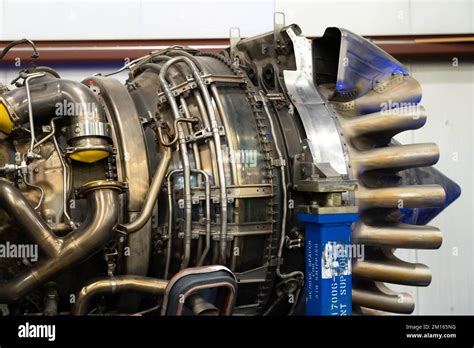
Airbus originally intended the aircraft to feature a specially designed engine perfectly suited for smaller narrowbody operations: the Pratt & Whitney PW6000. The goal was simple. Airbus wanted a lighter, more fuel-efficient powerplant optimized specifically for the A318.
Unfortunately, reality intervened.
The PW6000 program suffered serious delays and failed to meet performance expectations. Fuel burn targets were missed. Reliability concerns emerged. Airlines quickly lost confidence.
Many customers switched to the larger CFM56 engines already used across the A320 family, even though those engines were heavier and less efficient for the A318’s intended mission profile.
That decision solved one problem while worsening another.
The aircraft became heavier and less economical than originally planned. Some airlines simply abandoned the program altogether rather than wait for engine issues to be resolved.
America West became one of the most visible casualties, walking away from the A318 in favor of larger aircraft.
In the end, LAN became the only airline to operate PW6000-powered A318s commercially. Even those aircraft eventually disappeared from service.
The engine failure effectively destroyed Airbus’ original vision for the aircraft.
The One Mission Where The A318 Actually Excelled
Despite its commercial struggles, the Airbus A318 was not a bad aircraft.
In certain specialized roles, it was genuinely impressive.
The jet possessed exceptional runway performance thanks to its powerful wing and relatively light passenger loads. That capability allowed it to operate from airports where larger narrowbody aircraft struggled.
Its most famous niche became London City Airport.
Located in the heart of London’s financial district, London City features a notoriously steep approach and short runway. Only specially certified aircraft can operate there safely.
British Airways recognized the opportunity.
The airline acquired two Airbus A318s specifically configured for premium transatlantic service between London City Airport and New York JFK. The flights became legendary among aviation enthusiasts and business travelers alike.
Passengers boarded the tiny Airbus in central London, enjoyed an all-business-class cabin, stopped briefly in Shannon, Ireland for refueling and US preclearance, then continued nonstop to New York.
The service was luxurious, exclusive, and deeply unconventional.
For a brief period, the A318 found a purpose no other Airbus narrowbody could fulfill quite as elegantly.
But even that operation eventually ended.
The economics simply never justified long-term survival.
Boeing Had The Same Problem With The 737-600
Airbus was not alone in misjudging the small narrowbody market.
Boeing encountered nearly identical problems with the Boeing 737-600, the smallest member of the 737 Next Generation family.
Like the A318, the 737-600 was a shrink of a larger aircraft. It also struggled with weak economics, limited passenger capacity, and poor market demand.
Only 69 units were ever sold.
The parallels between the two aircraft became striking. Both entered service during a weak airline market. Both offered insufficient economic advantages compared to larger siblings. Both became trapped between regional jets and more profitable narrowbody aircraft.
Yet there were important differences.
Boeing optimized the 737-600 less aggressively than Airbus optimized the A318. Instead of developing smaller engines or significantly redesigning the aircraft, Boeing largely retained the existing 737NG architecture.
Ironically, Airbus’ more ambitious optimization effort still failed to save the A318 commercially.
Both aircraft ultimately proved the same harsh truth: traditional narrowbody airframes struggle economically at around 100 seats.
That market increasingly belonged to purpose-built regional aircraft.
Why Aviation Enthusiasts Are Suddenly Obsessed With The A318
Aircraft enthusiasts love rarity.
And the Airbus A318 has become exceptionally rare.
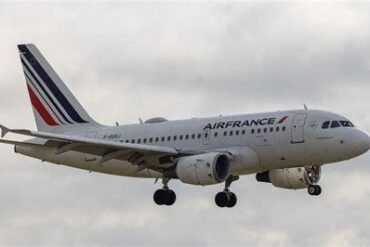
With TAROM retiring the aircraft in 2024, Air France now operates the last remaining commercial examples anywhere in the world. Only four aircraft remain active, and all are expected to disappear by the end of 2026.
That looming deadline transformed the aircraft into a bucket-list experience for aviation fans.
The aircraft itself is not especially luxurious. Air France configures its A318s with standard six-abreast seating using Recaro slimline seats with relatively tight pitch. Business class merely blocks the middle seat rather than offering true premium seating.
But enthusiasts are not flying the A318 for comfort.
They are flying it because it represents the end of an unusual chapter in commercial aviation history.
The aircraft also delivers a distinct flying experience. The short fuselage combined with the oversized wing gives the jet noticeably energetic takeoff performance. Enthusiasts frequently describe the aircraft as feeling unusually lively compared to larger Airbus narrowbodies.
Its rarity adds emotional weight to every flight.
Many aviation fans now intentionally route themselves through Paris Charles de Gaulle simply for the opportunity to log an A318 before retirement.

The Last Routes Flying The Airbus A318
Air France currently uses the A318 primarily on short European sectors from Paris Charles de Gaulle Airport.
The routes are practical rather than glamorous. The aircraft typically serves lower-demand business destinations or high-frequency domestic operations where larger aircraft would create unnecessary excess capacity.
Current destinations include cities such as:
- Amsterdam
- Barcelona
- Berlin
- Bordeaux
- Copenhagen
- Lisbon
- Madrid
- Marseille
- Milan-Linate
- Munich
- Naples
- Nice
- Rome
- Toulouse
- Venice
- Warsaw
- Zagreb
These flights may seem ordinary, but for enthusiasts they represent one final opportunity to experience one of aviation’s strangest commercial failures before it disappears forever.
Unfortunately, spotting the aircraft now requires patience and flexibility. Air France frequently substitutes A220s or A319s depending on operational needs. The shrinking fleet also means cancellations and schedule changes can occur without much notice.
The race to fly the “Baby Bus” has therefore become increasingly urgent.
The Airbus A220 Quietly Finished What The A318 Could Not
The ultimate irony surrounding the A318 is that Airbus eventually solved the very problem it failed to crack.
The Airbus A220 now occupies the market segment Airbus originally envisioned for the A318. Unlike the older aircraft, the A220 was designed from the ground up specifically for smaller-capacity operations.
That distinction matters enormously.
The A220 uses lightweight composite materials, advanced aerodynamics, and modern geared turbofan engines optimized for efficiency at lower passenger counts. It delivers dramatically lower fuel burn while maintaining excellent range and passenger comfort.
Air France itself demonstrates the shift perfectly.
The airline chose the A220-300 as the replacement for its remaining A318 fleet despite retaining older A319s longer. That decision says everything about the A318’s economic weaknesses.
The newer aircraft simply performs the mission more efficiently.
In many ways, the A318 became a victim of timing. Had modern engine technology and lightweight materials existed during its development, the aircraft might have succeeded.
Instead, it arrived too early with too many compromises.
The Legacy Of Airbus’ Most Unwanted Narrowbody
The Airbus A318 occupies a strange place in aviation history.
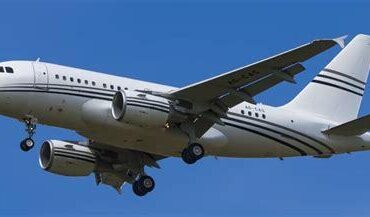
It was not a catastrophic disaster. Airbus still delivered 80 aircraft, including several corporate and VIP variants. The aircraft proved reliable, capable, and operationally flexible. Pilots generally enjoyed flying it. Passengers rarely noticed anything unusual.
Yet commercially, the aircraft never justified its existence.
The economics simply failed to align with what airlines needed. Its operating costs remained too close to larger aircraft while revenue potential dropped sharply. Regional jets squeezed it from below, while larger narrowbodies overwhelmed it from above.
Still, failure alone does not define an aircraft’s legacy.
The A318 demonstrated how difficult aircraft design truly is. Tiny changes in capacity, weight, engine selection, and operating economics can determine whether a jet becomes a global bestseller or a forgotten niche product.
Today, the “Baby Bus” survives not because airlines loved it, but because enthusiasts discovered charm in its awkwardness.
That may be the most fitting ending possible for an aircraft nobody really wanted — until it started disappearing.