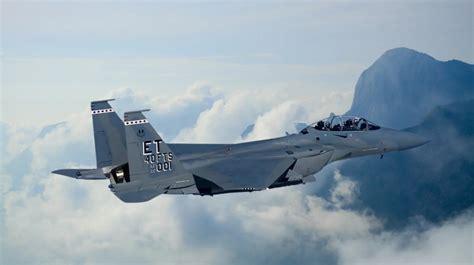
Modern air combat is no longer a simple contest of speed or maneuverability. The definition of power in 2026 has evolved into a complex fusion of stealth, sensor dominance, electronic warfare, network integration, and precision lethality. The aircraft that truly dominate today’s skies are not just fast—they are intelligent, elusive, and deeply interconnected within a broader combat ecosystem. Victory increasingly belongs to the side that can detect first, decide faster, and strike before being seen.
Across global air forces, a small group of elite fighters stands at the apex of this evolution. These aircraft represent the pinnacle of aerospace engineering, blending cutting-edge avionics with battlefield-tested capabilities. While fifth-generation stealth fighters define the leading edge, a select group of highly advanced 4.5-generation jets still prove that raw performance, payload, and operational flexibility remain decisive.
What follows is a deep exploration of five of the most powerful fighter jets currently in service—machines designed not just to compete, but to control the airspace and dictate the outcome of modern warfare.
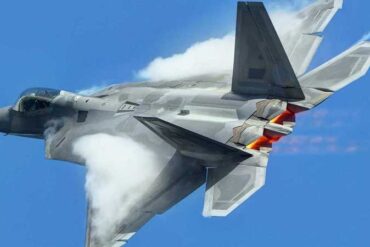
Lockheed Martin F-22 Raptor: The Undisputed King of Air Superiority
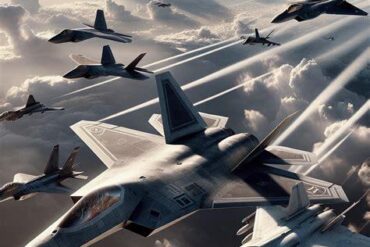
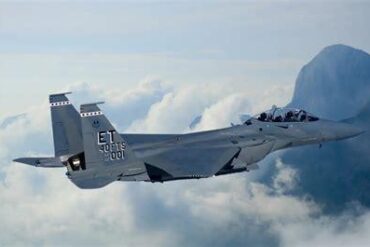
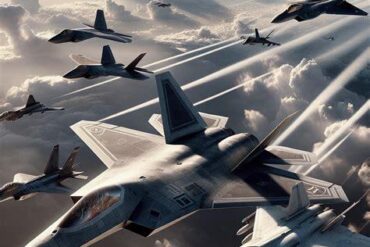
The F-22 Raptor remains the gold standard for air dominance, even decades after its introduction. Designed with a singular purpose—to defeat the most advanced enemy fighters—it continues to embody a level of performance that few aircraft can approach. This is not a multirole compromise; it is a purebred predator built to win air wars.
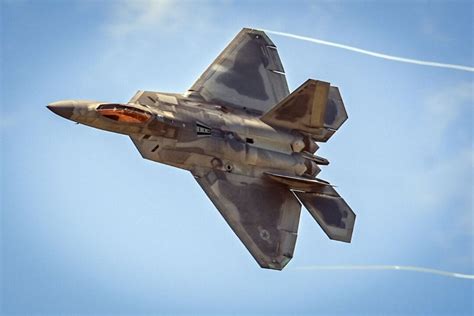
What makes the F-22 exceptional is the way its core attributes reinforce each other. Its stealth profile minimizes detection, allowing it to penetrate contested airspace unnoticed. Its supercruise capability enables sustained supersonic flight without afterburners, preserving fuel while maintaining speed. Combined with thrust-vectoring engines, the Raptor achieves extreme agility, giving it a decisive edge in close combat scenarios.
However, modern air combat rarely devolves into dogfights. The true strength of the F-22 lies in its ability to engage and eliminate threats before they are even aware of its presence. Advanced sensor fusion provides the pilot with a clean, unified battlefield picture, reducing cognitive load while maximizing situational awareness. This allows the Raptor to act with precision and speed, often controlling engagements from beyond visual range.
Despite its unmatched capabilities, the F-22’s limited production and exclusivity to the United States add an aura of strategic mystique. It is not widely exported, and its technology remains closely guarded. Critics often point to its high cost, but that expense reflects a deliberate choice: to build the most capable air superiority fighter ever conceived, regardless of scale.
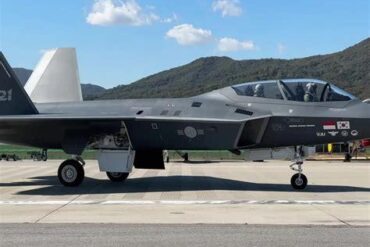
Lockheed Martin F-35 Lightning II: The Ultimate Force Multiplier
If the F-22 is a specialist, the F-35 Lightning II is the ultimate generalist—yet calling it a “jack of all trades” undersells its transformative impact. The F-35 is arguably the most powerful fighter in service today, not because of raw performance, but because of its unparalleled information dominance.
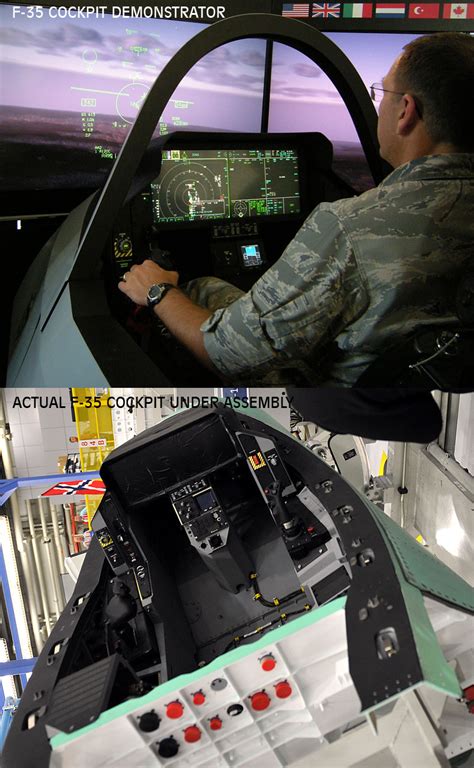
At its core, the F-35 functions as a flying sensor hub and battlefield coordinator. Its advanced systems collect data from multiple sources—radar, infrared sensors, electronic surveillance—and fuse them into a single, coherent picture. This information is then shared across allied platforms in real time, turning the aircraft into a central node within a larger combat network.
This capability fundamentally changes how wars are fought. Pilots no longer rely solely on what they can see; they operate within a shared digital battlespace, where information flows instantly between aircraft, ships, and ground forces. In this environment, the F-35 becomes more than a fighter—it becomes a strategic asset that amplifies the effectiveness of every unit around it.
While it may not match the F-22 in speed or agility, the F-35’s stealth design ensures survivability in heavily defended airspace. Its versatility allows it to perform air-to-air combat, precision strike missions, electronic warfare, and reconnaissance with equal effectiveness. This adaptability explains its widespread adoption among allied nations, making it a cornerstone of modern coalition warfare.
In practical terms, acquiring the F-35 means joining an integrated ecosystem where data is as valuable as firepower. That combination of connectivity and capability makes it one of the most influential aircraft ever built.
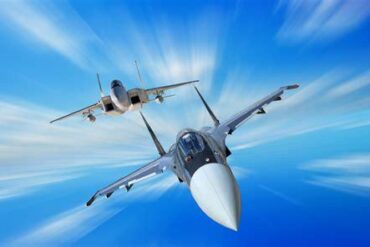
Chengdu J-20 Mighty Dragon: China’s Strategic Challenger
The Chengdu J-20 represents a significant shift in global airpower dynamics. As China’s first true fifth-generation fighter, it signals a determined effort to close the technological gap with Western air forces while introducing a distinctly strategic approach to aerial combat.
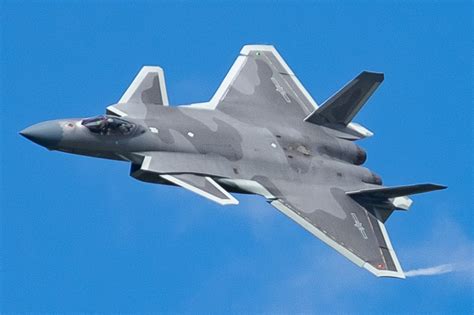
Unlike traditional dogfighters, the J-20 appears optimized for long-range engagements and high-value target interception. Its design emphasizes stealth and endurance, enabling it to operate deep within contested regions. This makes it particularly suited for targeting critical support assets such as airborne early warning aircraft, refueling tankers, and command platforms—elements that are essential to modern military operations.
One of the most striking aspects of the J-20 program is its scale. China is producing and deploying these aircraft in growing numbers, signaling not just technological ambition but also industrial momentum. Continued improvements in engine performance and avionics suggest that the platform is evolving rapidly, narrowing the gap with its Western counterparts.
The J-20’s exact capabilities remain partially obscured, adding a layer of uncertainty that enhances its strategic impact. What is clear, however, is that it integrates advanced radar systems, long-range missile capabilities, and internal weapons carriage, making it a formidable presence in any potential conflict scenario.
Rather than mirroring Western designs outright, the J-20 reflects a tailored doctrine focused on disrupting enemy networks and neutralizing force multipliers. In that role, it becomes less about traditional air superiority and more about reshaping the battlefield itself.
Dassault Rafale: The Most Complete Multirole Fighter
The Dassault Rafale stands as proof that stealth is not the only path to dominance. Among non-stealth aircraft, it is widely regarded as the most complete and capable fighter in operational service. Its strength lies in its balance—speed, range, payload, and versatility all integrated into a single cohesive platform.
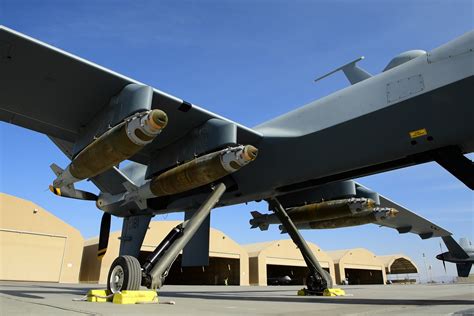
What distinguishes the Rafale is its maturity. This is an aircraft that has not only been engineered with precision but also proven extensively in real-world operations. From air defense missions to deep strike operations and nuclear deterrence roles, it has demonstrated consistent reliability across diverse combat scenarios.
Its advanced avionics and sensor systems provide strong situational awareness, while its weapons integration allows it to carry a wide array of munitions. This flexibility enables it to transition seamlessly between mission types, reducing the need for specialized aircraft within a fleet.
Another key advantage is its operational independence. The Rafale is designed to function effectively without relying heavily on external support, making it particularly attractive for nations seeking sovereign military capability. Its growing export success across Europe, Asia, and the Middle East reflects confidence in its ability to deliver consistent performance under varied conditions.
In an era increasingly dominated by stealth platforms, the Rafale proves that a well-designed multirole fighter can still compete at the highest level through adaptability and operational excellence.
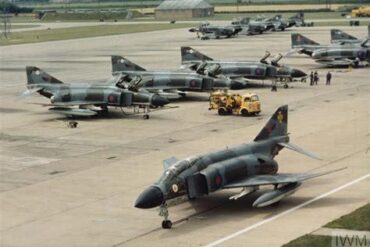
Eurofighter Typhoon: Raw Power Meets Modern Evolution
The Eurofighter Typhoon remains one of the most formidable air combat platforms in service, blending exceptional aerodynamic performance with continuous technological upgrades. Originally conceived as an air superiority fighter, it has evolved into a highly capable multirole aircraft without losing its core strengths.
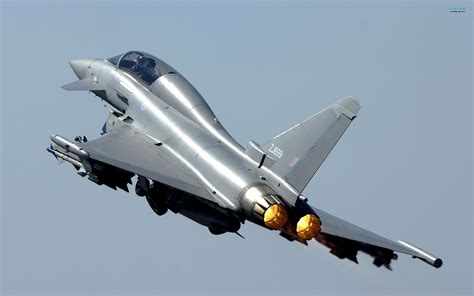
At the heart of the Typhoon’s appeal is its raw power. Its twin-engine configuration delivers impressive thrust, enabling rapid acceleration, high climb rates, and sustained supersonic flight. These characteristics make it particularly effective in quick-reaction alert missions, where speed and responsiveness are critical.
Over time, the Typhoon has expanded its capabilities beyond interception. Upgraded radar systems, enhanced weapons integration, and improved targeting systems have transformed it into a versatile platform capable of conducting precision strikes alongside traditional air combat roles. This evolution ensures its continued relevance in a rapidly changing operational landscape.
While it lacks the deep stealth capabilities of fifth-generation fighters, the Typhoon compensates with agility, speed, and advanced electronic warfare systems. In less contested environments or when supported by allied assets, it remains a highly effective tool for maintaining air superiority.
Its strong presence within European defense frameworks also provides long-term stability, ensuring ongoing upgrades and operational support. This combination of performance and institutional backing makes the Typhoon a durable and adaptable force in modern airpower.
What Defines Power in Modern Fighter Jets
The concept of “power” in fighter aviation has undergone a profound transformation. It is no longer sufficient to evaluate aircraft based on speed or maneuverability alone. Instead, true power emerges from the integration of multiple capabilities into a cohesive system.
Stealth remains a critical factor, allowing aircraft to operate undetected within hostile environments. However, sensor fusion and data sharing have become equally important, enabling pilots to make informed decisions faster than their adversaries. Electronic warfare capabilities further enhance survivability by disrupting enemy systems and protecting friendly assets.
Weapons technology also plays a vital role. Modern fighters are equipped with beyond-visual-range missiles that allow them to engage targets at significant distances, often before visual contact is established. This shifts the focus from traditional dogfighting to information-driven combat, where awareness and timing determine the outcome.
Range and endurance add another layer of complexity, influencing how far and how long an aircraft can operate without support. In large-scale conflicts, these factors can determine strategic reach and operational flexibility.
Ultimately, the most powerful fighter jets are those that can integrate all these elements seamlessly, creating a platform that is not only lethal but also resilient and adaptable.
The Future of Air Dominance
As impressive as today’s fighters are, they represent only a stepping stone toward the next generation of air combat systems. Sixth-generation programs are already in development, promising even greater levels of automation, artificial intelligence integration, and network-centric warfare.
Yet, the aircraft currently in service continue to define the present battlefield. The F-22, F-35, J-20, Rafale, and Typhoon each bring unique strengths, reflecting different strategic priorities and technological approaches. Together, they illustrate a simple but powerful truth: air superiority is no longer about a single aircraft—it is about how effectively that aircraft operates within a larger system.
In that sense, the most powerful fighter jet is not just the one with the best specifications, but the one that can shape the battle before it even begins.