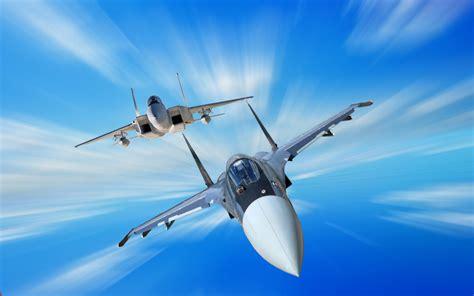
Fighter aircraft, initially termed pursuit aircraft, represent the pinnacle of military aviation, meticulously engineered primarily for air-to-air combat. Their fundamental objective in any military conflict is the establishment of air superiority over the battlespace. Achieving dominance of the airspace is a critical enabler, permitting friendly bombers and attack aircraft to conduct tactical and strategic bombing of enemy targets with reduced interference, while simultaneously denying the enemy the same capability. The defining performance characteristics of a fighter extend beyond its firepower; they critically include its high speed and maneuverability relative to opposing aircraft. The ultimate success or failure of a combatant’s endeavor to gain air superiority is a complex interplay of factors, including the innate skill and training of its pilots, the tactical acumen embedded in its doctrine for deploying fighters, and, crucially, the sheer numbers and technological performance of those fighters. While specialized for air combat, many modern fighter aircraft possess significant secondary capabilities, notably ground attack. Indeed, some designs, such as dedicated fighter-bombers, are conceived from their inception for these dual roles. Conversely, other fighter designs remain highly specialized, focusing almost exclusively on the air superiority mission; these include dedicated interceptors and, in historical contexts, types like the heavy fighter and night fighter.
The Genesis of Aerial Warfare: World War I Fighters
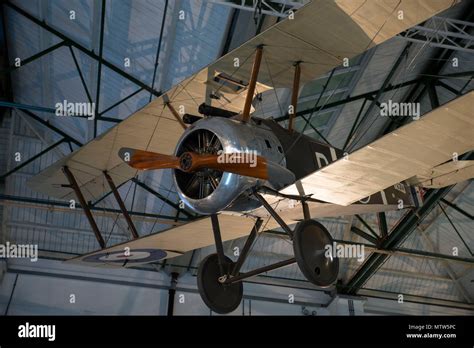
The concept of achieving and maintaining air superiority has been a cornerstone of conventional warfare strategy since its dramatic emergence during World War I. Throughout this global conflict, fighter aircraft underwent rapid and continuous development, driven by the urgent need to deny enemy aircraft and dirigibles the ability to gather vital reconnaissance information over the dynamic battlefield. The earliest fighters were, by later standards, diminutive and lightly armed. Most were biplanes, constructed with wooden frames covered in fabric, and their maximum airspeeds hovered around a modest 100 mph (160 km/h). A notable exception and a harbinger of future construction techniques was the successful German Albatros series, which utilized a plywood shell instead of fabric for its fuselage, resulting in a stronger, more streamlined, and consequently faster airplane. As the strategic importance of controlling the airspace above armies became undeniably clear, all major powers invested heavily in developing fighters to support their military operations. The very term “fighter” initially described two-seat aircraft where a gunner operated a pedestal-mounted machine gun. The French Voisin pushers, appearing from 1910, were early examples, with a Voisin III achieving the first recorded air-to-air shootdown on October 5, 1914. However, at the war’s outset, most aircraft were unarmed reconnaissance platforms. The initial attempts at aerial combat were rudimentary, often involving pilots firing pistols or rifles at each other. The critical innovation was the fixed forward-firing machine gun, synchronized to fire through the propeller arc, a development spearheaded by engineers like Anthony Fokker. This transformed the aircraft itself into a weapon platform, and the ensuing “Fokker Scourge” demonstrated the potency of this new technology, with aircraft like the Fokker Eindecker gaining temporary air superiority despite being based on an older airframe. This spurred a technological arms race, leading to iconic designs like the British Sopwith Camel and the German Albatros D.III. Materials evolved slowly, with wood and fabric dominating, though Hugo Junkers pioneered all-metal aircraft with the Junkers J 1 and later the Junkers D.I, featuring corrugated duralumin, while Dornier explored stressed-skin aluminum construction. Tactical doctrines also began to emerge, with ace pilots like Oswald Boelcke developing formations and maneuvers to maximize combat effectiveness.
Inter-War Advancements and the Path to Modernity
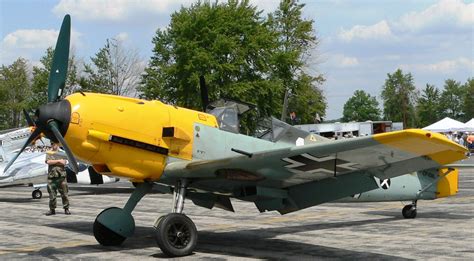
Between the devastating World Wars, fighter development experienced a period of mixed progress. In nations like the United States and the United Kingdom, constrained military budgets led to a relative stagnation in innovative designs. Conversely, France, Italy, and Russia, with more substantial budgets, continued to explore advanced concepts, leading to the common adoption of monoplanes and all-metal structures. However, by the late 1920s, these nations found their resources overstretched, allowing powers that had been more conservative with spending, such as Britain, the US, and a re-arming Germany, to take the lead in the 1930s. Pilots often favored the agility of biplanes, and designs like the Gloster Gladiator and Fiat CR.42 remained in service well into the late 1930s, and some even saw combat in the early years of World War II. Armament typically consisted of rifle-caliber machine guns, often mounted in the wings or synchronized to fire through the propeller. The powerful rotary engines popular in World War I gradually gave way to stationary radial engines and increasingly sophisticated inline engines, such as the Curtiss D-12. Engine power saw a dramatic increase, from around 180 hp in late WWI fighters to over 900 hp in aircraft like the Curtiss P-36 by the mid-1930s. The debate between the aerodynamic efficiency of inline engines and the rugged reliability of radials continued, with naval forces generally preferring radials due to their air-cooling and resilience. Some air forces experimented with heavy fighters, larger twin-engined aircraft intended for long-range escort or bomber destroyer roles, but these often proved vulnerable to more agile single-engine fighters. A significant catalyst for fighter innovation during this period was, surprisingly, civilian air racing, particularly the Schneider Trophy races. These high-stakes competitions pushed the boundaries of aerodynamic streamlining and engine power, with advancements quickly finding their way into military designs. The Spanish Civil War served as a crucial proving ground for the latest fighter aircraft and tactics. Germany’s Luftwaffe tested the Messerschmitt Bf 109, which proved highly effective, while the Soviet Union deployed the Polikarpov I-16. The lessons learned in Spain, particularly by the Germans, led to substantial improvements in aircraft design and tactical formations, such as Werner Mölders’ development of the “finger-four” formation, which became a standard tactical unit for many air forces in the subsequent global conflict. Japan, engaged in conflicts in China, also used this period to refine its aircraft and pilot training, transitioning to modern cantilever monoplanes.
World War II: The Apex of Piston-Powered Fighters
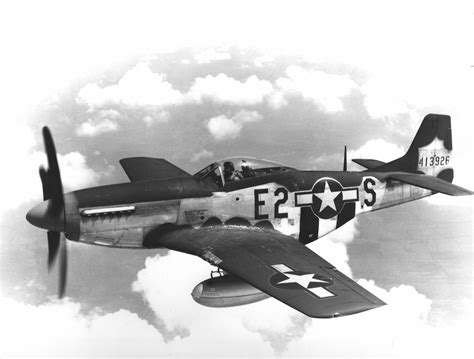
World War II witnessed fighter combat on an unprecedented scale, fundamentally shaping military outcomes across all theaters. German Field Marshal Erwin Rommel poignantly noted the impact of airpower: “Anyone who has to fight, even with the most modern weapons, against an enemy in complete command of the air, fights like a savage…” Throughout the war, fighters executed their traditional role of establishing air superiority by engaging enemy fighters and intercepting bombers, but they also increasingly undertook crucial tactical air support and reconnaissance missions. Fighter design philosophies varied significantly among the major combatants. Japan and Italy, for instance, favored highly maneuverable but lightly armed and armored aircraft like the Japanese Mitsubishi A6M Zero and the Italian Macchi C.200. In stark contrast, designers in the United Kingdom, Germany, the Soviet Union, and the United States prioritized speed, altitude performance, and firepower, believing that the increasing speeds of combat would render traditional dogfighting less viable. Aircraft such as the British Supermarine Spitfire, the German Messerschmitt Bf 109 and Focke-Wulf Fw 190, the Soviet Yakovlev Yak-9, and the American Republic P-47 Thunderbolt and North American P-51 Mustang exemplified this approach. In the European Theater, Luftwaffe fighters initially dominated during the invasions of Poland and France. However, during the Battle of Britain, the RAF’s Hawker Hurricanes and Spitfires, aided by radar direction and the advantage of fighting over home territory, successfully denied Germany air superiority. On the Eastern Front, Soviet air forces suffered immense losses initially but gradually recovered with improved aircraft like the Yak-9 and Lavochkin La-5, and substantial Lend-Lease aid, eventually challenging Luftwaffe dominance. In the Western European air war, Allied fighters, particularly long-range escorts like the P-51 Mustang, systematically attrited the Luftwaffe, paving the way for the successful D-Day landings and the eventual Allied victory. The Pacific Theater saw early Japanese success with the agile A6M Zero. However, the Allies adapted, developing new tactics like the Thach Weave and introducing superior aircraft such as the Grumman F6F Hellcat, Vought F4U Corsair, and Lockheed P-38 Lightning. These aircraft, combined with overwhelming industrial capacity and improved pilot training, eventually secured Allied air supremacy. Technological advancements during WWII were profound: piston engines exceeded 2,000 hp, monocoque construction became standard, laminar flow wings improved high-speed performance, and armament shifted towards heavy machine guns and cannons. The first operational jet fighters, the German Messerschmitt Me 262 and the British Gloster Meteor, appeared late in the war, heralding a new era. Airborne radar also saw its first use, primarily in night fighters like the Northrop P-61 Black Widow.
The Dawn of the Jet Age: First-Generation Fighters
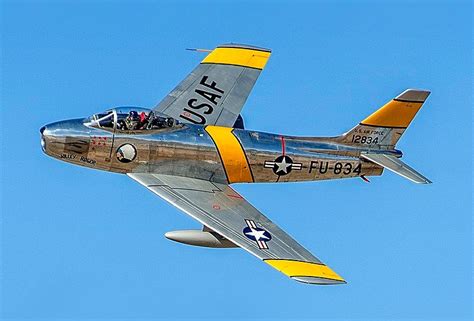
The late stages of World War II and the immediate post-war period marked a revolutionary transition in fighter aircraft design: the advent of the jet engine. Several prototype programs initiated during the war continued, leading to advanced piston-engine fighters like the Lavochkin La-9, but the future clearly belonged to jets. The German Messerschmitt Me 262 was the first operational jet fighter and, despite its late introduction and limited numbers, it demonstrated the obsolescence of propeller-driven aircraft with its significant speed advantage. Britain’s Gloster Meteor entered service around the same time, primarily used against V-1 flying bombs. These first-generation jet fighters (roughly 1940s-1950s) initially bore a strong resemblance to their piston-engined predecessors, many featuring unswept wings and relying on cannons as their primary armament. Early jet engines were temperamental, with short operational lifespans and slow throttle response. However, the allure of higher speeds was irresistible. The Americans, after the unsuccessful Bell P-59, introduced the Lockheed P-80 Shooting Star. The British de Havilland Vampire, with its distinctive twin-boom design, was widely exported. A crucial development was the adoption of swept wings, pioneered by German wartime research and famously utilized by the Soviet Mikoyan-Gurevich MiG-15. The MiG-15’s performance came as a shock to UN forces during the Korean War, prompting the rapid deployment of the American North American F-86 Sabre. The Korean War saw the first large-scale jet-versus-jet combat, with engagements between Sabres and MiGs defining this new era of aerial warfare. Navies also transitioned to jets, with types like the Grumman F9F Panther (US Navy) and de Havilland Sea Vampire (Royal Navy) overcoming the challenges of carrier operations. This period also saw the introduction of early air-to-air missiles (AAMs), such as the infrared-homing AIM-9 Sidewinder and the radar-guided AIM-7 Sparrow, initially deployed on naval fighters like the Vought F7U Cutlass and McDonnell F3H Demon. Innovations like ejection seats, air brakes, and all-moving tailplanes became standard.
Supersonic Performance and Evolving Doctrines: Second and Third Generation Fighters
The lessons from the Korean War, coupled with rapid technological breakthroughs and the Cold War’s nuclear context, shaped the second-generation jet fighters (roughly 1950s-1960s). Aerodynamic innovations such as delta wings and area-ruled fuselages became more common. The widespread adoption of afterburning turbojet engines allowed these aircraft to routinely break the sound barrier and sustain supersonic speeds in level flight. A key advancement was the miniaturization of radar systems, enabling their installation in fighter-sized aircraft for beyond-visual-range (BVR) detection. Guided missiles began to supplant guns as the primary offensive armament. Early infrared (IR) missiles had limited fields of view, restricting them to tail-chase engagements, while early radar-guided missiles proved somewhat unreliable. This era saw a divergence in design philosophy, leading to specialized interceptors like the British English Electric Lightning and Soviet Mikoyan-Gurevich MiG-21, designed for high-speed, high-altitude interception of strategic bombers, often sacrificing maneuverability for climb rate and missile payload. Concurrently, fighter-bombers such as the American Republic F-105 Thunderchief and Soviet Sukhoi Su-7B were developed for high-speed, low-altitude strike missions, some with nuclear delivery capabilities. Dogfighting was generally de-emphasized in favor of missile engagements.
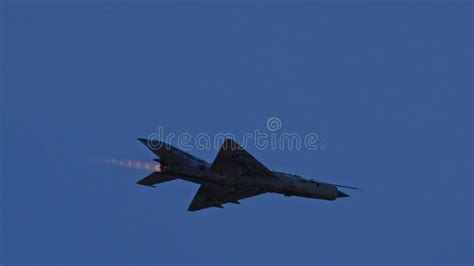
The third-generation jet fighters (roughly 1960s-1970s) saw a renewed emphasis on maneuverability and traditional ground-attack capabilities, largely influenced by combat experiences in conflicts like the Vietnam War, which demonstrated that missile engagements often devolved into close-in dogfights. Analog avionics started replacing older cockpit instrumentation. Aerodynamic enhancements included flight control surfaces like canards, powered slats, and blown flaps. While guns remained standard (with notable exceptions like early F-4 Phantom II models), improved air-to-air missiles and more sophisticated radar systems became primary. However, early radio-frequency (RF) missiles suffered from low kill probabilities due to reliability issues and effective enemy electronic countermeasures (ECM). Infrared missiles improved, with wider fields of view. The US Navy established its “TOPGUN” school to refine air combat maneuvering (ACM) skills. This generation also saw significant expansion in ground-attack capabilities, with the introduction of electro-optically guided missiles like the AGM-65 Maverick and laser-guided bombs (LGBs), often directed by external targeting pods. Jet engines became more reliable and “smokeless,” reducing visual detection range. The iconic McDonnell Douglas F-4 Phantom II, initially designed as an interceptor, emerged as a highly versatile and capable multirole fighter-bomber, serving with the US Air Force, Navy, and Marine Corps, and achieving a remarkable combat record.
The Digital Age: Fourth-Generation Fighters and Beyond
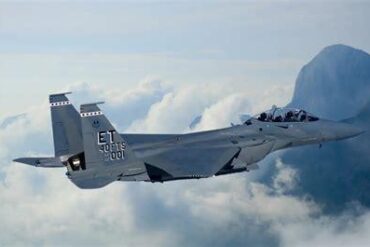
Fourth-generation fighters (roughly 1970s-2000s) marked a significant leap, heavily influenced by Colonel John Boyd’s Energy-Maneuverability (E-M) theory. This theory prioritized sustained energy and rapid transient performance (quick changes in speed, altitude, and direction) over sheer speed alone. This led to designs like the McDonnell Douglas F-15 Eagle, a dedicated air superiority fighter, and the smaller, highly agile General Dynamics F-16 Fighting Falcon. The F-16 pioneered relaxed static stability (RSS), enabled by fly-by-wire (FBW) flight control systems, which replaced mechanical linkages with electronic signals. Digital avionics, including Full Authority Digital Engine Controls (FADEC), became commonplace. Key cockpit technologies included pulse-Doppler fire-control radars (providing look-down/shoot-down capability), head-up displays (HUD), hands-on throttle-and-stick (HOTAS) controls, and multi-function displays (MFD). The use of composite materials reduced weight and improved structural integrity. “All-aspect” IR AAMs and long-range active-radar-homing missiles like the AIM-54 Phoenix (unique to the Grumman F-14 Tomcat) became standard. The concept of a “high/low mix” emerged, combining expensive, high-capability air superiority fighters (like the F-15) with more numerous, lower-cost multirole fighters (like the F-16). Many fourth-generation aircraft, such as the McDonnell Douglas F/A-18 Hornet and Dassault Mirage 2000, were designed as true multirole platforms from the outset.
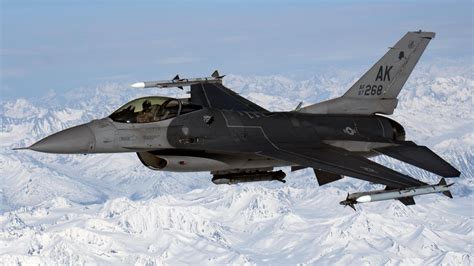
Emerging from the end of the Cold War, 4.5-generation fighters (roughly 1990s-2000s) represented an evolution of fourth-generation designs, incorporating advanced digital avionics, Active Electronically Scanned Array (AESA) radars, highly integrated systems, and modest signature reduction (stealth) features. These aircraft, such as the Eurofighter Typhoon, Dassault Rafale, Saab JAS 39 Gripen, and upgraded versions of existing airframes like the F/A-18E/F Super Hornet and Sukhoi Su-35S, were designed for network-centric warfare. Many feature thrust vectoring for enhanced maneuverability and some possess limited supercruise capability (supersonic flight without afterburners). These aircraft bridge the technological gap to the next true generation.
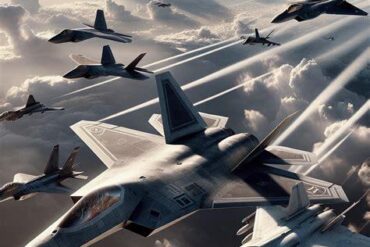
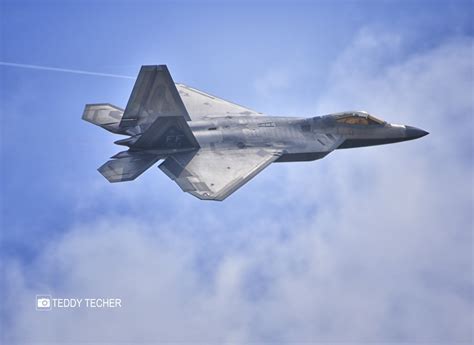
Fifth-generation fighters (roughly 2000s-present) are characterized by a design philosophy centered on all-aspect stealth (Very Low Observability – VLO), achieved through shaping and advanced materials, integrated from the very beginning. They feature highly advanced sensor fusion, where data from AESA radars, Infrared Search and Track (IRST) systems (often termed Situational Awareness IRST or SAIRST), and other sensors are combined to provide unparalleled situational awareness to the pilot. Internal weapons bays are used to maintain a low radar cross-section. Supercruise capability is often a design goal. Avionics rely on very high-speed integrated circuits and high-speed data buses. Examples include the American Lockheed Martin F-22 Raptor and Lockheed Martin F-35 Lightning II, the Russian Sukhoi Su-57, and the Chinese Chengdu J-20. These aircraft are designed to achieve “first-look, first-shot, first-kill” capability.
Looking ahead, sixth-generation fighters (currently in conceptual and early development stages, expected 2030s-2040s) are envisioned to incorporate even more advanced technologies. These may include enhanced stealth (“broadband stealth”), optionally manned capabilities, advanced artificial intelligence for decision support and autonomous operations, directed-energy weapons, hypersonic speeds, and seamless integration with swarms of unmanned aerial vehicles (UAVs). Programs like the American Next Generation Air Dominance (NGAD), the British-led Team Tempest (with Japan and Italy), and the Franco-German-Spanish Future Combat Air System (FCAS) are actively pursuing these future capabilities.
Fighter Armament: From Bullets to Smart Missiles
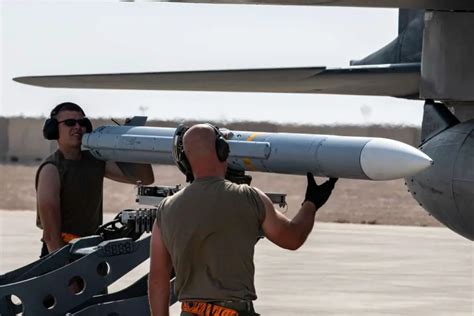
The lethality of fighter aircraft has always been intrinsically linked to their armament. In World War I, fighters were typically armed with one or two rifle-caliber (e.g., .303 inch or 7.92mm) machine guns. By World War II, armament had evolved to include multiple heavy machine guns (typically .50 caliber/12.7mm) or 20mm to 30mm cannons firing explosive shells, which offered significantly greater destructive power. The American P-47 Thunderbolt, for example, carried eight .50 caliber machine guns, while the Spitfire often featured a mix of machine guns and 20mm cannons. Post-WWII, revolver cannons and rotary cannons (like the M61 Vulcan) became standard, offering extremely high rates of fire and devastating hitting power. Modern gun systems, often coupled with radar ranging and lead-computing sights, remain a vital backup weapon, effective at relatively short ranges (around 1,000 meters) and highly cost-efficient compared to missiles. The primary air-to-air weapon for modern fighters, however, is the guided missile. Development began in earnest in the 1950s. Infrared (IR) homing missiles, or “heat-seekers,” like the ubiquitous AIM-9 Sidewinder, detect the heat signature of an enemy aircraft’s engines. Early versions were limited to rear-aspect engagements, but modern IR missiles are “all-aspect” and feature “off-boresight” capability, allowing engagement of targets not directly in front of the launching aircraft. Radar-guided missiles offer longer range and all-weather capability. Early types used semi-active radar homing (SARH), where the launching aircraft had to continuously illuminate the target with its radar for the missile to track (e.g., AIM-7 Sparrow). More advanced missiles use active radar homing (ARH), where the missile has its own small radar transmitter to guide itself to the target in the terminal phase, allowing the launching aircraft to “fire and forget” (e.g., AIM-120 AMRAAM). The effectiveness of early missiles was often low, hampered by unreliability and countermeasures. However, continuous development has led to highly sophisticated and lethal weapons capable of engaging targets from beyond visual range (BVR), fundamentally changing the nature of air combat. Modern missiles incorporate advanced seekers, powerful rocket motors, and sophisticated electronic counter-countermeasures (ECCM) to overcome enemy defenses.
The evolution of fighter aircraft is a testament to relentless technological innovation and the enduring strategic imperative of controlling the skies. From frail wood-and-fabric biplanes to stealthy, sensor-fused fifth-generation platforms, fighters have consistently pushed the boundaries of speed, maneuverability, and lethality, remaining a decisive element in modern warfare.