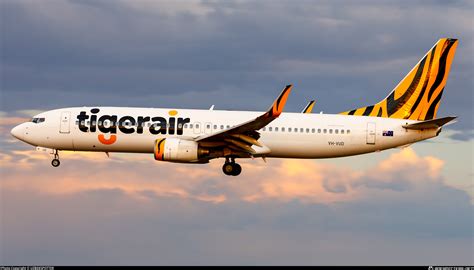
Tigerair Australia, a name that once resonated with budget-conscious travellers across the Australian continent, etched a significant, albeit turbulent, chapter in the nation’s aviation history. Operating from its inception on 23 November 2007 as Tiger Airways Australia, the carrier embarked on a mission to redefine low-cost air travel down under. Its journey, marked by ambitious expansion, regulatory hurdles, ownership changes, and ultimately, an unforeseen global crisis, concluded with the cessation of its operations on 25 March 2020, and the official retirement of the brand later that year. This article delves deep into the rise and fall of Tigerair Australia, exploring its operational strategies, competitive dynamics, and the lasting impact it left on the Australian aviation landscape.
The genesis of Tigerair Australia was intrinsically linked to shifts in Australian government policy, which progressively opened the domestic airline market to foreign ownership. Initially, in 1996, these regulations were relaxed for New Zealand-owned airlines, a move that paved the way for entities like Virgin Australia (then Virgin Blue). Subsequently, these policies were further liberalised, allowing 100% foreign-owned airlines to operate domestic services, although Australian international airlines remained subject to a 49% foreign ownership cap. Seizing this opportunity, Singapore-based Tiger Airways Holdings received approval from Australia’s Foreign Investment Review Board in March 2007 to establish a wholly-owned Australian subsidiary, without any special conditions attached. This pivotal decision set the stage for a new entrant in the fiercely competitive low-cost carrier segment.
On 16 March 2007, Tiger Airways Australia Pty Ltd was officially incorporated in the Northern Territory, though its operational heart and headquarters were established in Melbourne, Victoria, with Melbourne Airport designated as its primary hub. The initial commitment was substantial, with five Airbus A320 aircraft and an investment of $10 million earmarked to launch the subsidiary. The airline’s business model was a direct import from its successful Singaporean parent, focusing on several key tenets: stimulating market growth by attracting new passengers, rigorously controlling operating costs, and maximizing the number of flight sectors served. A core part of its early cost-reduction strategy involved avoiding major, more expensive airports where possible, a tactic common among budget carriers globally. The journey to operational readiness culminated on 20 November 2007, when Tiger successfully completed two proving flights from Melbourne to the Sunshine Coast and Launceston, under the watchful eyes of Civil Aviation Safety Authority (CASA) officials. Just two days later, on 22 November, Tiger Airways Australia received its coveted Air Operator’s Certificate (AOC), projecting an initial passenger volume of two million annually. The airline’s inaugural commercial flight, TT 7402, departed from Melbourne bound for the Gold Coast on 23 November 2007, officially heralding its entry into the Australian domestic market.
Early Roars: Expansion and Market Penetration
In its nascent phase, Tiger Airways Australia operated exclusively from its Melbourne Airport base, gradually building its network. A significant, and somewhat controversial, move came on 31 May 2008, when the airline announced the introduction of fees for checked-in luggage – $10 for a 15kg bag if pre-booked, or $20 at the check-in counter. This unbundling of services was a hallmark of the low-cost model, aimed at keeping base fares low while generating ancillary revenue. The airline signaled a strategic shift on 3 April 2009, announcing its intention to enter the lucrative Melbourne–Sydney route, at the time the fifth busiest passenger air corridor globally. This move marked a departure from its initial policy of shunning more expensive, primary airports, indicating an ambition to compete directly with established players like Qantas, Jetstar, and Virgin Blue on high-demand city pairs. This ambition was further underscored on 18 July 2009, with an announcement to increase Melbourne–Sydney flights to up to nine daily services in each direction and to double capacity on the Adelaide–Sydney route, supported by the anticipated arrival of new aircraft from October 2009.
The airline’s network expansion continued apace. On 5 November 2009, Tiger Airways declared its intent to establish a presence in the Brisbane market, launching services to Melbourne, Adelaide, and Rockhampton. These new routes were celebrated with a promotional $2 fare sale, coinciding with the airline’s second birthday, a tactic that also applied to its Tasmanian routes and the popular Melbourne-Sydney corridor. This aggressive pricing and network growth appeared to yield positive financial results, as Tiger Australia announced in February 2010 that it had achieved profitability. However, this period also saw leadership changes, with Managing Director Shelley Roberts departing on 1 June 2010, succeeded by Crawford Rix. Rix, upon taking the helm, emphasized a renewed focus on operational reliability, stating, “As far as I am concerned, on-time performance is going to be a big area that we will be focusing on.” Despite the overall growth trajectory, some routes were adjusted; on 16 July 2010, Tiger Airways announced the cessation of flights from Launceston Airport effective 2 August 2010, and the suspension of the Adelaide–Hobart route. Conversely, new destinations were added, such as Cairns, with daily late-night services from Melbourne commencing on 16 September 2010. Further fleet expansion was announced on 21 October 2010, with two additional Airbus A320 aircraft to be based in Melbourne, bringing its Victorian fleet to ten aircraft, aligning with an agreement with the State government. The strategic ‘golden triangle’ of Australian aviation – Melbourne, Sydney, and Brisbane – was completed on 25 October 2010, when Tiger announced its entry into the busy Sydney–Brisbane market with double daily frequencies.
Turbulence and Transformation: The CASA Grounding and Virgin Australia’s Acquisition
The year 2011 proved to be a watershed moment for Tiger Airways Australia, defined by a series of safety concerns that culminated in an unprecedented grounding by the Civil Aviation Safety Authority (CASA). The troubles began to surface early in the year. On 11 February, there were suspicions of erroneous data being entered into a flight computer. This was followed on 3 March by a traffic collision avoidance system (TCAS) alarm triggered when a Tigerair A320 flew too close to a smaller aircraft. These incidents prompted CASA to issue a “show-cause” notice concerning pilot training and maintenance. Despite airline spokeswoman Vanessa Regan’s assurances that there was “no cause for concern” and that operations would continue normally, the scrutiny intensified. Further incidents, including an aircraft descending below minimum altitude near Melbourne Airport on 7 June, and another flying below published minimum altitude near Avalon Airport on 30 June, compounded the regulatory body’s concerns. A critical event occurred on 1 July when a Tigerair A320 en route from Brisbane to Melbourne reportedly flew too close to a Boeing 767.

The very next day, on 2 July 2011, CASA took the drastic step of suspending Tigerair Australia’s Air Operator’s Certificate, grounding its entire fleet due to “various” safety concerns. This decision, coinciding with school holidays in New South Wales and Victoria, caused widespread disruption, affecting an estimated 35,000 passengers and costing the airline a reported $4.2 million for every week of the suspension. CASA spokesperson Peter Gibson stated, “Tigerair has not been able to, at this stage, convince us that they can continue operations safely… We believe this is symptomatic of problems within the airline.” Tigerair pledged full cooperation with CASA. On 6 July, CASA announced its intention to seek an extension of the suspension until 1 August at the Federal Court in Melbourne, as its investigation unearthed more questions. Consumer regulators, including the Australian Competition & Consumer Commission (ACCC), criticized Tigerair for its initial lack of clear communication to ticketed passengers regarding the uncertainty of future flights. After a challenging five-week period, CASA lifted the ban, and Tigerair Australia recommenced operations on 12 August 2011, albeit under strict conditions. Initially, services were limited to 18 flights a day between Melbourne and Sydney. In a commercially driven decision following the grounding, Tigerair announced the suspension of operations from Avalon Airport and the complete closure of its Adelaide base, also reducing its fleet to eight aircraft. It wasn’t until 22 October 2012 that CASA announced it was issuing a new safety certificate and lifting all remaining restrictions, satisfied that the airline had addressed the underlying issues.
Amidst these operational challenges, significant structural changes were on the horizon. On 7 March 2012, Tiger Airways announced its decision to reopen a second operational base at Sydney Airport, signaling a renewed push for growth. This was followed on 4 September 2012 by the news that flights from Melbourne to Adelaide would resume from 1 November 2012. A pivotal development occurred in October 2012 when Virgin Australia Holdings announced its intention to purchase a 60% stake in Tiger Airways Australia for $35 million. This deal, completed in July 2013 after the airline officially rebranded to Tigerair Australia, marked a new era for the budget carrier. Virgin Australia and the newly christened Tigerair committed to spending up to $62.5 million to expand Tigerair’s fleet from 11 to 35 aircraft by 2018, positioning it as Virgin Australia’s dedicated low-cost subsidiary. The Australian Competition & Consumer Commission (ACCC) approved the acquisition on 23 April 2013, with chairman Rod Sims noting that Tigerair would be “highly unlikely to remain in the local market if the proposed acquisition didn’t proceed.” Under this new part-ownership, Tigerair continued to expand its network, launching direct return flights from Mackay to Melbourne and Sydney on 18 December 2012. On 6 February 2013, services resumed between Melbourne and Sunshine Coast/Alice Springs, and new routes were initiated between Sydney and Cairns/Alice Springs. A week later, Tigerair Australia launched its first intrastate route, connecting Sydney with Coffs Harbour. The consolidation of ownership was completed on 17 October 2014, when Virgin Australia Holdings announced plans to acquire the remaining 40% of Tigerair for a nominal $1, retaining the Tigerair name and acquiring brand rights for potential international operations from Australia.
Under Virgin’s Full Embrace: International Ventures and Brand Evolution
With Virgin Australia Holdings in full control, Tigerair Australia embarked on further strategic initiatives, including its first foray into international skies. On 7 August 2015, it was announced that Tigerair Australia would commence its first-ever international services to Denpasar, Bali, from Melbourne, Adelaide, and Perth, starting 23 March 2016. These services were operated using three Boeing 737-800 aircraft wet-leased from Virgin Australia, utilizing Virgin’s AOC and flight crew, while Tigerair provided the cabin crew. This international expansion, however, proved to be short-lived. On 3 February 2017, Tigerair abruptly ended its Bali flights, citing ongoing approval issues with Indonesian authorities. This setback highlighted the complexities of international budget operations.
Domestically, the airline continued to refine its offering. On 18 August 2015, Tigerair moved into the newly opened Terminal 4 at Melbourne Airport, which boasted advanced automated check-in kiosks, bag drop facilities, an expanded departure lounge, and enhanced retail and dining options. This move aimed to improve the passenger experience, a critical factor in the competitive low-cost market. Network adjustments continued with the announcement on 27 August 2015 of three weekly return services between Melbourne and Coffs Harbour, further supplemented on 2 March 2016 with an additional weekly return service. A significant brand refresh was unveiled on 22 October 2015, featuring new modern uniforms, a revamped website and booking system, and an overall improved check-in experience, all designed to project a more contemporary and customer-friendly image. Further domestic expansion saw the resumption of flights between Canberra and Melbourne on 9 December 2016, after a five-year hiatus. A new domestic route connecting Canberra and Brisbane with three weekly return services was added on 14 September 2017. In a bid to leverage global partnerships, Tigerair Australia joined Value Alliance, the world’s largest low-cost carrier alliance, on 16 May 2016, alongside carriers like Cebu Pacific, Jeju Air, Nok Air, and Scoot. However, its participation in this alliance was relatively brief, with Tigerair exiting in 2018. In November 2016, Tigerair had sought approval to operate expanded international services under its own AOC using both A320s and 737s, but these plans did not fully materialize beyond the Denpasar attempt.
An organizational restructuring within the broader Virgin Australia group occurred on 2 September 2019. Virgin Australia Holdings Managing Director and CEO Paul Scurrah unveiled a new structure designed to bring the three flying businesses – Virgin Australia, Virgin Australia Regional Airlines (VARA), and Tigerair Australia – closer together. Under this new framework, the distinct position of CEO Tigerair ceased to exist. Tigerair’s operations were subsequently led by an Executive General Manager responsible for its AOC, reporting to the VAH Chief Operations Officer, while commercial and corporate functions were centralized within the Group. This integration signaled a tighter alignment with the parent company’s strategy.
The Gathering Storm and Final Descent
Even before the cataclysmic impact of the COVID-19 pandemic, Tigerair Australia was facing significant headwinds. In February 2020, Virgin Australia Holdings announced a substantial retrenchment for its budget arm: Tigerair’s fleet was to be reduced from 13 to eight aircraft, five loss-making routes were to be exited, and its Brisbane base was slated for closure. These measures were indicative of the intense pressure in the low-cost segment and the airline’s ongoing struggle for sustainable profitability.
The global COVID-19 pandemic delivered the final, decisive blow. As international and domestic travel restrictions decimated the aviation industry worldwide, Tigerair Australia suspended all operations on 25 March 2020. The situation deteriorated rapidly, and on 3 April 2020, all Tigerair pilots were made redundant. The parent company, Virgin Australia Holdings, was itself forced into voluntary administration. Following a protracted sale process, new owner Bain Capital confirmed in August 2020 that the Tigerair Australia brand would be permanently retired as part of a broader strategy to simplify Virgin Australia’s operations and focus on its core mainline business. Tigerair was officially discontinued by Bain Capital on 10 September 2020. While its Air Operator’s Certificate was reportedly retained for potential future revival, the subsequent failure of new ultra-low-cost entrants like Bonza, which went into liquidation, and the struggles of Rex Airlines in its bid to compete in major city-pair markets (leading to its own administration in mid-2024), cast a long shadow over the viability of such a revival. The Transport Workers Union of Australia even labeled the market segment as being ‘in crisis’.
Competitive Arena: Claws Out
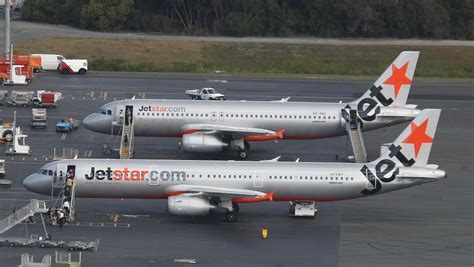
The arrival of Tiger Airways Australia in 2007 undeniably shook up the domestic aviation market, eliciting strong reactions from its primary competitors, Qantas (and its budget subsidiary Jetstar) and the then Virgin Blue. Jetstar was particularly outspoken, with its then-CEO Alan Joyce famously quoted as saying, “Tiger and what they have done have come across as a joke, and will probably continue that way.” Joyce also claimed Tiger Airways had lost over SGD $60 million in its Singapore operations over the preceding two years. The market responded with aggressive fare competition. Jetstar, for instance, announced it would “double the difference of any competitor’s fare that is cheaper than its own fares” and introduced bonus systems to retain customer loyalty. Tigerair’s initial promises of “single digit” one-way fares and announcements like $80 flights from Melbourne to Darwin were met with skepticism and competitive counter-offers from Jetstar. Virgin Blue, before its own transformation into Virgin Australia, even considered establishing its own distinct low-cost offshoot to counter Tiger’s entry. Melbourne Airport, keen to secure Tiger’s hub operations, announced plans to cut usage fees shortly after Tiger’s hub announcement. Tiger’s mere mention of New Zealand as a potential future market also raised concerns across the Tasman. In a clear competitive jab just days before Tiger’s Australian launch, Jetstar offered 5,000 seats on 21 November 2007 for a mere five cents each (inclusive of taxes) on seven domestic routes, a move Jetstar claimed was unrelated to Tiger’s launch while simultaneously acknowledging them as a “competitive” force. Tigerair itself engaged in sharp practices, criticizing Qantas on 23 November 2007 for allegedly being unable to provide ground handling services at Alice Springs Airport, forcing a three-month delay to its launch there. Qantas executive John Borghetti’s reported retort that “assisting competitors is not part of my job description” highlighted the cut-throat nature of the industry. Tigerair frequently used aggressive promotional sales, such as its first-anniversary “Free Seats” campaign in November 2008, which saw 100,000 seats on sale, and its second birthday $2 fare sale in November 2009.
Gauging Performance: On-Time Reliability and Cancellations
Tigerair Australia’s operational performance was a key metric, particularly given its low-cost, high-utilization model. For the 2012–2013 fiscal year, among major Australian domestic airlines (Qantas, Jetstar, Virgin Australia, Tigerair), Tigerair recorded the second-lowest level of on-time departures at 79.6%. This was a significant drop from its 2011-2012 figure of 89.5% but still ahead of Jetstar’s 75.6%. Its on-time arrival rate was 76.3%, again surpassing Jetstar’s 76.1%. Notably, during this period, Tigerair had the lowest cancellation rate among these carriers, at 1.2% of flights cancelled. Performance showed improvement in subsequent years. Statistics for the 2015 calendar year revealed that 84.1% of Tigerair Australia services departed on time, a record for the airline over a full year. This compared favorably against its main competitor (Jetstar), which departed on schedule 76.2% of the time on like-for-like routes. Furthermore, Tigerair Australia was reportedly three times more reliable than its key competitor regarding cancellations in 2015, cancelling only 0.9% of its flights compared to 2.9% for the competitor on comparable routes. The airline achieved its best-ever monthly on-time departure statistics in February 2016, with an impressive 93.3% of services departing on schedule.
Fleet Composition: The Workhorses of the Low-Cost Fleet
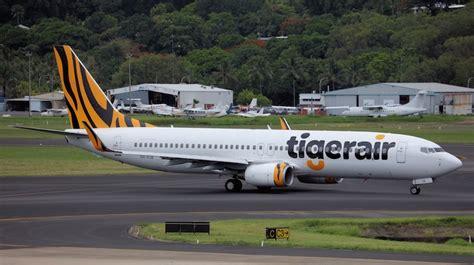
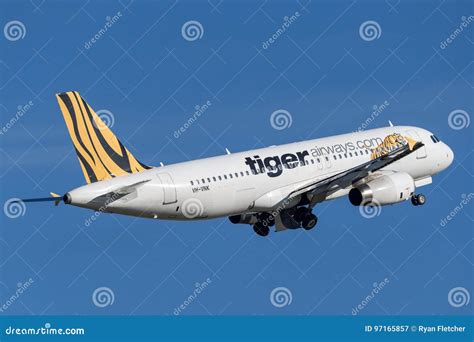
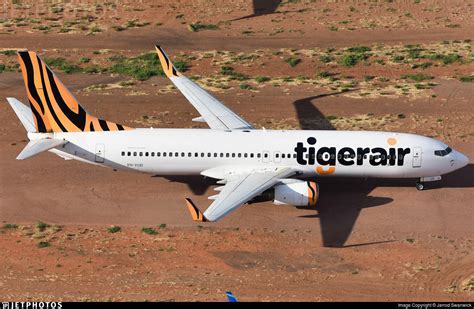
Tigerair Australia commenced operations with a fleet of Airbus A320-200 aircraft, a popular choice for low-cost carriers worldwide due to its efficiency and capacity. Each A320 was typically configured with 180 seats in an all-economy layout. Over the years, the A320 fleet grew to support its network expansion. In July 2016, a significant fleet evolution was announced: Tigerair Australia revealed plans to transition its entire A320 fleet to Boeing 737-800 aircraft. These 737s, often sourced from parent Virgin Australia, were configured with 186 seats. This move aimed to streamline fleet commonality within the Virgin Australia Group and leverage the 737’s capabilities, particularly for the planned (though ultimately limited) international operations to Bali. At the point of its operational cessation in March 2020, the Tigerair Australia fleet comprised a mix of these two aircraft types. Records indicate there were 6 Boeing 737-800s and 7 Airbus A320-200s actively in service, making a total of 13 aircraft. It’s noted that seven A320 aircraft had already exited the fleet prior to the final suspension of services, reflecting the fleet reduction efforts initiated in early 2020.
- Boeing 737-800: 6 aircraft (186 passengers each)
- Airbus A320-200: 7 aircraft (180 passengers each)
Network Footprint: Connecting Australia on a Budget
Throughout its operational life, Tigerair Australia served a dynamic range of destinations across Australia, primarily focusing on leisure routes and major trunk lines. Its operating bases evolved, starting with Melbourne (Tullamarine), later adding Sydney in July 2012, and Brisbane in March 2014. These bases were crucial for its hub-and-spoke and point-to-point operations.
As of its suspension in March 2020, Tigerair served the following key destinations:
- Adelaide (Adelaide Airport)
- Brisbane (Brisbane Airport) – Base
- Cairns (Cairns Airport)
- Canberra (Canberra Airport)
- Gold Coast (Gold Coast Airport)
- Melbourne (Melbourne Airport – Tullamarine) – Base
- Sydney (Sydney Airport) – Base
Over its history, Tigerair Australia also served and subsequently terminated flights to several other locations, including:
- Alice Springs (Alice Springs Airport)
- Coffs Harbour (Coffs Harbour Airport)
- Darwin (Darwin International Airport)
- Hobart (Hobart Airport)
- Launceston (Launceston Airport)
- Mackay (Mackay Airport)
- Melbourne/Geelong (Avalon Airport)
- Newcastle (Newcastle Airport – Williamtown)
- Perth (Perth Airport)
- Proserpine (Whitsunday Coast Airport)
- Rockhampton (Rockhampton Airport)
- Sunshine Coast (Sunshine Coast Airport)
- Townsville (Townsville Airport)
Its brief international venture saw it operate to Denpasar (Ngurah Rai International Airport) in Indonesia, a route that was terminated in February 2017.
A Fleeting Glimpse: The ‘Air Ways’ Television Series
Adding a unique dimension to its public profile, Tigerair Australia was the subject of the factual television series Air Ways, created by the Seven Network. Premiering in 2009, the show followed the day-to-day operations of the airline, its staff, and passengers, offering a behind-the-scenes look at the challenges and triumphs of a budget carrier. Similar in premise to the successful UK series Airline, Air Ways, while not always portraying Tigerair in an exclusively positive light (often highlighting customer frustrations and operational hiccups), undoubtedly contributed to brand awareness and public recognition. The program, however, was axed in 2012 due to declining ratings, mirroring the airline’s own fluctuating fortunes.
The Legacy of a Budget Challenger
Tigerair Australia’s 13-year journey was a vivid illustration of the volatile and fiercely competitive nature of the low-cost airline sector. It brought significantly lower fares to many Australian routes, stimulating travel for a segment of the population that might have otherwise found flying prohibitive. However, its aggressive cost-cutting measures, coupled with periods of operational instability and intense regulatory scrutiny, often led to a challenging public perception. The airline’s ultimate demise, accelerated by the COVID-19 pandemic but also influenced by pre-existing financial pressures and strategic shifts within its parent company, left a void in the ultra-low-cost carrier market in Australia. While its roar has been silenced, the story of Tigerair Australia remains a pertinent case study in airline economics, regulatory compliance, and the enduring quest for affordable air travel.