Air superiority has long defined modern military dominance, but it is air defense systems that serve as the silent sentinels ensuring national sovereignty. In an era marked by ballistic missiles, hypersonic threats, and aerial warfare evolution, the importance of sophisticated surface-to-air defense technology has never been more profound. Below, we explore five of the most powerful military air defense systems in the world, each representing a pinnacle of engineering, deterrence, and strategic capability.
S-500 Prometheus: Russia’s Guardian of the Skies
Introduced in 2021, the S-500 Prometheus represents a significant leap in Russia’s air defense doctrine. Developed by Almaz-Antey, this system bridges the gap between missile defense and aerospace interception, capable of targeting everything from stealth aircraft to low-orbit satellites.
The S-500 is designed for synergy with its predecessors—the S-300, S-400, and A-235 systems—creating a layered, nationwide network. With a maximum detection range of 373 miles and an interception radius of 311 miles, it excels in tracking and neutralizing hypersonic projectiles and ICBMs. Its ability to engage targets at altitudes reaching 120 miles above sea level distinguishes it as a formidable threat to satellites in Low Earth Orbit (LEO).
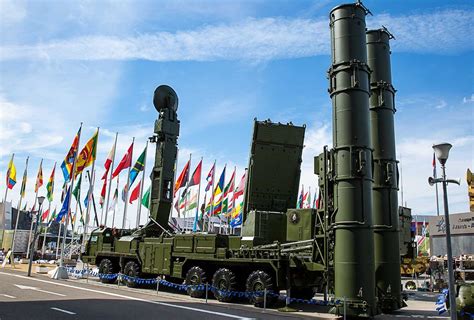
Russia deployed its first S-500 unit in December 2025, indicating its readiness for full operational status. Notably, the system is highly mobile, enabling rapid redeployment in response to strategic threats. The potential to compromise even stealth platforms such as the F-35 Lightning II underscores the S-500’s disruptive potential in global aerospace defense.
THAAD: America’s Terminal Interceptor
The Terminal High Altitude Area Defense (THAAD) system was born from hard-won lessons during the Gulf War, where SCUD missile attacks highlighted the vulnerabilities in traditional missile defense. In contrast to the Patriot missile system, THAAD operates at much higher altitudes, designed to intercept threats during their terminal phase—the most critical and difficult window.
THAAD is engineered to track and intercept ballistic missiles outside the Earth’s atmosphere and just before reentry. Each battery contains six launchers and 48 missiles, complemented by advanced radar and fire control units. The system utilizes hit-to-kill technology, relying purely on kinetic energy rather than warheads to neutralize threats.
In 2022, THAAD recorded a landmark achievement when it intercepted a Houthi-launched medium-range missile targeting an oil facility near Al-Dhafra Air Base in the UAE. This real-world validation cemented its role as a frontline defense for U.S. allies and installations around the world.
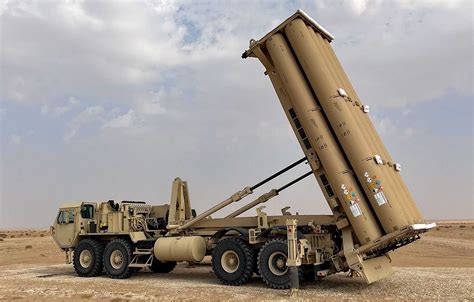
Unlike systems confined by static deployment, THAAD’s mobility and modular design allow swift repositioning and integration with wider missile defense architectures, including the Aegis system and allied regional sensors. The ability to engage multiple simultaneous targets cements THAAD’s reputation as one of the most robust ballistic missile interceptors in existence.
David’s Sling: Israel’s Precision Mid-Tier Shield
Developed jointly by Rafael Advanced Defense Systems and Raytheon, David’s Sling functions as the intermediate layer in Israel’s tri-tiered air defense framework, situated between the Iron Dome and Arrow systems. This multi-mission interceptor is essential for defending against tactical ballistic missiles, drones, cruise missiles, and enemy aircraft.
Its key interceptor, the Stunner, is a two-stage, warhead-less missile capable of reaching Mach 7.5 (5,755 mph) and engaging targets as close as 9 miles or as far as 186 miles. The absence of a traditional warhead may seem unconventional, but the system relies on sheer kinetic impact, guided by advanced multi-sensor seekers and electro-optical tracking.
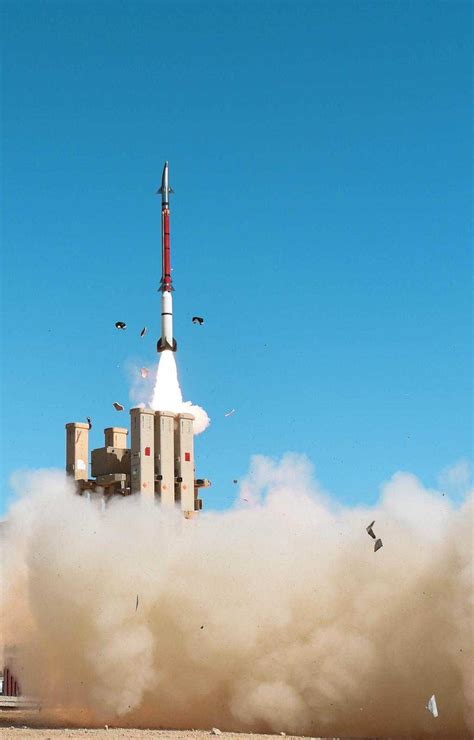
The SkyCeptor, a lower-cost derivative, offers more economical interceptions for short-to-medium range threats, enabling Israel to maintain cost-efficiency without sacrificing capability. David’s Sling’s components—multi-function radar, fire-control units, and mobile launchers—are designed for seamless integration and quick deployment, reflecting Israel’s emphasis on high maneuverability in confined operational theaters.
Moreover, its successful deployment against multi-vector threats in recent skirmishes validates its precision and effectiveness. As tensions escalate in volatile regions, David’s Sling emerges as both a deterrent and a scalpel, precise and potent.
HQ-9C: China’s Evolving Missile Shield
Emerging from decades of iterative development, China’s HQ-9 series reached new levels with the introduction of the HQ-9C in 2025. This version is believed to be a high-altitude, long-range interceptor, extending China’s air defense capability to counter advanced aerial threats, including ICBMs and potentially satellites.
Revealed during Beijing’s military parade in September 2025, the HQ-9C is a mobile, ground-based system employing four launch tubes per vehicle. While official specifications remain undisclosed, Western analysts believe the HQ-9C’s range exceeds 186 miles with a top speed of at least Mach 4.2 (3,223 mph).
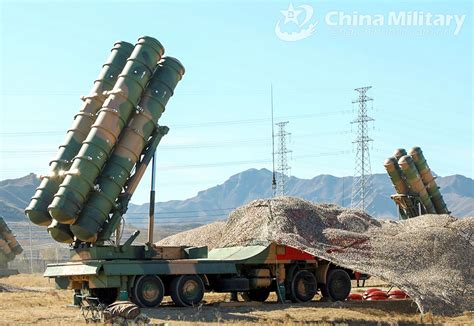
Drawing conceptual parallels with the U.S. THAAD and Russian S-400, the HQ-9C leverages dual-stage propulsion, advanced radar tracking, and semi-active radar guidance. Previous versions featured high-explosive warheads weighing nearly 400 pounds, and it is presumed that the HQ-9C maintains or improves upon this destructive capacity.
Strategically, the HQ-9C forms part of China’s upper-layer strategic defense, safeguarding crucial assets from ballistic threats and reinforcing anti-access/area-denial (A2/AD) strategies. It also supports China’s maritime ambitions, with adaptable variants for naval deployment on destroyers and cruisers.
SAMP/T & SAMP/T NG: Europe’s Layered Guardian
Europe’s contribution to modern missile defense comes in the form of the SAMP/T and its next-generation successor, the SAMP/T NG. Developed by France’s Thales Group and Italy’s Leonardo, these systems are engineered to protect against cruise missiles, tactical ballistic missiles, and manned aircraft, forming a vital component of NATO’s integrated air defense network.
The original SAMP/T employs the ASTER 30 missile, with a reach of 75 miles, guided by the Arabel multi-function radar. The NG variant, slated for full deployment in 2026, incorporates enhanced radar, extended-range interceptors, and 360-degree coverage. With a detection range exceeding 218 miles and an engagement range of 93 miles for cruise missiles and aircraft, it provides formidable forward defense for strategic assets.
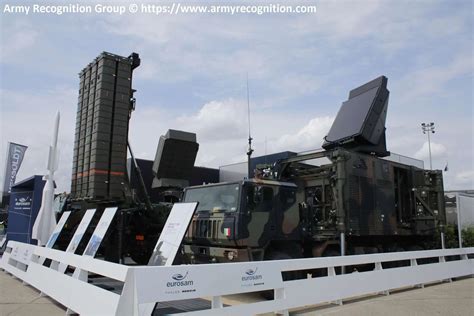
When intercepting ballistic missiles, the SAMP/T NG achieves engagement ranges beyond 373 miles, rivaling the capabilities of THAAD and other high-tier systems. Its mobility enables rapid field deployment, and a single battery includes 48 ASTER missiles, six launchers, and a centralized engagement control unit.
Denmark’s recent selection of SAMP/T over the Patriot system further validates its capabilities and interoperability within European and transatlantic defense frameworks. Its ability to fuse seamlessly with radar and command infrastructure across NATO makes it an ideal solution for allied joint operations.
Conclusion: Toward a Multipolar Defense Future
The evolution of air defense has been shaped by the relentless arms race between offense and defense, with each advancement in missile technology necessitating a parallel leap in interception capability. The systems explored above—S-500, THAAD, David’s Sling, HQ-9C, and SAMP/T NG—are not merely technological marvels; they are strategic instruments of national survival and geopolitical posturing.
While the specifics of each system vary—some excelling in high-altitude intercepts, others in multi-layered threat management—they share common attributes: mobility, precision, range, and interoperability. As warfare becomes increasingly multidimensional and space assets become legitimate targets, the fusion of ground-based defense with space and cyber domains will dictate the next frontier in air defense.
The race is no longer just to protect the skies—but to control the continuum from earth to orbit.