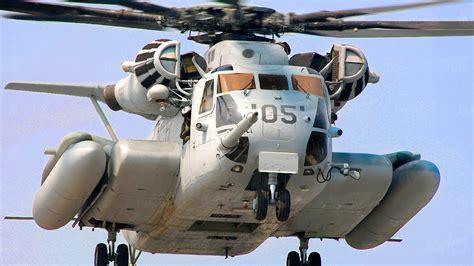
Heavy-lift helicopters represent one of the most vital backbones of U.S. military logistics and mobility, bridging the operational gap between ground convoys and strategic airlift. While they lack the supersonic speed of fighter jets or the vast cargo capacity of transport aircraft, their ability to take off vertically, hover, and maneuver in rugged or confined environments makes them uniquely irreplaceable in modern warfare. From dense jungles and high-altitude mountains to disaster zones and naval operations, these machines ensure that no terrain is beyond reach.
The United States has spent decades perfecting its heavy-lift helicopter designs, balancing raw mechanical strength, endurance, and precision control. Among these giants, the Sikorsky CH-53 series and the Boeing CH-47 Chinook stand as twin pillars of American rotary-wing supremacy. Each embodies a distinct philosophy—one focused on extreme lift and long-range transport, the other on tactical agility and battlefield adaptability.
From Vietnam to the Modern Battlefield: The CH-53 Legacy
The lineage of the CH-53 Stallion began in the early 1960s, a period defined by the U.S. military’s growing need for versatile air mobility during the Vietnam War. The original CH-53A entered service as a heavy transport workhorse capable of carrying 38 fully equipped troops, 8,000 pounds of internal cargo, or 13,000 pounds externally via sling hook. Its early operational success set the stage for continuous evolution through more powerful variants.
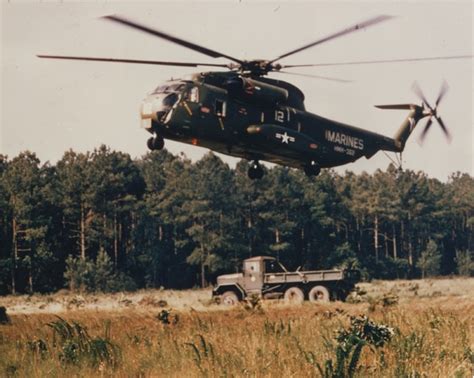
The CH-53D Sea Stallion followed, with upgraded engines and transmission systems, increasing the troop capacity to 55 soldiers and a maximum takeoff weight of 42,000 pounds. Yet as U.S. operational demands expanded—particularly in expeditionary and naval missions—the military required a helicopter with far greater lifting power. This led to the birth of the CH-53E Super Stallion, a machine that redefined the boundaries of heavy-lift capability.
The CH-53E Super Stallion: Engineering Power and Precision
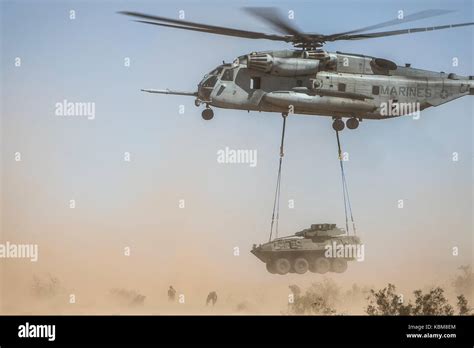
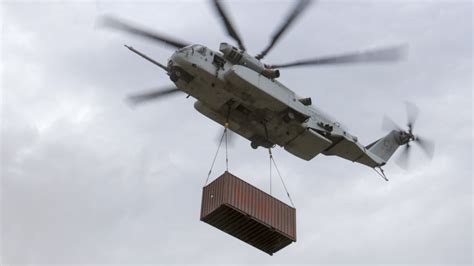
The CH-53E Super Stallion emerged as a three-engine powerhouse, designed to carry 30,000 pounds internally and lift up to 36,000 pounds externally. With its seven-bladed main rotor and reinforced transmission system, it could hoist armored vehicles, artillery, and even other aircraft. Its operational might was dramatically showcased on September 22, 2023, when a CH-53E lifted a Joint Tactical Vehicle and an M7 Howitzer simultaneously during the Miramar Air Show in San Diego, drawing global attention from military experts.
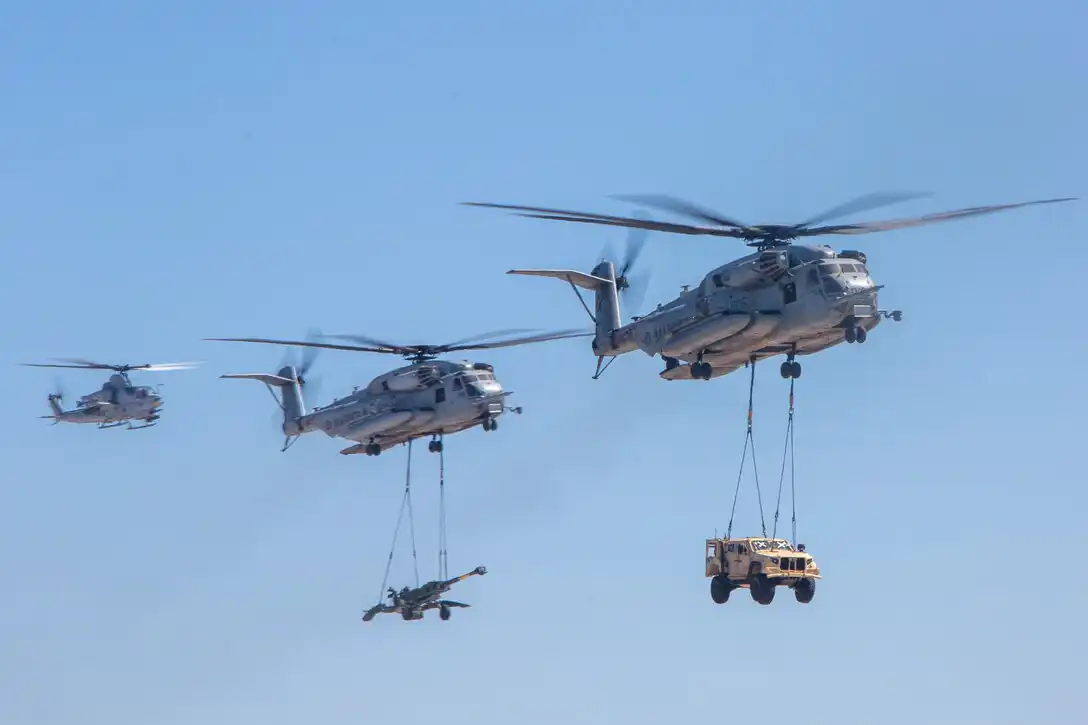
The CH-53E’s adaptability is what makes it legendary—it can operate from amphibious assault ships, fly long distances over water, and perform under austere conditions where traditional aircraft cannot land. Yet as the demands of modern warfare evolved, so too did the need for greater automation, efficiency, and survivability. This evolution culminated in the CH-53K King Stallion.
The CH-53K King Stallion: Redefining the Future of Heavy-Lift Operations
Developed by Sikorsky Aircraft, a Lockheed Martin subsidiary, the CH-53K King Stallion represents the next generation of American heavy-lift technology. Built to replace the aging CH-53E fleet, the CH-53K incorporates composite rotor blades, advanced GE38 engines, a digital fly-by-wire system, and an expanded cargo bay that redefines heavy-lift performance for the 21st century.
This helicopter’s external lift capacity reaches 88,000 pounds, with dual cargo hooks rated at 25,000 pounds each, enabling it to transport vehicles, artillery, and large equipment with unmatched efficiency. Internally, its 30-foot-long by 9-foot-wide cargo bay can carry 35,000 pounds of material, including Humvees, 463L pallets, or 30 fully equipped Marines. The King Stallion’s maximum takeoff weight exceeds that of any helicopter in history.
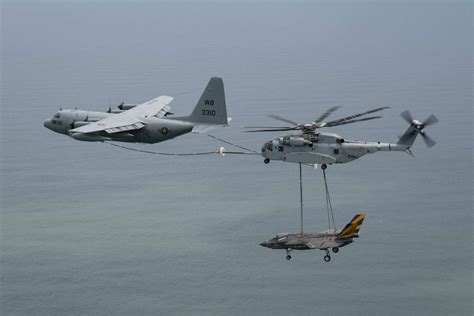
Beyond sheer power, the CH-53K integrates cutting-edge digital flight controls that enable autonomous or optionally piloted operations, drastically reducing pilot workload and enhancing mission safety. The fly-by-wire system allows unprecedented precision, particularly when hovering or positioning for external sling loads in combat zones.
Combat-Ready Design and Mission Flexibility
While not primarily a combat helicopter, the CH-53K is capable of defending itself during transport operations. It can be equipped with GAU-21 .50 caliber machine guns mounted on both side doors and the rear cargo ramp. These weapons provide critical suppressive fire during hostile zone insertions or extractions. Gunners undergo specialized training to coordinate with pilots during low-altitude or nighttime missions where spatial awareness and precision are paramount.
In September 2021, two CH-53Ks demonstrated the aircraft’s reliability under extreme conditions by lifting a downed Navy MH-60S helicopter from a high-altitude site in California’s White Mountain Range. Operating at 12,000 feet above sea level, the mission showcased the CH-53K’s high-altitude lift capacity, thermal performance, and flight stability—all critical traits in emergency recovery and combat resupply operations.
Technological Superiority: Systems, Refueling, and Endurance
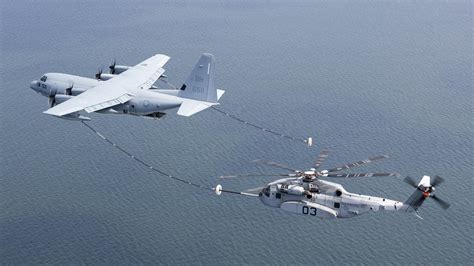
One of the King Stallion’s most groundbreaking achievements came in 2020, when it successfully completed air-to-air refueling tests with a KC-130J Super Hercules tanker over Chesapeake Bay. Despite severe aerodynamic turbulence, the CH-53K maintained multiple stable connections with the drogue, confirming its ability to extend range and carry heavier payloads across longer distances than any other helicopter in existence.
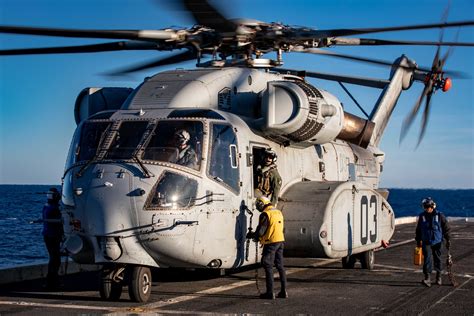
Every mission begins with meticulous preparation. Crews conduct pre-flight inspections, checking the fuselage for leaks, verifying electronic systems, and ensuring rotor integrity before takeoff. These pre-launch protocols reflect the aircraft’s complexity and the U.S. Marine Corps’ uncompromising safety culture. The CH-53K’s endurance and self-diagnostic systems also enable longer missions with fewer maintenance intervals, a decisive advantage in expeditionary warfare.
The Boeing CH-47 Chinook: The Twin-Engine Icon
While the CH-53K dominates the heavy-lift category, the Boeing CH-47 Chinook remains one of the most enduring and successful rotary-wing aircraft ever built. Entering service in 1962, the Chinook’s twin-rotor configuration offered unmatched stability, redundancy, and maneuverability. By 2012, over 1,200 Chinooks had been produced, serving with dozens of allied nations.
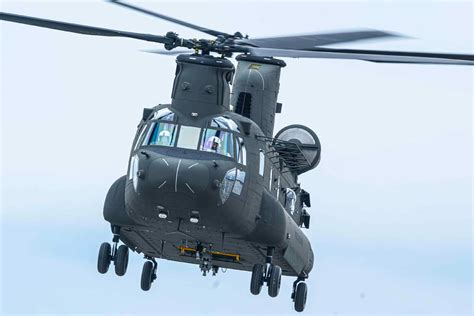
Modern variants like the CH-47F feature digital cockpits, advanced avionics, and composite rotor blades. The U.S. Army and international operators continue to rely on the Chinook for troop transport, artillery movement, and special operations support. Its production line at Boeing’s Philadelphia facility remains one of the most advanced rotorcraft assembly plants in the world.
Specialized Operations: From Hellocasting to Pinnacle Landings
The Chinook’s reputation isn’t merely technical—it’s tactical and operational. One of its most distinctive maneuvers, known as hellocasting, allows special forces to covertly deploy into maritime or hostile environments. The helicopter hovers just above the water’s surface, drops its rear ramp, and allows personnel to exit silently into the sea, evading radar detection. This method remains a key infiltration tactic for elite U.S. units.
Another demonstration of its agility is the pinnacle landing, a technique where the Chinook balances its rear wheels on elevated terrain—such as a mountain ridge or rooftop—while the front section hovers midair. This allows rapid deployment in areas inaccessible to fixed-wing aircraft, often under enemy fire or adverse weather.
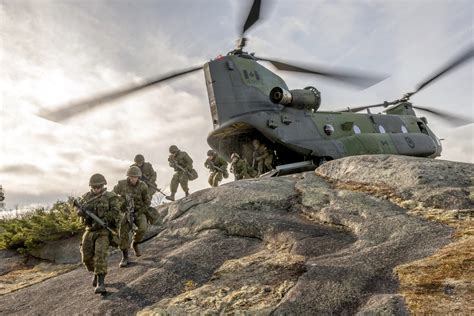
These capabilities underscore the Chinook’s engineering resilience and operational flexibility. Despite being over six decades old, the CH-47 remains indispensable for missions that require both speed and adaptability.
Pilot Training, Maintenance, and Modernization
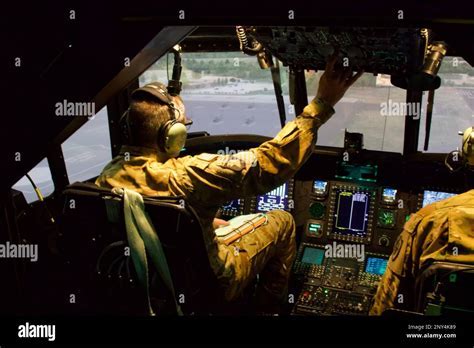
Training for U.S. helicopter pilots has evolved alongside the aircraft themselves. At bases like Camp Humphreys in South Korea, state-of-the-art simulators replicate real flight conditions with motion feedback, visual immersion, and instrument accuracy far beyond earlier generations. These simulators allow pilots to experience high-stress environments—ranging from desert heat to arctic turbulence—without risk.
Maintenance is equally critical. Older Chinook variants undergo periodic overhauls based on flight hours, during which maintenance test pilots perform post-repair evaluations. These include aggressive flight maneuvers to ensure mechanical integrity and performance reliability—an essential process considering the extreme stress placed on rotor systems during combat or lift operations.
The Future of U.S. Military Heavy-Lift Aviation
The CH-53K King Stallion is expected to replace all existing CH-53E units within the U.S. Marine Corps, with a planned fleet of 200 helicopters at a total cost exceeding $25 billion. This transition marks not only a generational leap in technology but also a broader shift toward digitally integrated, networked military aviation.
At the same time, the CH-47 Chinook continues to evolve, with Boeing exploring hybrid-electric systems and advanced flight control software to extend range and reduce fuel consumption. Together, these helicopters embody America’s mastery of vertical air mobility—machines that project power, deliver aid, and move troops in any corner of the globe.
Conclusion: Vertical Power and Strategic Reach
From the jungles of Vietnam to the deserts of the Middle East and beyond, the U.S. military’s heavy-lift helicopters have transformed the logistics and tactics of modern warfare. The CH-53K King Stallion stands as the world’s most powerful helicopter, capable of lifting entire vehicles over mountain ranges, while the CH-47 Chinook continues its unmatched record of versatility and reliability.
Together, these aircraft form a dual legacy—engineering excellence and mission endurance—that underpins America’s global reach. Their story is not merely one of machinery, but of innovation, adaptability, and the relentless pursuit of capability in an ever-changing battlefield environment.