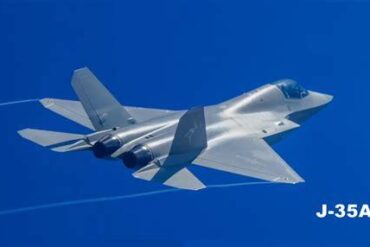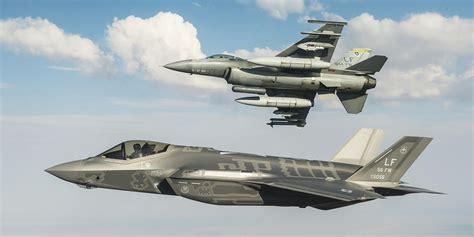
The F-35 Lightning II, the most advanced stealth fighter in the world, continues to shape the future of global air combat—and now, two decorated United States Marine Corps veterans are set to play pivotal roles in its evolution. These developments highlight not only the expanding capabilities of the F-35 program but also the enduring influence of Marine Corps leadership within cutting-edge defense initiatives.
A Marine Takes the Stick: Ross Fearon Becomes First Civilian F-35 Test Pilot at Cherry Point
At Marine Corps Air Station Cherry Point in North Carolina, retired Marine Corps fighter pilot Ross Fearon has taken on a groundbreaking position as the first civilian F-35 test pilot at the Fleet Readiness Center East (FRCE). This critical move addresses operational gaps in aircraft testing and delivery that previously strained active-duty squadrons.
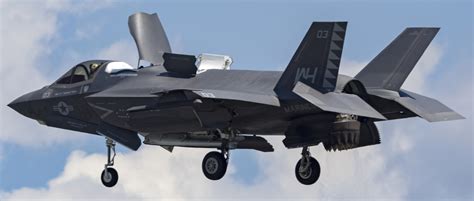
The FRCE has long been responsible for maintenance, repair, and overhaul operations for the Marine Corps’ aviation fleet. Until now, functional check flights or ferrying operations for the fifth-generation stealth aircraft required pulling operational pilots away from their combat units. Fearon’s appointment signals a strategic shift, ensuring these vital tasks no longer disrupt front-line readiness.
“I know it sounds surprising, because everyone expects it to be the flying,” Fearon remarked when asked about his new role. “But honestly, the most rewarding aspect is seeing everyone work together to overcome the challenges we may face to get those airplanes out the door and back to the parent units, whether it’s parts availability or tight timelines for units that need to deploy.”
Fearon’s qualifications for the role are beyond reproach. Commissioned into the Marine Corps following completion of the Navy ROTC program at the University of North Carolina at Chapel Hill, he underwent rigorous officer training and flight school before serving as an AV-8B Harrier pilot stationed at Cherry Point. Notably, Fearon was among the first cohort of Marine Corps aviators to transition from the Harrier to the F-35B Lightning II, the short takeoff and vertical landing (STOVL) variant of the Joint Strike Fighter.
His familiarity with the F-35’s advanced systems, coupled with his deep operational experience, positions him to safely execute functional check flights and ferry operations across all three variants—the F-35A (conventional takeoff and landing), F-35B (STOVL), and F-35C (carrier-based).
This isn’t the first time FRCE has looked to retired Marines to strengthen its aviation workforce. The facility previously hired a retired UH-1N Huey pilot to support helicopter operations, a program that proved highly effective and laid the foundation for this latest initiative.
Marine Leadership at the Helm of the Pentagon’s F-35 Program: Lt. Gen. Gregory Masiello
While Fearon takes to the skies, another Marine Corps veteran is poised to steer the F-35 program from an entirely different altitude—this time, within the highest echelons of the Pentagon’s defense infrastructure.
Marine Corps Lieutenant General Gregory Masiello, a seasoned aviator and acquisition expert, has been selected to lead the F-35 Joint Program Office (JPO)—the sprawling entity overseeing development, production, and sustainment of the F-35 Lightning II.
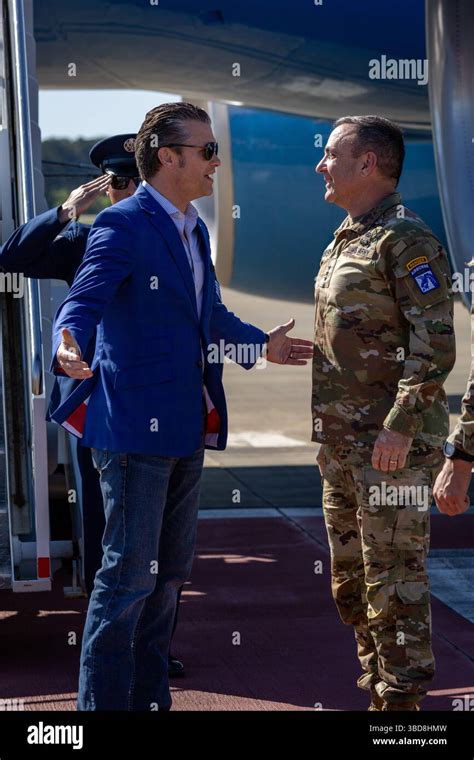
Masiello brings a decorated resume to the role. A graduate of the United States Naval Academy, he completed flight school at Naval Air Station Pensacola, before serving as a naval aviator. His career trajectory then shifted toward program management, notably serving as the V-22 Osprey Joint Program Manager, where he gained invaluable experience coordinating complex defense acquisition programs with international stakeholders.
Now, as the incoming head of the F-35 JPO, Masiello will oversee lifecycle management for the fighter’s three distinct variants, ensuring seamless integration and operational readiness across all branches of the U.S. military and allied forces under Foreign Military Sales (FMS) agreements.
He succeeds Lt. Gen. Michael Schmidt, who has served as Program Executive Officer for the F-35 since July 2022. Masiello’s appointment comes at a crucial juncture, as the F-35 enters a new phase of expansion and capability enhancement.
The F-35 Lightning II: A Global Stealth Fighter Dominating Modern Airpower
The F-35 Lightning II, developed by defense giant Lockheed Martin, represents the most ambitious—and expensive—fighter aircraft program in history. With a projected 1,763 aircraft in the U.S. Department of Defense’s program of record, the F-35 family is central to American and allied airpower.
According to the Government Accountability Office (GAO), the F-35 program is the single most costly weapons initiative ever undertaken by the United States, but its operational benefits are unmatched.
The fighter boasts:
- Advanced stealth capabilities, making it nearly invisible to radar.
- Cutting-edge sensor fusion, providing unparalleled situational awareness.
- Network-centric warfare integration, connecting pilots with ground, air, and naval assets.
- Multirole flexibility, capable of executing air-to-air, air-to-ground, and intelligence missions.
These capabilities have driven the aircraft’s widespread adoption among U.S. allies, with nations including the United Kingdom, Israel, Italy, Japan, and Australia operating the platform. Recent expansions in procurement orders, particularly in Europe and the Indo-Pacific, underscore the F-35’s role in global defense strategy.
Expanding the F-35 Program: Civilian Integration and Leadership Continuity
The integration of retired Marine aviators like Fearon into essential support roles reflects a broader trend within military aviation—leveraging veteran expertise to alleviate operational burdens while enhancing readiness.
At Cherry Point, Fearon’s appointment means operational units retain their full complement of pilots for mission-critical deployments, while ensuring aircraft at FRCE receive timely testing and delivery. It’s a win-win strategy that maximizes both personnel efficiency and aircraft availability.
Similarly, the continuity provided by appointing leaders like Lt. Gen. Masiello ensures stability at the program’s strategic level. His background in both aviation and acquisition uniquely positions him to navigate the program’s technical complexities, budgetary pressures, and international partnerships.
Looking Ahead: The Future of the F-35 and Marine Corps Involvement
The F-35 Lightning II is more than just an aircraft—it’s a platform that underpins 21st-century military doctrine, and its success depends on seamless collaboration across government, industry, and operational units.
With Ross Fearon piloting functional check flights as the first civilian F-35 test pilot at Cherry Point, and Lt. Gen. Masiello steering the global F-35 Joint Program Office, the Marine Corps’ legacy of aviation excellence remains deeply embedded in the aircraft’s trajectory.
Their stories underscore a powerful message: whether in uniform or as civilians, Marine aviators continue to shape the future of American airpower, ensuring that the F-35 remains at the forefront of global defense for decades to come.