In a move poised to reshape the military aviation balance in South Asia, China is set to supply 40 J-35 fifth-generation stealth fighter jets to Pakistan, a development that has sparked concern among Indian Air Force (IAF) veterans and defense analysts. The agreement was confirmed earlier this month through official Pakistani social media channels, with additional reports highlighting a broader procurement package that includes the KJ-500 airborne early warning and control aircraft and HQ-19 ballistic missile defense systems.
This unprecedented defense acquisition marks the first foreign export of China’s J-35, also known as the FC-31, representing a leap in Pakistan’s aerial warfare capabilities. The implications of this sale are significant, not only because of the advanced nature of the aircraft but also because it comes at a time of increasing geopolitical tensions across Asia.
The Strategic Weight of the J-35 Deal
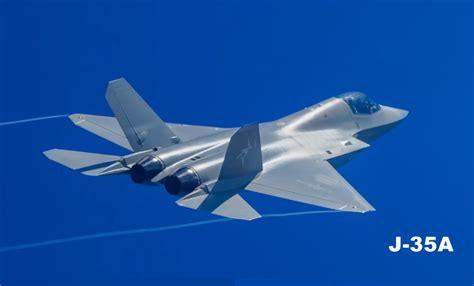
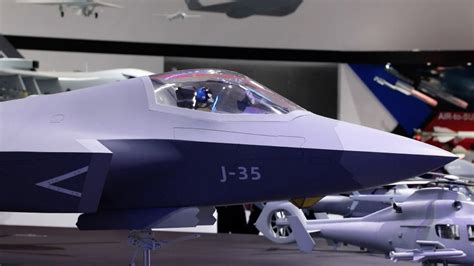
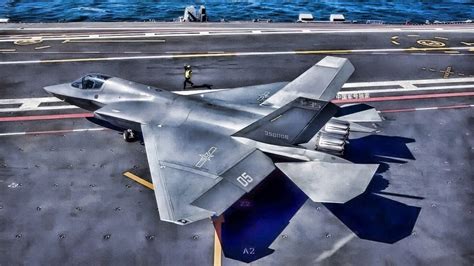
The J-35 is a fifth-generation twin-engine stealth fighter developed by Shenyang Aircraft Corporation. It is designed to complement China’s larger J-20 stealth jet and is expected to operate from both land bases and aircraft carriers. The version destined for Pakistan is reportedly a downgraded FC-31 variant — a practice common in defense exports to protect the manufacturer’s proprietary technology and maintain operational superiority.
Still, even in its reduced configuration, the J-35 offers a formidable package. Featuring low observable airframe design, angled vertical stabilizers, and internal weapons bays, the fighter is built to significantly reduce radar cross-section and enhance survivability in contested airspace. These attributes push the Pakistan Air Force (PAF) closer to parity with regional competitors, especially in scenarios requiring beyond-visual-range combat and precision strikes under electronic warfare conditions.
Pakistan’s defense ministry has not disclosed the cost of the acquisition or the funding mechanism. However, defense analysts speculate that the purchase is part of a broader China-Pakistan strategic alignment, which has seen a growing number of defense cooperation initiatives, including joint development projects and arms transfers.
IAF Veterans Sound the Alarm
The announcement of the J-35 deal has triggered unease among Indian defense circles, particularly among retired IAF officers, many of whom view the development as a direct challenge to India’s air superiority doctrine.
Group Captain (Retd.) Ajay Ahlawat, a former IAF fighter pilot and defense analyst, highlighted the growing intimacy between Chinese and Pakistani air forces, stating:
“Pakistan receiving these jets is not a surprise at all because their team of nominated fighter pilots have been in China for more than six months. They were training on the type before they were inducted.”
This long-term training involvement indicates not only Pakistan’s preparedness to deploy these aircraft quickly but also the depth of its strategic coordination with Beijing. Ahlawat further underscored the psychological and tactical ramifications of Pakistan operating even a diluted version of a fifth-generation stealth jet.
“It’s concerning. Any version of the J-35 in Pakistani colours is going to raise concerns on our side. Ever since independence, we have fought a very hard battle in the procurement sphere to retain an edge over at least Pakistan, if not China.”

India’s Current Fifth-Gen Gap
India’s response to fifth-generation aircraft threats has long centered on its Advanced Medium Combat Aircraft (AMCA) program — an ambitious indigenous initiative aimed at fielding a stealth-capable fighter platform by the early 2030s. However, with the Pakistani J-35 acquisition timeline suggesting deliveries before December 2025, a critical capability gap may emerge for nearly a decade.
Air Marshal (Retd.) Sanjeev Kapoor voiced this concern in a recent statement, noting that India cannot afford to wait ten more years while its adversaries bolster their capabilities:
“There is absolutely no doubt that we need to have our own indigenous platform. But as a nation, can we wait ten more years with adversaries on both sides acquiring more and better equipment?”
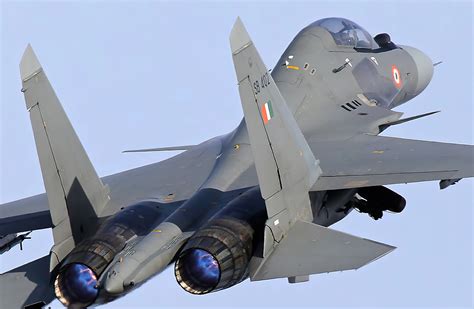
The broader implication here is not just about platform parity, but strategic air dominance in contested theatres such as Kashmir and the broader Indo-Tibetan region. While India does operate advanced aircraft such as the Dassault Rafale, Su-30MKI, and Tejas Mk1, none of these currently offer the stealth characteristics and radar-evading capabilities of a fifth-generation jet.
Why the J-35 Could Be a Game Changer for Pakistan
The J-35’s architecture, reportedly evolving from the FC-31 prototype revealed in 2014, is built for survivability, sensor fusion, and operational flexibility. Its incorporation into the Pakistan Air Force could redefine strategic depth and engagement tactics. Among its standout features:
- Reduced radar signature through faceted fuselage design and internal weapons bays
- Advanced avionics and sensor fusion that allow pilot-friendly situational awareness
- Compatibility with air-to-air and air-to-ground munitions, offering both offensive and defensive versatility
- Twin-engine layout providing better thrust-to-weight ratio and redundancy
- Carrier-capable configuration, giving Pakistan future naval aviation options
These capabilities are likely to shift doctrinal approaches within the PAF. The aircraft would allow Pakistan to penetrate heavily defended Indian airspace, execute first-strike missions, or perform persistent surveillance with lower risk of detection.
How India Might Respond
India’s options in the short to medium term appear limited. The AMCA program, though progressing, is still in its design validation phase, with prototype rollouts expected by 2026 and potential induction by 2035. The country’s possible responses may include:
- Accelerated procurement of next-generation platforms through foreign collaborations — notably, discussions around the F-35 or Tempest programs
- Upgrade packages for existing Su-30MKIs to incorporate stealth coatings, AESA radar, and electronic warfare systems
- Enhanced cooperation with partners such as France, the U.S., and Israel for radar, missile, and drone technologies to offset gaps
- Strengthening integrated air defense networks (IADN) to better detect stealth threats
- Fast-tracking indigenous efforts such as the Tejas Mk2 and unmanned combat aerial vehicle (UCAV) platforms
India may also seek to leverage strategic deterrence through satellite surveillance, air defense modernization, and expanded deployment of S-400 systems to create anti-access/area denial (A2/AD) bubbles around key installations.
Implications for Regional Security Architecture
Beyond bilateral concerns, the J-35’s transfer signals a deeper militarization of the China-Pakistan nexus, potentially alarming other regional actors such as Iran, Afghanistan, and even Gulf nations. The introduction of stealth platforms into the subcontinent also raises the risk of miscalculated preemptive strikes, especially in high-alert scenarios.
Moreover, the transfer could set a precedent for Chinese arms diplomacy, enabling exports to other nations under Beijing’s sphere of influence. As China positions itself as an alternative to Western defense suppliers, stealth technology proliferation could destabilize fragile military balances in Southeast Asia, Africa, and Central Asia.
Can India Rely on Conventional Superiority?
While India’s current air fleet remains numerically and technologically superior in several categories, stealth changes the equation. The J-35’s radar-evading profile makes it uniquely capable of striking early-warning installations, air bases, or command nodes before they are fully activated. In such a scenario, India’s conventional edge may not translate to pre-emptive detection or interception.
This underscores the urgency for India to not only expedite its fifth-generation roadmap but also to adopt a multi-layered deterrence approach — fusing satellite tracking, electronic warfare, AI-assisted early warning systems, and hardened infrastructure.
The Way Forward: Strategy Beyond Platforms
Ultimately, airpower dominance in the 21st century is not just about platforms but about integrated combat ecosystems. While Pakistan may gain a short-term qualitative edge with the J-35, India’s strategic response must be holistic — encompassing tactical doctrine revision, electronic warfare modernization, and strategic partnerships.
The coming decade will likely define air combat evolution in South Asia, and the introduction of the J-35 is a stark reminder that geopolitical alignments and technological advancements can alter strategic balances rapidly. For India, this is not just about catching up — it’s about staying ahead in an increasingly complex air warfare environment.
Conclusion
The impending arrival of J-35 stealth fighters in the Pakistan Air Force represents a milestone moment in regional air power dynamics. While the aircraft may not be a silver bullet, its stealth capabilities, paired with early-warning systems and missile defenses, could embolden Pakistan’s strategic posture and shift the balance of air deterrence in its favor.
For India, the challenge is clear: build faster, collaborate deeper, and innovate smarter. The era of stealth warfare in South Asia is no longer a distant future — it has already begun.