In a landmark incident that has sent ripples through global defense circles, the Indian Air Force (IAF) successfully detected, identified, and supported the emergency landing of a Royal Navy F-35B stealth fighter jet near Thiruvananthapuram, sparking intense discussion on whether India has quietly mastered the technology to track stealth aircraft.
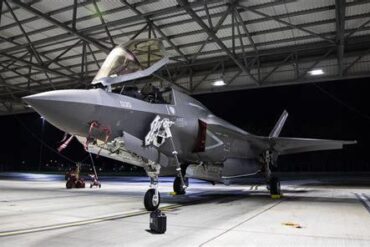
On June 14, 2025, the UK Royal Navy’s F-35B Lightning II, operating from the aircraft carrier HMS Prince of Wales, was forced to divert and make an unplanned landing at Thiruvananthapuram International Airport due to a fuel-related emergency. While the landing itself was a procedural event, what followed captured the attention of defense analysts worldwide: the IAF’s Integrated Air Command and Control System (IACCS) successfully detected and tracked the stealth jet, a feat few countries can confidently claim.
The F-35B Lightning II: Elusive by Design
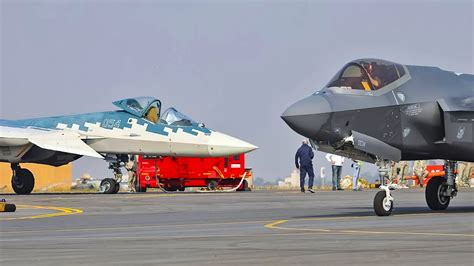
Developed by Lockheed Martin, the F-35B is a fifth-generation multirole stealth fighter with cutting-edge avionics, sensor fusion, and stealth coatings designed specifically to evade traditional radar detection. Its ability to conduct short takeoffs and vertical landings (STOVL) makes it ideal for carrier-based operations. Since entering service with the UK Royal Air Force in 2018 and the Royal Navy in 2020, the jet has become a central pillar in NATO’s next-gen air power.
This aircraft isn’t just a marvel of engineering—it is an intentional ghost in the sky. Outfitted with advanced radar-absorbing materials, internal weapon bays, and thermal masking, the F-35B minimizes electromagnetic and infrared signatures. When a platform like the F-35B is tracked during an unplanned diversion, it opens the door to a critical question: Has India’s sensor network matured to the level where even stealth jets can no longer remain hidden?
IACCS: India’s Eyes in the Sky
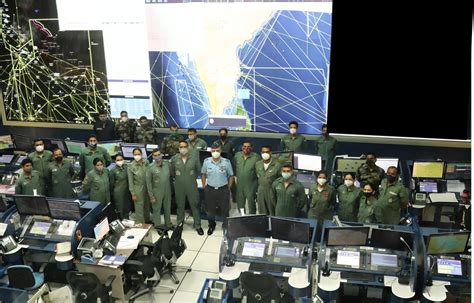
The detection of the F-35B wasn’t a fluke. The Integrated Air Command and Control System (IACCS) — an indigenous network linking air defense radars, satellite feeds, and ground-based control centers — lies at the heart of India’s airspace surveillance capabilities. Developed over the last decade, this digital backbone gives the IAF real-time situational awareness across its vast territorial skies.
Upon declaration of the emergency, the F-35B was picked up, identified, and cleared for landing by IACCS, demonstrating its ability to detect aircraft designed to be invisible. Although the IAF has chosen not to disclose which systems were directly responsible for the identification, defense insiders suggest a combination of passive radar, multi-static sensor arrays, and sophisticated data fusion algorithms may have contributed.
What This Means for India’s Air Defense Capabilities
The successful tracking of the F-35B is not just a tactical win — it’s a strategic milestone. The episode underscores a crucial shift: India may now possess rudimentary but expanding capabilities to detect and classify stealth platforms, previously seen as the exclusive domain of nations like the United States, China, and Russia.
India’s current deployment of Russian-made S-400 Triumf systems gives it strong high-altitude defense, but the integration of indigenous systems like IACCS and upcoming Project Kusha marks a deeper movement towards technological self-reliance. The ability to detect an aircraft like the F-35B — even in an emergency scenario — suggests India has made measurable progress in multi-domain threat detection and response.
Project Kusha and the Future of Indigenous Surveillance
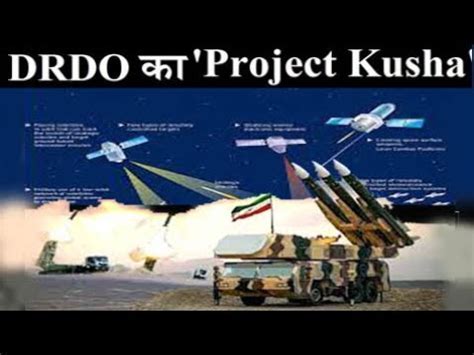
India’s indigenous air defense evolution finds its spearhead in Project Kusha, a long-range surface-to-air missile (LRSAM) system being developed jointly by the Defence Research and Development Organisation (DRDO) and Bharat Electronics Limited (BEL). Designed to rival platforms like the S-400, the system aims to create a multi-tiered air defense grid capable of tackling a wide range of aerial threats.
Alongside Project Kusha, India is actively deploying:
- Akash Surface-to-Air Missiles
- QRSAM (Quick Reaction SAM)
- Akashteer Air Defence Control System
All these platforms feed into IACCS, giving India a growing network of layered detection and response capabilities, offering both wide-area coverage and high-resolution tracking. The apparent success in detecting the F-35B serves as a partial validation of these interlocking systems.
Stealth vs. Counter-Stealth: A New Battlefield
Stealth technology has long been the centerpiece of modern air dominance. Yet, history has shown that counter-stealth detection has evolved just as stealth has. Nations like China have invested heavily in passive radar arrays, bi-static/multi-static configurations, and quantum radar research. The IAF’s apparent ability to detect the F-35B signals that India may now be entering this select group, even if at a nascent stage.
Rather than relying solely on radar cross-section (RCS) reflections, systems like IACCS use digital signal processing, AI-enhanced data fusion, and triangulation from dispersed sensors to derive the presence of a low-observable object. In real terms, this means India can form a virtual picture of the skies even when traditional radar echoes are absent or degraded.
This doesn’t necessarily mean that stealth aircraft are obsolete. But it suggests that stealth is no longer a complete cloak—and its effectiveness depends increasingly on context, geography, and the sophistication of adversary sensor networks.
The Political and Strategic Undertones
The timing and optics of this event are significant. The F-35B’s unscheduled landing on Indian soil, and the IAF’s swift response, send a nuanced message to both allies and adversaries: India is not only watching but capable of identifying assets operating in or near its Air Defense Identification Zone (ADIZ).
While there is no indication that the UK violated any protocols, the event implicitly affirms India’s surveillance sovereignty and rising technological maturity. Given the South Asian region’s tense aerial dynamics — particularly with China — this development serves as a quiet but firm strategic signal.
Not a One-Off: Growing Confidence in Indigenous Defense Tech
This isn’t an isolated achievement. Over the past five years, the IAF has conducted major live trials of the IACCS, integrated AWACS and AEW&C platforms like ‘Netra’, and expanded its satellite communication networks. Simultaneously, DRDO’s growing portfolio — from hypersonic missile programs to advanced radar systems — is equipping India with the tools to compete technologically with modern military powers.
The true challenge, however, lies ahead: maintaining this momentum. Detecting a stealth aircraft during a declared emergency, in controlled airspace, is different from intercepting one in combat or a contested zone. Stealth warfare is as much about deception and electronic warfare as it is about low observability. Whether India can consistently detect stealth aircraft in a high-conflict scenario remains an open question.
Conclusion: A Tactical Event with Strategic Implications
The detection of the F-35B by the IAF’s IACCS system has opened a new chapter in India’s defense narrative. It is a tangible demonstration that the country’s sensor infrastructure, indigenous radar development, and multi-layered surveillance strategy are maturing.
India has not “cracked the stealth code” in absolute terms — but it has shown the world that stealth is no longer a reliable invisibility cloak when pitted against capable, integrated, and evolving detection systems.
With Project Kusha on the horizon and continuous improvements in the IACCS, the Indian Air Force appears ready to transition from reactive defense to proactive airspace dominance.
The world is watching — and so, clearly, is India.