In a striking departure from earlier expectations, India’s frontline Rafale fighter jets were notably absent from the recent air drills held between the Indian Air Force (IAF) and the United States Air Force (USAF) from November 10 to 13, 2025. Instead, the IAF deployed its Russian-origin Su-30MKI multirole fighters alongside Mirage-2000s, sparking widespread speculation and intrigue across strategic circles, defense analysts, and global observers.
IAF-USAF Joint Drill: Scope and Strategic Objectives
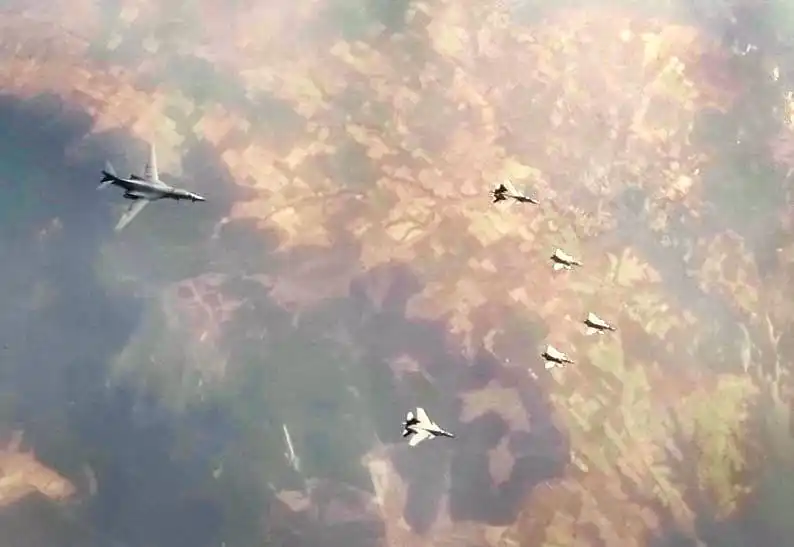
The four-day bilateral air exercise was conducted with the primary aim of fostering mutual tactical learning and enhancing interoperability between the two powerful air forces. The USAF deployed a B-1B Lancer, a long-range strategic bomber capable of penetrating sophisticated air defense systems, to engage in bomber integration sorties with IAF assets.
While the exercise was initially expected to take place under the much-anticipated Cope India 2025 banner, it ultimately unfolded as a scaled-down bilateral engagement, devoid of broader multilateral involvement or the advanced stealth jets the U.S. was expected to field.
Rafales: Expected, Promised, but Absent
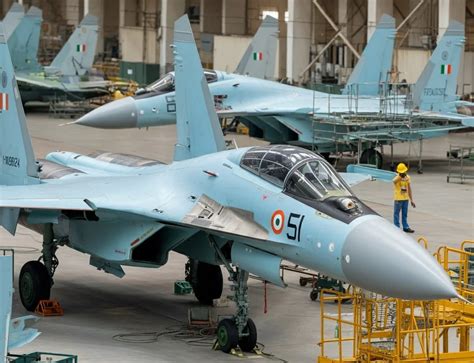
Prior to the drill, defense watchers and open-source intelligence analysts were abuzz with claims that three Rafales—tail numbers BS-021, BS-022, and BS-027—were scheduled to join the exercise. These aircraft had gained prominence earlier in 2025 when Pakistan-linked propaganda outlets falsely claimed to have shot them down during Operation Sindoor, a brief but intense border conflict.
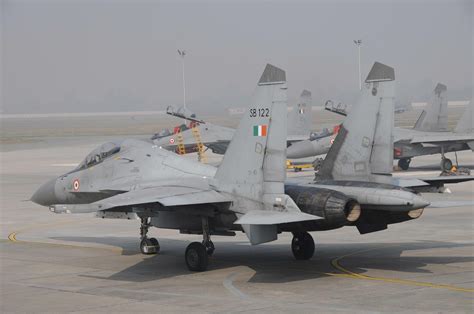
Despite high expectations, the Rafales were missing in action, replaced by Su-30MKIs, which dominated the aerial drills in coordination with the USAF’s B-1B. The absence of official clarification only added fuel to speculations across defense communities.
What Happened to Cope India 2025?
Traditionally a biennial event since 2004, Cope India serves as a keystone of Indo-U.S. air cooperation. This iteration was originally billed to bring together QUAD members—India, the U.S., Japan, and Australia—for the first-ever multilateral QUAD air exercise. Reports hinted that while India and the U.S. would be full participants, Japan and Australia were poised to join as observers.
However, by early November, signs of derailment began to surface:
- No official notification was issued by either IAF or USAF.
- Reports emerged suggesting Cope India was postponed, likely due to geopolitical tensions and a trade dispute between New Delhi and Washington.
- The QUAD summit, also scheduled for November, was called off.
The exercise that eventually transpired was thus a bilateral substitute, with no participation from Japan or Australia, and conducted under a much lower strategic profile.
The Su-30MKI: Strategic Flexibility in an Uncertain Theatre
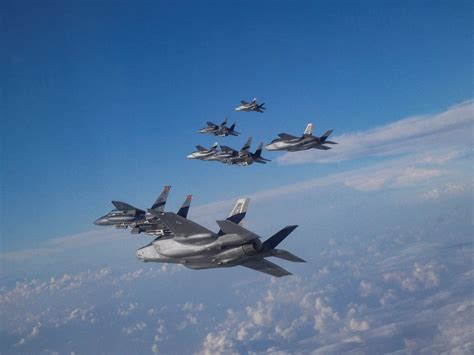
Although less flashy than the Rafales, the Su-30MKI remains the IAF’s workhorse, and its selection for this drill was anything but arbitrary. Designed for supermaneuverability and equipped with advanced jamming pods, the Su-30MKI thrives in high-electronic warfare (EW) and GPS-denied combat scenarios.
A senior USAF official, speaking anonymously, stated:
“We’re practicing how to integrate heavy bombers with 4.5-gen fighters in GPS-denied, high-EW environments—exactly what the Su-30 brings to the table.”
Thus, from an operational design standpoint, the Su-30MKI was better aligned with the exercise’s objectives. These fighters also offer a wider strategic canvas for training in network-centric warfare, joint targeting, and bomber escort tactics—all critical in modern air combat.
INDIA–US AIR EXERCISE
The Indian Air Force and United States Air Force are engaged in a bilateral exercise from 10–13 Nov 25, aimed at fostering mutual learning and enhancing interoperability.
USAF is participating with the B-1B Lancer.#IAF #USAF #Interoperability… pic.twitter.com/49z1jYsv91— Indian Air Force (@IAF_MCC) November 12, 2025
Why Were Rafales Kept Away?
While no official reason has been provided, several factors could explain the deliberate exclusion of the Rafales:
1. Operational Reserve Amid Escalating Tensions
The terror attack in Delhi on November 10, near the historic Red Fort, triggered national outrage. India officially labeled the incident a terrorist act, attributing it to Pakistan-based Jaish-e-Muhammed (JeM). The political climate further deteriorated following a deadly car blast in Islamabad the next day that claimed 12 lives. Pakistan blamed India, despite the Tehrik-i-Taliban Pakistan (TTP) taking responsibility.
Amid such volatility, keeping the Rafales on standby for rapid deployment or strategic retaliation may have been a doctrinal choice rather than a logistical one. Indian leadership has warned that future terrorist acts from Pakistan will be treated as acts of war, underscoring the increasing likelihood of escalation.
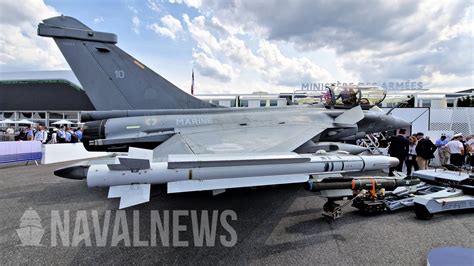
2. Strategic Ambiguity and Psychological Deterrence
The three Rafales that were rumored to join the drills are central to wartime propaganda narratives. Their absence may well be a calculated move to maintain strategic ambiguity, particularly in light of Operation Sindoor and ongoing disinformation warfare across South Asia.
By avoiding any visible deployment of these aircraft, India denies adversaries the chance to track their status or confirm their operational role, especially at a time when speculation runs rampant about a possible Operation Sindoor 2.0.
3. Doctrine of Asymmetry in Exercise Deployments
India’s air drill doctrine does not necessarily require deployment of its top-tier assets for non-combat joint training. Given the political downgrade of the exercise from a QUAD-oriented Cope India to a simple bilateral drill, the use of Su-30MKIs is consistent with a “minimum commitment” strategy, ensuring participation without overexposure.
The Legacy of Cope India: Past Lessons and Present Shifts
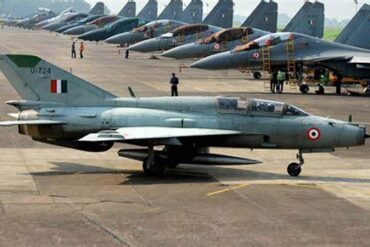
Historically, Cope India has served as a benchmark of IAF prowess. The 2004 edition, still discussed fervently among analysts, saw Indian MiG-21 Bisons achieve a 9:1 kill ratio against the USAF’s vaunted F-15 Eagles. That surprise performance compelled the U.S. to reassess its assumptions about air superiority.
However, the dynamics have since shifted. Today’s air drills focus on systems integration, data fusion, and electronic countermeasure tactics, areas where newer platforms like Rafales offer clear advantages—but also demand tighter confidentiality.
Implications for Regional Security and Indo-US Relations
This scaled-down exercise offers a window into evolving regional dynamics:
- The deferral of Cope India 2025 highlights persistent fault lines within the QUAD, particularly between India and the U.S. on trade and strategic autonomy.
- The continued absence of official timelines for both Cope India and the QUAD summit signals a cooling of multilateral military momentum in the Indo-Pacific.
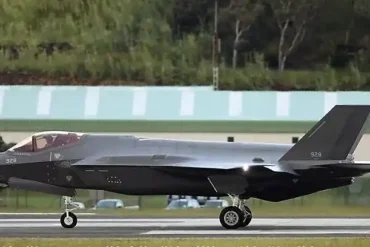
- The deployment of only one B-1B bomber, rather than a fleet or F-35s, also suggests a toned-down strategic posture from the American side.
Meanwhile, India’s internal policy recalibrations amid terror threats emphasize a security-first posture that prioritizes homeland defense over military pageantry.
Conclusion: A Tactical Choice in a Strategic Moment
India’s decision to send Su-30MKIs instead of Rafales to the joint exercise with the USAF was not an oversight—it was a strategic signal. In a region simmering with volatile hostilities, where information warfare is as critical as firepower, restraint is sometimes the most assertive form of military diplomacy.
The Rafales, while absent from the skies above the drill zones, loomed large over the entire exercise—as silent sentinels, symbols of ambiguity, and perhaps, instruments of a calibrated deterrence yet to unfold.