The Indian Air Force (IAF) stands as a formidable guardian of India’s skies, an elite force entrusted with safeguarding the nation’s sovereignty through aerial supremacy. Established as the Royal Indian Air Force on 8 October 1932, it transitioned to the Indian Air Force on 26 January 1950, reflecting India’s emergence as a sovereign republic. Headquartered at the Integrated Defence Headquarters under the Ministry of Defence in New Delhi, the IAF today comprises approximately 135,000 active personnel and 100,000 reserves, wielding a formidable fleet of around 1,926 aircraft. Its motto, “Nabhaḥ Spr̥śaṁ Dīptam” (Touch the Sky with Glory), perfectly encapsulates its ethos and aspirations.
The IAF’s primary mission is to defend Indian airspace and support the Indian Army and Navy in joint combat operations. Additionally, the Air Force extends vital support to civil authorities during natural disasters and crises, including humanitarian rescue, evacuation, and international peacekeeping under UN mandates. The IAF’s strategic integration with ISRO and the Department of Space through the Integrated Space Cell highlights its evolving focus on space-based defense and surveillance capabilities.
The IAF’s Wartime Legacy: Unmatched Valor and Tactical Prowess
Throughout its storied history, the IAF has demonstrated unparalleled courage and tactical finesse across a spectrum of operations. During World War II, it made its combat debut in the Arakan Campaign in Burma, later extending operations to Thailand, North Africa, and Europe. Its exceptional service earned the prestigious “Royal” prefix in 1945. The first of many critical roles played by the IAF, this period marked its transformation into a professional and combat-tested force.
The post-independence years saw the IAF actively engaged in the Indo-Pakistani Wars and other regional conflicts. During the 1947–48 Kashmir conflict, the IAF’s adept transport missions and close air support were vital in securing key territories. In the 1965 Indo-Pakistani War, it was the first time the IAF entered air-to-air combat, famously earning its pilots the nickname “Sabre Slayers” as their Folland Gnats outmatched Pakistani Sabres, contributing to an estimated 60–70 IAF kills versus 43 PAF losses.
The 1971 Bangladesh Liberation War was perhaps the IAF’s most defining moment. With over 16,000 sorties, the Air Force executed strategic bombings, crippled Karachi’s oil infrastructure, and provided relentless support that accelerated Pakistan’s defeat. This campaign established the IAF as an undisputed regional air power, with its audacious strikes and tactical precision leaving a lasting imprint on military history.
In subsequent years, the IAF participated in landmark operations such as Operation Meghdoot (1984), the world’s highest battlefield airlift in the treacherous Siachen Glacier, and Operation Pawan (1987), which provided close air support to the Indian Peace Keeping Force in Sri Lanka. Operation Cactus in 1988 further displayed its rapid-response capability when it swiftly neutralized a coup in the Maldives through an overnight airborne assault.
Modern Conflicts and High-Stakes Engagements
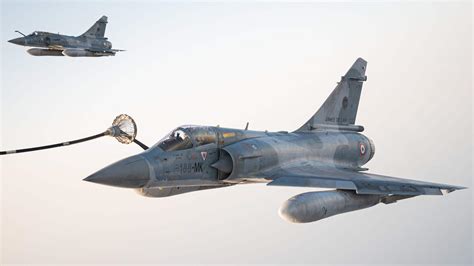
The turn of the century brought new challenges, with the Kargil War (1999) underscoring the IAF’s modern warfare capabilities. Under Operation Safed Sagar, IAF fighters including MiG-27s and Mirage 2000s executed over 40 sorties daily, delivering precision strikes that were pivotal in recapturing key mountain positions like Tiger Hill.
More recently, the IAF made global headlines with the 2019 Balakot airstrike, in which its aircraft penetrated deep into Pakistani territory to neutralize a major terror training camp, followed by intense skirmishes that saw Wing Commander Abhinandan Varthaman’s daring dogfight and capture, symbolizing the valor and resilience of IAF aviators. The IAF also played a critical role in border standoffs with China (2020–21) and humanitarian missions like Operation Ganga (2025), showcasing its readiness across peace and conflict scenarios.
Command Structure and Strategic Organization
The IAF operates under the supreme command of the President of India, currently Droupadi Murmu, while day-to-day operations are helmed by the Chief of the Air Staff, Air Chief Marshal Amar Preet Singh. He is supported by high-ranking officers including VCAS Air Marshal Narmdeshwar Tiwari and DCAS Air Marshal Tejinder Singh. The legacy of Marshal of the Air Force Arjan Singh, India’s only five-star air officer, continues to inspire generations of aviators.
The IAF’s operational readiness is ensured through five major commands: Western, Eastern, Central, South Western, and Southern Air Commands, complemented by Training and Maintenance Commands. These commands manage a vast network of approximately 47 wings and 19 Forward Base Support Units, supported by numerous squadrons and flights strategically dispersed across the nation.
Arsenal of Air Dominance: Advanced Aircraft and Systems
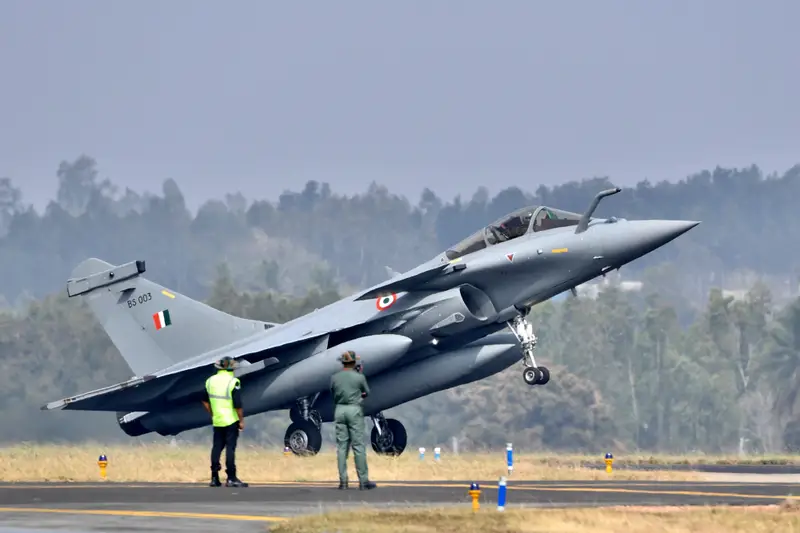
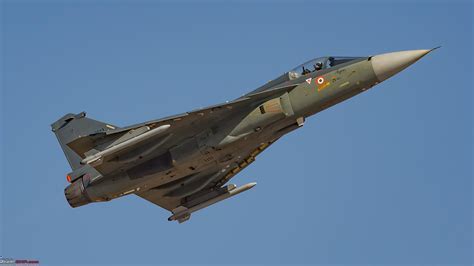
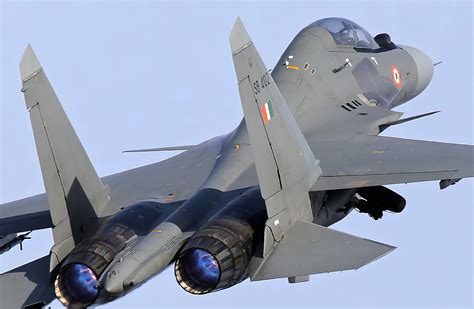
The IAF’s fleet represents a dynamic blend of indigenous and international platforms. Its fighter and multirole aircraft inventory boasts the Su-30MKI, Rafale, Tejas, MiG-29, Mirage 2000, and the ever-resilient MiG-21. Ground attack and interception missions are reinforced by Jaguar and Prachand attack aircraft, while transport and tanker operations are carried out by stalwarts like the C-17 Globemaster III, C-130J Super Hercules, Il-76, An-32, and Il-78 MKI.
Helicopter operations leverage platforms such as the Dhruv, Mi-17, and Apache AH-64E, offering versatility from troop deployment to combat assault. For surveillance and reconnaissance, the IAF utilizes the A-50E/I AWACS, DRDO AEW&CS, and unmanned systems including Searcher II and Heron drones. Training is provided via platforms like the Hawk Mk 132 and HJT-16 Kiran, ensuring pilot proficiency at every level.
Elite Units and Technological Integration
Among its elite forces, the Garud Commando Force stands out, specializing in counter-terrorism, combat search and rescue, and special reconnaissance. These commandos, trained to operate behind enemy lines, are crucial for high-risk missions. The IAF’s strategic posture is further enhanced by its Defence Space Agency, which manages tri-service space operations and satellite-based warfare capabilities, reflecting the Air Force’s shift towards a multi-domain battle space.
Supporting branches, including Engineering, Logistics, Administration, Medical, Meteorological services, and the Garud Commandos, play indispensable roles in ensuring seamless operational efficiency and readiness.
Conclusion
As we look to the future, the Indian Air Force remains steadfast in its mission to protect and project India’s power across domains. Its legacy of valor, technological evolution, and unwavering commitment to national defense underscore its status as a premier air power in the region and a pillar of India’s strategic might. With continuous modernization and a focus on indigenous development, the IAF is poised to Touch the Sky with Glory well into the 21st century.