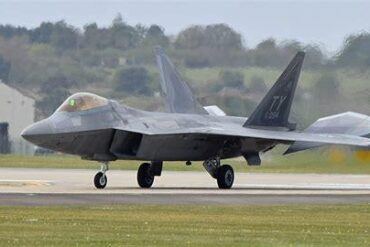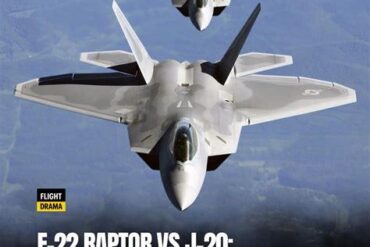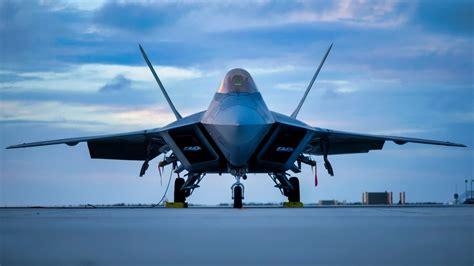
The U.S. Air Force is moving forward with a groundbreaking plan to modernize 32 of its oldest F-22 Raptor stealth fighters, transforming them from training-only aircraft into fully combat-coded war machines. This major shift reverses earlier proposals to retire these jets and comes after Congress mandated the preservation of the fleet. The move aims to strengthen U.S. air superiority as global competitors like China and Russia rapidly expand their fifth-generation fighter inventories.
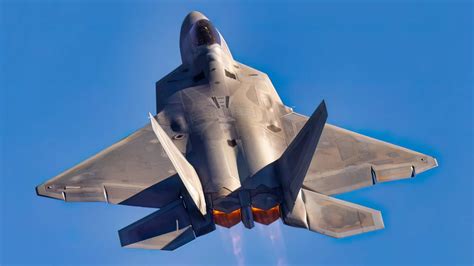
This modernization program, led by Lockheed Martin, will increase the number of operational F-22s by over 20% — from 143 to approximately 175 aircraft. The upgraded jets, known as Block 20 Raptors, will bridge the capability gap as the next-generation F-47 Next Generation Air Dominance (NGAD) program continues development. The project underscores the Pentagon’s urgent need to maintain a technological edge amid rising global competition.
From “Zombie Raptors” to Frontline Warriors
For years, the Air Force’s oldest Block 20 F-22s have served only as training and test aircraft, lacking the sophisticated avionics, radar systems, and weapon integrations of the more advanced Block 30 and Block 35 variants. Initially considered obsolete, they were slated for decommissioning in favor of newer F-15EX fighters. However, in 2023, the House Armed Services Committee intervened, blocking the plan and insisting that the Air Force modernize rather than scrap these invaluable stealth assets.
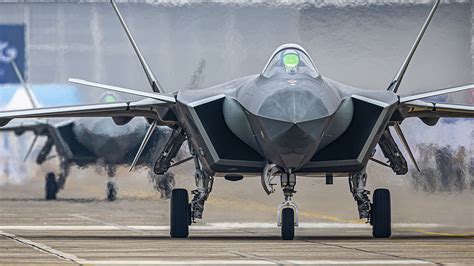
By converting these aging aircraft into combat-ready fighters, the Air Force gains a much-needed force multiplier. The upgraded Block 20s will close critical capability gaps and restore balance in the Pacific, where China’s J-20 Mighty Dragon fleet continues to expand aggressively.
Inside the $3.3 Billion Modernization Package
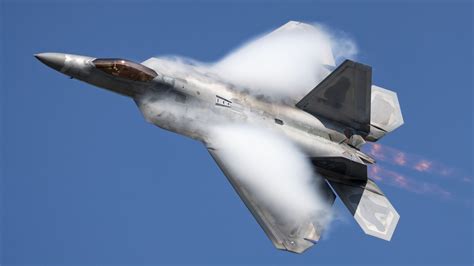
The Air Force’s investment, estimated at $3.3 billion, focuses on four primary areas: detection, survivability, interoperability, and endurance. These upgrades represent one of the most ambitious revivals in the service’s history — a technological overhaul designed to extend the Raptor’s relevance deep into the 2030s.
1. Open Mission Systems Architecture
A key component of the upgrade is the open mission systems (OMS) architecture, a software-driven framework that enables rapid integration of new technologies. This approach allows future updates to avionics, sensors, and weapon systems without requiring major redesigns. The flexibility of OMS ensures that the F-22 can swiftly adapt to new battlefield threats and remain compatible with evolving defense networks.
2. Advanced Sensor and Detection Suite
The modernization introduces a new Infrared Detection and Search (IRDS) system to replace the outdated AN/AAR-56. The IRDS provides 360-degree passive infrared monitoring, capable of detecting heat signatures and missile exhaust plumes in all directions. With greater range and accuracy, this upgrade will give the F-22 a decisive edge against stealthy adversaries.
3. Enhanced Stealth and Survivability
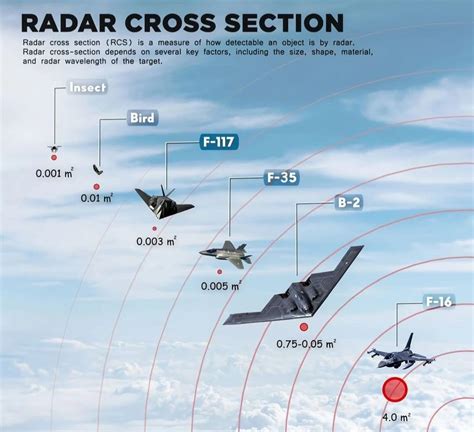
Lockheed Martin engineers are implementing a next-generation stealth coating, described as a “mirror-like metallic film” that not only deflects radar waves but also reduces the aircraft’s infrared signature. This reflective coating can mimic the surrounding sky, offering visual concealment at specific distances and angles. The precise composition remains classified, but experts suggest it may utilize multi-layer composites that deflect both thermal and electromagnetic energy.
To reinforce survivability, the upgrade includes new electronic countermeasure systems that enhance defense against radar tracking and enemy jamming. These systems are vital for maintaining tactical dominance in contested airspace where electronic warfare plays a defining role.
4. Expanded Weapons Capability
The modernized F-22s will integrate the AIM-260 Joint Advanced Tactical Missile (JATM), designed to out-range and outmaneuver the Chinese PL-15 and Russian R-37M missiles. This upgrade dramatically extends the Raptor’s beyond-visual-range combat effectiveness, ensuring air superiority against evolving threats.
5. Crewed–Uncrewed Teaming
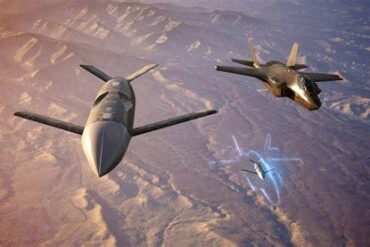
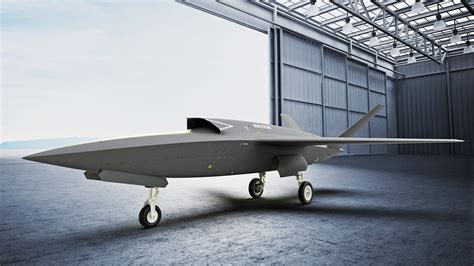
Perhaps the most revolutionary change lies in the integration of crewed–uncrewed teaming capabilities. According to OJ Sanchez, vice president of Lockheed Martin’s Skunk Works, “The F-22 is at the forefront of how to do that.” This new system allows Raptors to coordinate directly with autonomous drones, such as the XQ-58A Valkyrie Loyal Wingman, sharing real-time sensor data and targeting information. The drones can act as forward scouts, decoys, or strike assets, amplifying the effectiveness of each mission.
Strengthening America’s Air Superiority
Upgrading these Block 20 Raptors serves a dual purpose: preserving pilot training capability and expanding the combat fleet. Without the modernization, retiring the Block 20s would have forced the Air Force to use front-line F-22s for training, reducing mission availability and increasing maintenance wear. Instead, the modernization ensures that operational readiness and pilot development continue without compromising the active fleet.
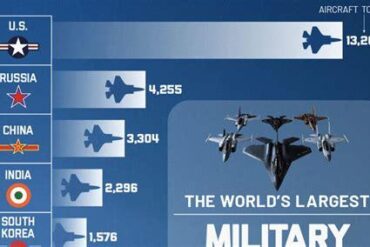
Beyond numbers, the upgrades enhance deterrence. With the addition of 32 combat-coded Raptors, the Air Force reinforces its strategic posture in the Indo-Pacific, where the balance of stealth air power has tilted toward Beijing. China has reportedly produced over 300 J-20 fighters, with some estimates nearing 400 aircraft — a figure that now challenges U.S. air superiority in the region.
The Technical Heart of the Modernization
The War Zone reports that the new upgrades will be completed by May 2029, encompassing significant advancements across multiple domains:
- Detection: The IRDS system gives the F-22 passive infrared awareness far superior to its original configuration.
- Survivability: The metallic stealth skin reduces detectability by both radar and infrared sensors, potentially offering visual blending capabilities.
- Interoperability: The LINK-16 data link — long absent due to stealth communication limitations — will finally allow the F-22 to communicate directly with F-35s, F-15s, and F-16s. However, tests have shown that transmitting over LINK-16 increases exposure risk, so developers are introducing drone-based relay nodes to protect the jet’s stealth integrity.
- Endurance: The introduction of Low-Drag Stealth Tanking Pods (LDTP) will extend the Raptor’s combat radius from 760 km to approximately 1,200 km. These stealthy, jettisonable fuel tanks are optimized for aerodynamic efficiency and can be dropped before entering contested zones to restore full stealth.
Strategic Context: A Shrinking Edge in Asia
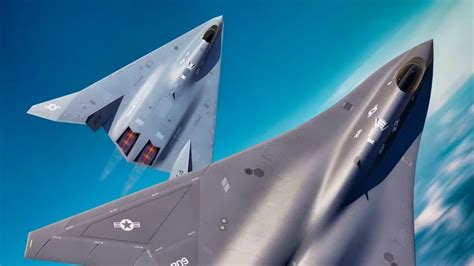
In the Asia–Pacific region, the U.S. once dominated the skies with unmatched stealth capability. Today, that dominance is under pressure. The Chinese People’s Liberation Army Air Force’s (PLAAF) J-20 production surge and the successful test flight of China’s sixth-generation fighter have alarmed U.S. defense planners. Meanwhile, the NGAD F-47 remains years from operational readiness, still in development and testing phases.
Currently, the U.S. military operates around 800 stealth fighters across all branches, but only one-third can be deployed to the Asia–Pacific at any given time. As China expands its regional reach, the U.S. can no longer rely solely on its numerical advantage. The F-22 modernization is thus a strategic stopgap, ensuring continued air superiority and deterrence until NGAD enters service.
Program Risks and Political Challenges
Despite its promise, the modernization effort faces significant risks and political scrutiny. Past upgrade programs, such as the F-22 Incremental 3.2B, experienced repeated delays — initially scheduled for 2018 but delivered only in 2021 due to complex software integration failures. These issues raise doubts about whether the Block 20 modernization can meet its 2029 completion target.
Congress remains divided on the cost-effectiveness of upgrading aging aircraft. Some lawmakers argue that investing billions into legacy systems diverts resources from next-generation programs like the F-35 and F-47, while others emphasize that retaining proven airframes is essential for near-term security. Lockheed Martin’s Skunk Works division, already burdened with multiple major programs including the B-21 Raider and F-35 upgrades, faces the challenge of managing limited engineering capacity across overlapping timelines.
A Calculated Investment in Air Dominance
While the $3.3 billion modernization cost is substantial, analysts argue it’s a cost-effective hedge against strategic uncertainty. Developing new aircraft or accelerating NGAD production would require far greater investment and longer timelines. Moreover, retiring the Block 20s would impose hidden costs — increased wear on the remaining combat fleet and reduced overall readiness.
By extending the operational lifespan of these aircraft, the Air Force effectively buys time — time to refine the F-47, to respond to adversaries’ advancements, and to maintain the credibility of U.S. deterrence.
The Future of the F-22 Legacy
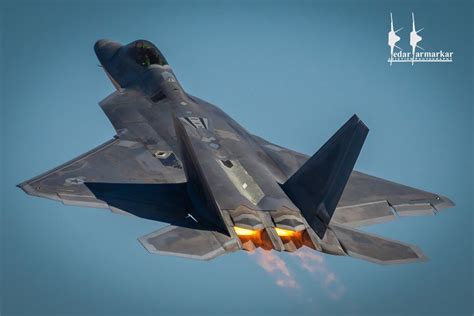
The upgraded Block 20 Raptors symbolize more than just additional numbers in the fleet — they embody the Air Force’s transition strategy toward sixth-generation warfare. The F-22 remains a cornerstone of U.S. air power, its unmatched maneuverability, stealth, and kill ratio serving as the benchmark for modern fighter design.
With enhanced sensors, networked warfare capabilities, and extended range, these revitalized Raptors will play a vital bridging role between today’s fifth-generation fighters and tomorrow’s NGAD platforms. As the Air Force braces for a more contested global airspace, the modernization ensures the F-22 remains not just relevant but lethal — a quiet guardian of U.S. air superiority well into the next decade.
In the evolving chessboard of modern warfare, where data links and stealth coatings are as decisive as speed and firepower, the revival of 32 F-22 Raptors signals one clear message: the U.S. Air Force isn’t surrendering its dominance of the skies anytime soon.