India’s defense procurement strategy is undergoing a seismic shift following the recent escalation in the India-Pakistan standoff during Operation Sindoor. In what is being perceived as a major diplomatic and industrial blow to France, New Delhi is reportedly reconsidering its commitment to acquiring 114 Dassault Rafale F4 fighter jets, possibly reducing the order to nearly half, and replacing the remainder with cutting-edge 5th-generation stealth fighters.
This strategic re-evaluation puts India on the cusp of a paradigm shift in air warfare capabilities. Rather than expanding its existing Rafale fleet, the Indian Air Force (IAF) is now leaning toward integrating next-generation platforms—either the Russian Su-57E or the American F-35A—into its arsenal.
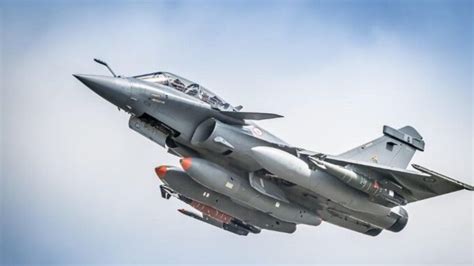
France Faces Strategic Setback as India Rethinks Rafale Deal
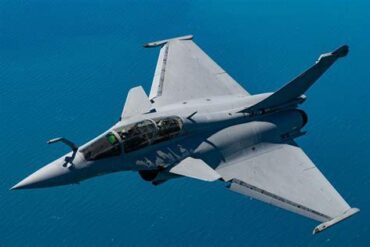
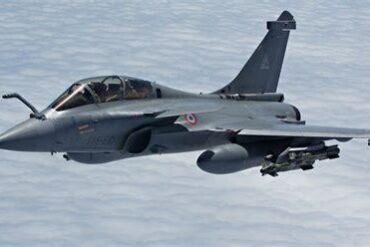
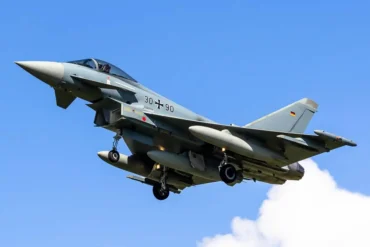
The original MRFA (Multi Role Fighter Aircraft) tender floated by the Indian Ministry of Defence envisioned the induction of 114 Rafale F4 fighter jets, intended to complement the existing fleet of 36 Rafales already inducted into IAF service. However, the changing regional security architecture, particularly after the lightning confrontation with Pakistan during Operation Sindoor, exposed a critical capability gap: India lacked a truly stealth-capable, 5th-generation aircraft platform.
This has reportedly led to the halving of the Rafale order, down to around 60 aircraft. The remainder of the fighter requirement is expected to be fulfilled through direct government-to-government procurement—eschewing conventional tender processes altogether.
Dassault Aviation, the French aerospace heavyweight, had pinned high hopes on a large Indian order to justify setting up a full-scale production facility in India. But those ambitions now face turbulence. The Ministry of Defence is said to have conveyed that unless final assembly and significant components of the Rafale F4 are localized, the deal may lose favor altogether.
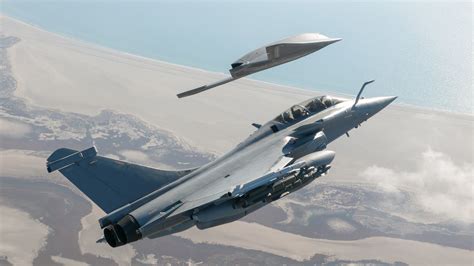
India’s Strategic Pivot: Why Rafale May No Longer Be Enough
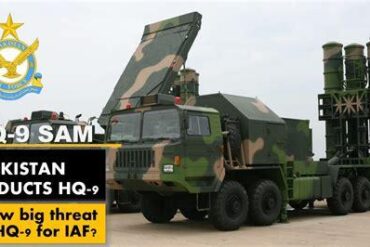
India’s shift away from Rafale is not due to dissatisfaction with the aircraft’s performance. In fact, the Rafale has been praised within defense circles for its multirole versatility, reliability, and avionics. However, after witnessing Pakistan’s commitment to induct Chinese-built 5th-generation J-35 stealth fighters, the strategic calculus for India changed dramatically.
India’s concern now centers around stealth survivability, sensor fusion, data sharing, and air dominance—features critical in a near-peer or hybrid conflict environment. The Rafale F4, while advanced, remains a 4.5-generation platform, falling short in several stealth and digital warfare domains that define fifth-gen capabilities.
Moreover, the growing geopolitical fluidity in the Indo-Pacific and the deepening ties between Islamabad and Beijing have triggered an urgency in accelerating IAF modernization. India cannot afford to field an aging fighter mix while adversaries gain a technological edge.
The Rise of the Su-57E and F-35A in Indian Procurement Calculations
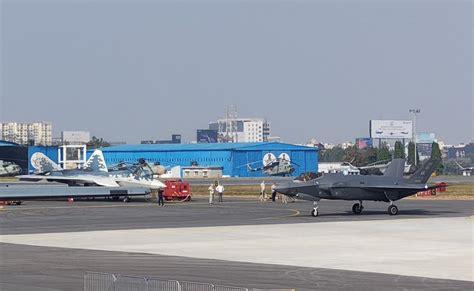
The Sukhoi Su-57E, Russia’s export variant of its 5th-gen stealth fighter, and the Lockheed Martin F-35A, arguably the most battle-tested stealth aircraft in the world, are now considered frontrunners to complement the reduced Rafale order. But both options carry complex geopolitical baggage.
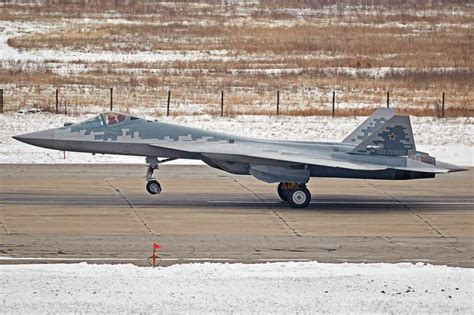
The Su-57E: Promise of Capability, but Concerns on Deliverability
The Russian Su-57E is pitched as a heavy, twin-engine stealth fighter capable of supercruise, internal weapons carriage, and integrated electronic warfare systems. India’s historic ties with Russia, especially in co-developing platforms like the BrahMos missile and Su-30MKI, make the Su-57 a logical candidate.
However, critical questions remain:
- Production delays and limited serial output due to Russia’s ongoing war with Ukraine.
- Concerns over the true stealth profile and sensor integration of the Su-57.
- Potential sanctions and logistical disruptions from Western partners if India deepens military engagement with Moscow.
Still, the Su-57 offers operational familiarity for Indian pilots and logistics crews accustomed to Russian airframes.
The F-35A: Technological Supremacy, but Political Strings
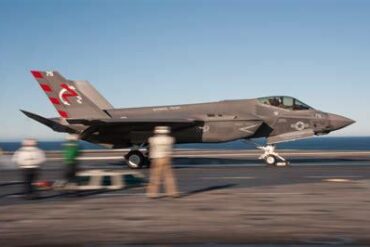
The F-35A Lightning II, with its global reputation for next-gen warfare, represents unmatched sensor fusion, network-centric warfare, and global logistics support. A large number of NATO and Indo-Pacific allies, including Japan and South Korea, have inducted or ordered F-35s.
For India, however, the F-35 comes with:
- Restrictive end-use monitoring agreements that could impinge on operational sovereignty.
- Potential incompatibility with Indian systems and doctrine.
- High acquisition and lifecycle costs, as well as risk of becoming too dependent on American platforms.
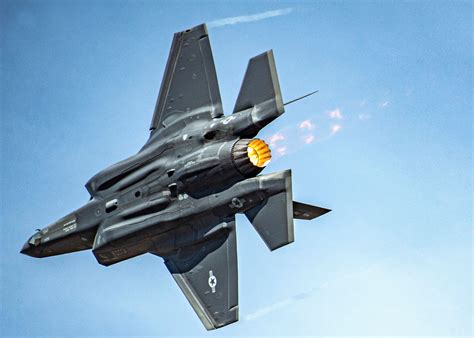
Still, its combat-proven capabilities and deep interoperability with US and Quad forces make it a compelling choice if India can negotiate terms that ensure strategic autonomy.
Tactical Assembly in India: The ‘Make in India’ Clause
Despite the reduced Rafale order, India is doubling down on indigenization. Tata Advanced Systems Limited (TASL) has been entrusted with manufacturing the Rafale fuselage, signaling the French fighter will have a partially Indian assembly line.
The Defense Ministry is believed to have issued a firm directive to Dassault Aviation: further sales will be contingent on industrial participation, including local manufacturing of key components, technological transfer, and possibly the setup of training and maintenance hubs in India.
In parallel, India is also developing the Advanced Medium Combat Aircraft (AMCA)—a homegrown 5th-gen stealth fighter. However, its first operational rollout is projected only around 2032. The Su-57 or F-35 could serve as a critical bridge until AMCA reaches maturity.
France’s Rafale Ambitions in India Face Long Odds
For Dassault, India was not just a buyer—it was a prospective strategic partner. A full Rafale production ecosystem in India would have transformed the company’s presence in Asia. But with revised numbers and new demands, Dassault faces mounting pressure.
- Unless France agrees to reduce per-unit costs,
- commit to local manufacturing,
- and support technology transfers,
it may find itself sidelined in favor of faster, stealthier, and geopolitically aligned options.
France’s push to include more nations under the Rafale umbrella—like the UAE and Indonesia—may help offset the impact, but losing India’s full order is a dent to its long-term ambitions.
Strategic Implications for the Indian Air Force
The IAF is at an inflection point. With dwindling squadron strength—hovering dangerously close to 30 squadrons against a sanctioned strength of 42—India cannot afford to waste another decade on bureaucratic delays.
The combined move to:
- Reduce Rafale numbers,
- Acquire 5th-gen fighters directly via G2G deals,
- Strengthen the domestic aerospace base,
signals a decisive, tri-pronged modernization approach.
If successfully executed, the IAF of 2030 could field a high-low mix of:
- Rafale F4s and Su-30MKIs as multirole backbone,
- Su-57 or F-35 as stealth spearheads,
- Tejas Mk-1A and AMCA as indigenous mainstays.
Conclusion: A Critical Juncture for Indian Air Power
India’s potential reduction in Rafale orders is not merely a procurement adjustment—it is a strategic pivot. As the Indo-Pacific becomes the epicenter of global military focus, air dominance will determine deterrence credibility.
Dassault Aviation must now reassess its pricing, industrial offerings, and timeline commitments. Meanwhile, the United States and Russia are closely watching, aware that winning the Indian stealth fighter deal could reshape the aerospace balance of power in Asia.
For India, the future lies in diversification, indigenization, and stealth superiority—and the clock is ticking.