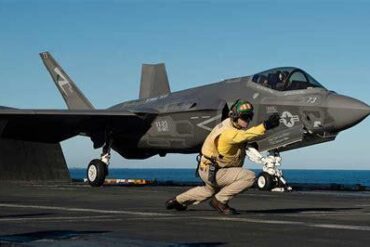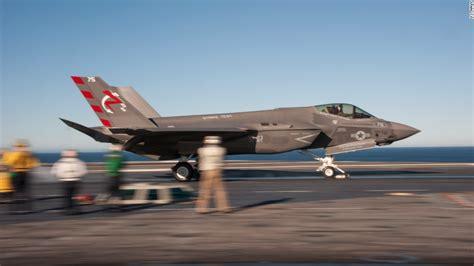
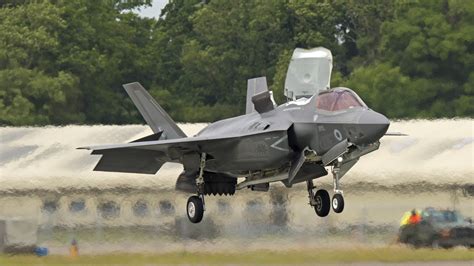
The U.S. Air Force’s decision to halve its F-35 procurement request for fiscal year 2026 marks a pivotal moment for Lockheed Martin, the defense contractor behind the world’s most advanced fighter jet. This dramatic shift in acquisition strategy not only reshapes the future of American air superiority but also sends ripples across the defense industry and global military partnerships relying on the F-35 program.
The Department of Defense’s new proposal reduces the Air Force’s order from 48 to just 24 F-35 aircraft. This significant cut aligns with Defense Secretary Pete Hegseth’s broader mandate to trim military expenditures by 8% over the next five years. The decision could potentially recalibrate the balance between advanced manned aircraft and increasingly prioritized unmanned aerial systems.
Strategic Shift in Pentagon Priorities
The reduction in F-35 orders is part of a comprehensive reassessment of military spending priorities. Hegseth’s initiative targets a more streamlined force structure with an emphasis on efficiency and technological advancement. Notably, manned aircraft like the F-35 were not included in the Pentagon’s 17 exempted programs during this budget review cycle — a clear indication that even cornerstone platforms are now on the chopping block.
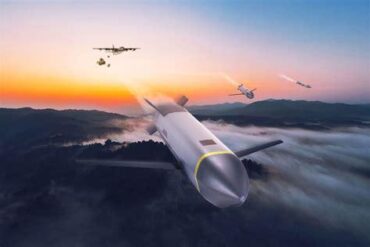
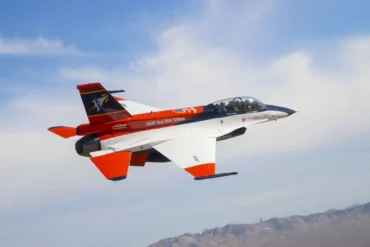
At the heart of this budgetary shift is a philosophical reevaluation of air combat doctrine. The Air Force has increasingly turned its focus to unmanned and semi-autonomous aerial systems, citing cost, versatility, and reduced risk to human life. With drone warfare and long-range precision weapons taking center stage, traditional fighter jet programs like the F-35 must now justify their value in an evolving combat environment.
Congressional Influence and Industry Lobbying
Despite the Pentagon’s proposed cuts, Lockheed Martin enjoys deep and sustained support in Congress, particularly from lawmakers whose districts benefit from F-35 production and maintenance facilities. The program has been politically insulated for years due to its broad industrial base spanning over 45 states, creating tens of thousands of jobs and injecting billions into the economy.
During congressional review, this political clout could translate into a reinstatement of previously projected procurement numbers. Historically, Congress has reversed or mitigated Pentagon-proposed cuts to the F-35 program, citing national security imperatives and the economic consequences of slowing production.
Budget Breakdown: Air Force, Navy, and Marines
While the Air Force requested 24 jets and $3.5 billion for the fiscal year 2026, it also included $531 million for advance procurement of materials — a strategic hedge that keeps the door open for future scaling if Congress restores funding.
The Navy’s request underscores continued commitment to the carrier-capable F-35C variant, with a demand for 12 aircraft totaling $1.95 billion, alongside $401.5 million in pre-purchase funds. Meanwhile, the Marine Corps plans to acquire 11 vertical-takeoff F-35Bs for $1.78 billion, and $113.7 million in early procurement.
Each branch’s figures reflect a reduced appetite for high-ticket manned aircraft in favor of multipurpose and cost-effective solutions. Importantly, these requests are significantly lower than past congressional approvals, and all branches are currently operating under temporary funding due to Congress’s failure to pass a permanent appropriations bill.
Implications for Lockheed Martin’s Long-Term Strategy
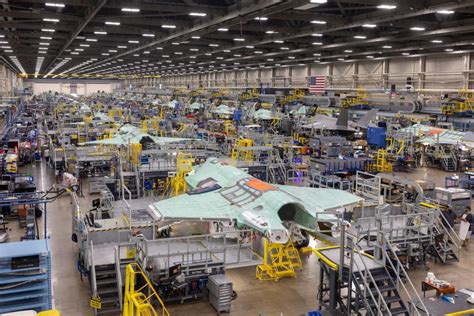
This unexpected downscaling presents both a tactical and strategic challenge for Lockheed Martin’s defense portfolio. The F-35 program, representing more than a quarter of the company’s revenue, has been the linchpin of its aeronautics division. A sustained reduction in orders could lead to production delays, layoffs, and renegotiation of supply chain contracts.
However, Lockheed Martin has invested in several risk mitigation strategies. These include an aggressive push into international sales, ongoing enhancements to the F-35’s software and weapon systems, and diversification into emerging technologies like hypersonic weapons and missile defense platforms.
The company is also actively lobbying to preserve funding levels, emphasizing the F-35’s irreplaceable role in joint-force operations, its interoperability with NATO allies, and its status as a deterrent in regions like the Indo-Pacific.
Global Ramifications for Allied Nations
The implications of reduced U.S. orders ripple beyond domestic borders. Many U.S. allies — including the UK, Japan, South Korea, and Italy — are co-producers or buyers of the F-35, and their defense planning hinges on the U.S. maintaining high production volumes to keep unit costs stable.
If American orders decline sharply, international partners may face increased procurement and maintenance costs, potentially straining defense budgets in allied nations and impacting geopolitical trust in long-term joint procurement deals. For example, Japan’s and Australia’s next-generation air combat strategies are heavily reliant on F-35 availability and upgrades.
Moreover, scaling back the program at home could limit the U.S.’s ability to export a consistent volume of aircraft and spare parts — a dynamic that adversaries like China and Russia could exploit to promote their own fifth-generation platforms, such as the J-20 and Su-57.
F-35: A Contested Legacy of Innovation and Expense
From its inception, the F-35 has been both a marvel of aerospace engineering and a magnet for controversy. Designed to serve the diverse needs of the Air Force, Navy, and Marine Corps under a single platform, it aimed to revolutionize stealth, interoperability, and combat versatility. However, its staggering price tag — currently hovering near $80 million per unit — and recurring software and maintenance challenges have drawn criticism.
Lockheed Martin’s ability to meet cost reduction goals and operational readiness metrics has been a frequent topic in congressional hearings. Some lawmakers have questioned whether the benefits of continued investment in the platform outweigh the opportunity costs, especially with rapid advancements in drone and cyber warfare.
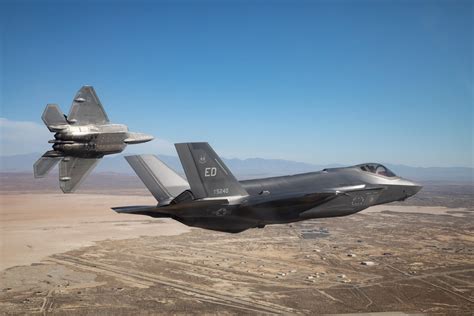
Yet, the F-35 remains central to U.S. force projection and deterrence doctrine, particularly in high-threat environments like the South China Sea and Eastern Europe. Its advanced radar evasion, multispectral sensors, and long-range engagement capabilities offer battlefield advantages that few competitors can match.
What’s Next: A Program at a Crossroads
As the 2026 budget cycle unfolds, the F-35 program stands at a critical crossroads. If Congress overrides the proposed cuts — a scenario bolstered by Lockheed’s lobbying and bipartisan support — the program could maintain its production tempo, preserving its industrial base and global relevance.
However, if the reduced procurement figures hold, it may accelerate a broader transition toward unmanned systems and modular platforms, reshaping how the U.S. prepares for the next generation of warfare. Either way, the outcome of this budget battle will not just define Lockheed Martin’s trajectory but also signal the Pentagon’s evolving priorities in a world marked by shifting alliances, emerging threats, and technological upheaval.
The coming months will reveal whether economic pragmatism or strategic imperative takes precedence in the final defense appropriations. For now, the future of the F-35 — and with it, a significant portion of America’s aerial dominance — hangs in the balance.