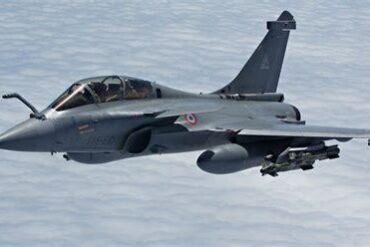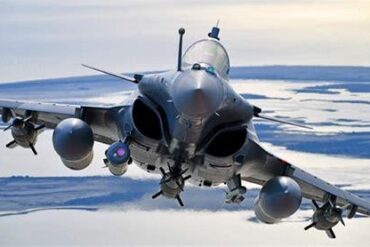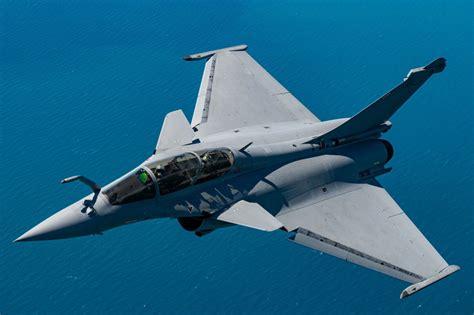
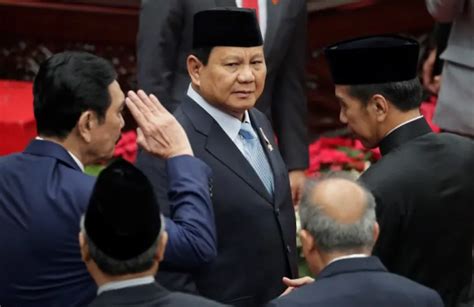
Indonesia is making a bold and strategic leap in its military modernization efforts with the anticipated purchase of 24 additional Rafale multirole fighter jets from France, bringing its total Rafale fleet to a formidable 66 aircraft. The news, first reported by La Tribune on July 4, 2025, coincides with President Prabowo Subianto’s upcoming visit to Paris, where he will be the guest of honor at France’s Bastille Day celebrations on July 14. This expanded procurement solidifies Indonesia’s growing role in the Indo-Pacific’s evolving security landscape and further deepens bilateral defense ties with France.
A New Milestone in Franco-Indonesian Defense Relations
The newly planned order of 24 Rafales comes just weeks after a bilateral announcement in May 2025 regarding the purchase of 12 aircraft, which itself built upon a major 2022 defense contract for 42 jets. The original contract, inked with Dassault Aviation, was structured into three tranches: 6 aircraft in 2022, 18 in 2023, and 18 more in early 2024. With the latest upgrade, Indonesia is set to become one of Dassault’s largest Rafale clients outside Europe, cementing Jakarta’s role as a strategic partner in France’s Indo-Pacific outreach.
This intensified cooperation is more than a transactional deal; it is a clear signal of Jakarta’s commitment to enhancing airpower capabilities amid escalating regional tensions in Southeast Asia. For Paris, the partnership fits seamlessly into France’s broader Indo-Pacific strategy, where Indonesia’s geographic and economic significance plays a pivotal role.
Why the Rafale? A Strategic Asset for Indonesia’s Evolving Threat Landscape
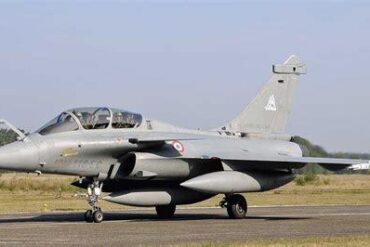
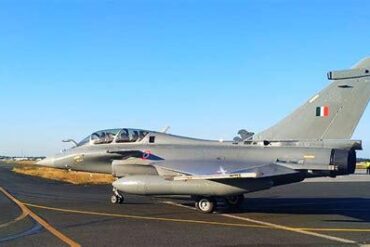
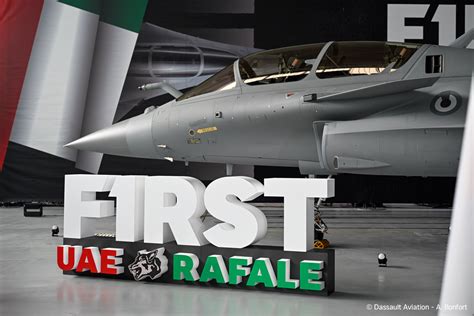
At the heart of this defense acquisition lies the Rafale’s operational versatility and battlefield superiority. Indonesia is receiving the F4 variant, the most advanced production standard of the Rafale platform. Designed by Dassault Aviation, the Rafale F4 incorporates a range of high-end capabilities:
- Enhanced RBE2-AA AESA radar
- Upgraded Spectra electronic warfare system
- Improved data fusion and AI-assisted targeting
- Network-centric warfare capabilities
- Compatibility with next-generation smart munitions
These technological advancements allow Indonesia to conduct air superiority, deep strike, close air support, intelligence, surveillance and reconnaissance (ISR), and nuclear deterrence missions—all with one single platform. This significantly expands the Indonesian Air Force’s (TNI-AU) flexibility to respond to diverse threats, from gray zone skirmishes in the South China Sea to disaster relief across its archipelagic expanse.
From Mixed Fleet to Modern Force: Replacing Operational Fragmentation
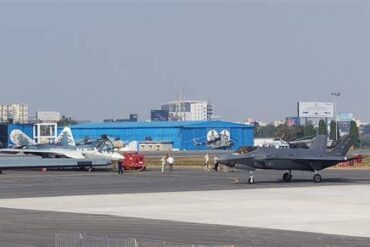
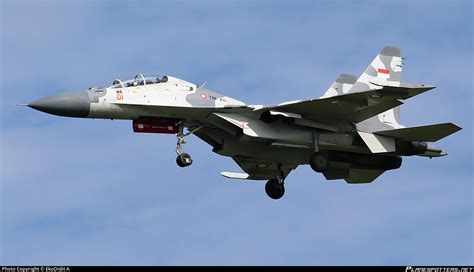
Indonesia’s current fighter inventory is fragmented and maintenance-intensive, consisting of a mix of U.S. and Russian platforms. The Air Force presently operates:
- F-16A/B and F-16C/D variants in multiple configurations (including older Block 25/32+)
- Su-27SK, Su-27SKM, and Su-30MK2 Flanker jets from Russia
This diverse fleet creates logistical and operational challenges, especially in spare parts sourcing, pilot transition, and tactical interoperability. The integration of 66 Rafales provides a much-needed standardization of combat aviation assets. It also ensures sustainability and reliability, with a long-term lifecycle supported by France’s globally trusted defense ecosystem.
Symbolism Meets Strategy: Prabowo’s Bastille Day Appearance
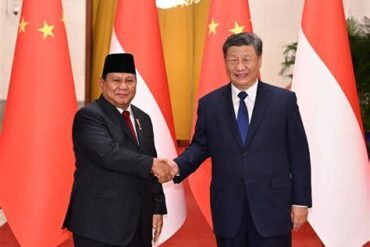
President Prabowo’s visit to Paris is far more than diplomatic theater. His role as guest of honor during France’s Bastille Day parade symbolizes the depth of growing Franco-Indonesian defense collaboration. France’s Indo-Pacific strategy, aimed at counterbalancing assertive moves by regional powers, increasingly sees Jakarta as a cornerstone of maritime security and democratic stability in the region.
Meanwhile, Indonesia is looking beyond just acquisitions. It seeks technology transfers, joint production, and long-term strategic independence. France, eager to expand its defense industry footprint in Southeast Asia, has embraced these ambitions. Rafale’s export package includes training, industrial offsets, and potentially local assembly, aligning closely with Jakarta’s “Defense Industry Revitalization Roadmap.”
Complementary Acquisitions: Submarines and Artillery in the Pipeline
The Rafale deal is part of a broader defense cooperation umbrella that also includes:
- Negotiations for two Scorpène-class submarines equipped with Air-Independent Propulsion (AIP) systems, enhancing stealth capabilities for prolonged undersea operations.
- Interest in acquiring CAESAR 155mm self-propelled howitzers, which are battlefield-proven and strategically mobile.
These acquisitions are strategically aligned with Indonesia’s goals to enhance maritime domain awareness, reinforce its joint forces doctrine, and prepare for multi-theater warfare scenarios.
Strategic Deterrence and Regional Stability
Indonesia’s geostrategic position makes it both vulnerable and essential in the regional balance of power. With more than 17,000 islands and proximity to critical sea lanes like the Strait of Malacca, Jakarta’s ability to control and secure its airspace is non-negotiable.
Tensions in the South China Sea, increased military assertiveness from neighboring powers, and rising cyber and electronic warfare threats have pushed Indonesia toward greater airpower projection. Rafale’s multirole capabilities, combined with its stealth features, allow the TNI-AU to:
- Conduct long-range patrols over disputed waters
- Respond to airspace incursions with minimal delay
- Provide combat-ready ISR and ground support capabilities
- Participate in regional coalitions and multilateral exercises
By equipping itself with one of the world’s most capable fighter jets, Indonesia ensures not just national defense, but also a credible strategic deterrence posture that resonates across ASEAN and the broader Indo-Pacific.
A Model for Defense Modernization in Southeast Asia
Indonesia’s Rafale procurement has the potential to set a regional precedent. As regional actors observe Jakarta’s comprehensive defense planning—balancing high-end acquisition with diplomacy, industrial cooperation, and strategic doctrine—they may seek to emulate or respond to its capabilities.
Countries like Vietnam, Malaysia, and the Philippines, which are also evaluating modernization options, could look to Jakarta’s Rafale integration as a benchmark. Meanwhile, China will undoubtedly view the growing Franco-Indonesian alliance as a development of interest, especially given the presence of forward-deployed assets in contested zones.
Looking Ahead: Deliveries, Deployment, and Integration
The first batch of Rafales is scheduled for delivery in early 2026, with full operational integration expected by 2029, assuming no delays. During this period, Indonesia will need to focus on:
- Upgrading airbases and hangar infrastructure
- Expanding pilot training and simulator capabilities
- Establishing a Rafale-specific maintenance ecosystem
- Conducting joint air doctrine alignment with France and other strategic partners
Such groundwork is critical for the Rafale fleet to achieve full mission-readiness and provide the high-tempo, precision-strike capability that Jakarta envisions.
Conclusion: Strategic Autonomy through Aerospace Supremacy
Indonesia’s planned expansion of its Rafale fleet to 66 aircraft is not merely a purchase—it is a profound statement of intent. In a region beset by uncertainty and shifting power dynamics, Jakarta is taking control of its security narrative through calibrated partnerships, technological upgrades, and operational reforms. The Rafale, with its combat-proven reliability and cutting-edge systems, offers the ideal platform for Indonesia to achieve strategic autonomy and maintain sovereignty over its skies and seas.
As the Rafales roar into Indonesian airspace in the years ahead, they will not only carry missiles and radar—they will carry the weight of a nation’s ambition to become a regional power grounded in peace, preparedness, and partnership.