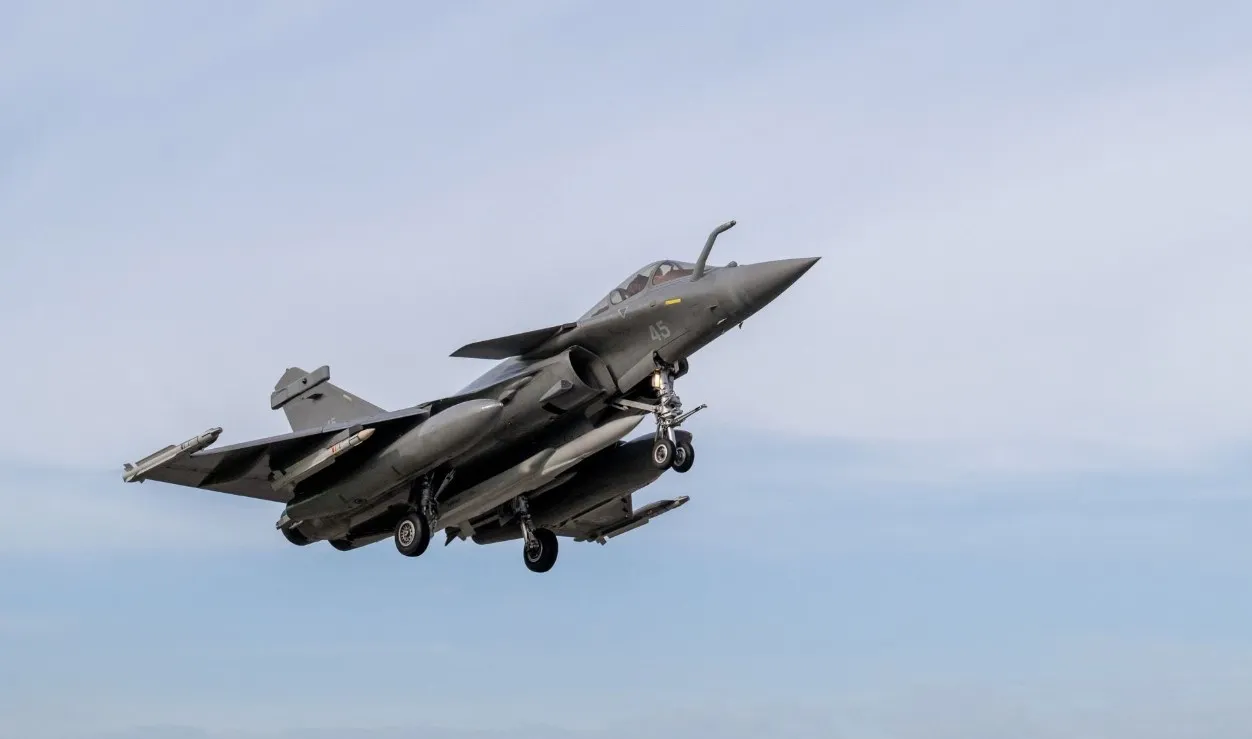
France has officially unleashed a new phase of its strategic deterrent with the historic test-firing of the ASMPA-R, a nuclear-capable, air-to-surface missile launched from the Rafale-M—its flagship naval fighter aircraft. This marks a significant leap forward in the modernization of the Force de Frappe, France’s nuclear deterrent force, showcasing a deepening reliance on carrier-based nuclear delivery systems amid a shifting global strategic environment.
France’s New Nuclear Edge: Rafale-M Armed With ASMPA-R
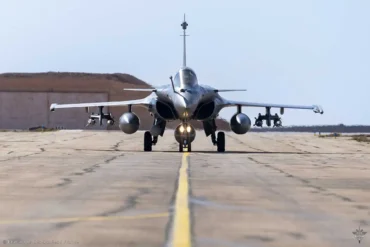
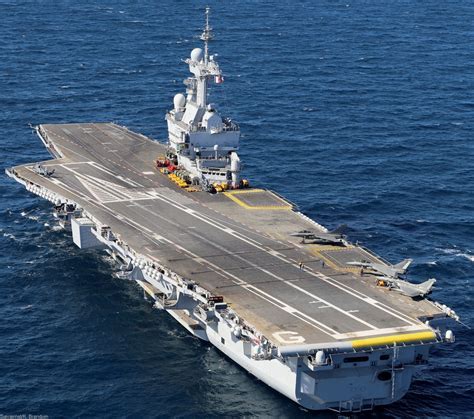
In a highly publicized demonstration, the French Navy’s Rafale-M, operating as part of the Nuclear Aeronaval Force (FANU) aboard the Charles de Gaulle aircraft carrier, successfully conducted the first-ever naval test of the ASMPA-R missile. This test represents the missile’s formal integration into the naval wing of France’s nuclear triad—a powerful development that now allows nuclear strike capabilities to launch directly from the sea via aircraft carrier.
The ASMPA-R is the latest in a lineage of French-developed air-launched nuclear cruise missiles, building upon decades of evolution and strategic refinement. The Ministry of the Armed Forces of France confirmed the event, stating, “An evaluation shot of the improved renovated medium-range air-to-surface strategic missile (ASMPA-R) was successfully carried out by the Nuclear Aeronaval Force (FANU).”
This test comes on the heels of its earlier operational integration within the Strategic Air Forces (FAS), where the missile had been in service since 2023. The coordinated dual-force capability—both air force and naval—now forms a robust nuclear dyad designed for stand-off capability, high-speed penetration, and survivable second-strike response.
ASMPA-R: Supersonic Deterrent With Strategic Reach
The ASMPA-R (Air-Sol Moyenne Portée Amélioré – Renové) represents a significant enhancement over its predecessors. A liquid-fuel, ramjet-powered cruise missile, the ASMPA-R can travel at speeds up to Mach 3 and has a confirmed range of 600 km (372 miles). This enables French strike aircraft to launch nuclear payloads from outside heavily defended enemy airspace, greatly increasing survivability and credibility.
The missile is initially propelled by a solid-fuel booster, which accelerates it to the necessary velocity before the ramjet sustainer takes over. This advanced propulsion system allows for sustained high-speed flight, making the missile extremely difficult to intercept using conventional air defenses.
There is growing speculation about enhancements to the nuclear warhead carried by ASMPA-R. While the previous version, ASMPA-A, carried the TNA-design warhead with yields ranging from 100 to 300 kilotons, France has been discreet about potential upgrades to ASMPA-R’s warhead—though increased yield, variable detonation modes, or enhanced penetration are all possible improvements.
Evolution of the ASMPA: From Cold War to Hypersonic Future
The journey of the ASMPA lineage spans over three decades of technological evolution. The original ASMP missile entered service in 1986, with a modest range of 300 km. It was a significant advancement at the time, developed to replace gravity bombs like the AN-22 on platforms such as the Mirage IV, aiming to enhance survivability during nuclear missions.
In 2009, the ASMPA-A was introduced, a modernization of the ASMP with improved electronics, guidance, and range (500 km). It was equipped with the TNA (Tête Nucléaire Aéroportée) warhead and widely deployed on both air force and naval Rafales.
Now, the ASMPA-R pushes the envelope further with aerodynamic refinements, more efficient propulsion, and potentially updated targeting systems. Externally, the ASMPA-R features a reconfigured fin layout—with larger tail fins and smaller front fins, contrasting the previous design of the ASMPA-A. Internally, it likely includes resilience against advanced electronic warfare and improved low-observability profiles.
France’s Dual Delivery Nuclear Doctrine Gets Sharper Teeth
With the successful ASMPA-R launch from the Rafale-M, France’s nuclear deterrence architecture has gained unprecedented flexibility. This development is a cornerstone in reinforcing France’s nuclear dyad, which includes:
- Sea-based component: The Triomphant-class SSBNs, equipped with M51 SLBMs having ranges of up to 12,000 km.
- Air-based component: Dual-role Rafale F3/F4/F5 fighters, both land-based and carrier-based, now deploying the ASMPA-R.
This dyadic posture allows France to maintain a credible second-strike capability, particularly important in the face of escalating global nuclear rhetoric. The ASMPA-R’s stand-off range and Mach 3 speed drastically reduce the exposure of French pilots and platforms to hostile air defense systems.
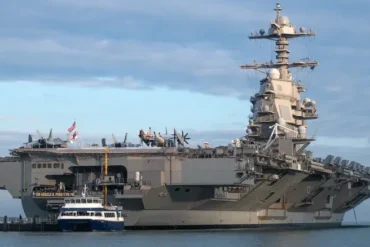
Moreover, France’s only aircraft carrier, the Charles de Gaulle, now functions as a mobile nuclear strike base, allowing for rapid deployment of nuclear deterrent capabilities into forward regions, including the Mediterranean, Indo-Pacific, or even Baltic theaters.
ASN4G: France’s Hypersonic Nuclear Future on the Horizon
France is already looking beyond the ASMPA-R, aiming to develop its next-generation air-launched nuclear missile, the ASN4G (Air-Sol Nucléaire de 4ème Génération). Slated for deployment by 2035, this missile will reportedly achieve hypersonic speeds (Mach 5+), making it virtually impossible to intercept.
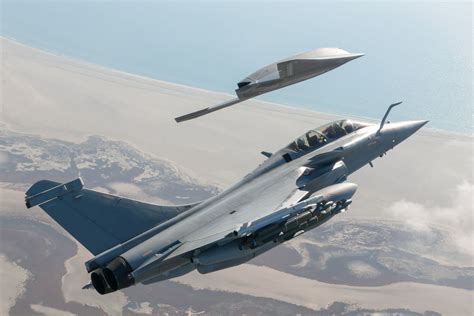
The ASN4G will be integrated with the upcoming Rafale F5 variant, including the carrier-capable version, ensuring future-proof compatibility with both French Air Force and Navy. It is expected to include advanced stealth coatings, AI-based guidance, and multi-targeting capabilities.
Geopolitical Undercurrents and Renewed French Assertiveness
This test must be viewed against a backdrop of renewed global nuclear posturing. Recent months have seen Russia, China, and Pakistan allegedly resuming or considering nuclear tests. The United States has also signaled that it could resume nuclear testing and conducted a test launch of the Minuteman III ICBM.
In Europe, the security calculus is shifting. France is actively exploring the idea of forward-deploying nuclear-capable Rafales in Germany, establishing a new nuclear air base, and even offering a nuclear protection umbrella to European allies. These steps, once considered provocative, are now part of the strategic discourse in response to Russian belligerence and NATO uncertainty.
French Minister of the Armed Forces, Catherine Vautrin, stated that this milestone “fulfills the ambition set by the President of the Republic and completes the maneuver to renew the capabilities of the airborne nuclear component as planned by the Military Programming Law (2024-2030).”
President Emmanuel Macron has emphasized the importance of a sovereign, independent French nuclear capability as a pillar of European security, even suggesting greater transparency and cooperation with EU allies without compromising autonomy.
Strategic Impact: France’s Message to Adversaries and Allies
The implications of the ASMPA-R launch from a carrier-based Rafale-M are both symbolic and strategic. Symbolically, it underscores France’s technological prowess and sovereign defense capability. Strategically, it sends a clear deterrent signal to any actor considering nuclear brinkmanship in Europe or beyond.
The message is unmistakable: France can project nuclear power globally, from airfields or carrier decks, without relying on foreign bases. This autonomy enhances France’s role as Europe’s most capable independent nuclear power, especially in an era where questions around NATO’s cohesion and US commitment persist.
In an increasingly unstable world, France’s ability to deploy nuclear deterrents from land or sea, with speed and survivability, may well prove the cornerstone of European nuclear strategy in the coming decades.