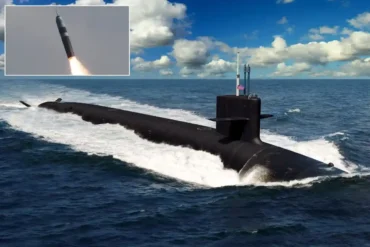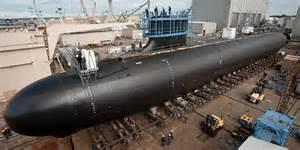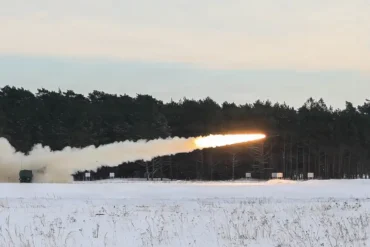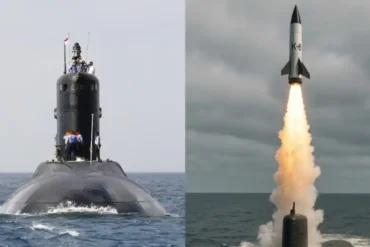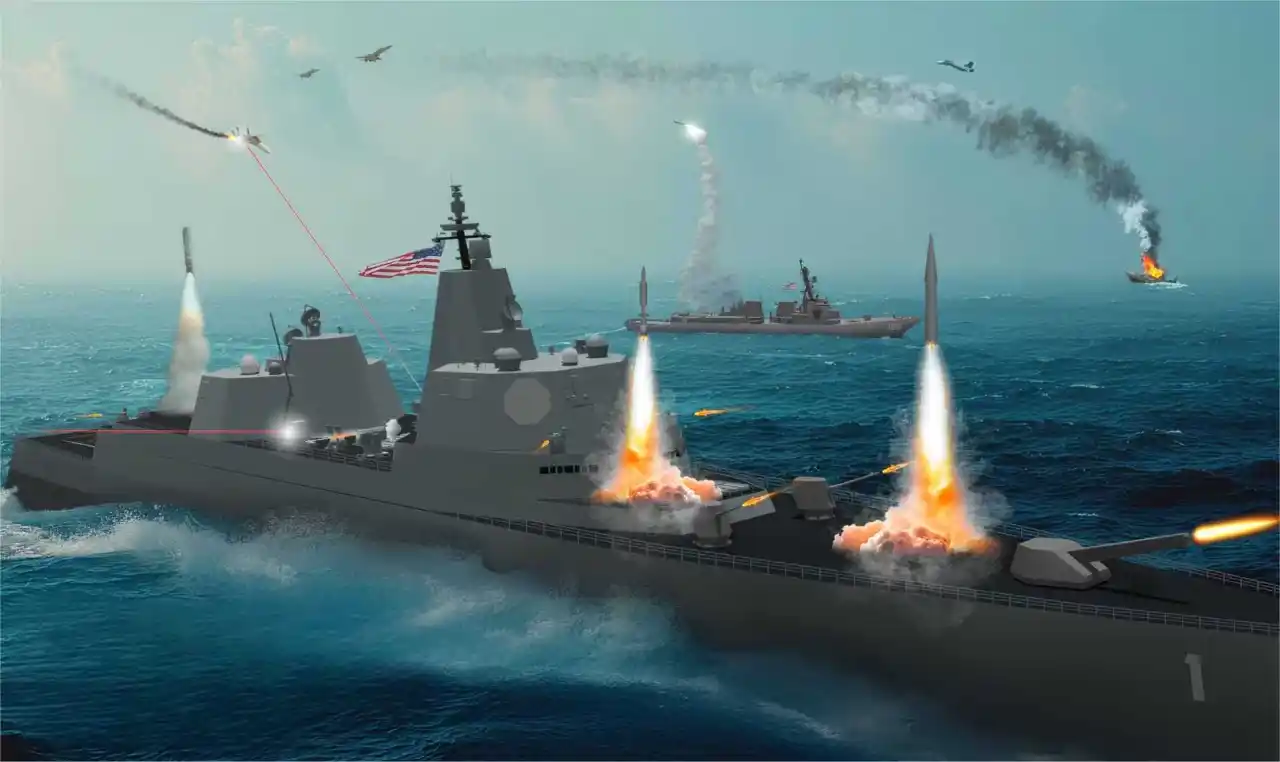
The U.S. Congress has formally approved the deployment of nuclear-armed Sea-Launched Cruise Missiles (SLCM-N) aboard the future Trump-class guided-missile battleships, marking a decisive shift in American naval strategy and nuclear posture. Confirmed on January 8, 2026, the decision reconnects surface warships with a nuclear strike role that has been absent from the U.S. Navy for more than three decades, fundamentally altering how sea-based deterrence is conceived and executed.
This authorization binds two of the most consequential defense initiatives of the decade: the revival of a non-strategic nuclear cruise missile and the introduction of a new class of very large surface combatants, officially designated BBG(X). Together, they represent a calculated response to intensifying great-power competition, expanding missile arsenals among adversaries, and a perceived gap between strategic nuclear weapons and conventional strike options.
By placing SLCM-N on a surface platform rather than limiting it to submarines, lawmakers are signaling a belief that visible, flexible, and regionally deployable nuclear capabilities are once again central to credible deterrence. This move does not merely resurrect an old concept; it redefines it for a maritime environment shaped by hypersonic weapons, integrated air defenses, and persistent surveillance.
A Historic Return of Nuclear Weapons to U.S. Surface Warships
The deployment of SLCM-N on the Trump-class battleship will be the first planned installation of a nuclear cruise missile on a U.S. surface combatant since the early 1990s. During the Cold War, the Navy operated the TLAM-N, a nuclear variant of the Tomahawk missile, aboard both surface ships and attack submarines. With a range of roughly 2,500 kilometers, TLAM-N provided theater-level nuclear options designed to deter regional conflicts from escalating.
That capability disappeared in 1991, when the United States withdrew sea-based tactical nuclear weapons as part of a broader post-Cold War drawdown. By mid-1992, TLAM-N had been removed from service, and surface ships were stripped of any nuclear strike mission. The Obama administration later formalized this shift, recommending the full retirement of TLAM-N in 2010, a process completed by 2013.
The current decision reverses more than three decades of policy, restoring a surface-based nuclear role in a strategic environment that Congress increasingly views as less stable and more contested than the post-Cold War era.
Why Congress Revived the SLCM-N Program
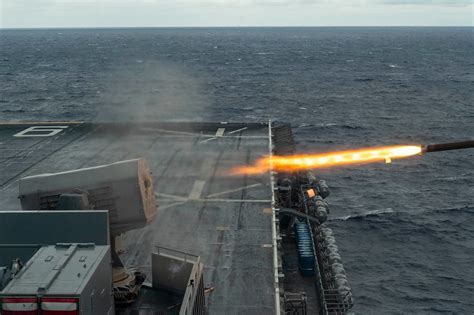
The intellectual and political foundation for SLCM-N was laid in 2018, when the first Trump administration proposed the missile as a response to perceived deterrence gaps. The argument was straightforward: potential adversaries possessed a range of low-yield, non-strategic nuclear weapons that could be used in limited regional scenarios, while the United States relied heavily on either high-end strategic weapons or conventional forces.
SLCM-N was conceived as a low-yield, non-ballistic nuclear option that could be deployed forward without the overt escalation signals associated with ballistic missile submarines or strategic bombers. Its cruise missile profile allows for flexible basing, ambiguity in deployment, and tailored signaling, characteristics that advocates argue enhance deterrence rather than weaken it.
Despite repeated attempts by the executive branch to cancel or delay the program, Congress maintained consistent support. Lawmakers viewed SLCM-N as an essential complement to existing systems, particularly in regions where adversaries might doubt U.S. willingness to escalate with strategic weapons.
Technical Profile and Strategic Role of SLCM-N
The SLCM-N is designed to minimize development risk by leveraging existing technologies. The missile will draw on cruise missile architectures already proven in U.S. service, while its nuclear payload is expected to be derived from the W80 warhead family, long associated with air-launched cruise missiles. This approach reduces the need for entirely new warhead designs, accelerating development timelines and controlling costs.
Strategically, SLCM-N occupies a distinct niche. It is neither a strategic ballistic missile nor a purely conventional weapon. Instead, it provides a graduated nuclear response option, intended to deter limited nuclear use by adversaries without immediately triggering large-scale escalation. Its deployment on surface ships further enhances its signaling value, as these platforms can be surged, redeployed, or withdrawn in response to regional crises.
Funding, Mandates, and Congressional Oversight
Congressional commitment to SLCM-N is reflected in its funding profile. Since FY2023, authorizations and appropriations have steadily increased, with hundreds of millions of dollars allocated annually to missile development, warhead integration, and launcher systems. Beyond standard budgeting, lawmakers embedded mandatory funding provisions in reconciliation legislation, ensuring long-term program momentum regardless of shifting political priorities.
Crucially, the FY2026 National Defense Authorization Act imposed statutory deadlines. The Navy is now required to deliver a limited number of deployable SLCM-N assets by September 2032, with full initial operational capability mandated by September 30, 2034. These requirements align closely with the projected development and construction timelines of the Trump-class battleship, effectively synchronizing missile readiness with platform availability.
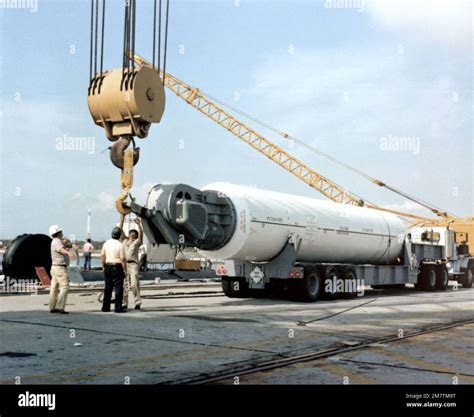
The Trump-Class Battleship: A New Kind of Capital Ship
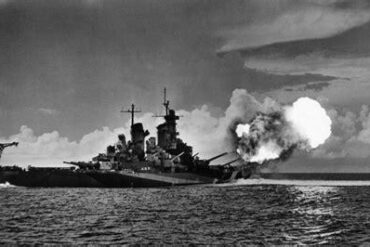
The Trump-class battleship represents a radical departure from recent U.S. surface combatant design philosophy. Since the retirement of the Iowa-class battleships in 1992, the Navy has avoided building extremely large surface warships, instead focusing on destroyers and cruisers. Programs like the Zumwalt-class demonstrated technological ambition but fell short of intended scale and impact.
Announced in late 2025, the Trump-class is envisioned as a guided-missile battleship, not a gun-centric relic. With a projected full-load displacement exceeding 35,000 tonnes, it will rank among the largest surface combatants ever built by the United States. Length estimates range from 256 to 268 meters, with a beam of up to 35 meters, underscoring its role as a missile-dominant platform.
Rather than replacing destroyers, the Trump-class is designed to anchor carrier strike groups and surface action groups, serving simultaneously as a missile arsenal, command ship, and defensive hub.
Firepower, Defense, and Integrated Systems
At the heart of the Trump-class concept is an unparalleled missile loadout. Current planning calls for 128 Mk 41 vertical launch system cells, supplemented by a dedicated launcher for Conventional Prompt Strike hypersonic missiles. The integration of SLCM-N into this architecture introduces a nuclear dimension to surface warfare that no other contemporary navy possesses.
Beyond missiles, the ship is expected to carry advanced defensive systems, including Rolling Airframe Missiles, close-in weapon systems, and high-energy directed-energy weapons rated between 300 and 600 kilowatts. These systems are intended to counter saturation attacks by cruise missiles, drones, and potentially hypersonic threats.
Aviation facilities will support helicopters and tiltrotor aircraft, enhancing anti-submarine warfare, logistics, and command-and-control functions. Collectively, these capabilities position the Trump-class as a multi-domain combat node, not merely a weapons platform.
Strategic Implications for U.S. Naval Deterrence
The pairing of SLCM-N with the Trump-class battleship fundamentally reshapes U.S. naval deterrence. For the first time since the Cold War, surface ships will once again carry nuclear strike responsibilities, expanding the geographic and political flexibility of American nuclear forces.
This move complicates adversary planning. Unlike ballistic missile submarines, which are designed to remain hidden, surface battleships are visible instruments of power. Their presence in a theater sends a deliberate message, while the ambiguity of their missile loadouts preserves uncertainty. In crisis scenarios, this combination of visibility and flexibility may enhance deterrence by making escalation calculations more complex for opponents.
Costs, Timelines, and Industrial Impact
The financial and industrial scale of the Trump-class program is immense. Early estimates suggest a lead ship cost of up to $15 billion, potentially exceeding the price of a Ford-class aircraft carrier, with later units projected around $10 billion each. The Navy anticipates a design phase running from 2026 into the early 2030s, followed by construction and commissioning in the late 2030s.
These timelines overlap directly with SLCM-N deployment mandates, reinforcing the strategic linkage between missile and platform. Industrially, the program is expected to absorb elements of the canceled DDG(X) initiative, concentrating resources and expertise into a single flagship surface combatant effort.
A Defining Moment in Post-Cold War Military Policy
The congressional approval to deploy SLCM-N on Trump-class battleships is more than a procurement decision. It represents a philosophical shift in how the United States views escalation control, regional deterrence, and the role of naval power in nuclear strategy. By reintroducing nuclear weapons to surface warships, Washington is acknowledging that the strategic environment of the 2020s and 2030s no longer resembles the assumptions of the post-Cold War era.
As development proceeds, the Trump-class and SLCM-N will remain focal points of debate, scrutiny, and strategic calculation. What is already clear is that their combination will redefine the boundaries of naval power projection and reinsert surface fleets into the nuclear deterrence equation with unprecedented clarity and intent.