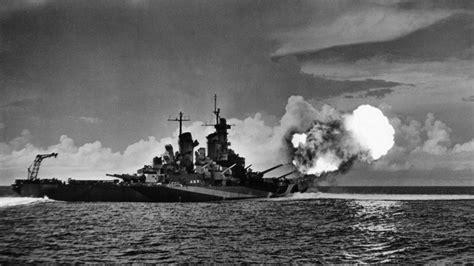
The Iowa-class battleships represent a bygone era of American naval dominance. With their towering 16-inch guns, heavy armor, and iconic silhouettes, these vessels served with distinction from World War II through the Gulf War, playing key roles in multiple conflicts. Today, all four remaining ships — USS Iowa, USS New Jersey, USS Missouri, and USS Wisconsin — rest in various parts of the country as museum ships. But despite their retirement, a provocative question lingers: Could the US Navy reactivate these historic behemoths in a modern conflict?
The question isn’t entirely hypothetical. In fact, the US Navy retains partial legal control over these vessels. As Ryan Szimanski, curator of the Battleship New Jersey Museum, noted in 2024, “our contract with the navy … says that they can take the ship over again if they need to.” This creates a latent potential for reactivation — one that is technically viable, but practically fraught with challenges.
Battleships in the Modern Naval Landscape
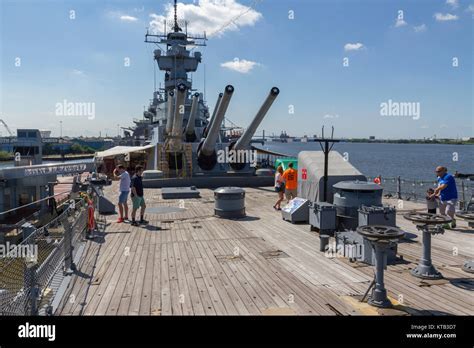
During their service, Iowa-class battleships embodied brute force. Each was equipped with nine 16-inch/50 caliber Mark 7 guns, capable of firing 2,700-pound shells over 23 miles. That power, however, has become increasingly irrelevant in an age dominated by long-range precision missiles, stealth technology, and unmanned systems. In the words of naval historian Norman Polmar, these ships are only relevant if they can get close to shore — a proposition that would likely make them vulnerable in today’s anti-ship missile environment.
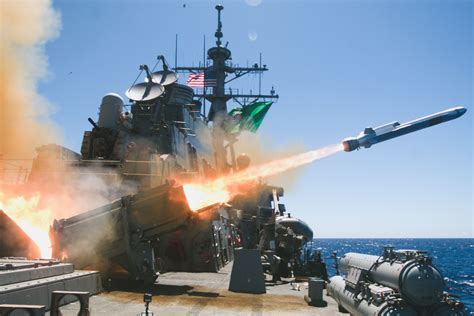
Even in their last period of active duty — during Operation Desert Storm in 1991 — the Iowa-class ships were supplemented with modern weapons, including Harpoon anti-ship missiles, Tomahawk land-attack cruise missiles, and Phalanx CIWS for close-in defense. But even then, they weren’t built to fully integrate modern digital fire control systems or multi-domain warfare networks. Their enormous crews — nearly 1,500 sailors — made them manpower-intensive compared to modern Arleigh Burke-class destroyers, which require fewer than 400 personnel and offer far more versatile combat capabilities.
Costly Resurrection: Billions Per Ship
The reactivation of any one Iowa-class ship would not be a minor undertaking. As history shows, bringing these vessels back online is massively expensive. During the 1980s Reagan-era naval expansion, the cost of returning all four Iowa-class ships to service totaled approximately $1.66 billion — and that’s in 1980s dollars. Today, the cost would likely exceed $2 billion per ship, depending on the extent of modernization.
According to Ryan Szimanski, it took nearly a year to reactivate USS New Jersey back then, and reequipping it with modern electronics, sensors, and missile systems today would be even more complex. The ship would need upgrades to C4ISR systems (Command, Control, Communications, Computers, Intelligence, Surveillance, and Reconnaissance), radar suites, satellite connectivity, and more.
Additionally, there are logistical and supply issues. The 16-inch gun shells are no longer produced, and their specialized propellant charges are scarce. Unlike modern smart munitions, these projectiles lack GPS guidance, limiting their effectiveness. Simply sourcing or reverse-engineering suitable ammunition would require new contracts, specialized production facilities, and compliance with modern safety and environmental standards — all at significant cost.
Mothball Fleets: Cold Storage and Emergency Use
The U.S. maintains a number of vessels in its reserve fleets, commonly known as “mothball fleets”, located in sites like Suisun Bay, California and James River, Virginia. These fleets are composed of warships in various states of readiness — some are barely more than stripped hulls, while others remain theoretically restorable to active service.
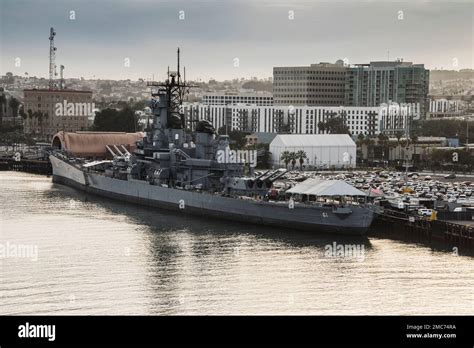
The Iowa-class battleships were once part of these fleets, kept in storage after earlier decommissionings. However, they have since been transferred to nonprofit organizations for use as museum ships. This transfer, while not permanent, presents a new obstacle: legal and administrative hurdles. The Navy would need to revoke agreements, displace preservation operations, and reclaim the ships for conversion back to warfighting platforms.
In cases of extreme national emergency, these steps could be bypassed. But even then, time would be the enemy. It would likely take 12 to 18 months per ship to refit and rearm, assuming funding and resources were immediately available. That is time the military might not have in a fast-moving global crisis.
Modern Naval Doctrine: Speed and Precision Over Firepower
Naval warfare has undergone a dramatic transformation since the 1940s. Today’s doctrine emphasizes multi-domain integration, long-range strike capability, electronic warfare, and distributed lethality. In this environment, massive capital ships like battleships are considered vulnerable liabilities rather than assets.
Modern adversaries — notably China and Russia — are developing or deploying anti-ship missile systems like the DF-21D “carrier killer” or Tsirkon hypersonic missiles, both capable of hitting large surface combatants with lethal precision. A battleship, despite its heavy armor, would be an enormous, slow-moving target for these advanced systems.
Even in potential peer-conflict scenarios, guided missile destroyers, Virginia-class submarines, amphibious assault ships, and carrier strike groups offer more flexibility and survivability. Additionally, unmanned surface and aerial vehicles are rapidly expanding the Navy’s reach without putting massive ships or their crews in harm’s way.
Symbolism Versus Strategy
There’s an undeniable appeal to the battleship. These ships represent more than firepower — they symbolize naval heritage, American power, and technological achievement. Their massive silhouettes evoke emotional responses, and their decks have hosted presidents, peace treaties, and decades of history.
Yet nostalgia is not a strategy. In a potential conflict, especially one involving high-end warfighting, efficiency, adaptability, and data dominance are more decisive than shell size. While a reactivated battleship might deliver psychological impact, the operational benefit would likely be minimal compared to its cost and risk.
That said, certain niche roles could theoretically exist. A reactivated battleship could serve as a heavily defended command ship, fire support platform for amphibious landings, or even as a missile arsenal barge — but only if thoroughly modernized. This would require complete gutting of internal systems, major structural retrofits, and potentially hybrid propulsion systems — again pushing the cost beyond reasonable limits.
Final Verdict: Technically Possible, Tactically Dubious
The reactivation of decommissioned US battleships remains a technically feasible but strategically questionable proposition. Yes, the Navy could theoretically bring one or more back into service, provided there is sufficient political will, financial backing, and a compelling threat scenario. But in the calculus of modern naval warfare, where cost-efficiency, stealth, precision, and rapid adaptability define success, the Iowa-class battleships are anachronisms.
Their time has passed. Their legacy, however, endures — not just in steel and rivets, but in the evolution of naval power itself. While they may never again sail into battle, they continue to serve as powerful reminders of American naval history, innovation, and might.