The United States Navy’s $120 billion Ford-class aircraft carrier program was designed to represent the future of naval aviation. Built around revolutionary technology, the class was supposed to deliver a new generation of American sea power with greater sortie rates, advanced automation, and the ability to support future manned and unmanned aircraft. But one of its most important innovations has become the center of an intense debate: the Electromagnetic Aircraft Launch System (EMALS).
The controversy surrounding EMALS has grown so severe that critics have called for a return to the traditional steam catapult system used on the older Nimitz-class carriers. Such a move would not be a simple equipment replacement. It would require a fundamental redesign of the Ford-class architecture, potentially forcing the Navy to rethink ships that cost tens of billions of dollars and took decades to develop.
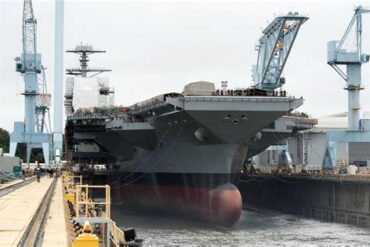
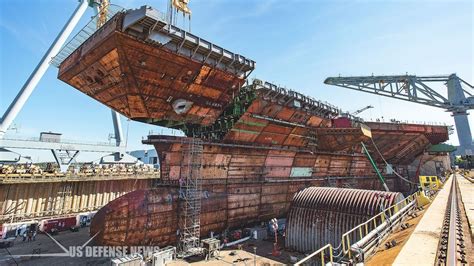
At the center of the dispute is the fourth Ford-class carrier, USS Doris Miller (CVN-81), which has already experienced delays that pushed its expected completion from 2032 to 2034. The carrier is now projected to require roughly 15 years from construction start to delivery, raising questions about whether the Navy’s ambitious technological leap has created more problems than solutions.
The Ford-Class Carrier Program’s Biggest Technological Gamble
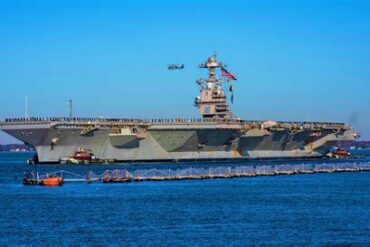
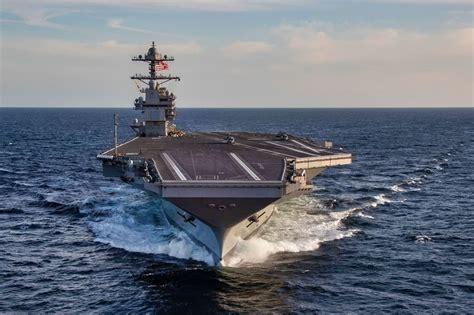
The Gerald R. Ford-class aircraft carriers represent the largest modernization effort in the history of American naval aviation. The Navy plans to build ten ships in the class, with the overall program cost estimated at approximately $120 billion. The lead ship, USS Gerald R. Ford (CVN-78), entered service after years of development challenges and reportedly cost around $13 billion.
Unlike previous aircraft carriers, the Ford-class was designed around a completely different philosophy. Instead of simply improving existing systems, the Navy attempted to create a highly automated nuclear-powered carrier capable of handling future generations of aircraft, including stealth fighters and unmanned systems.
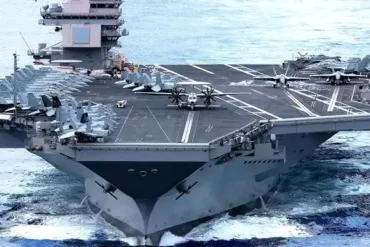
The centerpiece of that transformation was EMALS, which replaced decades-old steam-powered catapults with a linear electromagnetic launching system. Rather than using stored steam pressure to throw aircraft into the air, EMALS uses electrical energy and electromagnetic force to accelerate aircraft along the flight deck.
The technology promised several major advantages. It would reduce maintenance requirements, provide more precise control over launch power, save internal space, and increase the number of aircraft launches the carrier could conduct each day.
However, the transition from proven mechanical technology to an entirely new electromagnetic system has proven far more difficult than expected.
The problem is not that EMALS cannot launch aircraft. The system has successfully launched numerous aircraft during testing. The challenge is that certain launches, particularly those involving heavily loaded aircraft, have exposed serious concerns about reliability and aircraft stress.
EMALS Problems Raise Questions About Heavy Combat Aircraft Launches
The most serious criticism of EMALS involves the way it handles aircraft carrying maximum operational loads. Modern carrier aircraft often need external fuel tanks and weapons to achieve their required mission range and strike capability.
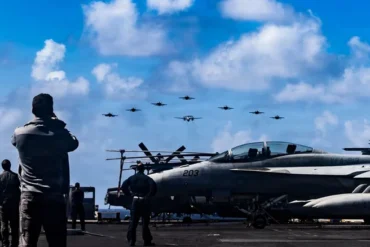
Testing showed that F/A-18E/F Super Hornets and EA-18G Growlers equipped with large 480-gallon external fuel tanks experienced excessive vibrations during launches. These vibrations created concerns about structural stress on aircraft components, especially wing pylons and external attachments.
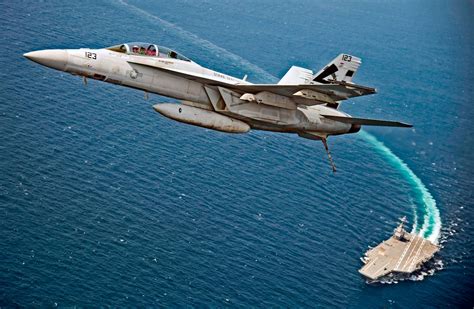
The issue became known as a “pogo effect,” where rapid acceleration from the electromagnetic launch system produced harmful longitudinal oscillations. The concern is not simply whether an aircraft can leave the deck safely. The larger question is whether repeated exposure to these forces could reduce the operational lifespan of expensive aircraft.
A carrier aircraft may perform hundreds of launches and recoveries throughout its service life. If every launch cycle creates excessive stress, the Navy could face increased maintenance costs and reduced fleet availability.
The Navy responded by developing software adjustments designed to smooth the launch process and reduce vibration. Supporters argue that this demonstrates the flexibility of a digital system. Unlike steam catapults, which rely on physical pressure management, EMALS can be modified through software improvements.
Critics, however, believe the solution is only a compromise.
Their argument is that reducing acceleration forces may limit the system’s performance margin. A catapult designed to deliver enormous launch energy must balance power, aircraft weight, environmental conditions, and electrical stability. If the system is already operating near its limits, future operational challenges could create additional problems.
Why Some Critics Want the Navy To Return To Steam Catapults
The argument for returning to steam catapults is based on one simple point: the technology is proven.
The Nimitz-class carriers, which currently represent the backbone of the American carrier fleet, have relied on steam-powered C13-2 catapults for decades. These systems have launched thousands of aircraft in combat operations and remain a trusted part of carrier aviation.
Supporters of steam technology argue that the Navy should prioritize reliability over innovation, especially as global competition increases.
Even former President Donald Trump publicly supported criticism of EMALS and suggested that future Ford-class carriers should consider returning to traditional steam systems.
However, replacing EMALS with steam would be one of the most complicated redesign efforts ever attempted on a major warship.
The Ford-class was not built as a traditional carrier with an optional electromagnetic launch system added afterward. The entire ship was designed around an electrical architecture.
The ship’s Bechtel A1B nuclear reactors produce significantly more electrical power than those aboard Nimitz-class carriers. That additional electrical capacity exists partly because EMALS requires massive amounts of energy during aircraft launches.
A return to steam would require adding enormous steam-generation equipment, new piping systems, water-brake mechanisms, and supporting infrastructure inside a ship that was never designed to contain them.
There is simply not enough empty space waiting to accept the old technology.
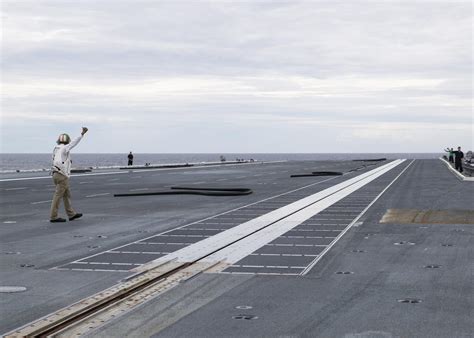
Why Removing EMALS Could Force a Complete Carrier Redesign
Changing the catapult system on a Ford-class carrier would be closer to rebuilding the ship than upgrading it.
Aircraft carriers are among the most complex machines ever created. Every system is interconnected. Moving one major component affects weight distribution, electrical systems, cooling requirements, maintenance access, and internal compartment layouts.
A steam catapult conversion would require naval architects to redesign major sections of the ship. Construction schedules would likely collapse as engineers attempted to solve problems that were already addressed during the original Ford-class design process.
The consequences would extend beyond engineering.
The Navy would also face the challenge of rebuilding a steam catapult industrial base that largely disappeared after the Nimitz-class program ended. Manufacturing specialized components, restoring supplier networks, and retraining skilled workers could take years.
The United States is no longer producing steam catapults at the scale required for a new carrier program. The tools, facilities, and expertise developed during the Cold War era have largely been replaced by the new electromagnetic technology.
Restarting production would mean recreating an outdated system while abandoning billions of dollars invested in EMALS research and development.
The Strategic Importance of Keeping Ford-Class Carriers On Schedule
The debate over EMALS is occurring at a critical moment for global naval competition.
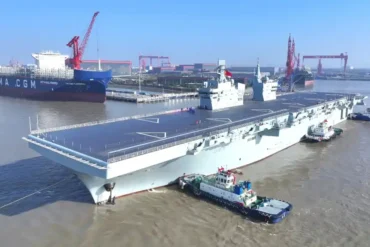
China’s navy has rapidly expanded its aircraft carrier capabilities. The People’s Liberation Army Navy recently advanced its carrier program with the introduction of the Type 003 Fujian, which uses electromagnetic catapult technology. The future Type 004 carrier is expected to push Chinese carrier capabilities even further, potentially featuring nuclear propulsion and a large air wing comparable to American supercarriers.
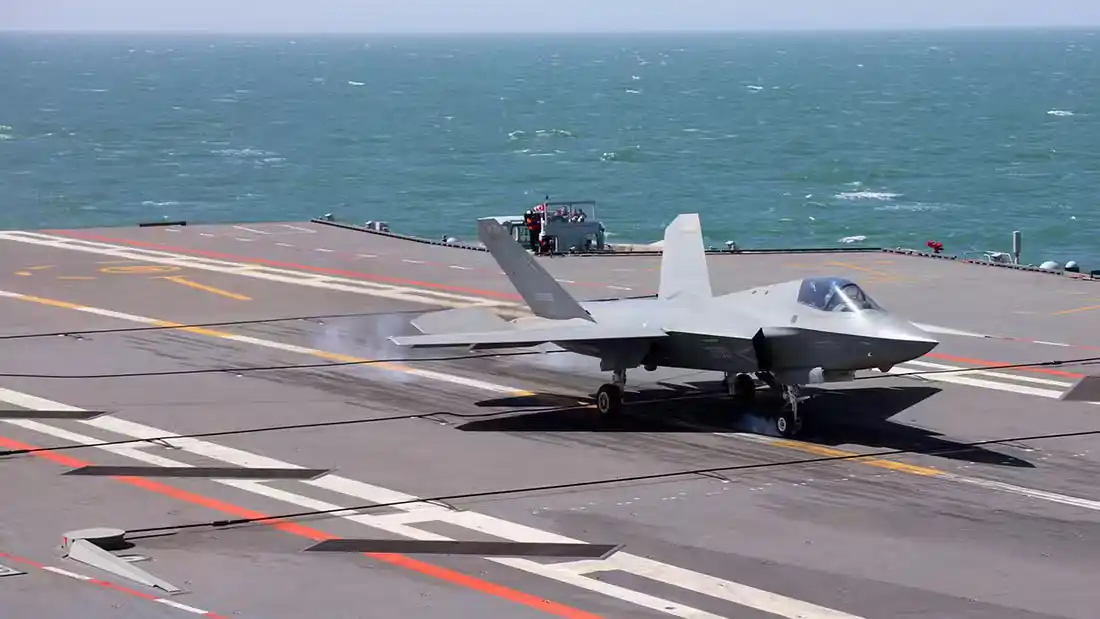
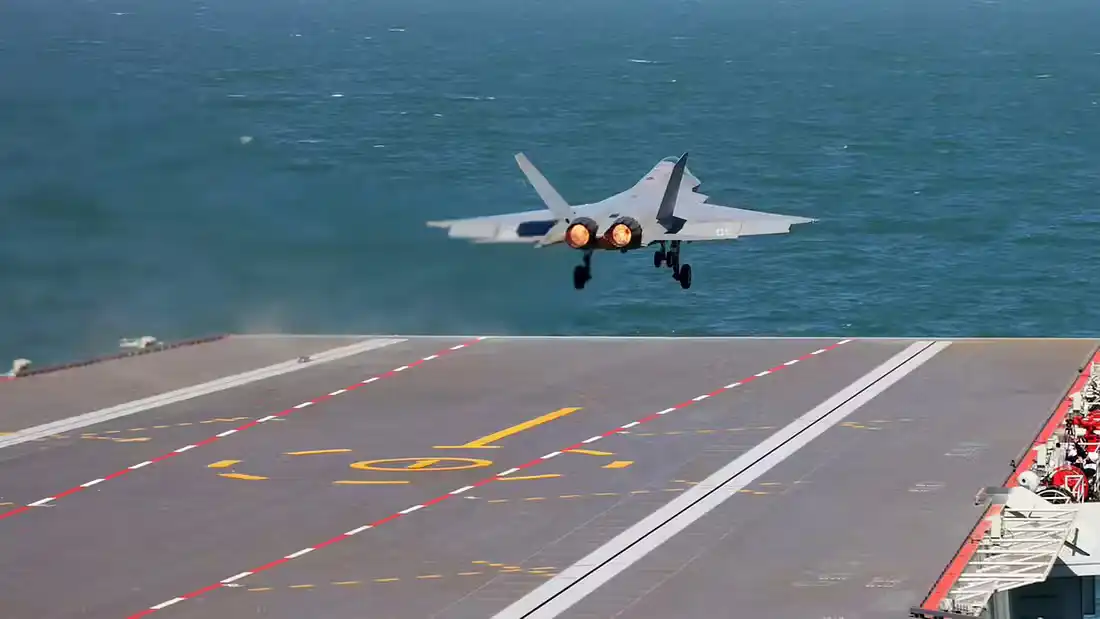
The competition between the United States and China is no longer simply about the number of ships. It is about technological capability, aircraft integration, and the ability to operate advanced unmanned systems.
This is where EMALS becomes strategically important.
Future carrier air wings are expected to include more unmanned aircraft, including tanker drones, surveillance systems, and potentially combat platforms. These aircraft may have different weight requirements than traditional fighters.
Steam catapults were designed primarily around heavier manned aircraft. EMALS offers much greater flexibility because its launch power can be precisely adjusted.
A lightweight drone and a heavily armed fighter could theoretically use the same launch system with completely different settings.
That flexibility could become essential as naval aviation changes.
The MQ-25 Stingray And The Future Of Carrier Aviation
One reason the EMALS debate is so significant is the Navy’s planned transition toward unmanned aviation.
The Boeing MQ-25 Stingray is expected to provide carrier air wings with an unmanned aerial refueling capability. The aircraft is intended to extend the range of carrier fighters by performing the dangerous “buddy tanker” mission currently carried out by manned aircraft.
However, MQ-25 is still years away from becoming a widespread operational capability. Even after entering service, it will not eliminate the need for external fuel tanks on strike fighters.
The Navy therefore still needs catapult systems capable of launching heavily loaded aircraft.
The challenge is finding the balance between solving current EMALS problems and preserving the future capabilities that justified the technology in the first place.
Why Starting Over Could Create A Bigger Problem Than EMALS Itself
The biggest danger facing the Ford-class program may not be a flawed catapult system. It may be losing years attempting to replace it.
A complete redesign could delay future carriers by five to seven years or more. During that period, older Nimitz-class ships would continue approaching their retirement limits.
The Navy currently operates eleven aircraft carriers, but delays could create serious fleet availability problems. If replacement ships arrive late, the carrier fleet could temporarily shrink at precisely the moment when global naval competition is intensifying.
The Mediterranean, Middle East, and Indo-Pacific regions all depend on American carrier presence as a symbol of military capability and political influence.
A decision to restart the Ford-class design would risk creating a capability gap while China continues expanding its own naval aviation forces.
The Future Of The $120 Billion Ford-Class Program
The EMALS controversy highlights a familiar challenge in military technology: revolutionary systems often experience painful development periods before reaching maturity.
The Ford-class carrier was never intended to be a simple replacement for the Nimitz class. It was designed as a foundation for the future of naval warfare.
The Navy must now decide whether EMALS problems represent a temporary engineering challenge or a fundamental design failure.
Replacing the electromagnetic catapult system would provide a return to familiar technology, but at an enormous cost in time, money, and strategic momentum.
Continuing with EMALS carries risks, but abandoning it could sacrifice many of the capabilities the Ford-class was created to provide.
For the United States Navy, the decision is not simply about choosing between steam and electricity. It is about determining what kind of aircraft carrier will dominate the oceans in the decades ahead.