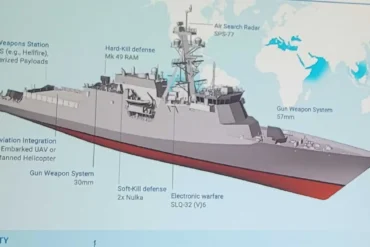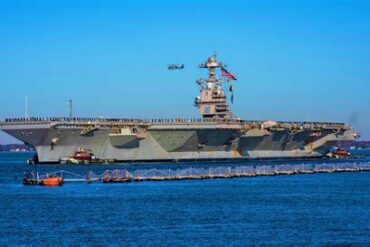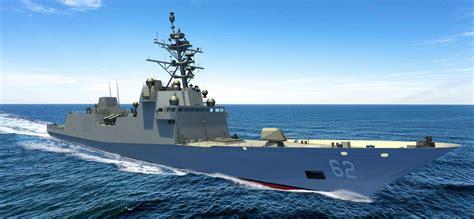
The abrupt termination of the $22 billion Constellation-class frigate program marks one of the most dramatic course corrections in recent U.S. naval procurement. After years of delays, design spirals, and escalating costs, the Navy has decided to stop the bleeding—abandoning its long-planned future frigate at a moment when China is accelerating its expansion at a scale unseen in modern naval history.
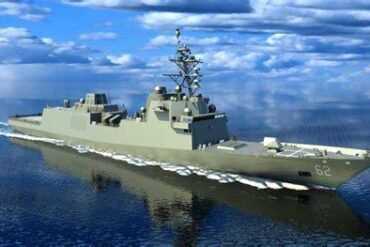
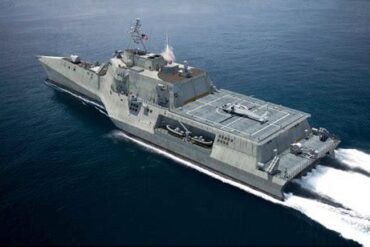
The shift is not subtle. It is a decisive break from earlier assumptions that the Constellation-class (FFG-62) would become the Navy’s workhorse small surface combatant, filling the gap left by the beleaguered Littoral Combat Ship. Instead, the program’s structural problems—design instability, ballooning weight, and a shipyard struggling to translate an Italian blueprint into an American warship—became too large to ignore.
On November 24, U.S. Navy Secretary John Phelan announced that the Navy was officially abandoning the program’s future hulls as part of a wider reallocation approach described as a “strategic shift,” one meant to free resources for more responsive, more adaptable procurement pathways. Phelan’s message was unmistakably blunt: if a ship doesn’t enhance warfighting readiness, it no longer deserves a place in the budget.
A Program Sinking Under Its Own Weight—Literally
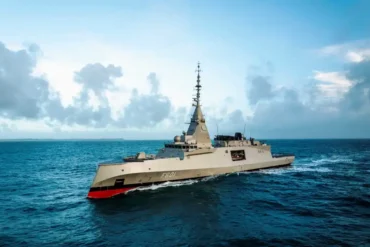
The Constellation-class was conceived as a modified version of Italy’s FREMM frigate, but the adaptation quickly spiraled. To comply with U.S. survivability standards, the Navy initiated a series of redesigns that transformed the vessel into something almost unrecognizable from its European parent—only 15% commonality remains. This meant new engineering, new subsystems, new integration challenges, and ultimately a new ship in everything but name.
The result was a construction nightmare. Despite the Navy beginning work years ago, the lead ship—USS Constellation—remains only 10–12% complete. Delivery originally set for 2026 has slipped to 2029, and the design itself remained unfinished as recently as April 2025.
The Government Accountability Office (GAO) highlighted an even more concerning development: the ship is now estimated to be 759 metric tons heavier than projected, raising alarms about long-term capability degradation. Weight growth this early in a program typically signals persistent and compounding problems over the ship’s entire life cycle.
Even former Navy acquisition officials have hinted that the decision to modify an existing design, rather than start clean, may have been doomed from the start. The effort to retrofit someone else’s hull form into American requirements proved far more complex than anticipated.
Why the Navy Is Walking Away Now
The cancellation of the final four frigates—none of which had begun construction—came after months of internal reviews, external pressure, and growing alarm about the Navy’s shipbuilding delays across all classes. Secretary of Defense Pete Hegseth’s mandate for sweeping cost reductions only intensified the pressure.
The Pentagon’s calculus is straightforward: funneling money into a program that cannot deliver on time, or on budget, erodes the Navy’s ability to compete in what analysts increasingly describe as a decisive naval decade. Every dollar poured into a troubled frigate is a dollar not spent on submarines, unmanned systems, or the next-generation destroyer.
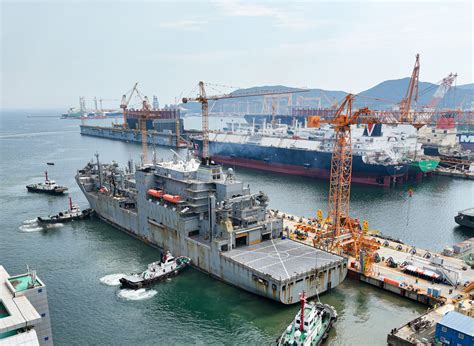
A Fleet Crisis in Slow Motion
The Constellation-class collapse arrives at an awkward moment for the U.S. Navy. The service has no operational frigates—a capability gap that increasingly stands out as China accelerates its buildup of medium-displacement warships.
While U.S. destroyers remain unmatched in combat power, they are expensive, manpower-intensive, and ill-suited for missions where frigates excel: escort duties, distributed operations, sea lane protection, and high-endurance patrols across contested littorals. The absence of a modern American frigate leaves a hole in strategic planning that becomes more glaring each year.
Some analysts argue the Navy may ultimately pursue a foreign design, with the Canadian T26 variant often floated as a viable alternative. Yet political realities—industrial lobbying, congressional pork, and longstanding cultural resistance to offshore procurement—make such a move unlikely.
The Chinese Navy Surges Ahead
The contrast between America’s stalled frigate and China’s shipbuilding momentum could not be sharper. According to Pentagon and CSIS assessments, China is expected to field 425 warships by 2030. Its shipyards operate at a tempo unmatched in peacetime naval history.
The Type 054A and Type 054B frigates now form the backbone of the People’s Liberation Army Navy (PLAN). These vessels are modern, multi-mission platforms built in high volume—optimized for anti-submarine warfare, air defense, and blue-water escort missions. China operates around 50 frigates, each contributing directly to its ambitions in the South China Sea and its evolving far-seas protection strategy.
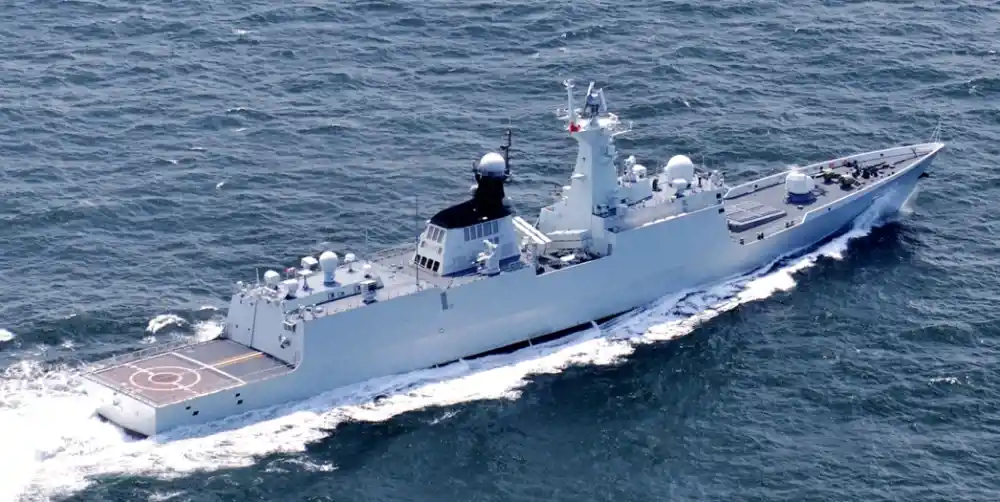
U.S. Navy leaders acknowledge that while their ships remain technologically superior, the scale of China’s production is cause for deep concern. Acting CNO Adm. James Kilby admitted that “virtually every shipbuilding class we have is behind schedule” and noted that quantity itself has become a strategic vulnerability.
A Dangerous Overreliance on Destroyers
A growing body of analysis warns that the U.S. Navy’s heavy concentration of firepower in large, expensive warships could be a liability. During World War II, smaller combatants—frigates, corvettes, destroyer escorts—played vital roles in convoy protection, radar picket duty, and fleet defense.
Modern conflict in the Indo-Pacific would likely demand similar flexibility. Distributed maritime operations require numerous, networked ships capable of absorbing losses without collapsing the force structure. China’s frigates and corvettes give it far greater tactical versatility.
The United States, according to USNI reporting, acknowledges the problem. A fleet design review is underway, and preliminary internal assessments suggest the Navy needs 73 small surface combatants—a number that cannot be met for years without a radical shift in procurement strategy.
What Comes Next for America’s Future Fleet
The death of the Constellation-class program is not simply the end of a troubled chapter. It is also an unmistakable signal: the Navy must rethink how it designs, builds, and fields its ships.
A shift toward modularity, rapid prototyping, and unmanned integration is already underway, but major structural challenges remain. The naval shipbuilding industrial base is stretched thin, and delays across major programs—Virginia-class submarines, Columbia-class ballistic subs, DDG-51 destroyers—suggest that the Constellation cancellation is not an isolated failure but a symptom of a systemic problem.
Yet there is opportunity in this disruption. Breaking free from difficult legacy designs may open the door to a new generation of frigates built for the Indo-Pacific’s unique threat environment—lighter, faster to build, digitally integrated, and optimized for distributed warfare.
The urgency is unmistakable. China’s navy is not slowing down, and the next decade will likely determine maritime dominance for a generation. The United States now faces a rare strategic crossroads where industrial capacity, cost discipline, and ship design philosophy all converge.
The frigate was meant to be the Navy’s bridge to the future. Instead, its cancellation may become the spark that forces the Navy to finally build it.