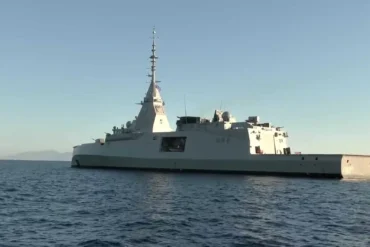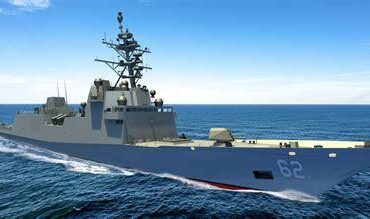
In a landmark announcement at the Surface Navy Association (SNA) Symposium in 2026, the U.S. Navy revealed the specifications for its new FF(X) frigate, an advanced surface combatant that aims to bolster the country’s naval capabilities. This new frigate design is poised to fill the gap left by the cancellation of the Constellation-class frigate, with an emphasis on speed, cost-effectiveness, and enhanced operational capacity. Designed for rapid acquisition and modular flexibility, the FF(X) frigate is a significant step forward in maintaining America’s dominance on the seas, enabling a faster restoration of fleet numbers, range, and endurance.
The FF(X) Frigate’s Specifications: A Balanced Approach to Combat and Efficiency
At its core, the FF(X) frigate is designed to be both robust and versatile, offering a blend of capabilities that allows it to serve across a broad spectrum of missions. Here are the key specifications of the FF(X) frigate:
- Length: 421 feet (128.3 meters)
- Beam: 54 feet (16.5 meters)
- Draft: 22 feet (6.7 meters)
- Displacement: 4,750 tons
- Maximum Speed: 28 knots (52 km/h)
- Endurance: 60 days
- Range: 12,000 nautical miles (22,224 kilometers)
These specifications are carefully crafted to enable the frigate to perform its role as a smaller, faster, and more cost-effective option compared to larger warships like the Arleigh Burke-class destroyer. While still maintaining formidable speed and endurance, the FF(X) frigate is more than just a scaled-down version of its predecessors.
Design Heritage and Structural Innovations: The Legend-Class Cutter Foundation
One of the most significant aspects of the FF(X) frigate design is its foundation on the Legend-class National Security Cutter (NSC) hull, a proven structure that serves as the backbone of the U.S. Coast Guard. The design is based on this hull with minimal structural changes, a decision made to reduce risk and accelerate the acquisition timeline. This strategic move enables the Navy to leverage an already tested platform, minimizing delays and unexpected costs.
The FF(X) is a smaller and less complex vessel than the Arleigh Burke-class destroyers, yet it is designed to enhance fleet capacity and endurance, focusing more on operational flexibility and modularity than on the high-end combat roles of larger warships. This design is aligned with the U.S. Navy’s broader goal of restoring fleet numbers and increasing operational reach in a cost-effective manner.
Flexible Weapon Systems: A Modular Approach to Combat
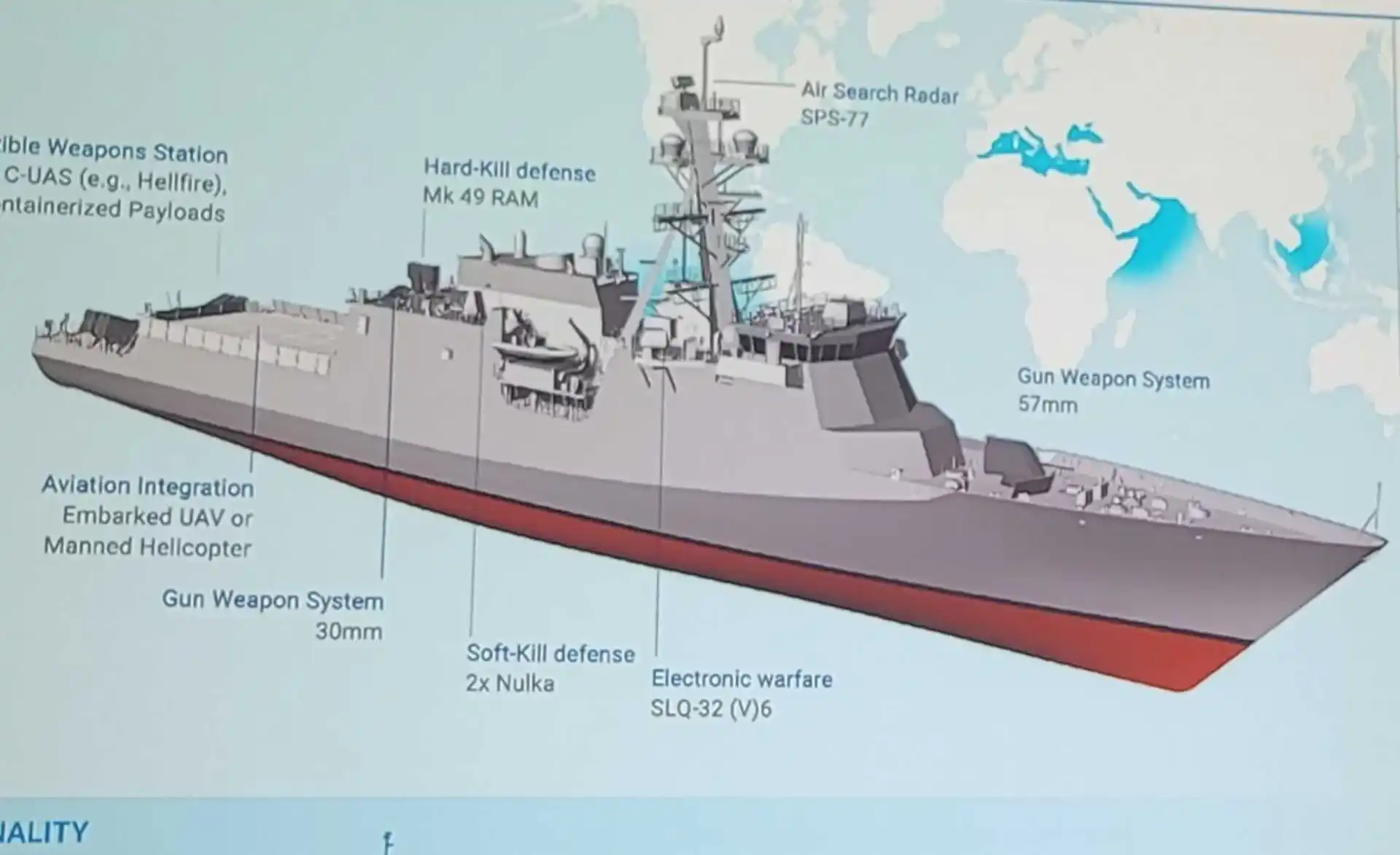
The FF(X) frigate takes a novel approach to weaponry, featuring a Flexible Weapons Station located aft. This modular system allows for the integration of various weapons depending on the mission at hand. These include:
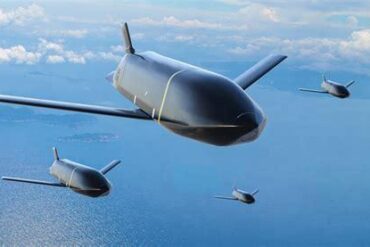
- Naval Strike Missiles for long-range anti-surface warfare
- Hellfire-class missiles to counter unmanned systems
- Containerized payloads, allowing for a customizable mission configuration
This flexibility sets the FF(X) apart from traditional surface combatants like the Arleigh Burke-class, which rely on fixed vertical launch systems for missile deployment. Instead, the FF(X) is built around the idea that future naval combat will require adaptable and scalable weapon configurations, enabling the frigate to pivot between different operational needs, from surface warfare to counter-unmanned systems (UxS).
Advanced Defensive Systems: Shielding the FF(X) from Modern Threats
While the FF(X) frigate is designed with flexibility and modularity in mind, it also boasts a formidable suite of defensive systems to protect it from modern threats. These systems include:
- SPS-77 Air Search Radar for advanced detection capabilities
- SLQ-32(V)6 Electronic Warfare Suite, ensuring protection from hostile electronic systems
- Nulka Active Decoy Launchers, which are crucial for intercepting incoming anti-ship missiles
- Mk 49 Rolling Airframe Missile (RAM) Launcher for hard-kill defense
These defenses are in line with the frigate’s intended role in supporting escort missions, maritime interdiction, and counter-UxS operations, rather than engaging in area air defense missions like the Arleigh Burke-class destroyers. The inclusion of these systems signals a shift toward operations in contested environments, focusing on survival and effective defense in forward-deployed, high-risk areas.
Armament and Firepower: Balancing Guns and Missiles
The FF(X) frigate strikes a balance between firepower and simplicity with its armament suite. It features a:
- 57mm main gun, offering significant firepower for engaging small surface targets, air threats, and providing close-in defense
- 30mm secondary gun, enhancing its ability to deal with smaller threats
In comparison to the Arleigh Burke-class destroyers, which rely heavily on missiles for their lethality, the FF(X) frigate offers a mix of guns and missiles, allowing for greater flexibility in how it responds to threats. This balanced approach also reflects a move towards a less complex configuration compared to the Constellation-class frigates, which were expected to have a more intricate weapons suite.
Aviation and Unmanned Systems Integration: Enhancing Combat Flexibility
Another standout feature of the FF(X) frigate is its capacity to integrate both manned helicopters and unmanned aerial vehicles (UAVs). This versatility makes it a key node in the Navy’s strategy of manned-unmanned teaming in modern naval warfare. The FF(X) frigate is designed to act as a command-and-control hub for unmanned systems, allowing it to coordinate and deploy unmanned surface, air, and subsurface assets.
Unlike larger ships like the Arleigh Burke-class destroyers, which focus on air defense and strike missions, the FF(X) frigate is designed to operate alongside a variety of unmanned systems, providing enhanced flexibility in missions such as maritime interdiction, counter-UxS operations, and escort defense. This emphasis on unmanned coordination within the FF(X) platform signals a shift toward a more integrated and future-proof approach to naval operations.
Crew and Operational Efficiency: Managing Resources for Maximum Output
The FF(X) frigate is designed with a relatively modest crew complement of 148 sailors, reflecting an emphasis on operational efficiency. Despite its smaller crew size, the ship is capable of supporting aviation operations and executing complex mission packages. This operational structure is aligned with the frigate’s goal of maintaining a smaller, more agile fleet while still delivering high-impact capabilities.
The FF(X) is designed to operate as part of a mixed manned-unmanned force structure, with potential unmanned vessels ranging from 75 to 250 feet (23 to 76 meters) in length, further expanding the operational reach of the frigate and its sister ships. This scale allows the Navy to quickly scale up its presence across global theaters, enhancing its ability to respond to emerging threats with greater agility.
Conclusion: FF(X) as a Pillar of U.S. Naval Power in the 21st Century
The introduction of the FF(X) frigate represents a crucial step in restoring the U.S. Navy’s fleet capacity while addressing the challenges of modern naval warfare. With its modular design, advanced defensive systems, and ability to integrate both manned and unmanned systems, the FF(X) is set to play a pivotal role in enhancing America’s naval power. By focusing on speed, flexibility, and operational efficiency, the FF(X) will complement larger warships like the Arleigh Burke-class destroyers while filling the gap left by the cancelled Constellation-class.
In the face of global security challenges, the FF(X) frigate is a forward-thinking solution that reflects the U.S. Navy’s commitment to maintaining dominance on the world’s oceans, ready to meet the demands of the 21st century.