Naval power has shaped the balance of global influence for centuries. From the age of empires to modern geopolitical competition, the nations that control the seas often wield enormous economic and military influence. Maritime dominance determines trade security, military mobility, and the ability to project power far beyond national borders.
The idea that control of the sea equals strategic supremacy is hardly new. During the height of the Roman Empire, the Mediterranean was often referred to as a Roman lake because Roman fleets ensured complete maritime dominance. Centuries later, Britain’s Royal Navy maintained global supremacy throughout much of the 19th century, allowing a relatively small island nation to oversee the largest empire in history.
In modern times, naval power has evolved dramatically. Warships now operate alongside submarines, aircraft carriers, amphibious assault ships, surveillance vessels, and logistical fleets. The size of a navy no longer reflects just the number of warships but the entire collection of maritime assets that allow a nation to control and protect its waters.
A navy today performs many functions beyond traditional combat. It secures international shipping lanes, supports humanitarian missions, conducts intelligence gathering, and provides a powerful diplomatic signal during international tensions. The ability to deploy naval forces across oceans remains one of the clearest indicators of military capability.
However, the largest navies are not always the most powerful. Some fleets contain hundreds of small patrol craft while others rely on fewer but far more advanced vessels such as nuclear-powered submarines and aircraft carriers. When evaluating naval size by total assets, surprising rankings can emerge.
Based on self-reported data compiled by World Population Review, the following countries operate some of the largest naval forces on the planet. The list includes every type of vessel counted as a naval asset — from frigates and submarines to patrol boats and support ships.
10. Sri Lanka Navy – 270 Naval Assets
Sri Lanka occupies a strategically critical position in the Indian Ocean Region (IOR). Located just south of India and along some of the busiest maritime trade routes in the world, the island nation sits near shipping lanes that connect Asia, the Middle East, and Europe.
Despite its relatively small size, Sri Lanka maintains a navy with approximately 270 vessels and maritime assets. Much of its fleet consists of patrol vessels designed to monitor coastal waters and enforce maritime law.
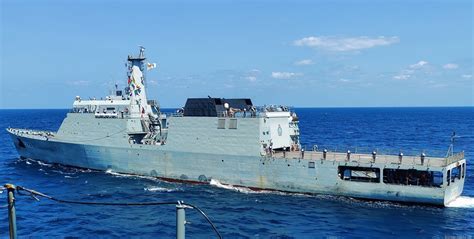
Sri Lanka’s naval forces gained considerable experience during the country’s long civil war, when maritime units were tasked with combating smuggling networks and insurgent groups that used small boats to transport weapons and supplies. As a result, the navy developed strong capabilities in coastal security, interdiction, and maritime surveillance.
Today the Sri Lanka Navy focuses heavily on combating:
- Human trafficking and smuggling
- Drug trafficking routes through the Indian Ocean
- Illegal fishing within national waters
- Maritime terrorism
The government has also launched a modernization initiative aimed at building a “Twenty Ship Fleet.” This program seeks to introduce new frigates, corvettes, and offshore patrol vessels designed domestically with the assistance of Colombo Dockyard Limited.
While financial constraints have slowed the program, the long-term objective remains clear: to create a capable regional naval force capable of protecting the island’s strategic sea lanes.
9. Royal Thai Navy – 293 Naval Assets
Thailand maintains one of Southeast Asia’s most unusual naval fleets. With approximately 293 naval assets, the Royal Thai Navy is among the region’s largest maritime forces.
Unlike many other navies of similar size, Thailand possesses a rare capability for a country of its scale — an aircraft carrier.
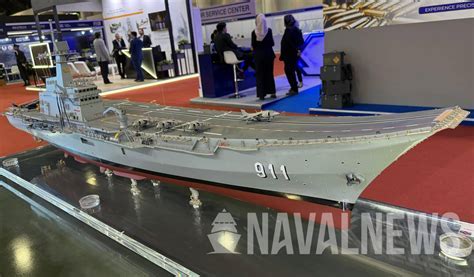
The HTMS Chakri Naruebet entered service in the late 1990s and remains the only aircraft carrier operated by a Southeast Asian nation. Although it primarily carries helicopters rather than fixed-wing fighter aircraft, its presence gives Thailand significant maritime prestige and command capability during regional operations.
The Thai naval fleet includes a diverse range of vessels:
- Coastal combat ships
- Corvettes
- Amphibious warfare vessels
- Logistic support ships
- Frigates
Thailand’s maritime strategy reflects a broader national vision centered on marine resource protection and economic development. The navy works closely with civilian authorities to protect fisheries, monitor maritime energy resources, and maintain safe shipping routes.
Because the Gulf of Thailand and the Andaman Sea are vital economic lifelines, the Royal Thai Navy plays a crucial role in maintaining regional stability.
8. Indian Navy – 294 Naval Assets
India’s growing economic power has been accompanied by an equally ambitious naval expansion. As the dominant country bordering the Indian Ocean, India views maritime security as essential to its geopolitical future.
With approximately 294 naval assets, the Indian Navy has transitioned from a coastal defense force into an increasingly capable blue-water navy.
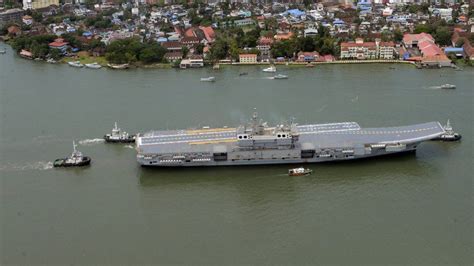
One of the most significant developments in India’s naval modernization has been the commissioning of the INS Vikrant, the country’s first domestically built aircraft carrier. The vessel symbolizes India’s determination to build advanced warships using its own shipbuilding industry.
India’s naval expansion also includes:
- Nuclear-powered ballistic missile submarines
- Advanced destroyers and frigates
- Long-range maritime patrol aircraft
- Modern amphibious assault vessels
The strategic motivation behind these investments lies in the growing competition across the Indian Ocean, particularly as China expands its naval presence through overseas ports and infrastructure projects.
India seeks to become the primary maritime security provider in the Indian Ocean Region, safeguarding critical trade routes and projecting influence from East Africa to Southeast Asia.
7. Italian Navy – 309 Naval Assets
Italy’s geography makes maritime security a constant strategic priority. The Italian peninsula stretches deep into the Mediterranean Sea, placing the country at the crossroads of European, African, and Middle Eastern maritime routes.
With 309 naval assets, the Marina Militare is one of Europe’s most capable naval forces.
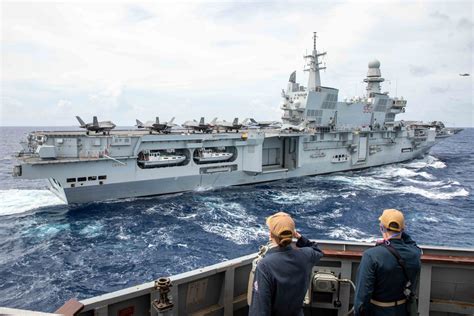
A centerpiece of Italy’s fleet is the aircraft carrier ITS Cavour, a versatile warship capable of operating F-35B stealth fighter jets as well as helicopters. The carrier significantly enhances Italy’s ability to participate in international military operations.
Italy also operates a capable submarine fleet consisting of diesel-electric attack submarines designed for stealth and anti-ship warfare. Although these submarines lack nuclear propulsion, they remain highly effective in the confined waters of the Mediterranean.
Beyond combat missions, the Italian Navy performs several unique roles, including:
- Maritime environmental monitoring
- Anti-pollution operations
- Search and rescue in migrant routes
- Participation in NATO naval task forces
Italy’s naval forces frequently collaborate with allied fleets, reinforcing European maritime security across the Mediterranean and beyond.
6. Indonesian Navy – 333 Naval Assets
Indonesia presents one of the most complex maritime security environments in the world. The country consists of more than 17,000 islands, stretching across thousands of miles of ocean.
Maintaining sovereignty across such a vast archipelago requires a significant naval presence.
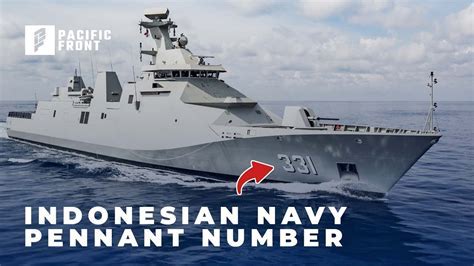
With 333 naval assets, the Indonesian Navy focuses heavily on patrol vessels, amphibious ships, and coastal defense craft designed to operate within narrow straits and island passages.
Indonesia’s strategic concerns include:
- Protecting sea lanes connecting the Pacific and Indian Oceans
- Preventing illegal fishing and maritime piracy
- Monitoring territorial disputes in the South China Sea
- Safeguarding offshore energy infrastructure
To modernize its fleet, Indonesia has increasingly partnered with foreign shipbuilders. One example is its purchase of advanced offshore frigates from Italy, designed to provide greater range and combat capability.
As Southeast Asia’s largest country by population and territory, Indonesia views naval expansion as essential to maintaining national unity and economic stability.
5. Swedish Navy – 353 Naval Assets
Sweden possesses one of the oldest continuously operating naval forces in the world, dating back to 1522. Despite being a relatively small nation, its strategic location along the Baltic Sea has always demanded a capable maritime defense.
Today Sweden commands 353 naval assets, placing it among the world’s largest fleets by total vessel count.
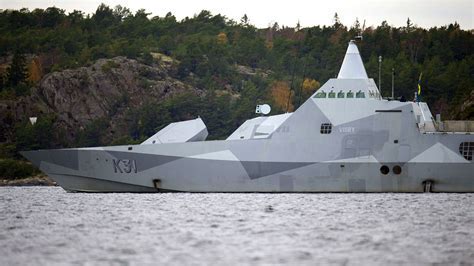
Modern Swedish naval strategy emphasizes stealth, speed, and coastal defense. The fleet includes the advanced Visby-class stealth corvettes, which are designed with radar-absorbing materials and sleek shapes that reduce detection by enemy sensors.
Sweden’s navy also relies heavily on diesel-electric submarines, which are exceptionally quiet and well suited for operations in the shallow Baltic waters.
The country’s recent accession to NATO has dramatically increased its strategic significance. Swedish naval bases now play an important role in defending the Baltic Sea region, particularly as tensions with Russia have risen.
By combining advanced technology with a large number of smaller vessels, Sweden has built a navy optimized for regional defense and alliance cooperation.
4. United States Navy – 472 Naval Assets
Despite ranking only fourth in total assets, the United States Navy remains the most powerful naval force in the world by a significant margin.
The U.S. fleet consists of 472 ships and naval platforms, but their capabilities far exceed those of most other fleets.
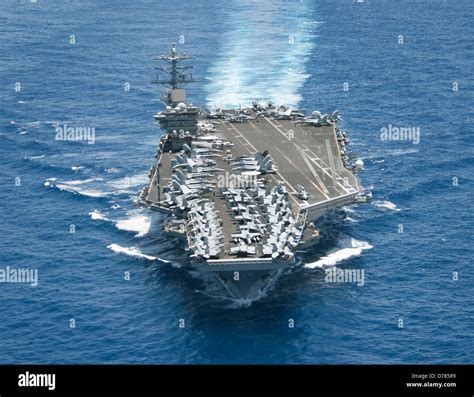
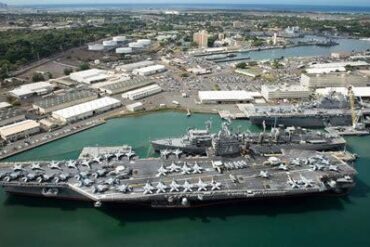
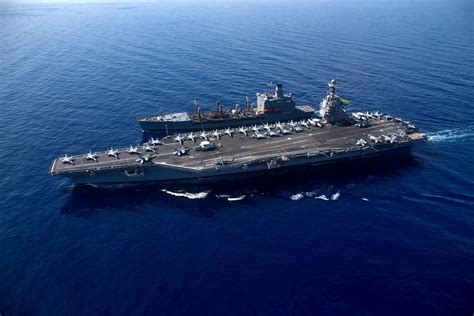
The defining strength of the U.S. Navy lies in its aircraft carrier strike groups. The United States operates 11 nuclear-powered aircraft carriers, each capable of launching dozens of fighter aircraft while supported by destroyers, cruisers, submarines, and supply ships.
These strike groups allow the United States to deploy combat power anywhere on Earth’s oceans.
The U.S. Navy also controls an enormous aviation component. In fact, the naval aviation branch is often described as the world’s second-largest air force, surpassed only by the U.S. Air Force itself.
Additional strengths include:
- Nuclear ballistic missile submarines for strategic deterrence
- Advanced guided missile destroyers
- Amphibious assault ships supporting Marine Corps operations
- Global logistics and replenishment fleets
The result is a navy capable of sustained global operations, enabling the United States to maintain military presence across every major ocean.
3. North Korean Navy – 505 Naval Assets
North Korea’s naval ranking often surprises observers. According to self-reported estimates, the Korean People’s Navy operates around 505 maritime assets.
However, the majority of these vessels are small patrol boats and coastal craft, rather than large ocean-going warships.
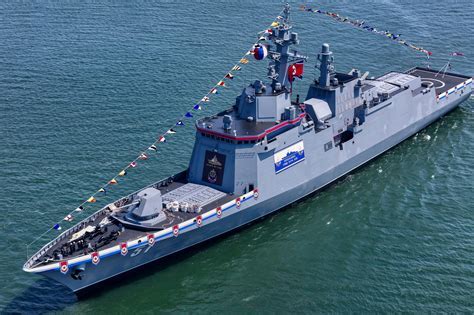
North Korea’s naval doctrine is heavily focused on coastal defense and asymmetric warfare. Instead of large surface fleets, the navy relies on:
- Fast attack boats
- Mini-submarines
- Coastal missile batteries
- Special operations maritime units
These assets are intended to defend the Korean Peninsula’s coastline and potentially disrupt enemy fleets operating near North Korean waters.
Despite possessing a large number of vessels, the country faces significant technological and economic limitations. Many ships are aging designs dating back to the Cold War era.
North Korea has instead concentrated its military resources on ballistic missile development and nuclear weapons, which it views as more effective tools for deterrence.
2. Chinese People’s Liberation Army Navy – 730 Naval Assets
Over the past two decades, China has carried out one of the most ambitious naval expansion programs in modern history.
With approximately 730 naval assets, the People’s Liberation Army Navy (PLAN) is now one of the largest fleets on the planet.
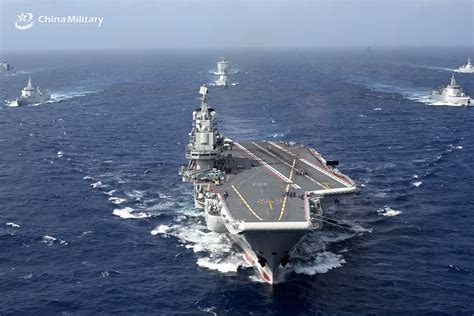
China’s strategy is based on a doctrine known as “Near Seas Defense and Far Seas Protection.” This concept focuses on defending China’s coastline while gradually extending naval operations into distant regions.
China’s rapidly growing fleet includes:
- Multiple aircraft carriers
- Modern destroyers and frigates
- Nuclear and diesel-electric submarines
- Amphibious assault ships
- Long-range logistics vessels
The aircraft carrier Liaoning, originally built in Ukraine before being refitted by China, marked the beginning of Beijing’s carrier program. Since then, additional carriers such as the Shandong have entered service, with more under construction.
China has also expanded its global presence by developing overseas port facilities and naval access agreements across Africa, the Middle East, and parts of Latin America.
These developments reflect China’s ambition to transform from a regional naval power into a truly global maritime force.
1. Russian Navy – 781 Naval Assets
Russia currently reports the largest navy in the world by total assets, with approximately 781 vessels and naval platforms.
The Russian fleet is spread across several regional commands, including:
- The Northern Fleet
- The Baltic Fleet
- The Black Sea Fleet
- The Pacific Fleet
Russia’s naval strategy has long been shaped by geography. Although the country possesses enormous coastlines, many of its ports freeze during winter months. Historically, this has made warm-water ports such as those in the Black Sea strategically vital.
One of the most notable examples is Crimea, where the port of Sevastopol serves as a key base for Russian naval operations.
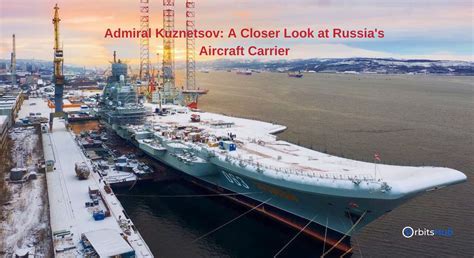
Despite the fleet’s large size, questions remain about its operational readiness. Russia operates only one aircraft carrier, the Admiral Kuznetsov, which has spent extended periods undergoing repairs after several accidents.
Nevertheless, Russia maintains a formidable submarine force, including nuclear ballistic missile submarines that form a critical component of its strategic deterrence capability.
Even with modernization challenges, the sheer scale of Russia’s naval inventory places it at the top of the list when measured by total assets.
Understanding Naval Size Versus Naval Power
Counting naval assets alone does not fully capture the reality of maritime strength. A fleet composed of hundreds of small patrol boats may technically outnumber another navy, yet possess far less combat capability.
Modern naval power depends on several factors:
- Technological sophistication
- Training and operational readiness
- Logistics and maintenance infrastructure
- Air and submarine capabilities
- Global deployment capacity
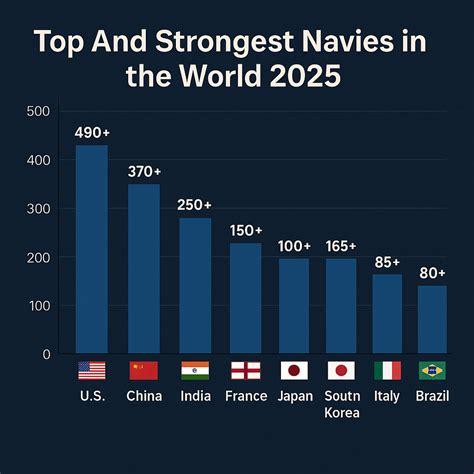
For example, although the United States Navy ranks lower in total assets, its carrier strike groups, nuclear submarines, and advanced aircraft give it unmatched global reach.
Naval strength ultimately reflects a combination of numbers, technology, and strategy. As geopolitical competition intensifies across the world’s oceans, the fleets listed here will continue evolving to meet new security challenges.
What remains certain is that the oceans will continue to shape the balance of global power — just as they have for centuries.