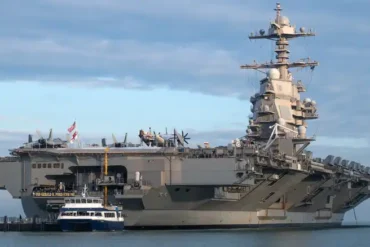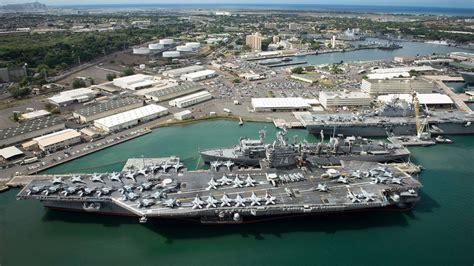
The United States commands one of the most formidable maritime forces ever assembled. That dominance is not sustained by ships alone, but by an immense network of naval bases that fuel, repair, arm, train, and house the fleet. These installations are not mere docking points. They are industrial ecosystems, aviation hubs, research laboratories, and fully functioning communities where operational readiness is forged long before a ship leaves the pier.
From the Atlantic seaboard to the Pacific coastline and deep into the Gulf of Mexico, America’s largest naval bases underpin global power projection. Size matters here—not as a vanity metric, but as a reflection of capacity. Acreage determines runway length, pier space, munitions storage, dry dock capability, housing infrastructure, and room for expansion in an unpredictable strategic environment.
Ranked by physical footprint, the following ten installations represent the largest naval bases in the United States. Each one plays a distinct role in sustaining sea control, deterrence, and rapid crisis response across the world’s oceans.
10. Naval Base San Diego – 1,600 Acres
Naval Base San Diego sits along the sunlit edge of San Diego Bay, yet its mission is anything but leisurely. Established in 1992 in its current configuration, the base spans 1,600 acres and serves as the principal homeport for the U.S. Pacific Fleet’s surface combatants.
This installation supports approximately 60 U.S. Navy ships and auxiliary vessels, making it one of the most concentrated collections of surface warfare power on the West Coast. Guided-missile destroyers, amphibious assault ships, and logistics vessels line its piers in disciplined formation. During peacetime, the base maintains operational readiness through maintenance cycles and crew training. In crisis, it becomes a rapid mobilization platform.
Its strategic location along the Pacific Rim positions it as a launch point toward East Asia and the Indo-Pacific theater. Just across the harbor sits the USS Midway Museum, a retired aircraft carrier that once projected American power from World War II through the Gulf War era.
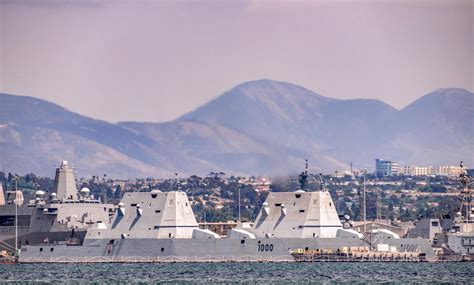
San Diego’s base is also a community anchor, housing service members and their families while supporting local economic activity. The base embodies the fusion of maritime might and coastal urban life.
9. NAS Joint Reserve Base Fort Worth – 2,300 Acres
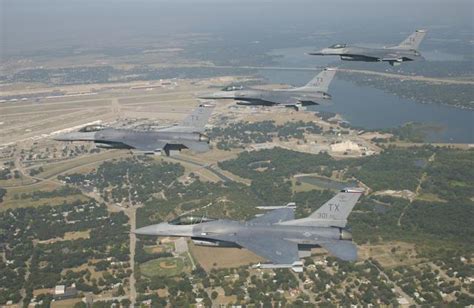
In Texas, far from any coastline, stands a reminder that naval aviation does not require saltwater to function. The Naval Air Station Joint Reserve Base (NASJRB) Fort Worth spans 2,300 acres and holds the distinction of being the first Joint Reserve Base in the United States.
This installation integrates multiple service branches—Navy, Marine Corps, Air Force, Army, and Texas Air National Guard—under one operational umbrella. More than 40 commands operate here, and roughly 10,000 personnel contribute to national defense missions.
Its runways accommodate aircraft such as the F/A-18 Hornet, F-16 Fighting Falcon, and C-130 Hercules. The base also serves as a designated hurricane evacuation site for military aircraft, a critical contingency role that underscores its inland strategic value.
Beyond military functions, NASJRB Fort Worth delivers significant economic impact to Texas, generating billions in activity annually. It demonstrates how aviation-centric naval power extends well beyond coastal boundaries.
8. Naval Air Station Corpus Christi – 2,844 Acres
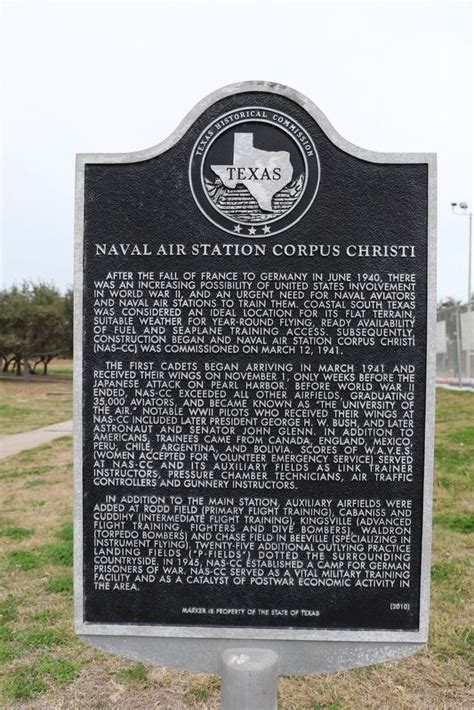
Situated on the northern edge of the Encinal Peninsula, Naval Air Station Corpus Christi covers 2,844 acres and operates as a vital training center for the next generation of naval aviators.
This base falls under the Naval Air Training Command, making it a crucible for pilot development. The headquarters for the Chief of Naval Air Training resides here, overseeing rigorous flight instruction and simulation programs that prepare aviators for carrier operations and combat missions.
More than 50 tenant commands share the installation, including the Corpus Christi Army Depot, U.S. Coast Guard elements, Marine Aviation Training Support Group units, and federal agencies such as Customs and Border Protection.
With approximately 43,000 active-duty personnel, civilians, and family members associated with the installation, NAS Corpus Christi functions as both a military engine and a self-contained community. It is where technical skill meets disciplined repetition, turning raw candidates into combat-ready aviators.
7. Naval Station Norfolk – 3,400 Acres
Naval Station Norfolk, located in Virginia, spans 3,400 acres and holds a title of global significance: it is the largest naval station in the world by operational capacity.
Supporting the U.S. Atlantic Fleet, the base manages 75 ships, 14 piers, and 134 aircraft housed within 11 hangars. Each year, it oversees roughly 3,100 ship movements and more than 100,000 air operations, a logistical ballet executed with military precision.
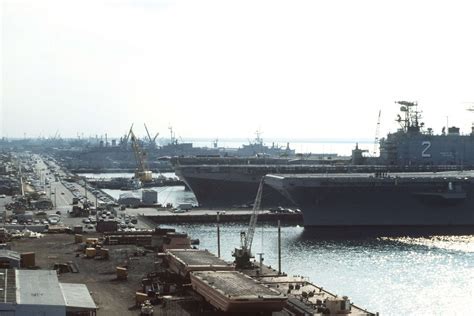
Its strategic positioning near the Atlantic shipping lanes ensures rapid deployment capability toward Europe, Africa, and the Middle East. Carrier strike groups assemble here before projecting power across oceans. Amphibious readiness groups stage here before humanitarian missions or combat operations.
Naval Station Norfolk is not simply large—it is kinetic. It hums with constant motion, reflecting the tempo of a global navy.
6. Naval Air Station Jacksonville – 3,800 Acres
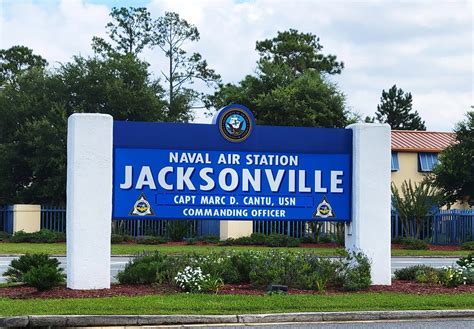
Along Florida’s St. Johns River lies Naval Air Station Jacksonville, stretching across approximately 3,800 acres. This installation specializes in anti-submarine warfare (ASW) and aviation readiness.
The base hosts multiple patrol squadrons, helicopter units, and an MQ-4C Triton unmanned aerial system squadron, reinforcing maritime surveillance across vast oceanic spaces. More than a hundred aircraft operate from its runways, including P-8 Poseidon patrol aircraft tasked with submarine detection.
Jacksonville NAS also manages three bombing ranges—Pinecastle, Rodman, and Lake George—and an outlying field at Whitehouse. These ranges are essential for maintaining weapons proficiency.
With thousands of active-duty personnel and tens of thousands of family members tied to its operations, the base stands as a cornerstone of southeastern U.S. naval aviation.
5. Naval Station Mayport – 3,409 Acres
Commissioned in 1942, Naval Station Mayport spans 3,409 acres near Jacksonville, Florida. It is the third-largest fleet concentration area in the continental United States.
The base supports over 80 commands, including approximately 20 surface ships and multiple helicopter squadrons. Its harbor can accommodate 34 vessels simultaneously, and its 8,000-foot runway supports Department of Defense aircraft operations.
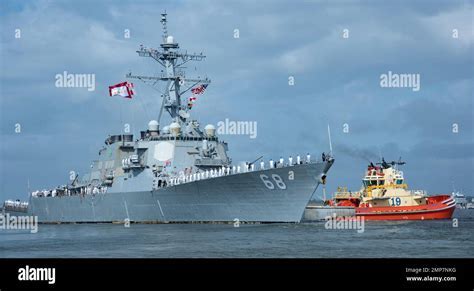
Mayport’s strategic location along inland waterways and direct Atlantic access allows rapid maritime movement. The installation plays a central role in East Coast surface fleet distribution, ensuring redundancy beyond Norfolk.
Its motto, “The Finest Service to the Finest Fleet,” reflects a service-driven philosophy centered on readiness.
4. Naval Air Station Patuxent River – 6,400 Acres
Known widely as NAS Patuxent River or simply “PAX River,” this Maryland installation encompasses roughly 6,400 acres and serves as the nerve center of naval aviation research and development.
The base houses the Naval Air Systems Command (NAVAIR) and the Naval Air Warfare Center Aircraft Division. Approximately 200,000 air operations occur here annually, many tied to experimental testing and system validation.
Advanced facilities include manned flight simulators and specialized test environments designed to evaluate new aircraft systems under controlled conditions. Historically, the base played a crucial role in World War II aircraft testing and later evaluated the FD-1 Phantom, the Navy’s first carrier-capable jet aircraft.
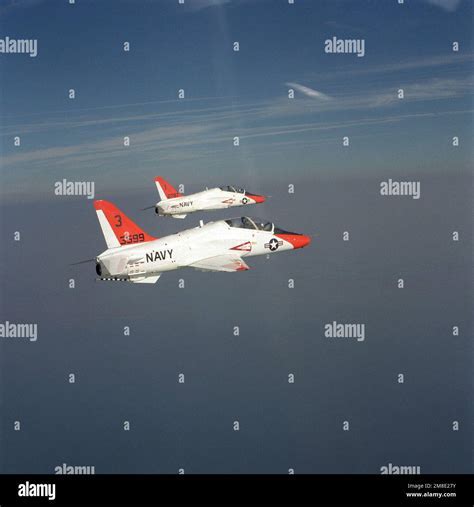
PAX River represents innovation in motion. It is where prototypes become operational assets and where technological superiority is refined through relentless testing.
3. Naval Base Kitsap – 12,000+ Acres
Spread across Washington State’s Kitsap Peninsula, Naval Base Kitsap occupies more than 12,000 acres, making it one of the largest naval installations in the United States.
The base supports submarines, aircraft carriers, and surface combatants. It includes the Puget Sound Naval Shipyard and Intermediate Maintenance Facility, one of the nation’s most significant ship maintenance complexes. The Manchester Fuel Depot, the largest single-site fuel terminal for the Department of Defense in the continental U.S., also resides here.
Roughly 70 tenant commands operate within Kitsap, and its economic footprint reaches billions of dollars annually. With tens of thousands of personnel employed, it functions as a strategic anchor for Pacific Fleet sustainment.
Kitsap’s importance lies not just in acreage, but in its ability to maintain and refit nuclear-powered vessels critical to deterrence.
2. Joint Base Pearl Harbor-Hickam – 27,694 Acres
Few names resonate in naval history like Pearl Harbor. Today, Joint Base Pearl Harbor-Hickam spans 27,694 acres, combining naval and air force capabilities into a unified installation.
This base can berth aircraft carriers, submarines, and large surface warships while also supporting major air operations. It once served as the only Hawaiian airfield capable of accommodating the B-17 bomber during World War II.
More than 160 commands operate here, maintaining readiness across the Pacific theater. Its geographic location makes it indispensable for Indo-Pacific strategy, serving as a forward-operating hub between the U.S. mainland and Asia.
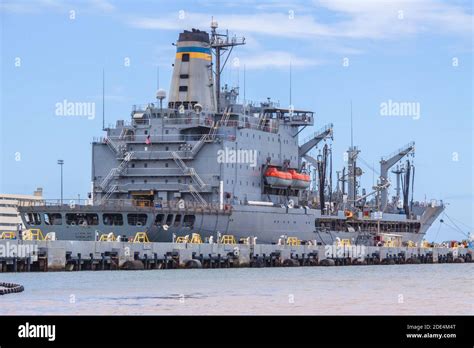
Pearl Harbor-Hickam symbolizes resilience and forward presence, linking historical legacy with contemporary strategic necessity.
1. Naval Base Coronado – 57,000 Acres
At the top of the ranking stands Naval Base Coronado, encompassing an extraordinary 57,000 acres, making it the largest naval base in the United States by physical area.
Often referred to as the “West Coast Quarterdeck,” Coronado is not a single installation but a complex of nine separate facilities, including Naval Air Station North Island, Naval Amphibious Base Coronado, and San Clemente Island training areas.
The base supports 17 squadrons, three aircraft carriers, multiple SEAL Teams, and expeditionary combat units. Approximately 36,000 active-duty personnel and civilian employees operate within its boundaries.
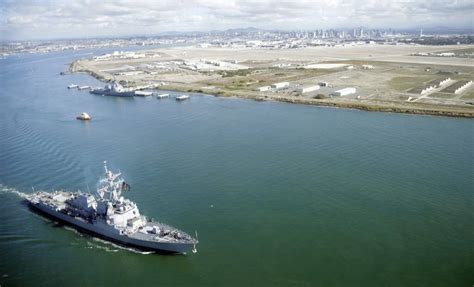
Coronado integrates aviation, amphibious warfare, special operations training, and fleet support into one immense maritime ecosystem. It contributes roughly 30% of the naval workforce in the Southwest region, underscoring its operational density.
The Strategic Architecture of American Sea Power
These ten naval bases form the physical backbone of U.S. maritime supremacy. Acreage alone does not define their significance; rather, it amplifies their capability to host carriers, submarines, aircraft, research laboratories, fuel depots, and entire communities.
From San Diego’s Pacific Fleet piers to Coronado’s sprawling West Coast complex, from Norfolk’s Atlantic armada to Pearl Harbor’s Indo-Pacific gateway, these installations ensure that American warships are never far from logistics, maintenance, or reinforcements.
Naval power is not simply about ships at sea. It is about the infrastructure that sustains them, the airfields that train their pilots, the shipyards that refit their hulls, and the communities that support their crews. The largest naval bases in the United States represent concentrated expressions of that reality—steel, runway, fuel, technology, and human expertise fused into a durable architecture of global reach.