Aircraft Carriers Are Taking On a New Strategic Role
Aircraft carriers have long represented the pinnacle of American naval power, serving as floating airbases capable of projecting force across the globe. Yet their mission is beginning to expand beyond combat operations. The latest generation of U.S. supercarriers is now being considered as a source of emergency electricity for military installations, transforming these massive warships into temporary nuclear power plants capable of supporting critical infrastructure during crises.
The concept highlights an emerging role for nuclear-powered carriers at a time when energy security has become as important as conventional defense. Modern bases depend heavily on reliable electricity for communications, radar systems, logistics, cyber operations, and maintenance facilities. A prolonged power outage could significantly reduce military readiness, making alternative energy solutions increasingly valuable.
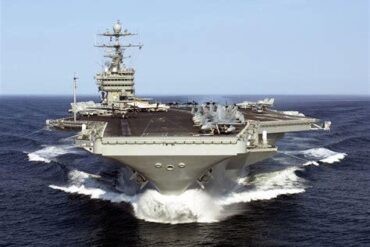
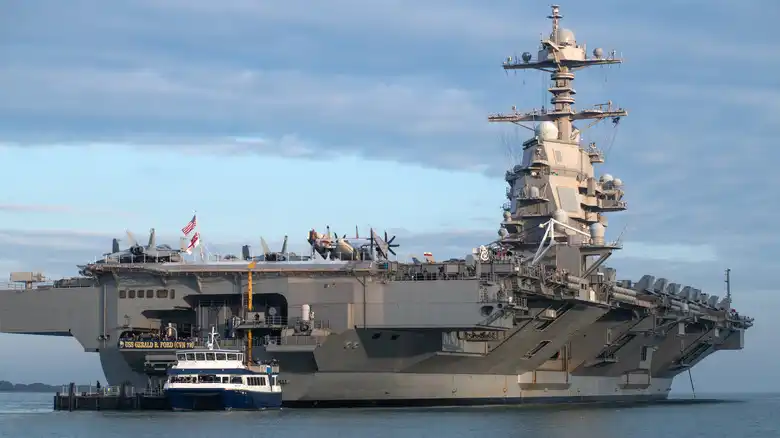
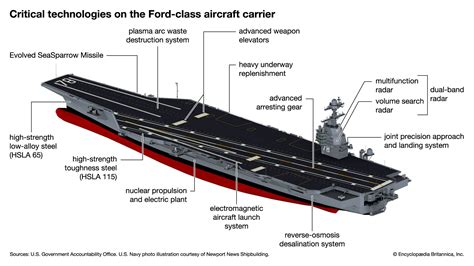
The U.S. Navy’s newest Gerald R. Ford-class carriers are especially suited for such missions. Stretching beyond 1,000 feet and carrying crews exceeding 4,000 personnel, these floating cities are powered by two highly advanced A1B nuclear reactors. Their enormous electrical output supports catapult systems, radar arrays, weapons systems, and thousands of onboard facilities while allowing deployments that can last for months.
USS Gerald R. Ford Will Test Emergency Power Support
The U.S. Navy plans to demonstrate this capability by using the USS Gerald R. Ford (CVN-78) to help supply electricity to Naval Station Norfolk. The experiment aims to prove that a carrier’s nuclear reactors can support shore-based infrastructure if traditional power systems become unavailable.
The initiative was discussed during a House Armed Services Committee meeting in May and represents a modern version of an idea that dates back nearly a century. Beyond strengthening domestic resilience, the project could create a blueprint for supporting military facilities affected by natural disasters, cyberattacks, or damage to local electrical grids.
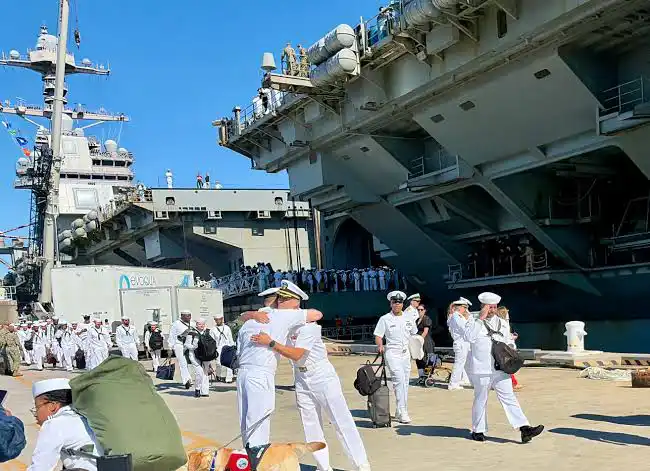
Recently returning from an unprecedented eleven-month deployment, the USS Gerald R. Ford demonstrated exceptional endurance. That same self-sufficiency makes the carrier an attractive emergency energy platform, capable of producing immense amounts of power independently from land-based fuel supplies.
History Shows The Idea Is Not Entirely New
Although the proposal appears revolutionary, naval vessels have provided electricity to communities before. In 1929, the USS Lexington supplied power to Tacoma, Washington, after severe drought reduced hydroelectric generation and disrupted the city’s electricity supply.
For approximately a month, the carrier generated power that helped stabilize local operations. While the solution was temporary, it proved that naval vessels could serve as emergency power providers when conventional infrastructure failed.
The difference today lies in scale. Modern nuclear-powered carriers possess capabilities unimaginable in the early twentieth century. Their reactors produce enormous quantities of electricity while operating continuously without dependence on fuel deliveries, making them uniquely suited for prolonged emergency support.
Major Technical Challenges Remain
Despite the promise, transforming an aircraft carrier into a floating power station is far from straightforward. Electricity cannot simply be transferred ashore with a few cables. Specialized interfaces are required to synchronize power generated onboard with existing electrical grids.
Engineers must also integrate protection systems, fault-management equipment, and isolation mechanisms to ensure safe operation. Distribution infrastructure may itself be damaged following disasters, requiring temporary transmission solutions before electricity can reach critical facilities.
Security concerns present another challenge. Deploying a carrier to unfamiliar ports or unstable regions introduces vulnerabilities. Harbors affected by conflict, sabotage, or hostile activities may expose the vessel to unnecessary risks. Considering that aircraft carriers represent some of the world’s most valuable military assets, commanders would have to weigh the benefits of emergency power generation against operational security concerns.
Commercial Floating Nuclear Plants Could Offer A Better Solution
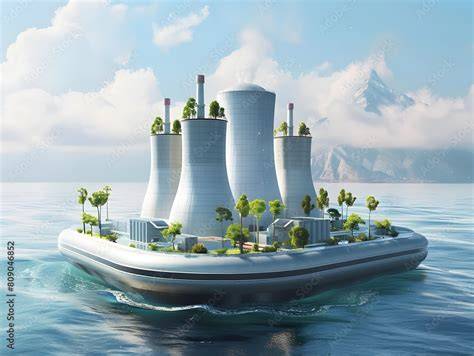
Private industry is already pursuing alternatives specifically designed for this role. Companies such as Core Power, working alongside marine engineering firm Glosten, are developing floating nuclear power plants intended to provide electricity directly to ports and coastal infrastructure.
Unlike aircraft carriers, these facilities are purpose-built for energy production. Their designs incorporate integrated connections to shore-based grids, potentially making deployment faster and safer during emergencies. They could also support remote communities and industrial facilities lacking reliable electricity.
Another challenge involves regulation. While the U.S. Navy has operated nuclear vessels for decades, civilian floating reactors would require oversight from nuclear authorities and international maritime organizations. Core Power’s Liberty initiative seeks to establish those regulatory frameworks and accelerate acceptance of maritime nuclear energy.
Floating Nuclear Energy May Define Future Resilience
Interest in floating nuclear plants extends beyond the United States. Denmark-based Seaborg Technologies has entered agreements with Thailand to support carbon-neutral electricity production, reflecting growing international demand for innovative energy solutions.
As military and civilian sectors seek greater resilience against disasters and power shortages, nuclear-powered ships are emerging as strategic assets with capabilities extending well beyond warfare. The Norfolk demonstration could mark the beginning of a new era in which aircraft carriers serve not only as instruments of national defense but also as mobile energy lifelines capable of sustaining vital infrastructure when conventional power systems fail.